By Editorial Staff
Updated: October 16, 2026
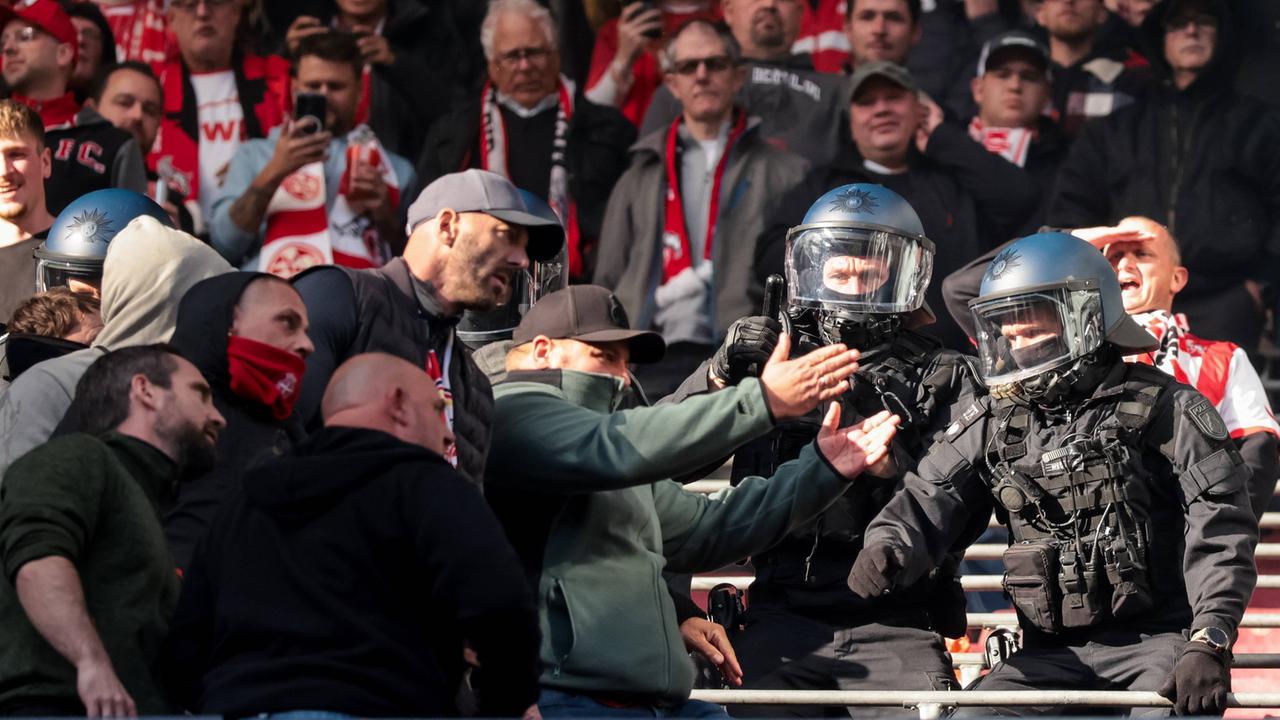
The aftermath of the violent clashes during the Rhine Derby between 1. FC Köln and Borussia Mönchengladbach on October 11, 2026, has ignited a fierce debate regarding the future of football security in Germany. As smoke cleared from the stands and the streets surrounding the stadium, the focus shifted from the hooliganism itself to the strategy intended to prevent it: the "Stadionallianz" (Stadium Alliance) project.
Championed by the North Rhine-Westphalia (NRW) Interior Ministry, the initiative aimed to modernize match-day security by reducing visible police presence and shifting the burden of order onto the clubs themselves. However, the chaos of the October 11 match—a high-risk fixture—has left critics, fan organizations, and local municipalities questioning whether the project is fundamentally flawed.
The Core Concept: A Shift in Responsibility
In July 2026, NRW Interior Minister Herbert Reul unveiled an expansion of the "Stadionallianz" framework, intended to cover not just top-tier Bundesliga clubs but also fan-heavy teams in the 3. Liga. The core philosophy of the project is simple yet controversial: "De-escalation through withdrawal."
The plan dictates that police presence within the stadium and its immediate perimeter should be significantly reduced. In theory, this allows for a more "civilian" atmosphere, with clubs taking full responsibility for entry security and internal stewarding. Police intervention is theoretically reserved only for the commission of specific criminal acts, rather than as a preventive, omnipresent force.
During the Rhine Derby in March 2026, the police deployed approximately 1,400 officers to manage the crowd. For the October 11 fixture, this number was reduced to "several hundred." The stark difference in manpower, combined with the subsequent disorder, has transformed the project from an administrative experiment into a major political liability.
Chronology of a Failed Strategy?
The timeline of the project’s rollout suggests a disconnect between the ministry’s intentions and the reality on the ground:
- July 2026: Interior Minister Reul announces the expansion of the Stadionallianz, citing the success of similar models in other German states as a blueprint.
- September 16, 2026: The Association of Towns and Municipalities (Städtetag NRW) sends a formal letter of concern to the Interior Ministry, warning that the new security paradigm was being forced upon them without adequate consultation.
- October 11, 2026: The Rhine Derby between 1. FC Köln and Borussia Mönchengladbach takes place under the new security protocol. Violent clashes occur, leading to significant public outcry.
- October 12–16, 2026: A blame game ensues. The police union and the Ministry target 1. FC Köln’s internal security as "insufficient," while fan projects and municipal leaders point to a systemic failure in communication and planning.
Voices from the Field: The Critique of "Non-Involvement"
Michael Gabriel, head of the national coordination office for fan projects (KOS), has become the leading voice of dissent. Gabriel, who has been critical of the NRW approach for months, argues that the ministry has fundamentally misunderstood the nature of a successful "Stadium Alliance."
"What is being implemented in North Rhine-Westphalia does not align with the definition of a ‘Stadionallianz’ used in other federal states," Gabriel stated. He emphasizes that the success of these models in other regions relies entirely on an inclusive network involving the police, the clubs, the local municipalities, and, crucially, the independent fan projects.
In NRW, however, the fan projects and local city authorities feel they have been systematically sidelined. According to Gabriel, the ministry opted for a top-down approach, failing to facilitate the transparent communication that is necessary to de-escalate tensions before they turn into violence.
"In other states, fan projects and ultra representatives are brought to the table. They provide a vital ‘translation’ service, helping the police understand the mood of the stands and helping fans understand the security measures," Gabriel explained. "In NRW, those vital links have been ignored, placing a perfectly functional system under unnecessary tension."
The Municipal Perspective: Overlooked and Overwhelmed
The criticism is not limited to fan advocates. Local governments, which are often left to manage the fallout of football violence on public transit and in city centers, feel blindsided.
The protest note submitted by the Städtetag NRW to the state parliament highlights that the government’s decision to stop police accompaniment of "fan marches" was made without considering the secondary effects. The municipalities argue that this policy ignores the dynamic nature of large, aggressive crowds moving through urban spaces. When police are absent, the responsibility for public safety falls onto local authorities, creating unforeseen costs and risks for innocent bystanders.
The Financial Motive: A Fiscal Policy Disguised as Security?
Critics like Michael Gabriel suggest that the drive for the Stadionallianz may be less about security innovation and more about fiscal austerity. With the state government under mounting pressure from the State Court of Audit (LRH) to curb the rising costs of police operations, the incentive to reduce deployments is strong.
In the 2024/25 season, the cost of policing high-risk matches in NRW reached 15 million euros. The LRH, led by President Brigitte Mandt, has repeatedly demanded that the state charge these costs back to the football clubs—a move the government has been reluctant to make.
The German Police Union (DPolG) in NRW has joined the chorus of critics, albeit from a different angle. They argue that the security at the October 11 derby was "recognizably insufficient" and that the time has come to hold the clubs financially accountable to force them to improve their own security standards.
The "Baden-Württemberg" Benchmark
The NRW government frequently points to Baden-Württemberg as the "gold standard" for the Stadionallianz model. However, data from the southwest state suggests that NRW has failed to adopt the core methodology that makes the system work.
In Baden-Württemberg, the implementation was driven by a scientific study from the University of Potsdam, which analyzed the interaction of all stakeholders. The result was a reduction in police hours by 34,000 annually, leading to a savings of roughly two million euros per season—not by abandoning the fans, but by fostering a more stable, communication-heavy environment.
"In Baden-Württemberg, the reduction in police presence is the result of successful communication," Gabriel notes. "In NRW, they seem to have decided to skip the communication and go straight to the reduction. That is a recipe for disaster."
Implications and Future Outlook
The fallout from the Rhine Derby has forced the NRW Interior Ministry onto the defensive. While the ministry maintains that the "clearly defined responsibilities" of the clubs are the correct path forward, the evidence from October 11 suggests that the current structure lacks the necessary checks and balances.
For the ministry, the way forward is fraught with political peril. If they continue with the current model, they risk further violent incidents that could lead to even greater public condemnation. If they pivot and increase police presence, they acknowledge the failure of their flagship security project, which could damage the credibility of the administration.
As the 2026 season progresses, the pressure will mount. The state parliament is expected to hold a special hearing on the matter, where the testimonies of local mayors, fan project leaders, and police union representatives will be central.
Ultimately, the lesson of the Rhine Derby is clear: security in professional football cannot be reduced to a math problem involving the number of officers on the street. It is a social contract. When that contract is drafted without the input of the fans, the cities, and the specialized social workers who bridge the gap, the result is not stability—it is the chaos seen in Cologne.
Whether the NRW government has the humility to "re-adjust" its strategy remains to be seen. But for now, the Stadionallianz in North Rhine-Westphalia stands as a cautionary tale of what happens when administrative efficiency is prioritized over the complex reality of human dynamics in the football stands.