In a significant shift for the generative AI landscape, OpenAI has officially unveiled plans to integrate visual display advertising into the ChatGPT experience. While the company began experimenting with text-based advertising earlier this year, the introduction of visual assets marks a maturation of its monetization strategy. By leveraging the platform’s massive global reach—currently estimated at 1.2 billion weekly active users—OpenAI is positioning itself to disrupt the traditional digital advertising market, long dominated by tech giants like Google and Meta.
The Evolution of Monetization: From Text to Visuals
The integration of advertising into a tool previously defined by its clean, minimalist interface is a delicate balancing act. Since early February 2026, OpenAI has been testing various ad formats, with the program expanding into the European market by late August. Initially, these efforts were focused on context-sensitive text placements—ads triggered by user intent rather than simple keywords.
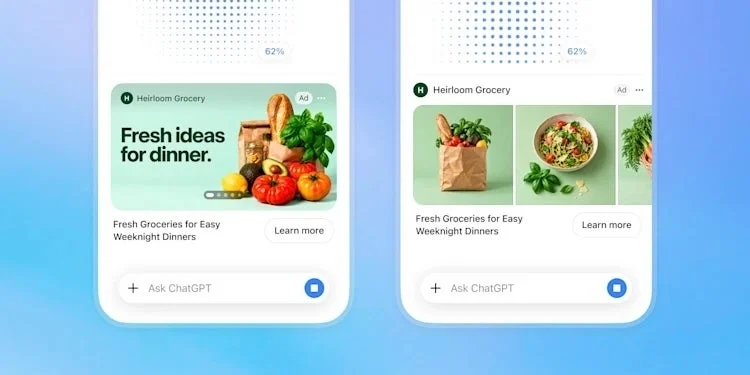
However, the latest update shifts the paradigm toward visual storytelling. Starting in October 2026, select users in the United States will encounter display advertisements while utilizing DALL-E and other image-generation features within ChatGPT. These visual units are designed to be non-intrusive, appearing while the AI processes the user’s request, effectively filling the "latency gap" that occurs during complex rendering tasks.
Chronology: A Strategic Rollout
The path to this moment has been carefully calculated to ensure minimal disruption to the user experience:
- February 2026: OpenAI initiates its first internal tests for advertising within the ChatGPT interface, focusing on non-disruptive, context-aware placements.
- August 2026: The advertising program sees a significant expansion, officially launching in European markets, signaling that the initial tests were deemed successful and scalable.
- October 2026: The company announces the "Visual Ad Format," moving beyond text-based links into high-fidelity image ads. This rollout begins with a restricted group of advertisers in the U.S.
- Ongoing: OpenAI continues to refine its measurement tools, aiming to provide advertisers with clearer attribution data than traditional search engines, which rely heavily on click-through rates (CTR) rather than conversational intent.
Supporting Data: Why Visual Ads Matter
The move into visual advertising is supported by early pilot studies that suggest ChatGPT’s unique environment yields higher engagement than traditional search results.

According to internal reports and early partner feedback, the efficacy of these ads is already showing promise:
- Weightwatchers: In early trials, the company reported that its cost-per-acquisition (CPA) on the ChatGPT platform was approximately 15% lower than the benchmark for traditional paid search ads.
- Dose: The wellness brand Workmagic reported a "statistically significant" increase in engagement metrics, suggesting that users are more likely to interact with ads that feel like part of a conversational flow rather than static sidebar banners.
For OpenAI, the goal is to prove that "conversational context" is a more valuable currency than "keyword intent." By understanding the nuanced, multi-turn dialogue of a user, OpenAI can serve visual advertisements that are hyper-relevant to the specific creative or research task at hand.
Official Responses and Company Stance
OpenAI has been careful to frame this development as an enhancement of the user experience rather than a compromise. In official communications, the company emphasized that the ads are "clearly labeled" and "distinct from the generated content."
The company’s rhetoric focuses on "discovery." They posit that users should be able to "discover new brands, understand what makes an offer special, and make informed purchasing decisions" directly within the chat window. By allowing advertisers to "tell their story with images," OpenAI is attempting to elevate the standard of digital advertising from a transactional annoyance to a value-added discovery tool.
However, the company remains tight-lipped regarding the long-term roadmap. While the current implementation is strictly limited to the image generation workflow, the use of the word "initially" in their press release suggests that visual ads could eventually permeate other areas of the ChatGPT interface.

Implications: Challenging the Search Hegemony
The most profound implication of this move is the potential threat to Google’s advertising empire. For decades, Google has functioned as the gatekeeper of the internet, monetizing the gap between a user’s question and an answer. If ChatGPT becomes the primary destination for research, creative work, and information retrieval, Google’s traditional ad-revenue model could face existential pressure.
1. The "Ad-Free" Premium Dilemma
Industry analysts have pointed out a clear strategic secondary motive: the monetization of the "free" user base. By introducing ads to the free and lower-tier subscription models, OpenAI is creating a stark contrast between the ad-supported experience and the premium, ad-free experience. This could serve as a powerful conversion tool, pushing casual users to upgrade to higher-tier subscriptions simply to regain an uncluttered interface.
2. The Shift from Intent to Context
Traditional search advertising is reactive; it targets keywords typed into a search box. OpenAI’s model is proactive and contextual. If a user is asking for "ideas for a tropical vacation," the AI doesn’t just show a list of links; it can provide a visual ad for a travel agency, a hotel chain, or specific gear, all while the user is actively brainstorming. This level of contextual alignment is the "holy grail" of modern marketing.
3. Ethical and User Experience Concerns
Despite the early success, user backlash remains a significant risk. ChatGPT’s rise to prominence was fueled by its utility and lack of clutter. The introduction of any form of advertising—even high-quality visual ads—risks eroding the trust that the platform has built. Critics argue that the "sanctity" of the AI assistant is being sacrificed for short-term revenue gains. Furthermore, privacy advocates are watching closely to see how user data—including the specific prompts used in creative sessions—will be leveraged to target these ads.
Future Outlook: A New Paradigm for Digital Media
As OpenAI continues to scale, the integration of ads will likely become more sophisticated. We may soon see interactive ads where users can ask the AI follow-up questions about a product they’ve seen in an advertisement.
The industry is watching with bated breath. If OpenAI succeeds in making advertising feel like a native, helpful component of the AI interaction, it will have fundamentally altered the economics of the internet. If they fail, they risk turning the most innovative tool of the decade into just another cluttered, ad-heavy web destination.
For now, the strategy is clear: keep the ads relevant, keep them beautiful, and keep them limited to specific contexts. Whether this approach can sustain the massive computational costs of running a global AI platform remains to be seen. However, one thing is certain: the era of the AI-powered advertisement has arrived, and it is going to change how we interact with brands forever.