

BAD MUSKAU, Germany – A quiet Saturday evening in the border town of Bad Muskau, located on the banks of the Neisse River, transformed into a scene of chaotic emergency operations after a vehicle veered off the road and plunged into the frigid waters of the border river. The incident, which left one man injured and a vehicle submerged, has once again brought the issue of impaired driving in the border region into sharp focus.
According to the Görlitz Police Directorate, the incident occurred late Saturday night. The driver, a 45-year-old man, was operating a passenger vehicle when he lost control, crashing through barriers and into the river that separates Germany from Poland.
Chronology of the Incident
The sequence of events unfolded rapidly in the late hours of the night. Local authorities were alerted to the accident shortly after the vehicle entered the water. According to preliminary reports, the vehicle struck the riverbed, quickly becoming partially submerged.
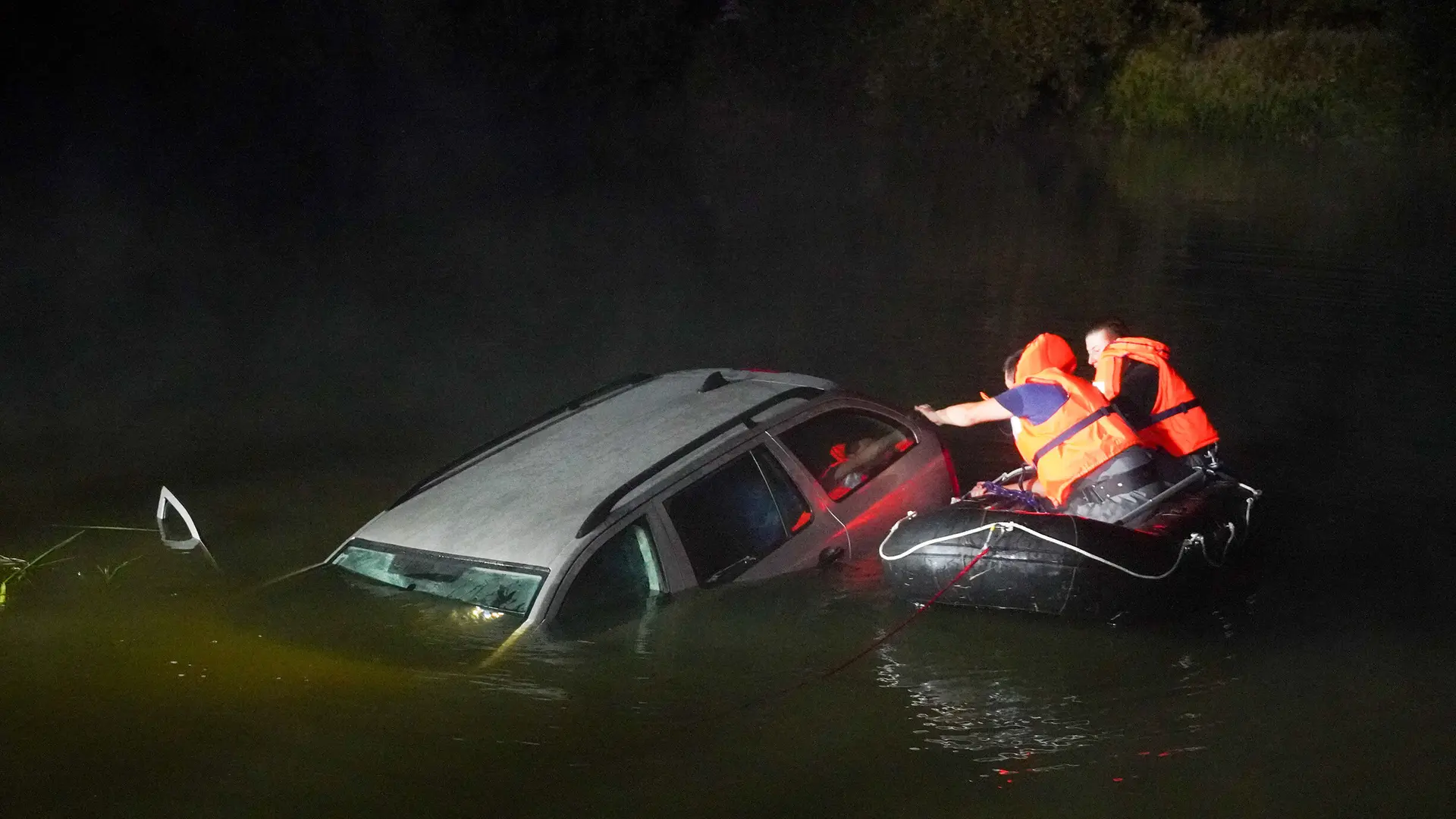
In a remarkable turn of events, both the 45-year-old driver and his 53-year-old passenger were able to extricate themselves from the sinking vehicle. However, their paths of escape were dictated by the river’s currents and the angle of the crash. The driver managed to scramble onto the German riverbank, while the passenger was swept toward the Polish side of the international border.
Emergency responders were quickly dispatched to the scene. Due to the unusual nature of the crash, with victims separated by the national border, a coordinated effort between German and potentially Polish emergency services was required to secure the area. The 53-year-old passenger, who sustained light injuries during the collision and the subsequent escape, was treated by medical personnel who navigated to his location to ensure he received immediate care.
Following the successful rescue of both individuals, the focus of the emergency teams shifted to the recovery of the vehicle, which had largely disappeared beneath the surface of the Neisse. Heavy recovery equipment was brought in, and the vehicle was successfully winched from the riverbed in the early hours of Sunday morning.

Official Investigation and Findings
Following the rescue and the stabilization of the victims, the Görlitz police conducted a series of standard investigations. The primary point of interest for law enforcement was the physical and mental state of the driver.
Upon administering a mandatory breathalyzer test, officers discovered a blood alcohol concentration (BAC) of 1.6 per mille. In Germany, this level is significantly above the legal threshold of 0.5 per mille for operating a vehicle, and it is legally classified as a severe state of intoxication.
The consequences for the driver were immediate. Police officers on the scene formally confiscated his driver’s license, ensuring that he would not be able to operate a vehicle while the investigation proceeds. The driver now faces serious criminal charges, including driving under the influence of alcohol and potentially reckless endangerment of others.

"The situation could have been significantly worse," a police spokesperson noted. "The speed at which the vehicle entered the water and the depth of the river at that specific point made this a life-threatening situation for both occupants."
Supporting Data and Context
While this incident has shocked the local community in Bad Muskau, it is not an isolated event. Statistical data from the Saxony region indicates a persistent struggle with alcohol-related traffic accidents.
According to regional traffic safety reports, alcohol remains one of the leading causes of severe, non-accidental traffic incidents in the Görlitz district. The combination of rural roads, proximity to international borders, and high-speed transit routes creates a challenging environment for traffic law enforcement.

The financial toll of the incident is also noteworthy. Initial estimates from the police put the property damage—including the vehicle, damage to the riverbank infrastructure, and the cost of the specialized recovery operation—at approximately 15,000 euros. While this figure pales in comparison to the potential loss of life, it represents a significant drain on both municipal resources and private insurance pools.
Implications for Border Safety
The incident highlights the complexities of emergency management in border regions. Because the Neisse serves as a natural boundary, rescue operations often require seamless cooperation between the Görlitz police and their counterparts in the Polish border provinces.
This incident also underscores the ongoing debate regarding the "border-hopping" nature of traffic safety. Local officials have long complained that drivers sometimes view the proximity of the border as a way to avoid standard police checkpoints. However, this weekend’s event proves that law enforcement on both sides is increasingly vigilant and capable of responding to cross-border emergencies.
Furthermore, the incident raises questions about the infrastructure along the Neisse. While protective barriers are in place, the topography of the riverbank is treacherous. Local planning committees are now expected to review the site of the accident to determine if additional structural safety measures, such as enhanced guardrails or better lighting, are required to prevent future incursions into the river.
The Human Element: A Warning
Beyond the statistics and the legal repercussions, the incident serves as a stark reminder of the human cost of drunk driving. The 53-year-old passenger, who was injured in the crash, serves as a victim of the driver’s decision to get behind the wheel while intoxicated.
"When you drive under the influence, you aren’t just risking your own life," said a local road safety advocate. "You are making a decision for every other person in your vehicle and every other person on the road."

As the legal process begins for the 45-year-old driver, the community of Bad Muskau is left to deal with the aftermath. The sight of a vehicle being pulled from a river is a jarring image for any small town, serving as a visceral reminder of how quickly a night out can turn into a criminal case and a medical emergency.
Future Outlook and Legal Consequences
The driver is currently facing a trial, and given the high level of intoxication (1.6 per mille), the legal system in Germany is likely to pursue a strict sentencing phase. Under German law, a BAC of 1.6 usually results in a mandatory medical-psychological assessment (often referred to as the MPU, or "idiot test") before any prospect of regaining a driver’s license, alongside heavy fines and the possibility of a suspended jail sentence.
The local police department has announced that they will increase patrols in the border area in the coming weeks. They are urging citizens to utilize public transport or designated driver programs, especially when traveling near the border, where the terrain and the proximity of the river create an unforgiving environment for even minor driving errors.
As the recovery efforts conclude and the investigation into the specific circumstances of the crash continues, the focus in Bad Muskau has shifted toward recovery and reflection. The river, which is usually a symbol of the peaceful landscape and the historic park that defines the town, will for now remain a site of caution, serving as a reminder of the night a vehicle disappeared into the current—and why responsible behavior behind the wheel is a matter of life and death.
Reporting by MDR Sachsen. This article reflects current information as of August 2, 2026, and is subject to updates as the police investigation concludes.