In a landmark decision that bridges the gap between fundamental physical chemistry and life-saving pharmaceutical engineering, the Royal Swedish Academy of Sciences has awarded the 2026 Nobel Prize in Chemistry to Henri B. Kagan and Kenso Soai. The duo was recognized for their pioneering discoveries in the fields of non-linear effects and autocatalysis within the realm of asymmetric organic synthesis—a field that dictates the very architecture of modern medicine.
The announcement, delivered in Stockholm, marks a significant moment in the history of the sciences, highlighting a solution to a century-old enigma: the nature of homochirality and the spontaneous emergence of "handedness" in molecular structures.
The Core Achievement: Solving the Mystery of Homochirality
At the heart of the Nobel committee’s decision is the concept of chirality—a property of molecules that are mirror images of one another, yet not superimposable, much like the relationship between a human’s left and right hand. In the microscopic world, these "enantiomers" (the left-handed and right-handed versions of a molecule) can possess radically different biological properties.
For decades, chemists struggled to understand why nature, particularly in the building blocks of life like amino acids, favors one specific mirror-image form over another. Heiner Linke, chair of the Nobel Committee for Chemistry, noted during the press conference, "Henri Kagan and Kenso Soai have provided a solution to a challenge that has puzzled chemists for over a century: how homochirality can emerge spontaneously from a symmetric environment."
By unlocking the mechanisms behind how one version of a molecule can be selectively synthesized, the laureates have provided humanity with the tools to engineer safer, more precise compounds.
Chronology of Discovery
1986: The Kagan Breakthrough
Henri B. Kagan, a French chemist born in 1930, fundamentally altered the trajectory of asymmetric synthesis in the mid-1980s. Working at the Université Paris-Sud in Orsay, Kagan developed innovative catalytic methods that allowed researchers to exert control over chemical reactions, effectively producing a significant excess of one mirror-image molecule over the other. His work demonstrated that by carefully designing catalysts, chemists could steer a reaction toward a desired enantiomer, a foundational step for industrial chemistry.
1995–2003: The Soai Advancement
Kenso Soai, a distinguished researcher at the Tokyo University of Science, built upon these foundations by exploring the phenomenon of autocatalysis. In 1995, he published groundbreaking research on a reaction that theoretically permitted the generation of homochiral molecules. By 2003, he achieved the "impossible": a reaction that resulted in the near-total production of a single mirror-image form. According to the Nobel committee, this was a feat previously only observed in biological systems.
Why Chiral Control Matters: From Biology to Industry
To understand the magnitude of this achievement, one must look at the "lock-and-key" model of biological interaction. In the human body, receptors act as locks, and molecules act as keys. A "left-handed" key might fit perfectly into a receptor, triggering a beneficial healing response. However, its "right-handed" mirror image might not fit at all—or worse, it might force the lock, leading to catastrophic side effects.
The Shadow of Thalidomide
The importance of controlling chirality became tragically evident during the Contergan (thalidomide) scandal of the 1960s. Thalidomide was marketed as a treatment for morning sickness, but it was manufactured as a racemic mixture—a 50/50 blend of both mirror-image forms. While one form successfully mitigated nausea, its mirror image was teratogenic, causing severe developmental abnormalities in fetuses.
The work of Kagan and Soai provides the synthetic pathways necessary to ensure that such drugs are produced in their pure, beneficial forms, effectively eliminating the "toxic" mirror image from the final product. Their discoveries are not merely academic; they are the bedrock upon which modern, safe, and efficient pharmaceutical manufacturing is built.
A Historic Milestone: Honoring a Life’s Work
At 95 years old, Henri B. Kagan becomes one of the oldest recipients in the history of the Nobel Prize. His longevity in the field and the enduring impact of his 1986 discoveries highlight the often-slow maturation of scientific breakthrough. He sits in esteemed company, joining legends like John B. Goodenough, who was 97 when he received the chemistry prize in 2019 for the development of lithium-ion batteries.
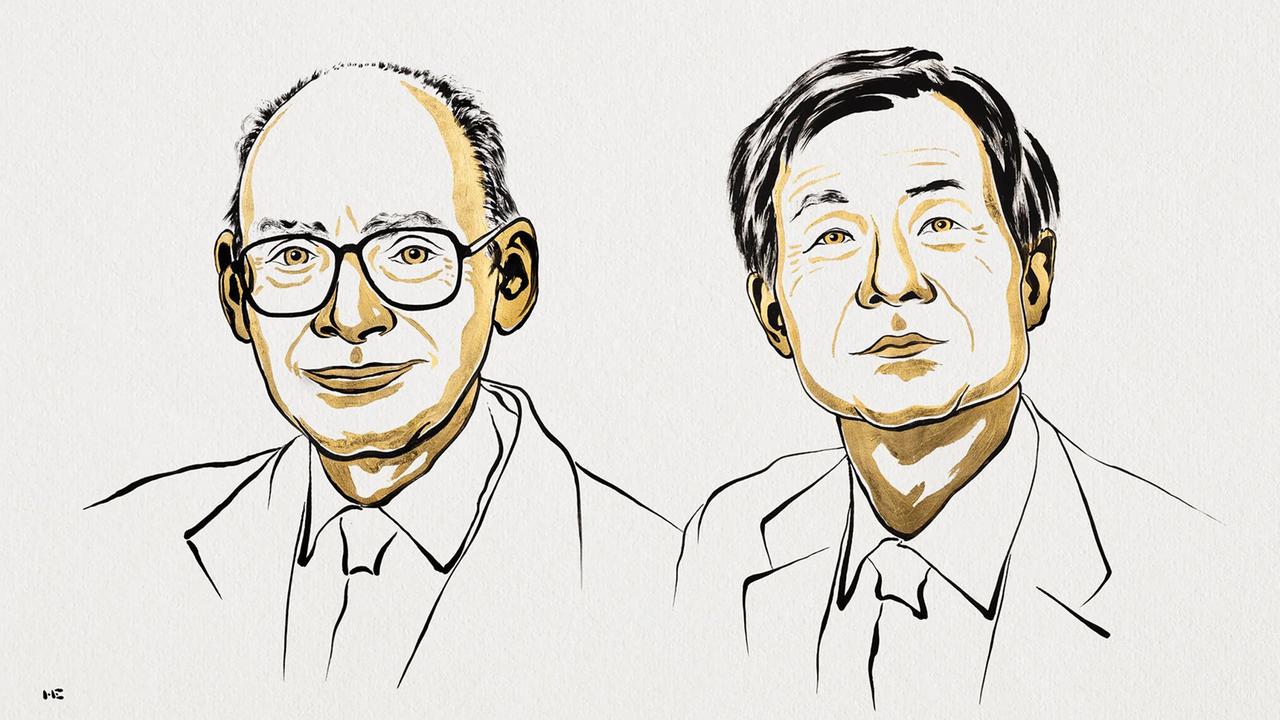
For Kenso Soai, the news was received with profound humility. Participating in the press conference via a digital link from Japan, Soai expressed his overwhelming joy: "I am deeply honored to receive this news. This is truly one of the most exciting days of my life. To share this recognition with Henri Kagan is a privilege I had not dared to dream of."
Supporting Data and Technical Significance
The Nobel Committee emphasized that the "spectacular" nature of their reactions lies in the efficiency of the asymmetric synthesis. By utilizing non-linear effects, Kagan and Soai proved that small initial imbalances in chirality could be amplified into pure products.
This process, which mimics the self-organizing nature of life, has applications far beyond pharmaceuticals. It is essential in the development of:
- Agrochemicals: Creating herbicides and pesticides that act only on specific targets, reducing environmental impact.
- Material Science: Synthesizing chiral polymers with unique optical and electronic properties for next-generation display technology.
- Synthetic Biology: Reconstructing prebiotic conditions to better understand the origins of life on Earth.
Official Responses and Global Impact
The international scientific community has lauded the decision as both timely and essential. Experts argue that while other Nobel Prizes often reward discrete discoveries, this year’s Chemistry prize honors a fundamental process that touches every aspect of modern molecular science.
"The work of Kagan and Soai is the ‘invisible’ infrastructure of our current medical capability," says Dr. Elena Rossi, a researcher in organic synthesis. "Without the ability to control molecular handedness, the complexity of modern drugs—such as personalized immunotherapies or advanced antivirals—would be physically impossible to produce at scale."
The 2026 Nobel Season: Contextualizing the Chemistry Prize
The awarding of the Chemistry prize is part of the broader Nobel week, which began with the announcement of the Medicine prize for advancements in optogenetics—a field that utilizes light to "switch" brain activity. The Physics prize was awarded to Francis Halzen for his work on high-energy astrophysical neutrinos.
As the world looks toward the remaining announcements—Literature, Peace, and the Economic Sciences—the Chemistry prize stands out as a testament to the power of human curiosity in solving the paradoxes of the natural world.
The laureates will receive a gold medal, a diploma, and a share of the twelve million Swedish krona (approximately one million euros) prize money. The award ceremony in Stockholm will serve as a global platform to honor these two visionaries who, through their meticulous study of mirrors and symmetry, have helped us see the building blocks of life with unprecedented clarity.
Looking Ahead
The legacy of Kagan and Soai is cemented in the textbooks of every chemistry student, but their impact continues to evolve. As we move further into the age of molecular nanotechnology and precision medicine, the techniques they developed will remain the standard-bearers for how we interact with the chiral nature of the universe.
By mastering the "mirror," Henri B. Kagan and Kenso Soai have not only solved a riddle of the past but have opened the door to a more precise, safer, and more innovative future.