By Financial News Desk
October 7, 2026
The global financial landscape is currently navigating a period of renewed volatility as geopolitical tensions and environmental threats converge to push energy prices higher. Investors, who had only recently found a sense of calm, are now reassessing their portfolios as the benchmark price for Brent crude oil surged back above the $100-per-barrel threshold. This shift in the energy market has rippled across international exchanges, leading to a cautious start for European indices and a cooling of sentiment in Asia.
Main Facts: The Return of Energy Pressure
The primary catalyst for the current market instability is a double-pronged threat to oil supply. A significant tropical storm is currently tracking toward the Gulf of Mexico, a critical hub for U.S. offshore energy production. Concurrently, Saudi Arabia has reported yet another drone and missile attack attributed to the Houthi militia in Yemen. These developments have reignited fears of supply chain disruptions in the Middle East, a region that remains central to global energy stability.
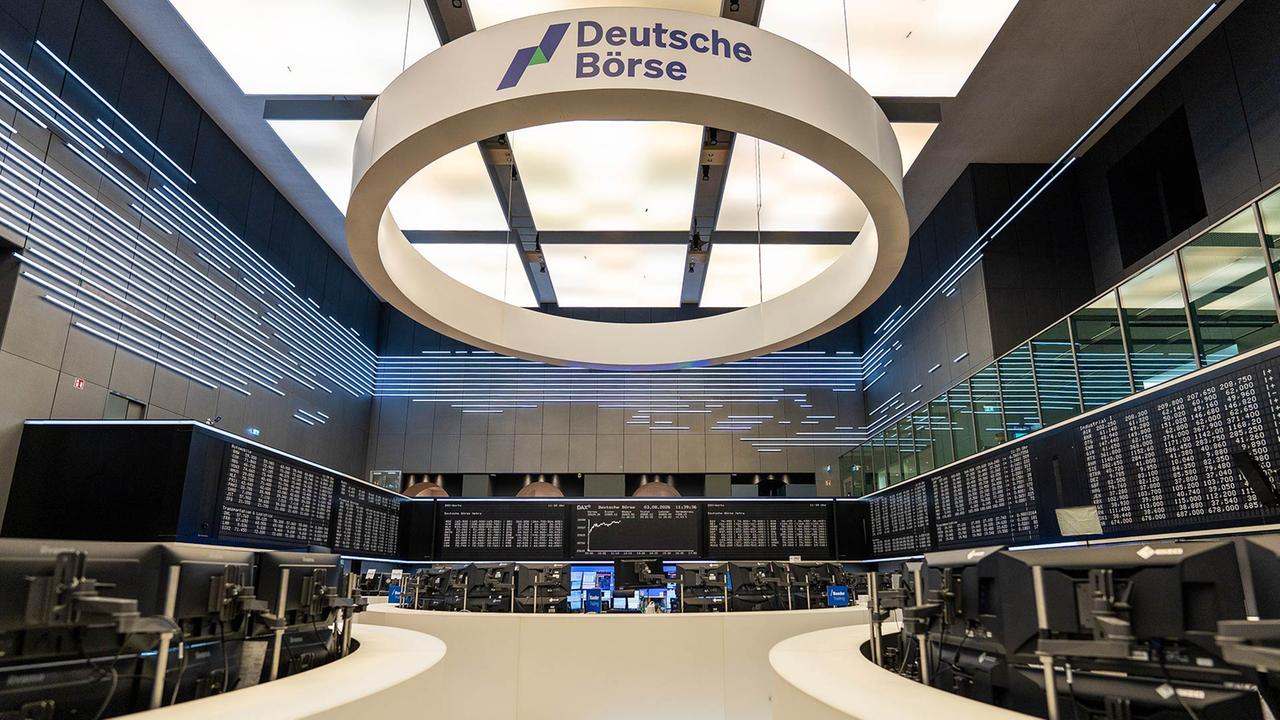
As of mid-morning trading, the German DAX index, which had enjoyed a period of optimism based on cooling energy prices, faced immediate selling pressure. After an initial drop of nearly one percent, the index managed to stabilize, shedding 0.5% to sit at 25,323 points. The resurgence of Brent crude—briefly touching $101 per barrel—serves as a stark reminder that inflation remains a persistent shadow over global growth projections.
Chronology of Market Events
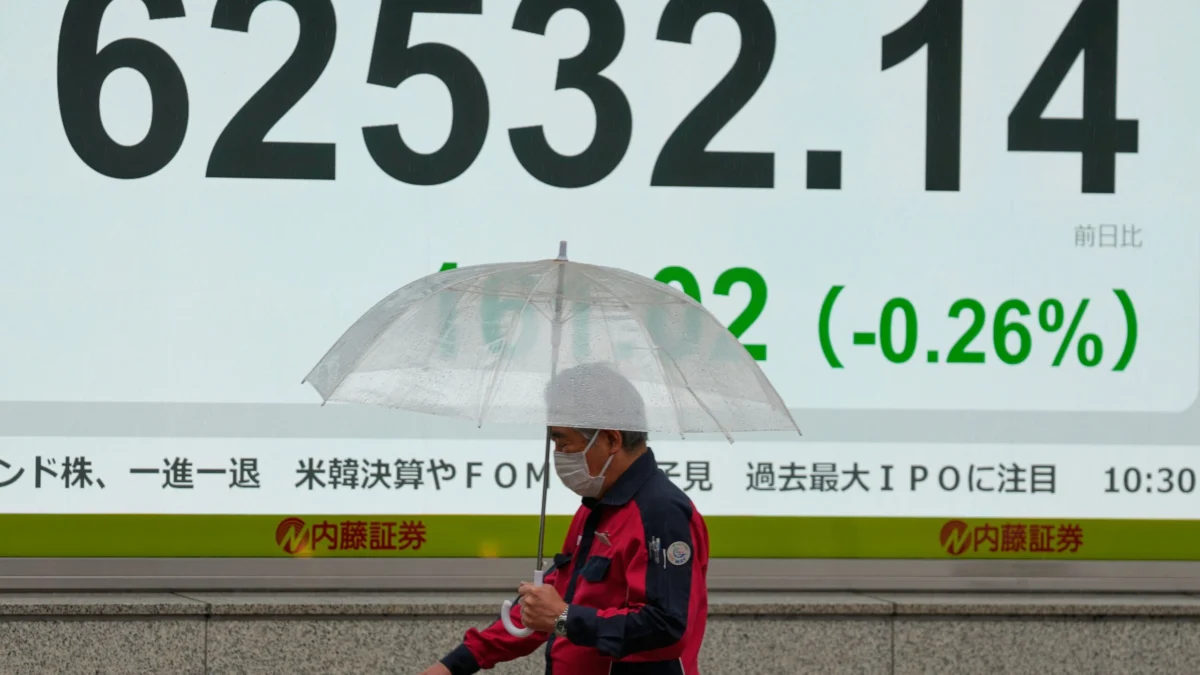
The market shift began in the overnight session in Asia, where the impact of the oil price hike was felt acutely. In Tokyo, the Nikkei 225 index retreated by 0.9%, while the South Korean Kospi took a harder hit, declining by 2.0%. These losses were exacerbated by the absence of Chinese market data, as the Shanghai Stock Exchange remained shuttered for public holidays.
The negative sentiment stood in sharp contrast to the record-breaking session witnessed on Wall Street yesterday. Both the S&P 500 and the Nasdaq 100 hit all-time highs, driven by an insatiable investor appetite for Artificial Intelligence (AI) infrastructure and software. Despite the optimism in New York, the global reaction today highlights how quickly macro-environmental factors—such as energy costs—can dampen enthusiasm.
Supporting Data: German Industrial Resilience
Despite the broader market anxiety, there is a glimmer of hope rooted in domestic economic performance. The German Federal Statistical Office (Destatis) released figures for August showing a surprising, robust rebound in industrial production. After a disappointing 1.2% contraction in July, production rose by 2.0% in August, comfortably beating the consensus forecast of 0.5%.
This growth was largely propelled by a surge in the construction sector. Furthermore, the long-term outlook for German manufacturing appears more stable than previously feared. According to recent data, order backlogs are at their highest levels since tracking began in 2015. While yesterday’s report on new order intake for August was underwhelming, the production surge suggests that factories are successfully clearing these backlogs, potentially providing a floor for the German economy during this period of high energy costs.
The French Conundrum: Fiscal Fragility
Outside of the energy markets, investors are keeping a close watch on the French bond market. The yield on ten-year French government bonds (OATs) has ticked upward to 4.84%, reflecting lingering anxiety over the nation’s fiscal health.
France is currently embroiled in a difficult legislative process as the government attempts to draft a 2027 budget that addresses a record-high deficit. With a deeply divided parliament and the shadow of an upcoming presidential election, the path to fiscal consolidation is fraught with political peril. The bond market’s sensitivity to these negotiations underscores the broader Eurozone anxiety: as debt servicing costs rise, political inability to implement austerity measures could lead to a downgrade in investor confidence, further complicating the European economic recovery.
Official Responses and Corporate Strategy
Amidst the general market downturn, one company has managed to carve out a positive trajectory: Porsche AG. The automaker announced a major strategic pivot today, dubbed the "Sportwagenschmiede ’35" (Sports Car Forge ’35) initiative.
In a press briefing, company leadership outlined an ambitious plan to bolster profitability by slashing development costs for future model ranges by up to 20%. The strategy also targets a 30% reduction in production-related personnel costs and a 20% cut in sales and distribution expenses.
"We are focusing on high-margin segments and optimizing our structural efficiency to ensure we remain resilient in a high-cost environment," a spokesperson for Porsche stated. Investors reacted favorably, viewing the move as a proactive step toward protecting margins in an industry currently grappling with high energy and raw material costs. Porsche maintains its medium-term target of an operating margin between 10% and 15%.
Global Implications and Looking Ahead
The broader financial world is now bracing for the release of the Federal Reserve’s latest meeting minutes, scheduled for 8:00 PM CET. Investors are scouring the text for clues regarding the U.S. central bank’s trajectory for interest rates. While the market consensus largely assumes that the Federal Open Market Committee (FOMC) will hold rates steady during their October 28 meeting, the nuances in the minutes could dictate the direction of the dollar and bond yields for the remainder of the quarter.
Implications of the Current Climate:
- Inflationary Pressure: Should oil prices remain above $100 per barrel for an extended period, the "transitory" nature of energy inflation will be challenged. This may force central banks, including the ECB and the Fed, to adopt a more hawkish stance than markets currently anticipate.
- Geopolitical Risk Premium: The reliance on energy from volatile regions remains a systemic risk. Investors are likely to increase their focus on companies with high energy efficiency or those transitioning toward decentralized, renewable energy sources.
- Sector Divergence: We are witnessing a clear decoupling between AI-driven tech stocks in the U.S. and traditional industrial stocks in Europe. While tech remains speculative and growth-oriented, the European market is currently a "show-me" environment where companies that can demonstrate cost-cutting efficiency—like Porsche—are being rewarded, while others are being punished for their exposure to macro volatility.
- Political Risk in the Eurozone: The situation in France is a microcosm of the political risk inherent in the current European landscape. With elections looming and fiscal deficits remaining high, the Eurozone is increasingly susceptible to "bond vigilantes" who may force the hand of governments to choose between social spending and fiscal responsibility.
As the trading day progresses, the resilience of the DAX at the 25,300-point level will be a key indicator of market sentiment. If the index can hold these gains despite the energy price spike, it may suggest that the market has already "priced in" the current geopolitical risk, allowing investors to focus on the positive industrial data emerging from the German manufacturing heartland.
Ultimately, the market remains in a tug-of-war between the technological optimism of the U.S. markets and the harsh, immediate realities of the global energy and fiscal landscape. Investors are advised to remain cautious, focusing on companies with strong balance sheets and the agility to adapt to a high-cost, high-volatility environment.