October 9, 2026 – One year after being awarded the Nobel Peace Prize, Venezuelan opposition leader Maria Corina Machado remains in exile, her influence diminished amidst shifting international dynamics and the continued entrenchment of the Nicolás Maduro regime. What was once heralded as a beacon of hope for Venezuela’s democratic future has, for many, devolved into a poignant symbol of dashed aspirations.
A Nobel Laureate in Limbo: One Year On
The announcement of Maria Corina Machado’s Nobel Peace Prize victory one year ago sent ripples of both elation and skepticism across the globe, particularly within her native Venezuela. For a nation grappling with profound political, economic, and humanitarian crises, the recognition of a defiant opposition figure by the Norwegian Nobel Committee was seen as a potential turning point. Yet, as the calendar now marks a full year since that momentous phone call, the initial surge of optimism has largely receded, leaving Machado in a precarious state of exile and her political leverage considerably weakened.
The Promise of the Prize
When Christian Berg Harviken, the Director of the Norwegian Nobel Institute, delivered the news to Maria Corina Machado, her reaction was one of profound disbelief and humility. "Oh my God, I… I am speechless, thank you very much! But I hope you understand that this is a movement, an achievement of all Venezuelans; I am just a single person and truly did not deserve this," she reportedly exclaimed. Her words underscored a characteristic blend of personal conviction and collective identity, framing the award not as an individual triumph but as an acknowledgment of the broader struggle for democracy in Venezuela.
The Nobel Committee lauded Machado’s "unwavering courage" in her relentless fight for democratic principles, even in the face of severe repression and a life lived under constant threat. Her commitment to political freedom and human rights, often pursued from the shadows or under restrictive conditions, resonated with the committee’s mandate to honor those who champion peace and fundamental liberties. The prize itself offered Machado a vital lifeline, facilitating her escape into exile – though not without significant hurdles that prevented her timely attendance at the December ceremony in Oslo. Her declaration, "I am very sad and I am very sorry, but I will not arrive in time for the ceremony, but I am on my way," captured the bittersweet reality of her situation: international recognition came with the cost of immediate displacement.
Venezuela’s Enduring Crisis
To fully grasp the significance of Machado’s struggle and the Nobel Committee’s decision, one must understand the dire context of Venezuela. For over a decade, the nation has been gripped by a multifaceted crisis, marked by hyperinflation, severe shortages of food and medicine, and the mass exodus of millions of its citizens. The government of Nicolás Maduro, widely accused of authoritarianism, corruption, and human rights abuses, has systematically dismantled democratic institutions, suppressed dissent, and consolidated power through dubious electoral processes and the use of state security forces.
Machado emerged as a prominent voice against this backdrop, advocating for free and fair elections, the restoration of institutional independence, and an end to what she and her supporters describe as a dictatorial regime. Her activism, often characterized by confrontational rhetoric and a refusal to compromise with the Maduro government, has made her both a revered figure among the opposition and a target of relentless state persecution, including political disqualification and accusations of treason. The Nobel Peace Prize, therefore, was not merely an honor but a powerful international endorsement of her cause and a spotlight on the suffering of the Venezuelan people.
A Chronology of Disillusionment
The year following Machado’s Nobel Prize has been a complex tapestry of strategic maneuvers, controversial alliances, and ultimately, a disappointing lack of tangible progress towards her stated goals. Her time in exile has been defined by efforts to garner international support, particularly from powerful global figures, which have yielded mixed and often counterproductive results.
From Underground to Exile
Machado’s path to exile was not a sudden decision but a culmination of years of escalating pressure and threats. Operating within Venezuela, she faced constant surveillance, travel bans, and the risk of arrest, making her a symbol of the domestic repression faced by many activists. The Nobel Prize, while a moral victory, also amplified the dangers she faced, making an immediate departure a strategic necessity for her safety and continued advocacy. Her journey to Oslo, though delayed, marked a transition from a constrained internal struggle to an international platform, albeit one fraught with its own set of challenges.
Controversial Alliances Abroad
Once in exile, Machado embarked on an ambitious campaign to rally international backing. Her strategy involved cultivating relationships with influential political figures and movements, primarily gravitating towards the international right. She sought and found common ground with leaders such as Argentina’s President Javier Milei, known for his radical libertarian policies, and aligned herself with the Bolsonaro camp in Brazil and Spain’s far-right Vox party.
These alliances, while providing some visibility, drew significant criticism. Many observers, including some within the broader democratic opposition, viewed this proximity to right-wing forces as problematic. Critics argued that some of these groups themselves have been accused of undermining democratic institutions, promoting divisive rhetoric, and exhibiting authoritarian tendencies in their respective countries. For a figure lauded for her fight for democracy, such associations raised questions about the consistency of her democratic principles and risked alienating potential allies across the political spectrum. The perceived ideological rigidity of these alliances also hampered her ability to build a broader, more inclusive coalition necessary for a complex political transition in Venezuela.
The Trump Card That Failed
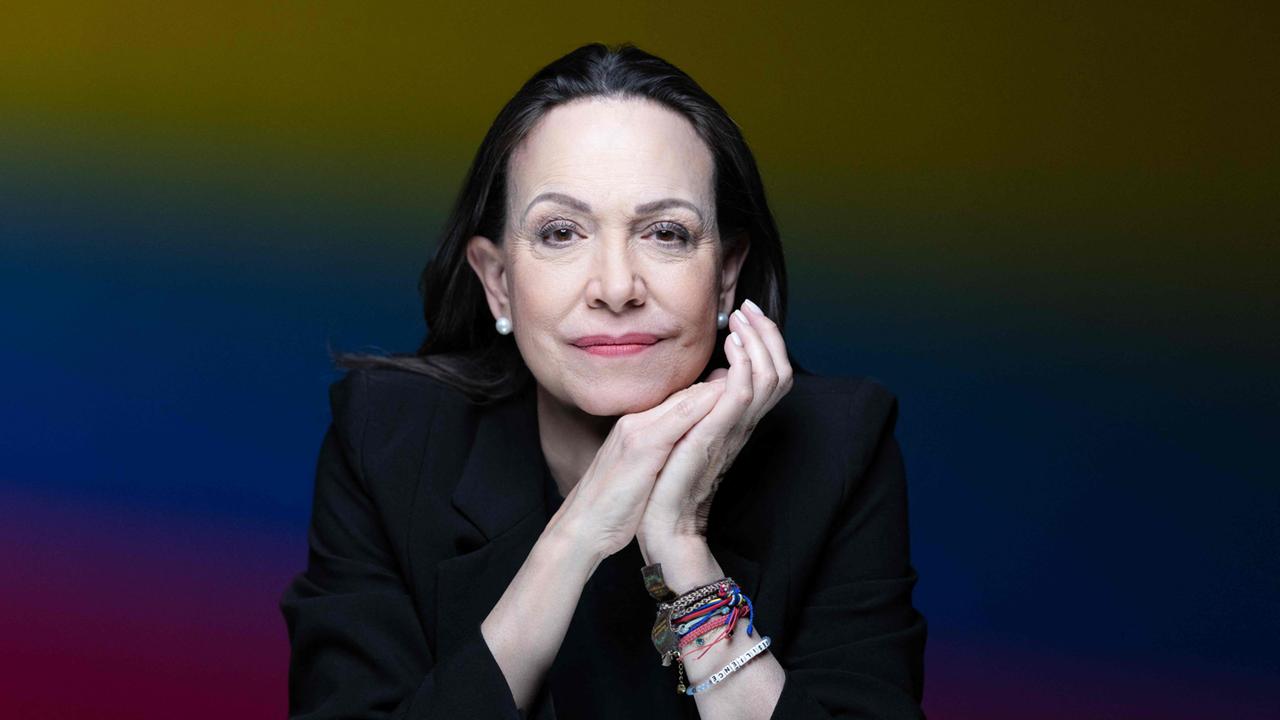
Perhaps the most significant and ultimately disappointing aspect of Machado’s post-Nobel strategy was her persistent effort to curry favor with former U.S. President Donald Trump. Her belief in Trump’s capacity to decisively intervene in Venezuela’s crisis led her to make a highly symbolic, and in retrospect, questionable gesture: she presented him with her Nobel Peace Prize medal. Speaking to the Spanish-language US broadcaster TeleMundo, Machado asserted that Trump deserved the honor because he had "ordered the arrest of long-time strongman Nicolás Maduro" in early January (of the previous year). She declared him "the only head of state worldwide who put the lives of some of his citizens at stake for the freedom of our country."
Machado’s statement, while indicative of her fervent desire for a strong intervention, mischaracterized the nature of the U.S. actions against Maduro. The U.S. Department of Justice had indeed indicted Maduro and several of his associates in March 2020 on charges of narco-terrorism, offering a $15 million reward for information leading to his arrest. This was a legal indictment, not a military "order of arrest" in Venezuela, and it did not lead to Maduro’s capture or removal from power. Machado’s interpretation underscored a misunderstanding of the limitations of external power projection and the complexities of international law.
Despite her effusive praise and the symbolic offering of her medal, Trump did not elevate Machado to a leading political role in any U.S.-backed plan for Venezuela’s reconstruction. The hoped-for decisive intervention that would pave her way back to power never materialized. This episode highlighted a critical miscalculation on Machado’s part, demonstrating that personal appeals, even from a Nobel laureate, often hold little sway against the intricate calculations of geopolitical strategy and national interests.
Shifting Sands of US Policy and Regional Dynamics
The aftermath of Machado’s outreach to Trump revealed not a strengthening of her position, but a continued consolidation of power by the Maduro regime, and a nuanced, often contradictory, U.S. foreign policy approach.
The Entrenchment of the Maduro Regime and Misinformation about US Policy
The original article’s assertion that the "USA allowed Delcy Rodríguez to come to power" as "interim president" is a significant misrepresentation of U.S. policy and the political reality in Venezuela. Delcy Rodríguez is, and has consistently been, a key figure within the Maduro government, serving as Vice President. She is subject to extensive U.S. sanctions due to her role in undermining democracy and human rights in Venezuela. The U.S. has never supported her or the Maduro regime; quite the opposite.
Under the Trump administration, the U.S. officially recognized Juan Guaidó, then president of the National Assembly, as Venezuela’s legitimate interim president in January 2019, withdrawing recognition from Maduro. This policy of supporting Guaidó continued for several years, even into the Biden administration, until the Venezuelan opposition itself dissolved Guaidó’s interim government in late 2022. The U.S. position has consistently been to apply maximum pressure, including sanctions, to force democratic change and Maduro’s departure.
Therefore, the narrative that "the USA allowed Delcy Rodríguez to come to power" is factually incorrect. Rather, despite U.S. pressure and the recognition of an alternative government, the Maduro regime, with figures like Rodríguez at its core, managed to withstand international pressure and consolidate its control. Rodríguez’s continued influence is a testament to the regime’s resilience and its ability to navigate international sanctions and diplomatic isolation, not to U.S. support. Her firm position in power reflects the failure of international efforts to dislodge the Maduro government and the limitations of an opposition fragmented by internal divisions and external pressures.
A Strategic Miscalculation?
Machado’s fervent embrace of Trump, particularly her symbolic offering of the Nobel medal, might be viewed as a strategic miscalculation. While seeking powerful allies is a common tactic for opposition figures in exile, aligning so closely with a figure whose own democratic credentials were often questioned, and who eventually failed to deliver the promised decisive action, arguably weakened her broader appeal. It also potentially narrowed her base of support among international actors who might have been more sympathetic to a less ideologically polarized approach.
The U.S. foreign policy toward Venezuela has been complex and evolving, marked by a desire to remove Maduro while balancing humanitarian concerns, regional stability, and domestic political considerations. Machado’s direct appeal to Trump, while emotionally charged, did not align with a sustained, multilateral strategy that could realistically achieve a democratic transition. Her reliance on a single, powerful figure for a dramatic intervention ultimately proved insufficient against the deep-seated political and institutional challenges within Venezuela and the resilience of the Maduro regime.
The Unyielding Grip of Exile and Domestic Support
Despite the setbacks in her international lobbying efforts and the hardening of the Maduro regime’s grip, Maria Corina Machado remains a potent symbol of resistance within Venezuela, though physically separated from her supporters.
Barred from Home
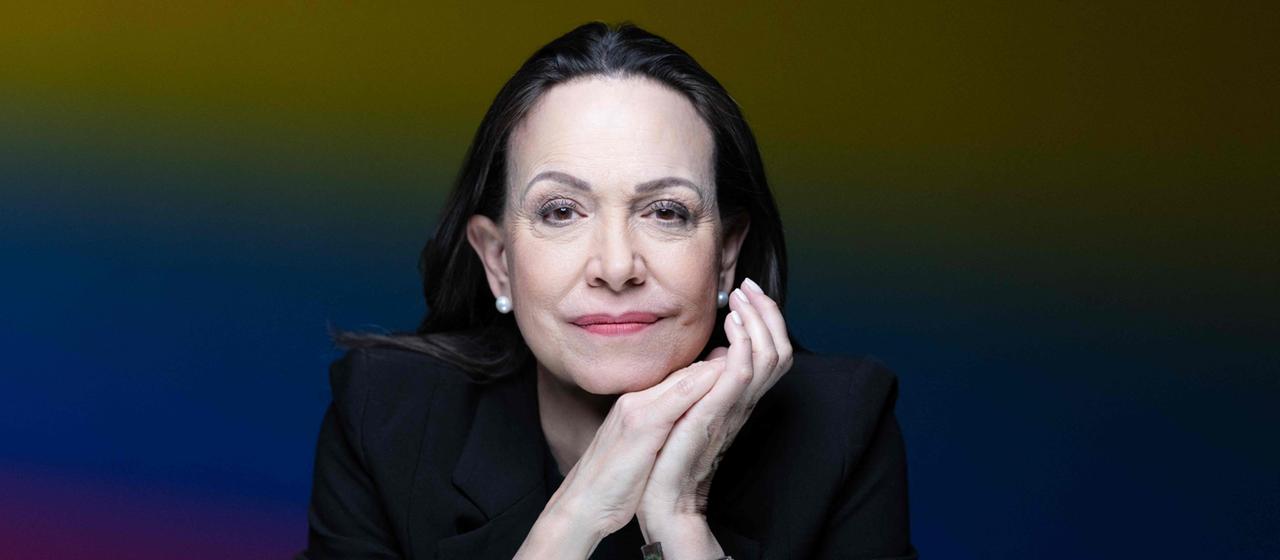
A year after her Nobel win, Machado’s most pressing personal and political challenge remains her inability to return to Venezuela. "I want to return, as hundreds of thousands of Venezuelan exiles around the world eagerly wish," she stated. "We will return to embrace each other, to work together, and to secure an orderly, sustainable, and irreversible democratic transition." However, her aspirations are met with harsh reality. Her seventh attempt to re-enter the country in late September reportedly failed, blocked by what her inner circle attributes to political obstacles imposed by the regime. She faces immediate arrest if she attempts to set foot on Venezuelan soil, a clear demonstration of the government’s determination to keep her out of the domestic political arena.
The Maduro government has long disqualified Machado from holding public office and views her as a legitimate threat to its power, citing various charges she considers politically motivated. Her continued exile, therefore, is not merely a matter of personal safety but a deliberate strategy by the regime to neutralize a formidable opponent and prevent her from mobilizing the populace directly.
A Symbol of Resistance
Despite her physical absence, Machado’s popular support within Venezuela remains significant and visible. Regular demonstrations, often defying government restrictions and risking arrest, continue to be held in her name. These gatherings are not just expressions of solidarity but powerful statements of discontent against the Maduro regime, underscoring the deep yearning for democratic change among a substantial portion of the population.
At these rallies, supporters articulate a clear and compelling vision for Machado’s leadership. "I believe no one but Machado possesses the moral, ethical, and sovereign authority," remarked one demonstrator, echoing a widespread sentiment. Many believe she is still the figure who, in a truly democratic and fair election, could secure a majority of votes and lead the country out of its protracted crisis. Her uncompromising stance against the regime and her consistent calls for a return to democratic norms resonate deeply with a populace weary of economic hardship and political repression. She represents a stark alternative to the existing power structure, embodying hope for genuine change and accountability.
The Elusive Path to Elections
The continued popular backing for Machado underscores the persistent demand for democratic elections in Venezuela. Yet, the path to free and fair elections remains elusive. The Maduro government has repeatedly demonstrated its willingness to manipulate electoral processes, disqualify opposition candidates, and suppress political dissent to maintain power. International efforts to pressure the regime into holding credible elections have largely stalled, lacking the unified resolve and leverage necessary to effect change.
Machado’s vision of a democratic transition, contingent on free elections, is thus caught in a stalemate. The absence of sustained, effective pressure from key international actors, including the United States, has allowed the Maduro regime to consolidate its position further. The very "Trump card" that Machado hoped to play, and which she believed would lead to decisive action against Maduro and pave the way for elections, ultimately proved ineffective in creating the conditions for a democratic opening. This highlights the complex interplay between internal resistance and external support, and how the failure of the latter can leave the former vulnerable.
Broader Implications and a Look Ahead
Maria Corina Machado’s journey since winning the Nobel Peace Prize serves as a powerful, albeit somber, case study in the challenges of promoting democracy in authoritarian contexts and the often-unpredictable dynamics of international politics.
The Paradox of International Recognition
The Nobel Peace Prize is designed to honor those who have made outstanding contributions to peace. For Machado, it was an undeniable moment of international recognition, shining a global spotlight on the plight of Venezuela and the courage of its opposition. However, her experience demonstrates a crucial paradox: while the prize confers immense moral authority and visibility, it does not automatically translate into political power or guaranteed success in the face of entrenched authoritarianism. The realpolitik of international relations often trumps symbolic accolades, leaving laureates like Machado struggling to leverage their newfound prestige into tangible political change. Her story underscores the limitations of international awards when confronted with sovereign resistance and the complex, often self-interested, calculations of global powers.
Uncertain Future for Venezuelan Democracy
As Venezuela enters another year under the Maduro regime, the prospects for a swift democratic transition appear dim. Machado’s continued exile, coupled with the regime’s firm grip on power and the lack of decisive international pressure, creates a challenging environment for any meaningful political opening. While she remains a vital symbol of hope and resistance for many Venezuelans, her practical ability to influence events on the ground is severely curtailed.
The future of Venezuelan democracy will likely depend on a confluence of factors: the resilience and strategic unity of the domestic opposition, the evolving dynamics of international pressure and engagement, and potential internal shifts within the Maduro regime itself. For Maria Corina Machado, the coming year will undoubtedly involve continued advocacy from exile, sustained efforts to rally international support, and a fervent hope that the collective will of the Venezuelan people can ultimately overcome the formidable obstacles to their democratic aspirations. Her Nobel Prize, while a testament to her courage, now stands as a powerful reminder of the ongoing struggle and the often-frustrating reality of political change.