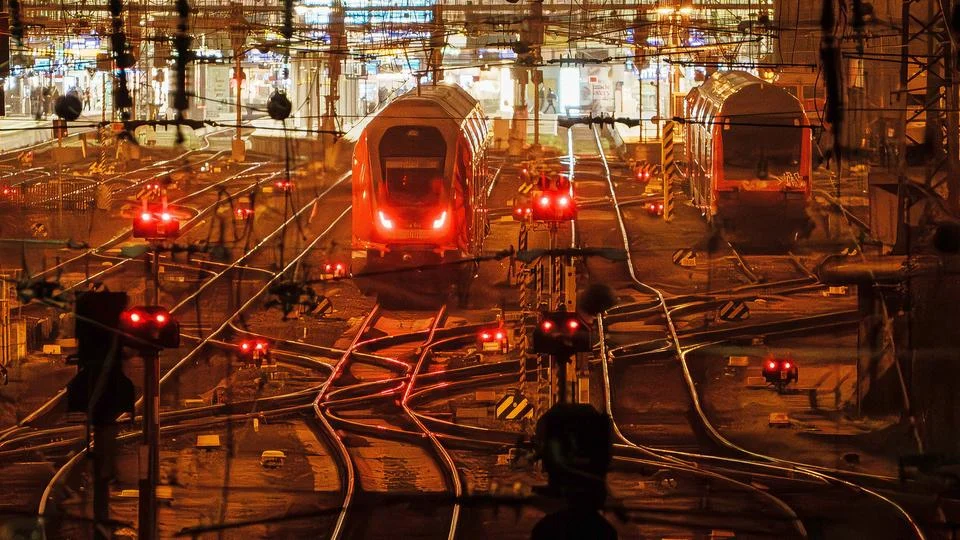
Commuters and long-distance travelers passing through Germany’s busiest railway hub are facing significant disruptions this week. A massive infrastructure project, aimed at untangling the complex web of tracks around Frankfurt, has necessitated temporary closures, diversions, and cancellations that will persist through early November.
The construction work, centered on the critical "Knoten Frankfurt-Stadion" (Frankfurt Stadium Node), represents one of the most ambitious rail engineering projects in the Rhine-Main region. While the long-term goal is to increase capacity and reliability, the short-term reality for thousands of daily passengers is a logistical challenge of redirected lines and altered schedules.
Main Facts: What Passengers Need to Know
Beginning this Friday and continuing until November 2, the Deutsche Bahn (DB) is implementing a comprehensive schedule adjustment. The primary objective of these works is the modernization of the rail infrastructure connecting the Frankfurt-Stadion hub to the Frankfurt Hauptbahnhof (Central Station).
Key Impacts:
- Regional Rail: Multiple regional lines serving the Frankfurt area are subject to cancellations or modified routes. Passengers are strongly advised to check the DB Navigator app or the regional transport authority’s website before heading to the station.
- Long-Distance Travel: Intercity and ICE trains are being rerouted via Forsthaus. In several instances, trains will terminate or bypass the Hauptbahnhof entirely, instead being redirected to Frankfurt-Süd.
- Specific Disruptions: Travelers between Wiesbaden and Frankfurt, as well as those commuting between Frankfurt Airport and the Central Station, face specific service gaps that require alternative transport planning.
The scale of this intervention is significant. By concentrating these works into a narrow window, the railway operator aims to minimize the duration of the impact, though the current disruption remains a hurdle for thousands of daily commuters navigating the Frankfurt hub.
Chronology of the Infrastructure Expansion
The current restrictions are not isolated incidents but part of a multi-year, multi-billion euro strategy to overhaul the German rail network. The "Knoten Frankfurt-Stadion" project is a lynchpin in this effort.
Phase 1: Preparation and Initial Work
The project officially broke ground with the goal of separating S-Bahn (commuter rail) traffic from long-distance and regional traffic. Historically, these services have shared the same corridors, leading to "bottleneck effects" where a single delayed train could cascade into a regional gridlock.
Phase 2: Current Operations (Oct 23 – Nov 2)
During this ten-day window, the focus is on the core track infrastructure. Engineering teams are working around the clock to integrate new track sections. This phase is critical, as it requires the physical disconnection of old signaling systems and the connection of new, modernized track beds.
Future Milestones:
Beyond November 2, the work will continue in subsequent stages. The project roadmap includes the construction of four new tracks between Neu-Isenburg-Zeppelinheim and the Gutleuthof junction, as well as two additional tracks to streamline the flow of traffic. These are designed to allow for higher train frequencies, which the DB states is essential for the future of German rail logistics.
Supporting Data: Why the Expansion is Necessary
The Frankfurt rail node is arguably the most important railway junction in Germany. It serves as the primary gateway for north-south and east-west traffic. However, its current configuration is a relic of 20th-century urban planning, which struggles to accommodate 21st-century passenger volumes.
The Engineering Challenge
The project encompasses several monumental tasks:

- Main River Crossing: Engineers are currently constructing a third railway bridge over the Main. This additional crossing is vital for increasing throughput capacity.
- Replacement of Heritage Infrastructure: The "Alte Niederräder Brücke" (Old Niederrad Bridge) is being replaced. This is a complex engineering feat involving the replacement of a historic structure with a modern, high-load-capacity bridge while maintaining as much service as possible on adjacent lines.
- Integration of Regionaltangente West: Simultaneously, work continues on the Regionaltangente West. This project is intended to provide a high-frequency orbital connection for the western and southwestern suburbs of Frankfurt, reducing the need for all traffic to pass through the city center.
According to data provided by the Deutsche Bahn, the separation of traffic flows—where S-Bahn trains run independently of regional and high-speed services—will increase the node’s total capacity by approximately 20% once fully completed.
Official Responses and Strategic Outlook
In recent press releases, the Deutsche Bahn has acknowledged the frustration caused by these interruptions. "We are aware that these construction measures place a burden on our passengers," a spokesperson for the rail operator noted. "However, the expansion of the Frankfurt-Stadion node is an absolute necessity to prevent the complete saturation of the Frankfurt rail network in the coming decade."
The "Stuttgart 21" Influence
The project is often compared to other large-scale infrastructure investments in Germany. Planners emphasize that the "Knoten Frankfurt" project is not merely about maintenance, but about a fundamental redesign of how the city handles its train traffic. By building new bridges and adding tracks, the DB is attempting to build "future-proof" infrastructure that can handle the projected growth in both passenger numbers and freight volume.
Local Authority Coordination
The regional transit authority (RMV) has been working in close cooperation with the DB to offer substitute bus services where rail lines have been severed. While these buses cannot replace the speed of a regional train, they serve as a critical lifeline for commuters in the affected corridors.
Implications: The Long-Term Benefit vs. Short-Term Pain
As the German government pushes for a "Verkehrswende" (transport transition) to meet climate goals, the importance of a functional rail system cannot be overstated. The current disruptions in Frankfurt are a microcosm of the challenges facing this transition.
Reliability in the Future
The short-term pain of these two weeks—cancelled meetings, late arrivals, and crowded platforms—is the price of decades of under-investment. Once the new tracks are operational and the third bridge over the Main is carrying traffic, the network will be significantly more resilient. Specifically, the separation of S-Bahn traffic from long-distance lines means that a delay on a regional line in the suburbs will no longer stall an ICE train heading to Berlin or Munich.
Economic Impact
For the city of Frankfurt, the financial hub of Germany, the reliability of its train station is a core economic requirement. Business travelers, international tourists arriving at the airport, and the massive workforce commuting daily depend on this infrastructure. The completion of these upgrades is expected to boost the reliability of the Frankfurt hub by an estimated 15% in terms of on-time arrivals.
Conclusion
As the calendar turns toward early November, passengers are encouraged to maintain a high level of vigilance. While the infrastructure upgrades promise a more robust and efficient future, the current transition phase requires patience. Travelers should utilize the digital tools provided by the Deutsche Bahn and allow extra time for their journeys.
The modernization of the Frankfurt-Stadion node is a monumental task, but it is one that, once finished, will serve as the backbone of German rail travel for decades to come. The current closures are a necessary, albeit difficult, chapter in the ongoing effort to modernize Europe’s most vital railway intersection.