

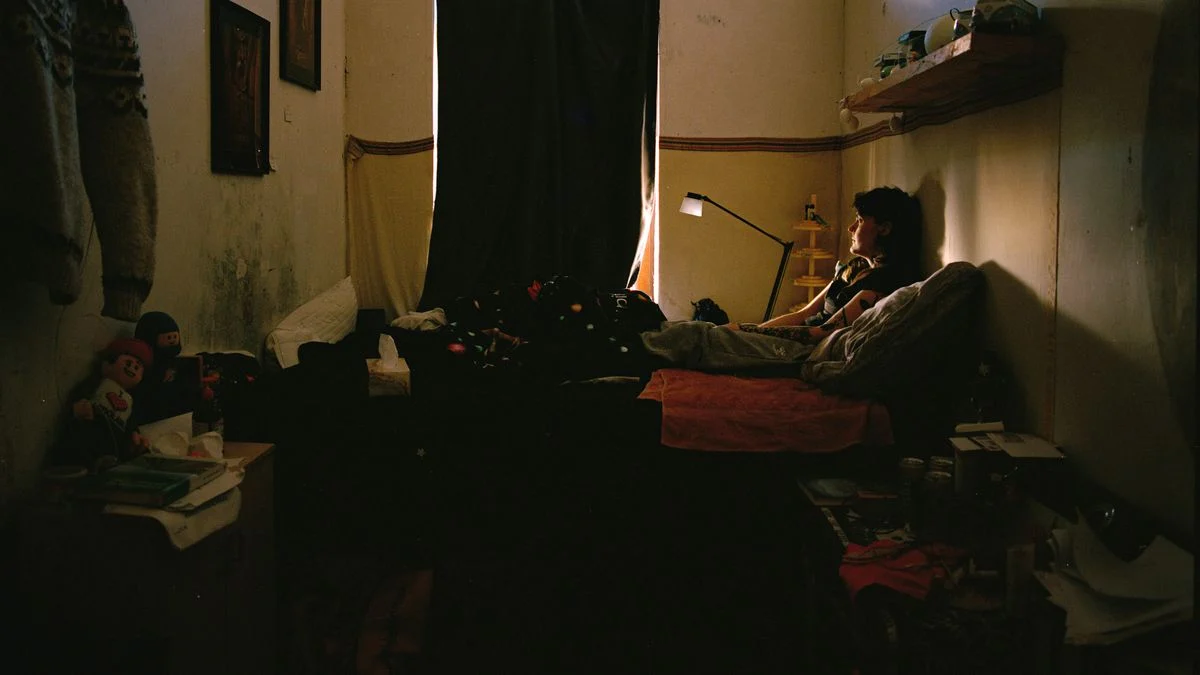
For the vast majority of the world, the transition from day to night is marked by a simple flick of a switch. For those suffering from severe Myalgic Encephalomyelitis/Chronic Fatigue Syndrome (ME/CFS), however, light is not a convenience—it is a weapon. The condition, often characterized by profound, debilitating exhaustion, sensory hypersensitivity, and immune dysfunction, remains one of the most misunderstood and under-researched medical crises of the 21st century.
This article explores the harrowing reality of those living in complete isolation, confined to darkened rooms, stripped of the ability to process sound, touch, or light, and the systemic failure of the medical establishment to provide adequate support.
The Invisible Crisis: Understanding Severe ME/CFS
ME/CFS is a complex, multi-system disease that affects an estimated 17 to 24 million people worldwide. While the "mild" or "moderate" forms of the illness allow some individuals to maintain a limited, albeit restricted, life, the "severe" classification represents a state of biological imprisonment.
Patients with severe ME/CFS are often bedridden, unable to tolerate even the softest whispers or the faint glow of a mobile screen. The disease is defined by Post-Exertional Malaise (PEM), a hallmark symptom where even minimal physical or cognitive exertion leads to a catastrophic worsening of symptoms. For those in the most severe stages, "exertion" can mean the simple act of chewing food, being moved by a caregiver, or processing the sound of a voice.
The Biological Underpinnings
Research has struggled to pinpoint a single cause, though the prevailing scientific consensus points toward a dysregulated immune system, potentially triggered by viral infections—a theory that has gained significant traction following the COVID-19 pandemic and the rise of "Long COVID." Many experts believe that ME/CFS represents a persistent state of cellular energy failure, where the mitochondria—the powerhouses of the cells—fail to produce adequate ATP (adenosine triphosphate) to sustain basic biological functions.
A Chronology of Neglect
The history of ME/CFS is a timeline of institutional dismissal. Since its initial identification in outbreaks throughout the 20th century—most notably the Royal Free Hospital outbreak in 1955—the disease has been plagued by stigma.
- 1980s–1990s: The "Yuppie Flu" Era: In the late 20th century, the medical establishment famously labeled the condition "Yuppie Flu," dismissing it as a psychosomatic manifestation of work-related stress or depression. This branding hampered funding for biomedical research for decades.
- 2015: The IOM Report: A landmark moment occurred when the Institute of Medicine (IOM), now the National Academy of Medicine, released a report officially recognizing ME/CFS as a serious, chronic, systemic physical disease. It recommended the term "Systemic Exertion Intolerance Disease" (SEID) to better reflect the pathology, though the name failed to gain widespread clinical traction.
- 2020–Present: The Long COVID Parallel: The global surge in Post-Acute Sequelae of SARS-CoV-2 (PASC) has forced the medical community to reckon with ME/CFS. As thousands of Long COVID patients develop symptoms indistinguishable from ME/CFS, the urgency for a breakthrough has finally moved from the periphery to the center of infectious disease research.
Supporting Data: The Burden of Disease
The human and economic cost of severe ME/CFS is staggering. Unlike other chronic illnesses, there is currently no FDA-approved curative treatment.
Quality of Life Metrics
Studies using the SF-36 (Short Form Health Survey) have consistently shown that patients with ME/CFS report lower physical functioning scores than those with multiple sclerosis, stroke, or end-stage renal disease. The "severe" cohort frequently reports a quality of life score near zero, effectively equating their existence to being trapped in a living coffin.
Economic Impact
- Healthcare Costs: The cost of home care, specialized equipment, and repeated, often fruitless, diagnostic testing places an immense burden on both the state and the families involved.
- Lost Productivity: The workforce participation rate among those with severe ME/CFS is effectively zero. The lost economic potential of this demographic is estimated in the billions of dollars annually, yet research funding remains a fraction of what is allocated to other, more "visible" conditions.
Official Responses and Medical Stance
For years, the medical community remained divided, with some practitioners insisting on "Graded Exercise Therapy" (GET) and "Cognitive Behavioral Therapy" (CBT). However, the narrative has shifted dramatically.
The Shift in Clinical Guidance
In 2021, the UK’s National Institute for Health and Care Excellence (NICE) released updated guidelines that officially discarded GET as a treatment for ME/CFS. This was a monumental victory for patient advocacy groups, as GET had been shown to cause permanent, irreversible harm to patients by triggering severe crashes.
The Funding Gap
Despite these shifts in policy, the funding gap remains a point of contention. While institutions like the National Institutes of Health (NIH) have increased their budgets, advocates argue that the investment is still vastly disproportionate to the disease’s prevalence. Many patients continue to report that their primary care physicians remain untrained in identifying or managing the disease, leading to a "diagnostic odyssey" that can last years.
Implications: The Moral Imperative
The existence of people living in darkness, isolated from their families and society due to a misunderstood illness, is a failure of modern medicine and social policy.
The Challenge of Care
Severe ME/CFS necessitates a level of home-based care that most healthcare systems are not equipped to provide. When the patient cannot leave the house, the burden falls entirely on family members, who often lack the medical training to prevent the patient from experiencing sensory overload or physical trauma.
The Future of Research
The path forward requires a three-pronged approach:
- Biomarker Discovery: Without a blood test or imaging scan to confirm the diagnosis, patients are left in a state of clinical limbo. Identifying a definitive biomarker is the highest priority.
- Multidisciplinary Clinics: Moving away from specialized, siloed care toward integrated, multidisciplinary clinics that address neurology, immunology, and cardiology simultaneously.
- Social Recognition: As long as ME/CFS is viewed as a "hidden" disease, the social and financial support systems will remain inadequate. Recognition is the first step toward the funding and policy changes necessary to bring these patients back into the light.
Conclusion
Living with severe ME/CFS is an exercise in endurance. It is a life lived in the margins, away from the noise and light of the world, defined by the walls of a room and the fragile limits of one’s own body. As we stand at the crossroads of a new era of medical understanding—driven by the urgency of the post-pandemic landscape—there is hope that the darkness that has defined the lives of these patients for decades will finally be broken.
The medical establishment, policymakers, and society at large have a moral imperative to ensure that those who are currently "forgotten in the dark" are finally seen, heard, and treated with the scientific rigor and compassion they have long been denied. The time for dismissing the "invisible" is over; the time for action is now.