
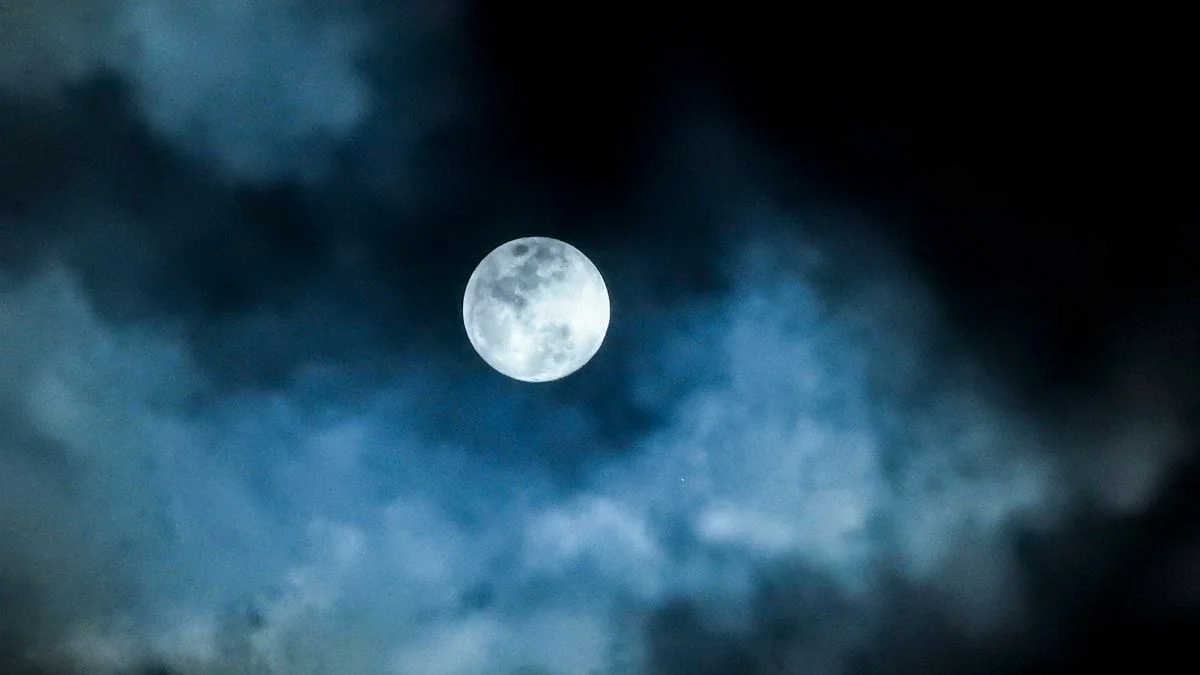
For centuries, folklore and anecdotal evidence have suggested a mysterious link between the phases of the moon and the quality of human sleep. From ancient sailors to modern-day emergency room nurses, the belief persists that the full moon triggers restlessness, insomnia, and even erratic human behavior. But as we move further into the age of data-driven chronobiology, is there any truth to the claim that we are governed by the lunar cycle?
This article explores the intersection of biology, psychology, and the lunar cycle to determine whether the "lunar effect" is a physiological reality or a cognitive bias rooted in our evolutionary past.
Main Facts: The Intersection of Biology and Folklore
The phenomenon of the "lunar effect"—the notion that the moon influences human health and behavior—has been a subject of intense scrutiny within the scientific community. Recent studies using sophisticated polysomnography (sleep monitoring) have begun to provide a clearer picture.
The primary debate centers on whether the moon’s gravitational pull or its brightness during the full moon phase influences human circadian rhythms. While the human body is comprised largely of water, the gravitational influence of the moon on an individual is negligible compared to the forces exerted by local geography. However, the brightness of the lunar cycle, even in our urban, light-polluted world, presents a different hypothesis.
Research published in journals such as Current Biology suggests that in the days leading up to the full moon, people tend to fall asleep later and experience shorter total sleep time. The mechanism remains debated: it is likely a vestigial trait—an evolutionary adaptation that allowed our ancestors to remain active for longer periods under moonlight, perhaps for protection or late-night foraging.
Chronology: From Ancient Myth to Modern Research
The Era of Folklore
Since the dawn of civilization, the moon has been a central pillar of timekeeping and cultural mythology. The word "lunacy" itself is derived from the Latin lunaticus, reflecting the historic belief that the moon caused temporary insanity. Throughout the Middle Ages, physicians and scholars often documented "lunar influence" as a standard diagnostic category for sudden bouts of mania or sleep deprivation.
The 20th Century: The Search for Empirical Evidence
In the 1970s and 80s, researchers began applying statistical rigor to the question. Early studies were often contradictory; some claimed to find correlations between lunar cycles and increased ER admissions or hospital visits, while others found zero statistical significance. These early efforts were hampered by small sample sizes and "confirmation bias," where researchers only looked for patterns that confirmed the lunar hypothesis.
The 21st Century: Precision Monitoring
With the advent of wearable sleep trackers and high-resolution EEG monitoring, the 2010s marked a shift in methodology. A seminal 2013 study by Christian Cajochen and his team at the Psychiatric Hospital of the University of Basel utilized controlled laboratory environments. By removing external variables like artificial light and noise, they found that even in a controlled setting, subjects exhibited a 30% decrease in brain activity related to deep sleep during the full moon.
Supporting Data: What the Science Says
To understand the impact of the moon on sleep, one must look at the data points that distinguish anecdotal evidence from empirical fact.
- Sleep Latency: Data indicates that during the three to five days before a full moon, individuals take an average of 5 to 10 minutes longer to fall asleep.
- Melatonin Suppression: Studies have shown that even faint increases in ambient light, such as a full moon reflecting off a window, can suppress the production of melatonin, the hormone responsible for signaling the body to sleep.
- REM Cycles: Research indicates a reduction in the duration of Rapid Eye Movement (REM) sleep during the full moon phase. Since REM is crucial for cognitive processing and emotional regulation, a reduction in this phase may explain why individuals report feeling "foggy" or "irritable" during this time.
- Circadian Rhythms: Our internal clocks are roughly 24 hours long, but they are constantly being "entrained" (reset) by external cues, primarily light. The lunar cycle represents a secondary, much weaker cue that may be interfering with our primary light-dark cycle.
Official Responses and Perspectives
The scientific community remains divided, not on the data itself, but on the significance of the findings.
The Skeptics’ View
Many chronobiologists argue that while the lunar effect might be statistically detectable, its biological impact is too small to be clinically significant for the average person. They argue that the primary cause of sleep disturbances in the modern age is not the moon, but "blue light" exposure from smartphones, laptops, and LED street lighting. To them, the full moon is a convenient scapegoat for poor sleep hygiene.
The Proponents’ View
Proponents of the lunar influence theory argue that humans have spent 99% of their evolutionary history living in sync with natural light cycles. They suggest that our modern internal clocks are "de-synced" and that the full moon acts as a lingering, biological trigger that our bodies haven’t yet learned to ignore. They advocate for further research into how lunar cycles might interact with other environmental stressors, such as urbanization and climate change.
Implications: The Future of Sleep Health
Understanding the lunar effect has broader implications for our understanding of human health. If, as the data suggests, we are still sensitive to subtle environmental cues, it changes how we approach sleep architecture and workplace productivity.
Implications for Public Health
If sleep quality is indeed affected by the lunar cycle, hospital administrators and emergency services might benefit from understanding these trends. If there is a slight, predictable increase in sleep-deprived individuals during the full moon, staffing levels or patient intake protocols could be adjusted to account for increased cognitive fatigue in the population.
Implications for Personal Wellness
For the individual, the findings offer a sense of validation. Many people experience inexplicable bouts of insomnia that defy the usual explanations of stress or diet. Recognizing that there may be an external, cyclical component can reduce the anxiety associated with sleep loss. Rather than fighting the frustration of a sleepless night during a full moon, experts suggest leaning into it: keeping the bedroom completely darkened with blackout curtains and engaging in low-intensity activities rather than staring at screens.
The Role of Technology
As we move forward, the integration of smart-home technology may mitigate these effects. Smart lighting that adjusts color temperature based on the time of day, combined with better window treatments, can shield us from the "lunar glow" that may be disrupting our natural rhythm.
Conclusion: A Nuanced Reality
The question of whether the moon ruins our sleep is not a simple "yes" or "no." It is a complex interaction between a vestigial biological sensitivity and the modern, high-stress environment we inhabit. While the full moon is unlikely to be the primary cause of chronic insomnia, it acts as a subtle, measurable, and fascinating reminder that we are not entirely detached from the natural world.
We are, at our core, biological organisms shaped by the celestial dance of the Earth and its moon. Whether we choose to view the full moon as a cause for concern or merely a beautiful, luminescent backdrop to our lives, the science suggests that acknowledging its influence—and taking steps to manage our sleep hygiene—is the most effective way to ensure that our internal rhythms remain in harmony, regardless of what the night sky brings.
As research continues, we may find that the moon’s role in our lives is less about "lunacy" and more about a profound, ancient connection to the cycles of the universe—a connection that, while often obscured by the trappings of modern life, remains etched into our very DNA.