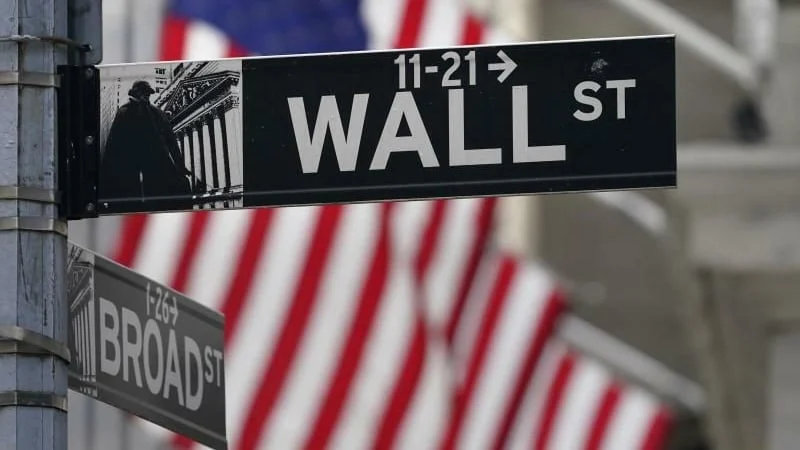
As the trading week draws to a close, global financial markets are navigating a period of heightened volatility. A sharp correction in the technology sector, coupled with mounting geopolitical risks in the Middle East, has cast a long shadow over investor sentiment. With the German DAX index expected to retreat further, market participants are bracing for a period of defensive positioning.
Main Facts: The Market Landscape at a Glance
The German DAX is facing a difficult end to the week. Market indicators from brokerage firm IG Markets suggest the index will open 0.2% lower, at 25,328 points, continuing a downward trajectory that saw the index close 1.1% lower at 25,371 points during Thursday’s session. This decline is not isolated; it is part of a broader, systemic trend of risk aversion spreading from the United States to Asia and finally to Europe.
The primary drivers of this negative sentiment are twofold: a critical reassessment of the high-flying technology sector and an alarming spike in energy prices. As investors move to lock in profits or mitigate potential losses, the enthusiasm that fueled the first half of the year is being replaced by a more sober, cautious analysis of corporate fundamentals and macroeconomic stability.
Chronology: How the Sell-Off Unfolded
The current instability can be traced back to a series of disappointments in corporate earnings, specifically within the "Big Tech" sphere.
Mid-Week Realignment:
The downward pressure began when major technology companies failed to meet the lofty expectations set by the market. Investors, who had previously been buoyed by the "AI narrative," began to scrutinize the actual revenue potential of artificial intelligence initiatives.
The Thursday Slide:
The sentiment turned decisively sour on Thursday. Despite the Dow Jones Industrial Average maintaining a flat position at 52,867 points, the broader S&P 500 succumbed to a 1.2% drop, landing at 7,663 points. The real pain, however, was felt in the Nasdaq index, which plummeted 2.6% to 26,008 points. This movement marked a clear pivot in investor behavior—a departure from the growth-at-any-price mentality that has dominated the cycle.
The Asian Reaction:
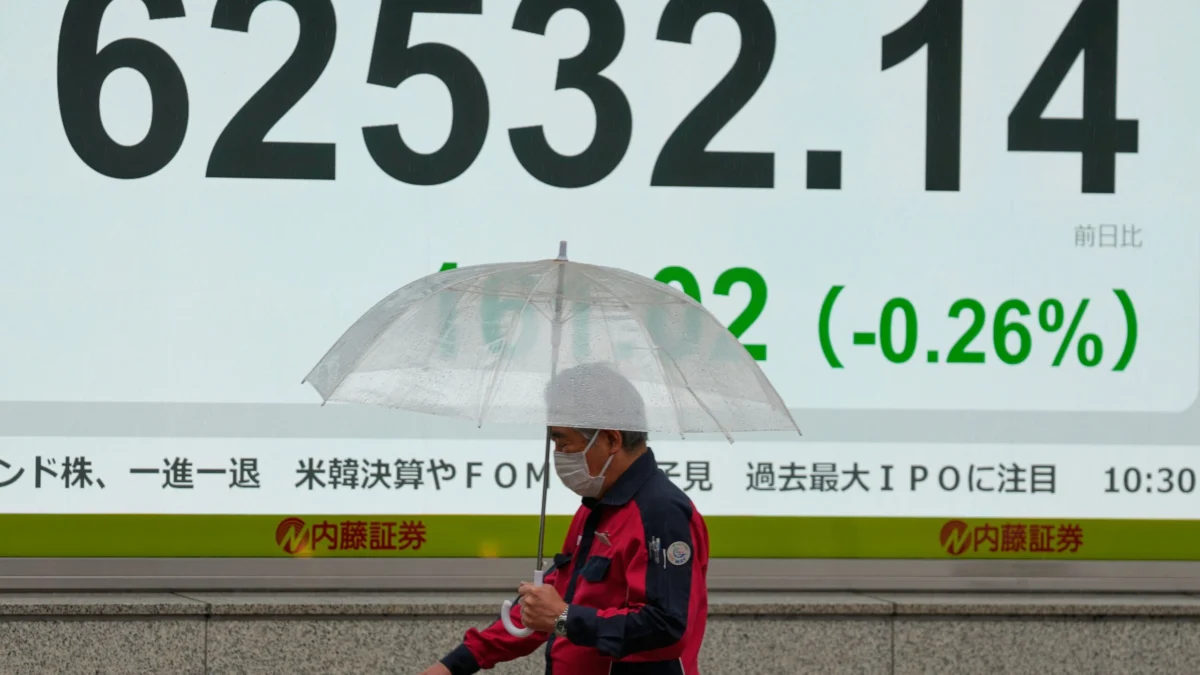
As the sun rose over Asian markets on Friday, the weakness in the US tech sector translated into immediate sell-offs. Japan’s Nikkei 225 fell by 1.7% to 61,825 points, while the Topix dropped 1.8% to 3,924. Chinese markets followed suit, with the Shanghai Composite sliding 1.5%, reflecting a widespread lack of appetite for risk as the week concludes.
Supporting Data: Energy Markets and the Inflationary Threat
Beyond corporate earnings, the sudden surge in energy prices has added a layer of complexity to the economic outlook. Brent crude, the international benchmark, has climbed to its highest level in five months, trading up 0.5% in Asia at $113.70 per barrel. US West Texas Intermediate (WTI) followed a similar pattern, rising 0.6% to $100.05.
Geopolitical Triggers
The rise in oil prices is directly linked to the deteriorating security situation in the Middle East. Market analysts point to several contributing factors:
- The Iran Factor: There is growing apprehension that the window for potential military escalations between the US/Israel and Iran may narrow, particularly surrounding the November 3rd US midterms.
- Supply Chain Disruptions: Recent attacks attributed to Houthi rebels in Saudi Arabia have reminded traders how fragile the global energy supply chain remains. Any disruption to transit routes or production facilities in the region is immediately priced into the cost of a barrel of oil.
Inflationary Pressure
The correlation between energy prices and general inflation remains a central concern for central banks. Higher energy costs serve as a "tax" on consumers and businesses alike, potentially forcing central banks to maintain higher interest rates for longer than previously anticipated. This prospect acts as a dampener on equity valuations, as the discount rates applied to future corporate earnings increase.

Official Responses and Expert Analysis
Market experts are increasingly vocal about the "structural shift" occurring in the equities market. Robert Halver, a senior market strategist at Baader Bank, noted that the enthusiasm surrounding High-Tech has hit a significant wall. "The recent global sell-off demonstrates that investors are finally moving past the marketing hype and are now critically questioning whether the lofty expectations surrounding Artificial Intelligence can actually be translated into tangible, long-term profit margins," Halver stated.
Paul Nolte, a market strategist at Murphy & Sylvest, echoed this sentiment regarding the tech sector’s current struggles. "Investors are beginning to recognize the gaps in the ‘AI story.’ When you have companies like Meta and Tesla reporting earnings that fail to impress, the market—which has been priced for perfection—reacts violently to any sign of weakness."
Andreas Lipkow, a strategist at CMC Markets, highlighted the deteriorating risk profile for the upcoming quarter. "The nervousness is palpable. We are seeing a confluence of risks—geopolitical, monetary, and fundamental—that are making it increasingly difficult for the DAX to maintain its recent support levels," Lipkow explained.
Implications: What Lies Ahead?
The current market environment carries several significant implications for investors and policymakers:
1. The End of "Blind" Growth
The era of blind faith in tech giants appears to be pausing. Investors are demanding clearer paths to monetization for AI technologies. Companies that cannot demonstrate cost-efficiency alongside innovation are likely to see their valuations continue to compress.
2. Geopolitics as a Permanent Risk Variable
The volatility in the energy market suggests that geopolitical risk is no longer a "black swan" event but a constant factor that must be factored into asset allocation. As long as the situation in the Middle East remains fluid, energy prices are expected to remain elevated, keeping the inflation narrative at the forefront of investor anxiety.
3. Defensive Positioning
For the DAX and other European indices, the road ahead involves a defensive pivot. Investors are likely to rotate out of high-growth, high-multiple stocks and into sectors with more stable cash flows and lower sensitivity to interest rate fluctuations.
4. The Central Bank Dilemma
The dual threat of slowing economic growth and persistent, energy-driven inflation puts central banks in a difficult position. Should they prioritize growth and cut rates, they risk fueling further inflation. Should they keep rates high to combat inflation, they risk tipping a fragile economy into a deeper recession.
Conclusion
As we head into the weekend, the message from the global markets is one of caution. The "tech-driven" growth narrative has been put to the test, and the results have been sobering. With geopolitical tensions remaining high and energy prices showing no sign of cooling, the market is signaling that it is no longer willing to ignore the structural realities of the global economy. Investors should prepare for a period where volatility is the norm, and where quality and fundamentals take precedence over the speculative fervor that defined the previous months.