

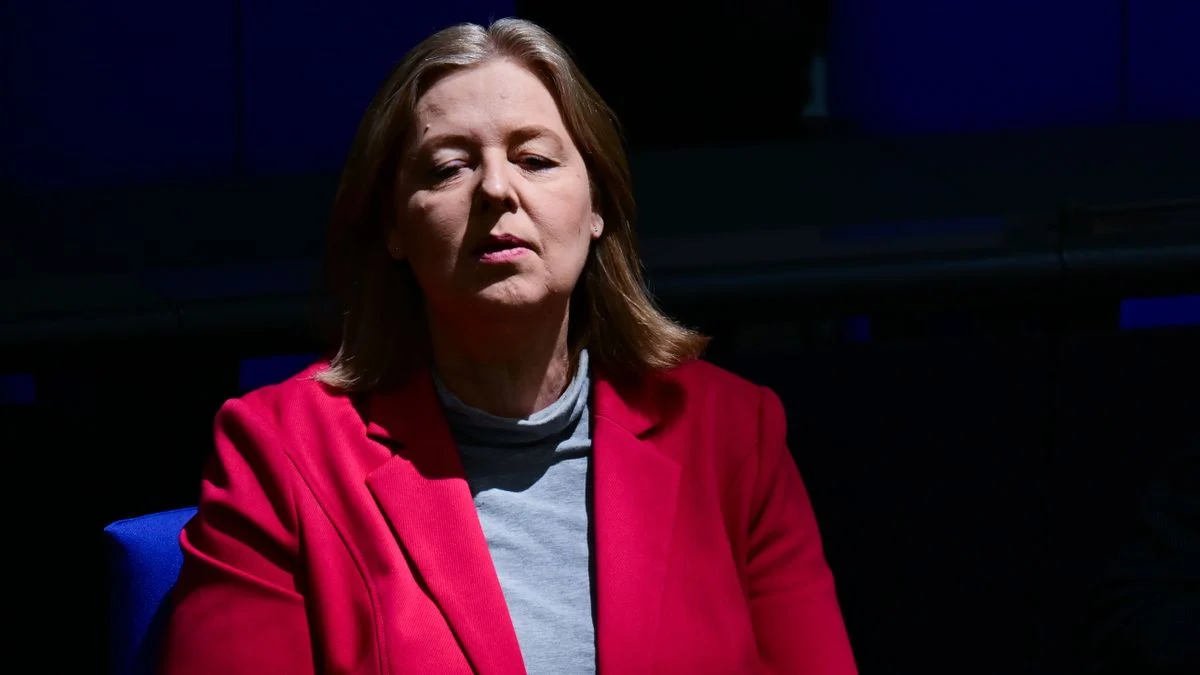
Berlin, Germany – A foundational pillar of Germany’s social welfare system, the "Rente mit 63" (pension at 63) policy, is facing intense scrutiny, placing Bärbel Bas, the President of the Bundestag and a prominent Social Democratic Party (SPD) figure, squarely in the eye of a gathering political storm. What was once hailed as a social achievement, designed to reward decades of hard work, has increasingly become a symbol of Germany’s demographic and economic challenges, drawing fire from economists, employer associations, and political opponents alike. As the nation grapples with an aging population, a burgeoning skilled labor shortage, and the escalating costs of its pension system, the debate over early retirement has intensified, pushing leading political figures like Bas to confront uncomfortable truths about the future viability of cherished social policies.
The pressure on Bas underscores the profound dilemma facing the ruling "traffic light" coalition – composed of the SPD, Greens, and Free Democratic Party (FDP) – as it navigates the treacherous waters of pension reform. The SPD, traditionally a staunch defender of the "Rente mit 63," finds itself caught between its commitment to social justice and the undeniable economic realities threatening the sustainability of the system. Bas, as a leading voice within the SPD and a figurehead of parliamentary democracy, finds her position particularly delicate, tasked with upholding the integrity of the political process while simultaneously being associated with a policy that is becoming increasingly contentious. The controversy is not merely about financial figures; it touches upon fundamental questions of intergenerational fairness, the future of the German workforce, and the very fabric of the country’s social contract.
The Core of the Controversy: Early Retirement at 63
At its heart, the "Rente mit 63" policy allows individuals to retire at 63 without deductions, provided they have contributed to the statutory pension insurance for at least 45 years. Introduced in 2014, the policy was a flagship project of the then-Grand Coalition government, championed by the SPD. Its stated aim was to acknowledge the lifelong contributions of workers, particularly those in physically demanding professions, who had started their careers early and endured long working lives. For many, it represented a tangible reward for decades of commitment to the German economy and society.
A Beleaguered Policy: Main Facts
The policy, officially known as the "pension for particularly long-term insured persons" (Rente für besonders langjährig Versicherte), was designed to offer a dignified exit from the workforce for those who had accumulated an exceptional number of contribution years. Unlike standard early retirement options, which typically incur actuarial deductions to compensate for a longer period of pension receipt, "Rente mit 63" provided a full pension. This distinction was crucial, as it elevated the policy from a mere flexibility option to a social entitlement, intended to prevent financial penalties for those retiring earlier than the standard age of 67 (which is being gradually introduced).
However, the policy’s implementation coincided with and exacerbated growing demographic challenges. Germany’s birth rate has been in decline for decades, while life expectancy has steadily increased. This demographic shift means fewer young contributors supporting a growing number of retirees for longer periods. The financial burden on the pension system, already substantial, has been compounded by "Rente mit 63," which incentivizes a segment of the workforce to leave the labor market earlier than they might otherwise.
The number of beneficiaries has consistently exceeded initial projections, leading to higher-than-anticipated costs. While proponents argue that the policy benefits those who genuinely need it most, critics point out that it is not exclusively utilized by manual laborers but also by a significant number of white-collar workers. This raises questions about whether the policy truly targets the intended beneficiaries or if it acts as a general early retirement incentive, irrespective of the arduousness of one’s profession. The increasing pressure on Bärbel Bas, therefore, is symptomatic of a broader national reckoning with a policy that, while socially appealing, appears to be increasingly out of step with Germany’s evolving economic and demographic landscape. The debate is no longer abstract; it is about billions of euros, hundreds of thousands of missing workers, and the fundamental question of how Germany will secure its future prosperity.
A Policy’s Tumultuous Journey: The Chronology of "Rente mit 63"
Understanding the current pressure on figures like Bärbel Bas requires tracing the origins and evolution of the "Rente mit 63" policy, from its inception as a social promise to its current status as a focal point of economic concern.
Genesis and Early Days (2014)
The "Rente mit 63" policy was a cornerstone promise of the Social Democratic Party (SPD) during the 2013 federal election campaign. Following the formation of a Grand Coalition government with Chancellor Angela Merkel’s CDU/CSU, the SPD successfully pushed for its implementation. The policy officially came into effect on July 1, 2014.
The primary justification at the time was rooted in principles of social justice and recognition. SPD leaders argued that it was unfair for individuals who had started working at a young age and contributed for 45 years or more to be forced to work until 67 or face significant pension reductions. It was framed as a deserved reward for a lifetime of hard work, particularly for those who had endured physically demanding jobs. The initial political consensus, albeit with reservations from the CDU/CSU’s more fiscally conservative wing, was that this was a necessary social correction. The policy was popular among a significant segment of the electorate, particularly older workers and union members, solidifying the SPD’s image as the party of social protection.
Mounting Scrutiny and Calls for Reform (Mid-2010s to Early 2020s)
Almost immediately after its introduction, "Rente mit 63" began to draw criticism from various quarters. Economists warned that the policy was fiscally unsustainable in the long run, given Germany’s rapidly aging population. They pointed out that while the immediate costs might seem manageable, the cumulative effect over decades would place immense strain on the pension system. Early projections about the number of beneficiaries were often underestimated, leading to higher actual expenditures.
Employer associations quickly joined the chorus of critics, arguing that the policy was detrimental to the German economy. They highlighted the impending "Fachkräftemangel" (skilled labor shortage) and contended that incentivizing early retirement would only exacerbate the problem, depriving industries of experienced workers at a time when they were most needed. Businesses warned of reduced productivity and competitiveness if a significant portion of their most experienced workforce opted for early retirement.
Political opposition also grew, primarily from the Free Democratic Party (FDP) and parts of the Christian Democratic Union (CDU) and Christian Social Union (CSU). They consistently advocated for either the abolition of the policy or significant reforms, such as linking the retirement age to life expectancy or introducing stricter eligibility criteria. These parties emphasized the principle of intergenerational justice, arguing that current retirees were placing an undue burden on future generations of taxpayers and contributors. Despite these growing concerns, the political will for reform remained limited, largely due to the policy’s popularity and the SPD’s steadfast defense of it.
The Current Political Flashpoint (Recent Developments)
The debate reached a new intensity in the early 2020s, coinciding with the "traffic light" coalition government taking office in late 2021. The FDP, a key coalition partner, has been vocal in its demand for pension reform, including a critical review of "Rente mit 63." While the coalition agreement did not explicitly commit to abolishing the policy, it did acknowledge the need for a stable and sustainable pension system, leaving room for future discussions.
Bärbel Bas, as President of the Bundestag, initially maintained a more reserved stance, typical of her office, which demands a degree of neutrality. However, as the debate has intensified, and particularly as the economic realities of labor shortages and pension funding become more acute, Bas has found herself increasingly drawn into the discussion. Recent public statements, whether defending the policy’s social merits or acknowledging the necessity of a broader debate on pension sustainability, have put her under significant pressure. She represents the SPD’s traditional position, but as a high-ranking official, she also faces the imperative to address the country’s economic challenges. This dual role makes her a target for criticism from both those who demand its immediate reform and those who fear any dilution of social benefits. The current flashpoint is characterized by an urgent need for solutions, clashing with deeply entrenched political positions and social expectations.
The Numbers Game: Supporting Data and Economic Realities
The political debate surrounding "Rente mit 63" is firmly grounded in compelling demographic and economic data that paint a stark picture of Germany’s future if the current trajectory remains unaltered.
Demographics and Labour Market Dynamics
Germany is experiencing one of the most rapid demographic shifts among industrialized nations. The Federal Statistical Office (Destatis) projects that by 2035, the number of people aged 67 and older will increase by more than 22% compared to 2020, while the working-age population (20-66 years) is expected to decline by 1.6 million people over the same period. This "double aging" phenomenon – fewer births and longer lifespans – is creating an unprecedented imbalance in the dependency ratio, meaning fewer workers are supporting more retirees.
This demographic squeeze directly impacts the German labor market. The country is already facing a severe "Fachkräftemangel" (skilled labor shortage) across various sectors, from healthcare and engineering to IT and skilled trades. The German Chamber of Commerce and Industry (DIHK) regularly reports that a significant percentage of companies struggle to fill vacancies, hindering innovation and growth. While immigration is part of the solution, it cannot fully offset the scale of the demographic decline. "Rente mit 63," by allowing experienced workers to leave the workforce up to four years earlier than the standard retirement age, directly contributes to this shortage. It removes valuable expertise and labor potential from the economy precisely when it is most needed. The paradox is striking: Germany needs more workers to sustain its prosperity, yet a government-backed policy encourages earlier exits.
Financial Strain on the Pension System
The financial implications of "Rente mit 63" are substantial and growing. According to calculations by the German Pension Insurance (Deutsche Rentenversicherung Bund), the policy has cost billions of euros since its inception. In 2022 alone, the additional cost for "Rente mit 63" beneficiaries was estimated to be in the range of several billion euros annually, a figure that is projected to increase further as more cohorts become eligible. These costs are primarily covered by contributions from current workers and employers, supplemented by significant subsidies from the federal budget.
The increasing reliance on state subsidies to balance the pension budget highlights the system’s structural deficits. In 2023, federal subsidies to the pension insurance system amounted to approximately €112 billion, representing a substantial portion of the federal budget. The "Rente mit 63" policy directly exacerbates this financial strain, as it requires the system to pay out pensions for a longer duration to individuals who have ceased contributing earlier. Economists warn that without reform, the contribution rate for workers will have to rise significantly in the coming decades, or the standard retirement age will need to be further increased, or pension benefits will have to be cut – or, most likely, a combination of all three. Germany’s pension system, based on the intergenerational contract, is showing clear signs of stress, and "Rente mit 63" is frequently cited as a significant contributing factor to its long-term unsustainability.
Beneficiary Profile
Initial arguments for "Rente mit 63" often focused on alleviating the burden on workers in physically demanding jobs. However, data on beneficiaries reveal a more nuanced picture. While indeed many manual laborers and those in physically strenuous professions utilize the option, a significant proportion of beneficiaries also come from white-collar professions. Studies have shown that a considerable number of beneficiaries are individuals with higher education and relatively stable careers, for whom the policy provides an attractive option for an earlier, deduction-free retirement.
For example, a report by the German Institute for Economic Research (DIW Berlin) indicated that while the policy has been beneficial for some lower-income workers, it has also been disproportionately used by those with higher lifetime earnings. This challenges the narrative that the policy exclusively serves the most vulnerable or those in the most arduous professions. The average pension amounts for those retiring at 63 are also a point of discussion; while they vary widely, the fact that a full pension is received without deductions contributes to the overall financial burden on the system. This broader beneficiary profile fuels arguments from critics who contend that the policy is too broad, too expensive, and not sufficiently targeted to justify its significant costs to the collective pension fund and the overall economy.
The Political Battleground: Official Responses and Party Stances
The "Rente mit 63" debate has become a microcosm of Germany’s broader political landscape, highlighting the ideological divides and pragmatic challenges facing the current government and opposition.
Bärbel Bas and the SPD’s Dilemma
As President of the Bundestag, Bärbel Bas holds a position that traditionally requires a degree of impartiality in parliamentary debates. However, as a leading member of the SPD, she is inherently associated with the party’s flagship social policies, including "Rente mit 63." The SPD has historically championed the policy as a testament to its commitment to social justice and the recognition of workers’ lifelong contributions. For many within the party, it remains a non-negotiable social achievement, a symbol of worker dignity.
Bas has, at times, sought to navigate this complex terrain by acknowledging the need for a sustainable pension system while also emphasizing the social value of the policy. Her statements often reflect the internal dilemma within the SPD: how to defend a popular policy that resonates deeply with its core electorate, while simultaneously addressing the undeniable demographic and economic pressures that threaten its long-term viability. This internal tension creates pressure on Bas from both sides: from those within the party who expect an unwavering defense, and from external critics who demand a pragmatic shift. Any suggestion of reform or even a critical re-evaluation of "Rente mit 63" by a prominent SPD figure like Bas risks alienating a significant part of the party’s base and union allies, who view it as a hard-won right. Her role as Bundestag President means her words carry significant weight, and any perceived wavering on such a fundamental SPD principle is immediately amplified in the political discourse.
Opposition’s Outcry: CDU/CSU and FDP
The main opposition parties, the Christian Democratic Union (CDU) and its Bavarian sister party, the Christian Social Union (CSU), have been consistent critics of "Rente mit 63." They argue that the policy is economically irresponsible and socially unjust in the long run. Their primary arguments center on:
- Unsustainability: The policy is deemed unaffordable given demographic trends, placing an unsustainable burden on future generations.
- Exacerbating Labor Shortages: By incentivizing early retirement, it removes experienced workers from the labor market, worsening the skilled labor crisis.
- Lack of Targeting: Critics argue it benefits a broad range of individuals, not just those in particularly arduous professions.
The CDU/CSU often proposes linking the statutory retirement age to life expectancy, a mechanism already adopted in several other European countries. They also advocate for stronger incentives for working longer, beyond the age of 63 or even 67, to retain valuable expertise in the workforce.
The Free Democratic Party (FDP), a coalition partner in the current government, is perhaps the most vocal and consistent critic of "Rente mit 63." As a liberal party focused on fiscal responsibility and economic competitiveness, the FDP views the policy as a prime example of misguided social spending. They argue that it runs counter to the imperatives of a modern economy struggling with labor shortages. FDP leaders have repeatedly called for its abolition or, at the very least, a fundamental reform, advocating for an end to deduction-free early retirement options. Their stance creates significant tension within the "traffic light" coalition, as they press their SPD and Green partners to reconsider a policy that is deeply embedded in the SPD’s political identity.
Coalition Partners’ Views: Greens and FDP
Within the "traffic light" coalition, the FDP’s position is clear and uncompromising, as outlined above. The Greens, however, hold a more nuanced stance. While sharing some of the FDP’s concerns about long-term sustainability and the need for fiscal prudence, the Greens also emphasize social justice and environmental sustainability, which can sometimes align with protecting social benefits. They tend to prioritize solutions that combine economic viability with social equity, often looking at broader reforms that might include flexible retirement options rather than a blanket abolition. However, the pressing economic data and the urgency of the labor shortage are increasingly pushing the Greens towards acknowledging the need for substantial pension reform. The internal dynamics within the coalition are complex, with the FDP acting as a constant driver for reform, while the SPD and Greens navigate between their social commitments and economic realities.
Stakeholder Voices: Employers and Unions
Beyond the political parties, powerful stakeholder groups exert significant influence on the debate.
- Employers’ Associations: Organizations like the Confederation of German Employers’ Associations (BDA) and the German Chamber of Commerce and Industry (DIHK) are staunch opponents of "Rente mit 63." They consistently highlight the policy’s detrimental impact on labor supply and economic competitiveness. They demand urgent reforms to increase the effective retirement age and retain skilled workers, warning that Germany’s economic future is at stake.
- Unions: German trade unions, such as the German Trade Union Confederation (DGB), are among the staunchest defenders of "Rente mit 63." They view it as a crucial social achievement, a recognition of workers’ rights, and a necessary option for those who have worked long and hard. They argue that the focus should be on strengthening the pension system through other means, such as increasing contributions or finding alternative funding sources, rather than cutting benefits or raising the retirement age. They see attempts to dismantle the policy as an attack on workers’ rights and a step backward for social welfare.
This clash of powerful interests ensures that any move to reform "Rente mit 63" will be a deeply contentious political battle, with Bärbel Bas and the SPD at the very center of the storm.
Beyond the Horizon: Implications for Germany’s Future
The debate over "Rente mit 63" extends far beyond the confines of parliamentary halls and pension statistics. Its outcome will have profound implications for Germany’s economic trajectory, social cohesion, and political stability for decades to come.
Economic Impact
The most immediate and tangible implication of the "Rente mit 63" debate is its potential economic impact. If the policy remains largely unchanged, economists predict a continued exacerbation of Germany’s skilled labor shortage. This shortage is not merely an inconvenience; it represents a significant drag on economic growth, innovation, and international competitiveness. Companies struggle to innovate and expand when they cannot find the necessary workforce, leading to reduced productivity and potentially offshoring of production.
Conversely, a reform of "Rente mit 63" that encourages longer working lives could unlock a significant pool of experienced labor. Retaining older workers in the workforce, even for a few additional years, could help mitigate the demographic crunch and provide a much-needed boost to economic output. It could also alleviate some of the financial pressure on the pension system, freeing up federal funds for other crucial investments in infrastructure, education, or digitalization. The decision on "Rente mit 63" is therefore not just a social policy choice but a critical economic lever that will shape Germany’s future prosperity.
Social Cohesion and Generational Justice
The pension debate inherently touches upon the sensitive issue of social cohesion and intergenerational justice. The current system, heavily reliant on a pay-as-you-go model, implies an unwritten contract between generations: today’s workers pay for today’s retirees, with the expectation that future generations will do the same for them. Critics of "Rente mit 63" argue that the policy disproportionately benefits current retirees at the expense of younger generations, who face the prospect of higher contributions, lower benefits, or a later retirement age.
This perception of unfairness can strain social cohesion, potentially leading to resentment between age groups. Ensuring a fair and sustainable pension system is crucial for maintaining trust in the state and preventing social divisions. Any reform must carefully balance the legitimate expectations of those nearing retirement with the long-term sustainability requirements for future generations. The political challenge is to craft a solution that is perceived as equitable across all age cohorts, preserving the foundational principle of solidarity upon which the German welfare state is built.
Political Ramifications
For the current "traffic light" coalition, the "Rente mit 63" debate presents a significant political tightrope walk. The FDP’s firm stance against the policy creates a constant source of tension with the SPD, whose core identity is intertwined with such social benefits. Any attempt to significantly reform or abolish "Rente mit 63" could lead to severe internal conflicts within the coalition, potentially jeopardizing its stability. The SPD leadership, including figures like Bärbel Bas, must carefully weigh the political cost of alienating its traditional base against the economic necessity of reform.
Moreover, the issue will undoubtedly be a major talking point in future election campaigns. Parties will seek to position themselves on the pension question, either as defenders of social rights or as champions of fiscal responsibility. The outcome of this debate could significantly influence voter sentiment, particularly among older demographics who are often highly engaged politically. The challenge for politicians is to communicate the complexities of pension reform in a way that is understandable and palatable to a broad electorate, without resorting to simplistic rhetoric that ignores the underlying realities.
Possible Paths Forward
Given the mounting pressure, several paths forward are being discussed, ranging from incremental adjustments to more fundamental reforms:
- Stricter Eligibility Criteria: One option is to tighten the conditions for "Rente mit 63," perhaps by increasing the required number of contribution years or by explicitly limiting it to professions with demonstrably higher physical strain.
- Incentives for Working Longer: Instead of coercive measures, policies could be introduced to incentivize working beyond 63 or even 67, such as higher pension bonuses for each additional year worked.
- Linking Retirement Age to Life Expectancy: This is a frequently proposed structural reform that would automatically adjust the statutory retirement age to reflect increases in life expectancy, ensuring long-term sustainability.
- Broader Pension Reform: A comprehensive reform could involve a multi-pillar system, incorporating more private or occupational pension provisions, or exploring alternative funding models beyond the current pay-as-you-go system.
- Flexible Retirement Options: Allowing for more flexible transitions from work to retirement, combining part-time work with partial pension benefits, could offer a softer landing for individuals while retaining labor potential.
Ultimately, the pressure on Bärbel Bas and the intense debate over "Rente mit 63" signify a pivotal moment for Germany. The nation must confront the hard choices required to adapt its cherished social model to the realities of the 21st century. The path chosen will not only determine the fate of a single policy but will define Germany’s social contract and economic future for generations to come.