For 280 years, the name "Höchst" has been synonymous with the pinnacle of European ceramic artistry. Founded in 1746 under the patronage of the Elector of Mainz, Johann Friedrich Karl von Ostein, the Höchst Porcelain Manufactory has weathered wars, economic shifts, and the transition from royal luxury to industrial ubiquity. Today, however, the venerable institution is undergoing its most radical transformation yet. No longer defined solely by its historical past, the manufactory has rebranded itself as a vibrant, interdisciplinary laboratory where centuries-old craftsmanship meets the disruptive potential of 3D printing and artificial intelligence.
Main Facts: A Legacy Reimagined
The Höchst Porcelain Manufactory is currently celebrating its 280th anniversary—a milestone that, in the world of high-end ceramics, is almost unparalleled. Yet, the atmosphere inside its sprawling 2,000-square-meter facility in Frankfurt is anything but dusty. Following two turbulent insolvencies, the most recent in 2022, the future of the manufactory hung in the balance. In 2023, the state of Hesse stepped in, effectively rescuing the heritage site by integrating it into the Offenbach University of Art and Design (HfG).
This strategic pivot has shifted the institution’s primary focus. While the manufactory still maintains its rich history, it has moved away from a purely commercial, sales-driven model toward a collaborative, educational, and experimental hub. It now serves as a living classroom where master craftsmen transfer the nuances of porcelain casting and "bossing" (the assembly of cast components) to a new generation of artists and industrial designers.
A Chronological Journey: From Electorate to Innovation
The history of Höchst porcelain is a mirror of European history itself. Established in the mid-18th century, it was one of the first factories in Germany to produce "white gold." Throughout the 1700s, it flourished, creating intricate figurines and table services that adorned the tables of aristocrats across the continent.

The 18th Century: The Age of Elegance
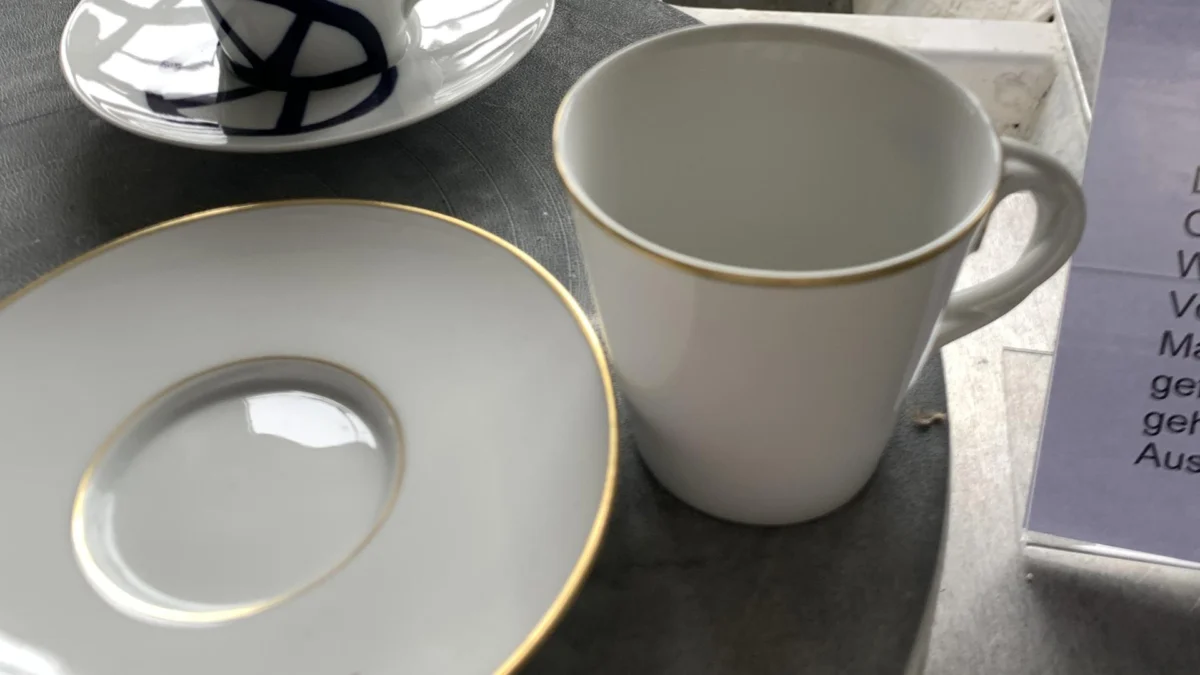
In its infancy, the manufactory focused on the aesthetic demands of the Baroque and Rococo periods. The "Trembleuse"—or "shaking cup"—remains a testament to this era. Steffen Taubhorn, the artistic director of the manufactory, explains: "In the 18th century, it was fashionable to eat breakfast in bed. Consequently, it was vital to have a deeply recessed saucer so that the tea wouldn’t spill if the drinker’s hand trembled." These artifacts were not just functional; they were status symbols that required immense technical skill to fire without warping.
The Modern Era: Insolvency and Integration
By the turn of the 21st century, the manufactory faced the harsh realities of a changing global market. Despite its prestigious reputation, the traditional business model struggled to compete with mass production. The bankruptcy of 2022 marked a critical nadir. However, the subsequent intervention by the state of Hesse proved to be a turning point. By embedding the facility within the HfG Offenbach, the state ensured that the "know-how"—the tacit knowledge of the masters—would not be lost to time.
Supporting Data: The Convergence of Craft and Tech
The current "Day of the Open Manufactory" offers a rare window into this hybrid existence. Across 28 stations, visitors can witness the stark contrast between the legacy of the past and the avant-garde experiments of the present.
The Ceramic Art Lab
On the ground floor, the "Ceramic Art Lab," led by Finnish artist Merja Herzog-Hellstén, redefines the physical relationship between the artist and the material. In a recent, unconventional demonstration, students were seen working with massive amounts of porcelain modeling clay—not with their hands, but with their feet.

"We are testing the possibilities of using body parts other than the hands for forming," explains Herzog-Hellstén. This is not mere performance art; it is an exploration of material behavior, texture, and the subconscious imprint of the body on ceramic forms. The students, many of whom are pursuing degrees in Fine Arts, view the facility as a sanctuary where they can iterate without the immediate pressure of commercial viability.
The Institute for Material Design
Adjacent to the artistic labs, the Institute for Material Design, under the leadership of Markus Holzbach, represents the technological frontier. Here, the hum of 3D printers and the precise movements of robotic arms complement the silent, meditative work of the traditional mold-makers.
One of the most striking examples of this synthesis is the work of student Simon Hanke. For his master’s thesis, Hanke produced a "futuristic Bembel"—the iconic Hessian apple wine jug—reimagined through the lens of artificial intelligence and 3D printing. The resulting object is a synthesis of regional cultural identity and hyper-modern manufacturing, proving that tradition does not have to be stagnant to remain relevant.
Official Responses and Strategic Vision
The leadership of the manufactory is keenly aware of the responsibility they carry. Steffen Taubhorn, who has witnessed both the decline and the resurrection of the site, notes that the integration of the HfG Offenbach was essential. "We are no longer just producing teacups for the shelf," Taubhorn says. "We are producing designers who understand the material’s soul."

The strategic vision for the coming decade is clear: to become a center of excellence for material research. By focusing on the intersection of craft and high-tech manufacturing, the manufactory aims to remain a vital part of Germany’s creative economy. The goal is not to compete with industrial porcelain factories, but to create a space where the limits of porcelain as a medium can be pushed, tested, and expanded.
Implications: The Future of Heritage Sites
The Höchst model offers a potential blueprint for other heritage institutions across Europe. As traditional crafts struggle to survive in a digital world, the integration of such sites into academic and research frameworks provides a sustainable path forward.
Educational Impact
For the students involved, the manufactory is an irreplaceable resource. Learning to work with porcelain—a material known for its temperamental nature during drying and firing—requires a level of patience and physical intuition that cannot be learned in a purely digital studio. The mentorship provided by the manufactory’s veteran staff creates a bridge between generations, ensuring that the "hidden knowledge" of the trade is preserved.
Cultural Continuity
The survival of the Höchst Porcelain Manufactory is also a victory for regional identity. In Frankfurt, the Bembel is more than just a vessel; it is a symbol of communal heritage. By allowing students to reinterpret this icon through 3D printing, the manufactory is effectively keeping the culture alive by allowing it to evolve.

As the institution moves toward its 300th anniversary, it stands as a testament to the idea that heritage is not a static object to be kept behind glass, but a living process. Whether it is the delicate, historical Trembleuse or a computer-generated, robotically produced apple wine jug, the message from Höchst is the same: the future of craft is in the hands of those who respect the past but are not afraid to rewrite its rules.
The "Day of the Open Manufactory" is more than an anniversary celebration; it is a declaration of intent. As the doors open to the public, visitors are invited to see that the "white gold" of Höchst has found a new, high-tech luster, ensuring that the manufactory will remain a beacon of innovation for decades to come.