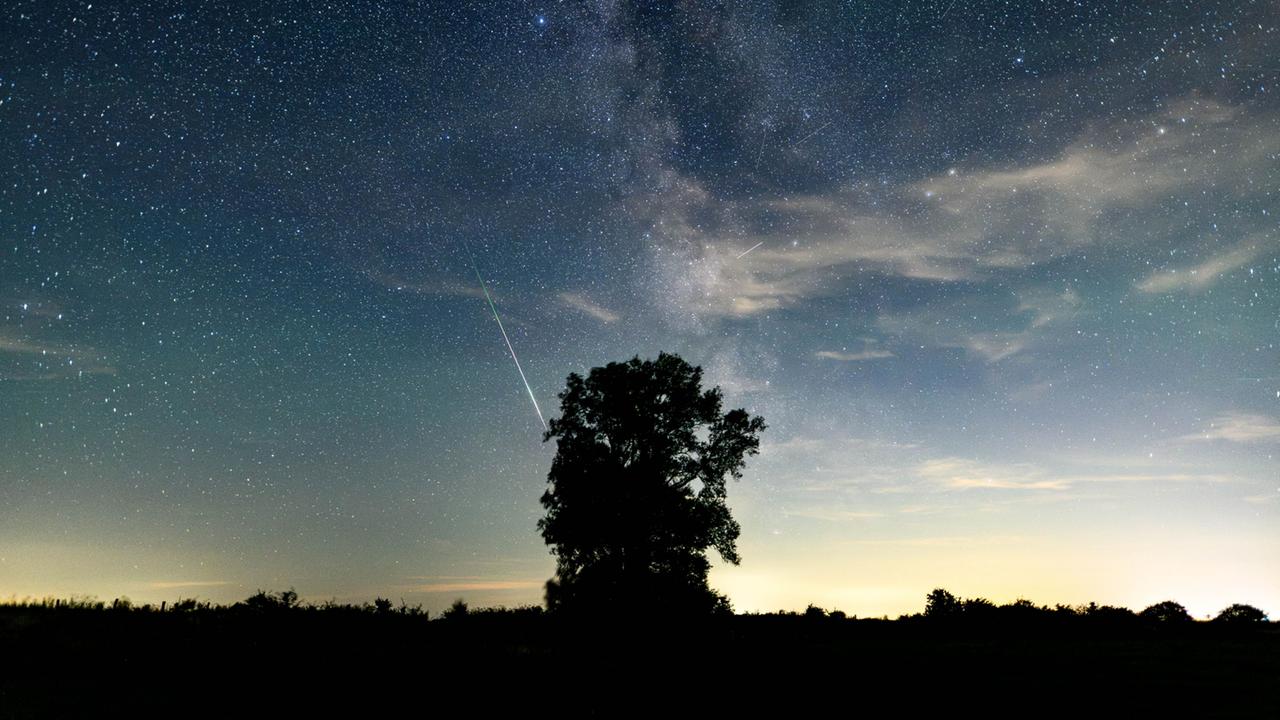
The annual arrival of the Perseids is more than just a seasonal marker; it is one of the most reliable and awe-inspiring displays in the astronomical calendar. As we approach August 2026, anticipation among skywatchers, professional astronomers, and amateur enthusiasts is reaching a fever pitch. This year’s apparition of the Perseid meteor shower is shaping up to be exceptional, bolstered by near-perfect lunar conditions and a rare celestial coincidence that adds an extra layer of drama to the night sky.
The Core Phenomenon: Nature’s Cosmic Dust Trail
At its heart, the Perseid meteor shower is a remnant of an ancient journey. Every year, as Earth orbits the Sun, it passes through a vast, diffuse cloud of debris left behind by the comet 109P/Swift-Tuttle. This comet, a massive icy body with a nucleus roughly 26 kilometers in diameter—significantly larger than the asteroid believed to have triggered the extinction of the dinosaurs—follows an elongated 133-year orbit through our solar system.
As 109P/Swift-Tuttle approaches the warmth of the Sun, its surface ice sublimates, shedding layers of dust and rocky fragments into its wake. When Earth intercepts this stream of "cometary crumbs," these particles—many no larger than a grain of sand—slam into our atmosphere at speeds exceeding 59 kilometers per second. The resulting friction causes the air around them to ionize, creating the brilliant, fleeting streaks of light we recognize as meteors. Despite the sheer size of the parent comet, there is zero risk to Earth; the orbital mechanics of 109P/Swift-Tuttle have been mapped with precision for centuries, confirming that our planet is in no danger of a collision.
Chronology of the 2026 Peak
For observers in the Northern Hemisphere, the window for optimal viewing is narrow but highly rewarding. While the Earth enters the fringes of the debris stream in late July, the peak of the shower is set for the early hours of August 13, 2026.
Astronomers suggest that the most productive hours will be between 11:00 PM on August 12 and 4:00 AM on August 13. During this time, the "radiant"—the point in the sky from which the meteors appear to originate, located in the constellation Perseus—will rise higher in the night sky. The higher the radiant climbs, the more meteors are typically visible to the naked eye.
This year’s peak is particularly auspicious due to the lunar cycle. The occurrence of a New Moon on August 12 creates a "blackout" period, removing the primary source of light pollution that typically washes out fainter meteors. Without the interference of moonlight, the contrast between the dark sky and the bright trails will be at its maximum, potentially offering one of the best viewing experiences in recent memory.
The Double Feature: A Rare Solar Coincidence
Adding to the intensity of the mid-August window is a major daytime event. On August 12, 2026, Europe will experience a significant partial solar eclipse. In some regions, the Moon will cover up to 90 percent of the Sun’s disk. This rare pairing—a solar eclipse followed by a deep-sky meteor shower on the same night—has generated significant interest from the scientific community.
While the eclipse provides a rare opportunity for solar observation during the day, it serves as a prologue for the night’s activities. Observers are encouraged to maintain their vigilance throughout the day and into the night, as the transition from the solar eclipse to the Perseid peak marks a unique 24-hour cycle of celestial activity that will not be repeated in this configuration for many years.
Scientific Insights and Observational Protocols
Professional astronomers emphasize that while the Perseids are a predictable annual event, they offer a unique window into the composition of the early solar system. By studying the chemical signatures of the light emitted as the dust burns up, researchers can glean information about the material expelled by 109P/Swift-Tuttle thousands of years ago.
For the general public, however, the barrier to entry is delightfully low. The "Summer Classic" reputation of the Perseids stems from the mild August temperatures, allowing for long periods of observation without the need for heavy winter gear. However, the success of the observation depends heavily on the observer’s preparation.
Essential Viewing Strategies
- The Hunt for Darkness: Light pollution is the enemy of the stargazer. To maximize the count, observers should venture at least 30 to 50 kilometers away from major urban centers. High-altitude locations or open fields far from streetlights and high-intensity building lights are ideal.
- The 30-Minute Rule: Human eyes require roughly half an hour to achieve full "dark adaptation." During this period, avoid looking at smartphones, tablets, or flashlights. If a light source is absolutely necessary, use a flashlight equipped with a red LED, as red light preserves night vision better than white or blue light.
- The Naked Eye Advantage: Contrary to popular belief, telescopes and binoculars are counterproductive for meteor showers. They restrict the field of view to a tiny patch of sky. The human eye, with its panoramic capability, is the superior tool for spotting streaks that can flash across the entire horizon.
- Optimal Posture: Comfort is key. Use a reclining chair or a blanket on the ground. Do not focus on a single point in the sky; rather, gaze upward at a 45-degree angle from the radiant, allowing your peripheral vision to catch the meteors as they streak through the atmosphere.
Implications for Public Engagement
The 2026 Perseid shower represents more than just a scientific opportunity; it is a moment for cultural and educational engagement. Public observatories and astronomy clubs across the globe are already planning "star parties" to facilitate safe, group-based viewing.
For the average citizen, the Perseids serve as a humbling reminder of our place in the universe. The ability to witness the remnants of a 26-kilometer-wide comet, which has been orbiting the Sun since before the dawn of human civilization, provides a sense of temporal perspective that is often lost in the digital age.
Furthermore, the surge in interest around the 2026 event is expected to drive a significant increase in amateur astronomy data collection. Platforms like the International Meteor Organization (IMO) rely on thousands of independent observations to track the density and distribution of meteoroid streams. Amateur skywatchers who submit their meteor counts contribute directly to our ongoing understanding of the solar system’s dynamic environment.
Final Considerations
As the date approaches, weather forecasts will become the deciding factor for millions of enthusiasts. While the astronomical conditions are ideal, a local overcast sky could obscure the event. However, for those fortunate enough to have a clear, cloudless night, the 2026 Perseids promise a spectacle that balances scientific significance with raw, natural beauty.
Whether you are a seasoned astronomer or a casual observer looking for a moment of quiet reflection, the night of August 12-13 offers a rare convergence of events. From the deep, shadow-filled display of the solar eclipse to the vibrant, burning trails of the Perseids, the skies of 2026 will serve as a stage for one of nature’s most consistent and captivating performances. Plan your spot, dim your lights, and prepare to look up; the universe is providing an invitation that is impossible to ignore.