In the modern media landscape, children’s television is often dismissed as mere background noise—a kaleidoscopic flurry of talking animals, catchy jingles, and moralizing tales designed to keep toddlers occupied while parents attend to household chores. Yet, beneath the veneer of "Peppa Wutz" or the heroic rescues of "Paw Patrol" lies a sophisticated, often provocative medium that challenges the status quo.
When children’s television asks the questions that children themselves are pondering, it frequently triggers discomfort among adults—especially those in positions of power. From the censorship of British cartoon pigs in China to the long-standing feud between the "Sesame Street" workshop and the political right in the United States, children’s television has proven to be a surprisingly subversive force.
The Evolution of the "Child’s Perspective"
Media scholar Maya Götz, who heads the International Central Institute for Youth and Educational Television (IZI) at the Bayerischer Rundfunk, argues that what adults perceive as "provocation" is often simply the show’s commitment to the child’s perspective.
"Children’s television often reflects the immediate experiential world of the child," Götz explains. "When a show prioritizes the child’s sense of humor, or validates their desire for autonomy, it often clashes with the adult desire for children to be ‘well-behaved’ and obedient."
This tension is at the heart of the medium’s evolution. Historically, children’s TV was didactic, designed to impart lessons or maintain order. Today, however, the most successful programming—from the anarchic energy of "Teen Titans Go!" to the social experiments of "Sesame Street"—works by placing the child in the driver’s seat.
Chronology: From Educational Tool to Cultural Flashpoint
1969: The Birth of "Sesame Street"
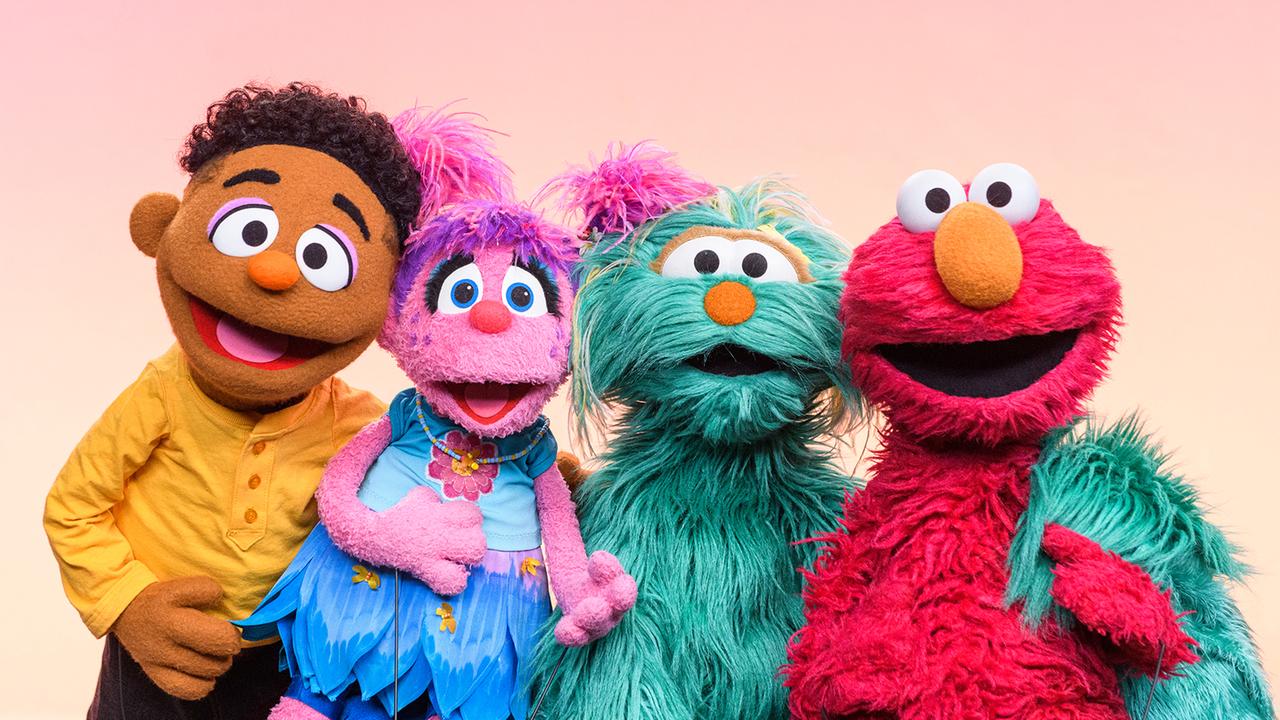
Launched in the United States in 1969 (and arriving in Germany in 1971), "Sesame Street" was conceived as a tool for social equity. The goal was to bridge the education gap for children from underprivileged backgrounds by providing access to foundational literacy and numeracy skills. It was inherently political, built on the belief that every child deserved an education regardless of their socio-economic status.
2004–2018: The Rise and Fall of "Peppa Wutz"
The British animated series "Peppa Wutz" (Peppa Pig) became a global juggernaut. However, in 2018, it faced a sudden, dramatic clash with the Chinese state. Videos of the show were removed from the platform Douyin, and publishers were instructed to cut back on the books. The official reasoning cited "inappropriate content," but the underlying issue was clear: the Chinese Communist Party viewed the "western ideology" of the series—specifically the independent nature of the pig family—as a threat to the cultural conformity of China’s youth.
1980s–2026: The "Ronald Grump" Saga
Perhaps the most direct confrontation between children’s media and political figures is the "Sesame Street" lampooning of Donald Trump. Appearing as "Ronald Grump," a parody real-estate developer, the character first appeared in the 1980s. With his trademark oversized hair and bluster, Grump sought to build a "Grump Tower" made of trash cans.
The satire continued through the decades, culminating in 2005 when the character appeared as a trash-obsessed version of the host of "The Apprentice." This proved to be a lasting grievance; following his rise to the presidency in the U.S., the show’s producers found themselves in the crosshairs of a movement that branded them as "subversive liberals." The political fallout was immediate, with efforts to defund public broadcasting impacting the show’s reach and forcing it to pivot toward a streaming-exclusive model.
Supporting Data: Why "Subversion" Resonates
Data from the IZI suggests that children are highly perceptive of power dynamics. Programs that allow characters to challenge authority figures—without necessarily being "naughty"—consistently perform better in terms of engagement metrics.
For instance, the YouTube-era success of "Salish and Jordan Matter" represents a shift in the genre. In these programs, a child (Salish) is tasked with "challenges" by her father. The dynamic is inverted: the child frequently outsmarts the adult, turning mundane construction tasks into grand, absurd architectural projects. This "parent-child battle" formula works because it provides a safe, low-stakes environment for children to witness the subversion of adult authority. It turns the world upside down, a technique that has been a staple of comedy and drama for centuries, now adapted for the living room rug.
Official Responses and The "Culture War"
The reaction from conservative political factions toward programs like "Sesame Street" highlights a broader trend: the politicization of childhood. By framing educational media as "liberal propaganda," political actors have attempted to exert control over the cultural consumption of the next generation.
In the U.S., the withdrawal of funding for public broadcasting, which historically supported "Sesame Street," was framed by proponents as a fiscal necessity. However, internal communications and public rhetoric from the era suggest a deeper discomfort with the show’s inclusive values—values that were deemed "subversive" by those favoring traditional, conformist narratives.
Educational institutions and child psychologists have largely defended these programs. Their argument is consistent: children do not exist in a vacuum. By addressing complex topics, whether it be poverty (in the early days of "Sesame Street") or the desire for autonomy (in modern shows like "Teen Titans Go!"), these programs act as a mirror for the child’s own internal development.
Implications for the Future of Media
What does the "subversive" nature of modern children’s television imply for the future? As traditional television gives way to fragmented, algorithm-driven streaming services, the gatekeepers of children’s media are changing.
- Autonomy over Instruction: The trend is moving away from purely "didactic" (teaching-focused) content toward "agency-focused" content. Children are increasingly looking for stories where they see themselves as the protagonists of their own lives.
- The Global Conflict: As seen with the Chinese reaction to "Peppa Wutz," children’s media is no longer a localized affair. Content is global, and that globalization brings it into direct conflict with diverse political and cultural regimes. A story about an independent piglet in Britain is, in the eyes of a central government, a political statement.
- The Erosion of "Safe" Spaces: The line between "children’s content" and "political content" is blurring. Parents, educators, and political entities now realize that the media consumed in the nursery has long-term implications for the values a society holds.
Conclusion: A Mirror for Growth
Whether it is a piglet navigating a marathon or a monster complaining about a "Grump Tower," the most enduring children’s programs do more than entertain. They provide a safe space for children to practice the act of questioning.
As Maya Götz notes, "We put authorities under a bit of pressure and have fun with it." By allowing children to laugh at the absurdity of the adult world, these shows provide an essential service: they help children understand that the world is not a fixed, rigid structure, but a malleable place that they will eventually shape themselves.
The discomfort this causes in some adults is perhaps the greatest compliment these shows can receive. If a show can successfully make a child feel empowered and a rigid authority figure feel uneasy, it has done more than teach the alphabet; it has taught the child how to think for themselves. In an era of increasing polarization, that is perhaps the most subversive—and necessary—lesson of all.