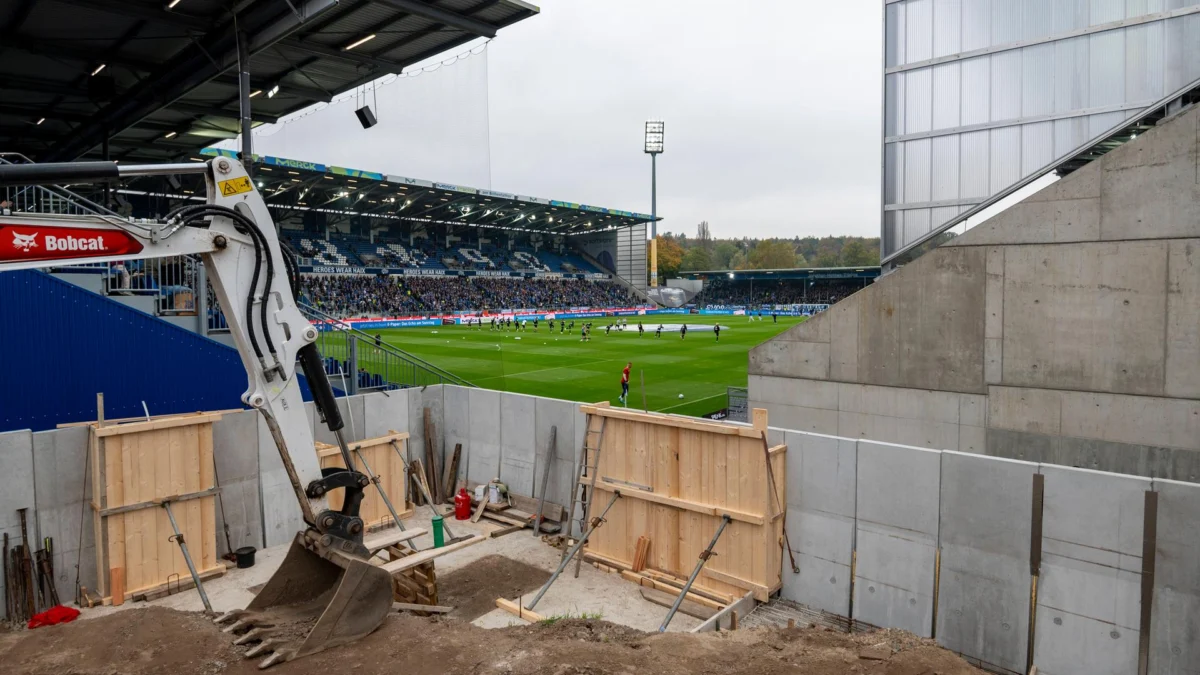
While the SV Darmstadt 98 first team currently finds itself embroiled in a challenging period on the pitch, the club’s leadership is looking firmly toward the horizon. Despite a difficult start to the 2. Bundesliga campaign that has left the "Lilien" hovering near the bottom of the table, the club’s hierarchy used Tuesday evening’s annual general meeting to signal a major shift in strategy: the Böllenfalltor Stadium is set for further growth.
Just under two years after the completion of a major modernization project, the club has unveiled plans to increase the stadium’s capacity to 20,000, modernize infrastructure, and potentially reconfigure the seating arrangements for visiting supporters. This announcement underscores a dual-track strategy: stabilizing the current sporting crisis while laying the institutional groundwork for long-term growth.
The State of the Club: Balancing Crisis and Vision
The atmosphere at the general meeting was necessarily somber, reflecting the reality of a season that has so far failed to meet expectations. Sporting Director Paul Fernie was the first to address the membership, candidly describing the season start as "disappointing." Fernie emphasized that the current fluctuations in performance must be corrected as quickly as possible to avoid a prolonged struggle in the second tier.
Club President Markus Pfitzner echoed these sentiments, acknowledging that the team’s current form resembles an "emotional rollercoaster." However, Pfitzner’s address quickly pivoted from the short-term woes on the grass to the long-term vision for the club. "We are not satisfied with the current sporting development, which feels like a rollercoaster at the moment. Stabilizing performance is our top priority," Pfitzner stated. "At the same time, we must think beyond the current season and the 90 minutes of any given match, pushing forward our future projects."
This strategic pivot serves a dual purpose: it reaffirms the club’s commitment to professional excellence while reassuring fans and stakeholders that the organization remains robust, regardless of short-term sporting volatility.
Chronology of Development: From Traditional Ground to Modern Arena
The Böllenfalltor, colloquially known as "Bölle," has undergone a radical transformation in recent years. Historically a ground that defined the rugged, traditional spirit of German football, it was long overdue for an overhaul to meet the standards of the modern professional game.
- December 2022: The club officially celebrated the completion of a comprehensive modernization program. This phase saw the replacement of aging structures and the creation of a more comfortable, safer environment for fans, bringing the capacity to 17,810.
- 2023-2024: Following the completion of the project, the club analyzed matchday logistics, fan demand, and commercial viability. The conclusion reached by the board was that the current capacity is insufficient to meet the growing demand for tickets and the club’s long-term commercial goals.
- November 2024: During the annual general meeting, leadership announced that the next phase of construction is not just a possibility, but a planned objective. The vision for the future involves moving away from temporary solutions toward permanent, higher-capacity concrete structures.
Technical Specifications: How the "Bölle" Will Grow
Vice President Arnd Zinnhardt provided the membership with a roadmap for the stadium’s expansion. The goal is to push the capacity from the current 17,810 to approximately 20,000. This increase is not merely about adding seats; it is about optimizing the stadium layout for better crowd control and commercial revenue.
Northern and Southern Expansion
The primary focus of the expansion lies at both ends of the pitch. The current steel-tube construction behind the north goal, which serves as the heart of the "Lilien" fan culture, is slated to be replaced by a permanent, modern concrete grandstand. This new structure is designed to accommodate 5,000 spectators, offering significantly better amenities and safety standards than the temporary setup.
The Guest Fan Relocation
On the southern side, the club is looking to increase capacity from 2,600 to 3,500. A critical part of this plan involves the potential relocation of visiting fans. By moving the away sector to this new southern structure, the club intends to turn the entire "Gegengerade" (the long side opposite the main stand) into a dedicated home-fan area. This shift is intended to create a more intimidating and unified atmosphere for the home team, a strategic move often employed by larger clubs to leverage "home-field advantage."

Commercial Upgrades
Beyond the spectator capacity, the club is exploring the development of an additional VIP section on the southern grandstand. In modern football, the ability to generate revenue from premium hospitality is non-negotiable for clubs looking to maintain financial sustainability. This VIP tier would provide the necessary capital injection to support the team’s operations.
Financial Strategy: A Marathon, Not a Sprint
Financing a multi-million euro construction project in the current economic climate is a complex endeavor. President Pfitzner was clear about the club’s guiding principle: "We want to enable more people to experience the Lilien at the Böllenfalltor so the club can continue to grow. The top priority remains the economic stability of SV 98."
The funding model is designed to be a three-pillar approach:
- Fremdkapital (Debt Capital): The club will utilize institutional financing, ensuring that debt levels remain within sustainable parameters.
- The "Lilien-Familie": A nod to the club’s membership and fan base, hinting at potential crowd-financing or member-led investment schemes.
- Public Funding: Collaboration with the city of Darmstadt and the state of Hesse.
Darmstadt’s Mayor, Hanno Benz (SPD), struck a cautiously optimistic tone during the meeting. While he did not provide a concrete timeline, he emphasized the complexity of the project, labeling it a "marathon." Benz stated, "I am very optimistic that the city, the state, and the club will be able to manage the financing together."
Implications for the Future
The decision to pursue this expansion sends a strong signal to the league and the fans. By choosing to invest in infrastructure during a sporting downturn, SV Darmstadt 98 is demonstrating institutional maturity.
Economic Implications
For a club of Darmstadt’s size, an extra 2,000–3,000 tickets per home game—combined with enhanced VIP hospitality—creates a recurring revenue stream that is vital for long-term survival in the competitive world of German football. This provides a buffer against the financial risks associated with relegation or promotion cycles.
Cultural and Community Impact
The "Bölle" is more than a stadium; it is a cultural landmark for the city of Darmstadt. By upgrading the stands, the club is ensuring that the stadium remains a community hub. The move to consolidate home fans by relocating the away section is also a strategic attempt to harden the club’s identity and create a more cohesive matchday experience.
The "Marathon" Ahead
While the plans are ambitious, the club faces a challenging path. The combination of local politics, construction costs, and the need for ongoing sporting success creates a delicate balancing act. The leadership knows that the fans will be watching both the league table and the construction site.
In conclusion, the SV Darmstadt 98 board has made its position clear: the club’s ambitions are not limited to the current season’s results. By focusing on the Böllenfalltor, they are building the foundation for a future where the club is no longer just a participant in the 2. Bundesliga, but a permanent, modern fixture in the landscape of professional German football. Whether this "marathon" leads to a successful, expanded arena remains to be seen, but the intent is clear: the Lilien are here to grow.