Introduction: A Wake-up Call in Berlin
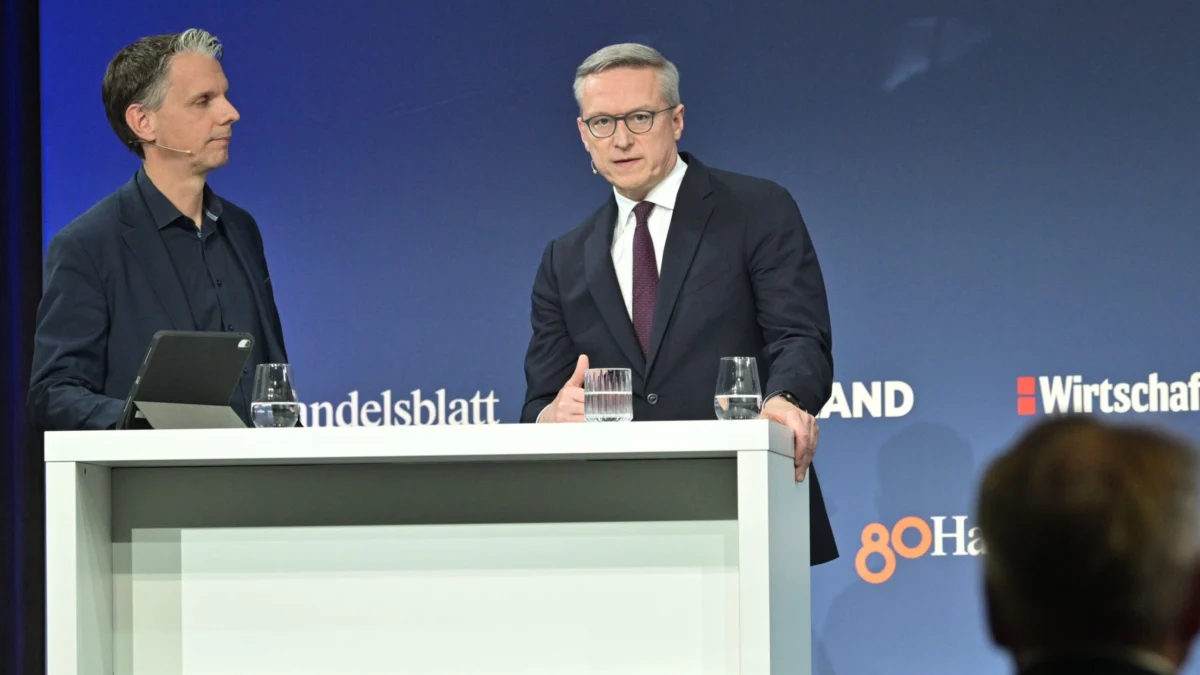
At the recent "Germany Summit," hosted by Handelsblatt and Wirtschaftswoche, a candid assessment of the nation’s political and economic trajectory emerged from an unexpected quarter. Karsten Wildberger, a prominent voice within the CDU, shattered the prevailing narrative that Germany’s current stagnation is merely a matter of bureaucratic bottlenecks or "implementation problems."
While acknowledging that operational friction exists, Wildberger posited a much more profound diagnosis: Germany is suffering from a systemic "perception problem." This, he warned, is not merely a superficial misunderstanding of policy goals, but a fundamental failure to grasp the existential scale of the challenges facing the nation. In a climate where the government often retreats into technical debates over specific reforms, Wildberger’s intervention serves as a demand for a broader, more cohesive national strategy.
The Core Problem: Why "Implementation" is Not Enough
For months, the political discourse in Berlin has been dominated by the rhetoric of efficiency. Ministers and officials have frequently argued that Germany’s legislative framework is sound, and that the only remaining task is to clear the administrative pipes to ensure that laws are executed properly.
Wildberger rejects this framing as dangerously reductive. "We have an implementation problem, yes," he stated during the summit, "but we also have a perception problem. And that is massive."
The Contextual Vacuum
According to Wildberger, the political class is failing because it treats reforms as isolated, siloed events rather than parts of an interconnected ecosystem. By focusing exclusively on individual measures—tax adjustments, energy subsidies, or digital permits—the government loses sight of the "context."
He argues that policy makers consistently underestimate the cumulative weight of simultaneous crises. Germany is currently navigating a convergence of:
- Internal Structural Weakness: An aging workforce, decaying infrastructure, and a sluggish digital transformation.
- External Geopolitical Shifts: The erosion of traditional energy security, the disruption of global supply chains, and the intensifying rivalry between the US and China.
When these are viewed through a lens of "business as usual," the result is a fragmented response that lacks the necessary gravity to mobilize the public and the economy.
Chronology of a Stalled Reform Agenda
To understand the urgency of Wildberger’s warning, one must look at the recent timeline of German economic policy:
- Q1-Q2 2023: The government focused on emergency energy relief, with high expectations that the "Double-Oomph" (Doppel-Wumms) strategy would stabilize the economy.
- Q3 2023: Economic data began to show that while the energy crisis was contained, structural growth remained stagnant, leading to the first round of criticism regarding the lack of a long-term industrial policy.
- Q4 2023: The "Implementation Problem" narrative took root. The government launched the "Growth Opportunities Act," focusing on administrative simplification.
- Present Day: The Germany Summit highlights a growing consensus among critics that legislative action without a clear, strategic "grand vision" has led to a lack of investment confidence.
Supporting Data: The Digital Gap
The call for a shift in perception is rooted in objective data regarding Germany’s digital competitiveness. As the minister noted, the race for Artificial Intelligence (AI) and high-tech sovereignty is not a polite debate; it is an economic contest with high stakes.
The AI Imperative
Recent studies by the Digital Economy Index suggest that Germany continues to lag behind its European neighbors and international peers in the adoption of AI within Small and Medium Enterprises (SMEs). While Germany excels in traditional manufacturing, its failure to integrate AI-driven processes threatens its competitive edge.
- AI Readiness: Germany currently ranks outside the top tier in global AI patent applications per capita, falling significantly behind the US and China.
- Investment Flows: Venture capital for deep-tech startups in Germany remains hampered by a risk-averse financial culture, a direct result of the "perception problem" Wildberger identified: the failure to see innovation as a survival necessity.
Official Responses and Political Stability
Wildberger’s speech was not solely an indictment of the status quo; it was a plea for the survival of the current coalition. He emphasized that the "black-red" (CDU/SPD) coalition must prioritize stability above all else.
"It would be a catastrophe if we did not have stability right now," Wildberger remarked. He signaled that while the opposition and the government may differ on specific tactics, the overarching goal of national progress must override partisan bickering.
A Call for Collective Evolution
The minister’s message was one of shared responsibility. He noted that every political actor, regardless of party, has the capacity to "learn and do things differently." He underscored that this is not a time for finger-pointing, but for a collective shift in how the nation views its role in the global order. The government’s ability to communicate the "why" behind its reforms is, in his view, just as important as the reforms themselves.
The Geopolitical Stakes: "At the Table or on the Menu"
Perhaps the most striking element of Wildberger’s contribution was his invocation of a metaphor originally used by former Bank of Canada Governor Mark Carney. Discussing the necessity for European cooperation in the age of AI and digital hegemony, Wildberger warned:
"We are fighting to sit at the table. If we are not at the table, we are on the menu."
This sentiment encapsulates the fear that middle-tier powers—and even the European Union as a whole—risk becoming mere vassals to the digital ecosystems dominated by the US and China. If Europe fails to develop its own AI infrastructure and digital regulatory framework, it will be reduced to a consumer of technology rather than a creator.
Implications for the Future
The implications of this shift are profound:
- Policy Re-orientation: Future legislative agendas must be framed not as "administrative tasks" but as "strategic imperatives" for national security and economic sovereignty.
- Public Communication: The government must move away from technical jargon and explain to the electorate how digital transformation directly impacts their jobs and livelihoods.
- Institutional Reform: To solve the "perception problem," the government must create cross-departmental task forces that look at the cumulative effect of regulations, rather than evaluating them in isolation.
Conclusion: A Turning Point?
Karsten Wildberger’s intervention at the Germany Summit represents a significant pivot in the rhetoric of the center-right. By moving the goalposts from "implementation" to "perception," he has invited a more sophisticated, if more uncomfortable, debate about Germany’s future.
The country stands at a crossroads. The "implementation" phase of the current political cycle is nearing its end, and the "perception" phase—the period in which the nation must decide its identity in a digital, AI-driven world—is just beginning. Whether the current administration can translate this recognition into a tangible, strategic national mission remains the central question for the coming year.
If Germany continues to treat its systemic challenges as mere procedural hurdles, it risks, as Wildberger cautioned, becoming the "menu" rather than the participant at the global table of the 21st century. The challenge, therefore, is not just to fix the bureaucracy, but to fix the vision.