BERLIN – Following a pivotal state election, Berlin’s political future hangs in the balance as the Social Democratic Party (SPD), The Left (Die Linke), and Alliance 90/The Greens (Bündnis 90/Die Grünen) embark on a series of intensive exploratory talks, aiming to forge a progressive "Red-Red-Green" (R2G) coalition. While the arithmetic of the ballot box has made this alliance the most viable path to a stable governing majority, negotiators are grappling with a formidable array of "substantive hurdles" that threaten to derail their shared ambition of shaping a more socially just, environmentally conscious, and affordable capital. The delicate dance between ideological principles and pragmatic compromise defines this critical period, as Berliners watch closely to see if their city can unite disparate progressive visions into a coherent political agenda.
The potential R2G coalition represents a significant ideological shift for Berlin, a city long known for its vibrant, sometimes tumultuous, political landscape. With the SPD often acting as the centrist anchor, The Left pushing for radical social reforms, and the Greens championing ecological transformation, the proposed alliance embodies both the hopes for a new direction and the inherent challenges of bridging profound policy gaps. The core mission – to address Berlin’s pressing issues such as the housing crisis, climate change, and social inequality – is universally acknowledged, but the pathways to achieving these goals are starkly different, demanding unprecedented levels of flexibility and political will from all parties involved.
Berlin’s Political Landscape at a Crossroads
The recent state election delivered a fragmented result, necessitating a multi-party coalition to form a stable Senate (Berlin’s state government). While specific election figures vary across different historical contexts, a common scenario sees the SPD emerging as the strongest force or a close second, with the Greens making significant gains, and The Left maintaining a strong presence, particularly in the city’s eastern boroughs. This configuration often leaves the traditional CDU/FDP conservative-liberal bloc without a viable majority, pushing the SPD towards its left-leaning counterparts.
The allure of an R2G coalition lies in its potential to create a strong, progressive bloc capable of tackling Berlin’s unique challenges. The city grapples with explosive population growth, escalating housing costs, persistent social disparities, and an urgent need for sustainable urban development. Each of the three parties brings a distinct perspective and a dedicated voter base, but also deeply entrenched policy positions that are now being put to the ultimate test in the negotiating rooms. The SPD, traditionally the dominant force in Berlin, seeks to lead a stable government that balances social justice with economic pragmatism. The Greens, buoyed by growing environmental awareness, demand ambitious climate action and a fundamental rethinking of urban mobility. The Left, rooted in anti-poverty and social equality movements, advocates for radical interventions in housing and public services. The challenge is not merely to find common ground, but to construct a shared vision that can genuinely improve the lives of Berliners while respecting the distinct identities of the coalition partners.
The Initial Soundings: A Tentative Dance
The journey towards a coalition government is a multi-stage process, beginning with the election aftermath and culminating, hopefully, in a signed coalition agreement.
Election Aftermath and Mandate
Immediately following the election, all parties engage in internal deliberations to assess their mandate and potential coalition partners. The SPD, as the probable leading party, typically holds initial bilateral talks with all plausible partners to gauge compatibility. If the numbers clearly point towards an R2G majority, the focus quickly narrows. The task is to form a government that not only commands a majority in the House of Representatives but also enjoys sufficient public legitimacy and internal party support. The election results, often characterized by high voter turnout and a desire for change, underscore the urgency of these negotiations.
First Encounters and Optimism
The exploratory talks, known in German as "Sondierungen," are the crucial first step. These informal discussions are designed to identify areas of significant overlap and, more importantly, pinpoint the most contentious policy differences. Delegations from each party, typically led by their top candidates and experienced policy experts, meet behind closed doors. Public statements at this stage are usually cautious, often emphasizing "constructive discussions" and "good chemistry" among negotiators. There is an understandable desire to project an image of unity and progress, even as deep-seated disagreements begin to surface. The initial optimism is a necessary ingredient, but it can quickly evaporate if fundamental ideological clashes prove insurmountable. Negotiators aim to build trust, understand each other’s red lines, and lay the groundwork for a more formal negotiation phase. These early conversations are as much about human relationships as they are about policy, as the ability of leaders to work together personally often dictates the success of a coalition.
Navigating the Substantive Hurdles: A Deep Dive into Policy Differences
The "substantive hurdles" facing a Berlin R2G coalition are manifold and deeply embedded in the ideological foundations of each party. These aren’t minor disagreements but often fundamental differences in how society should be organized and governed.
Economic and Fiscal Policy: The Budgetary Tug-of-War
One of the most immediate and complex areas of contention is economic and fiscal policy. Berlin, while a vibrant cultural hub, faces significant budgetary constraints and a persistent need for investment in infrastructure, public services, and social programs.
- The Left advocates for a significant increase in public spending, financed by higher taxes on wealth and corporations. They often call for a more flexible interpretation of Germany’s constitutional "debt brake" at the state level, arguing that austerity measures hinder essential social and ecological investments. Their focus is on strengthening the public sector, including the creation of more publicly owned enterprises, and ensuring that economic growth benefits all segments of society, not just a privileged few.
- The Greens share the desire for increased investment, particularly in climate protection, renewable energy, and sustainable urban infrastructure. They are generally open to new forms of taxation, such as a higher carbon tax or road pricing, to fund green initiatives. While they emphasize sustainable economic practices, they are often more cautious than The Left about outright nationalization or radical changes to market structures, preferring regulatory frameworks and incentives.
- The SPD, historically the party of social market economy, seeks to balance social investments with fiscal responsibility. While supportive of strengthening public services and social welfare, they are typically more wary of breaching the debt brake and advocate for prudent financial management. They often look for ways to stimulate economic growth and attract businesses, while ensuring fair wages and good working conditions. The SPD’s challenge is to find common ground between The Left’s expansive spending demands and the Greens’ focus on environmental economics, without compromising Berlin’s long-term financial stability. Specific areas of disagreement often include the scale of investment in public housing, the future of municipal utilities, and the overall trajectory of Berlin’s budget.
Urban Development and Housing: A Battle for Berlin’s Soul
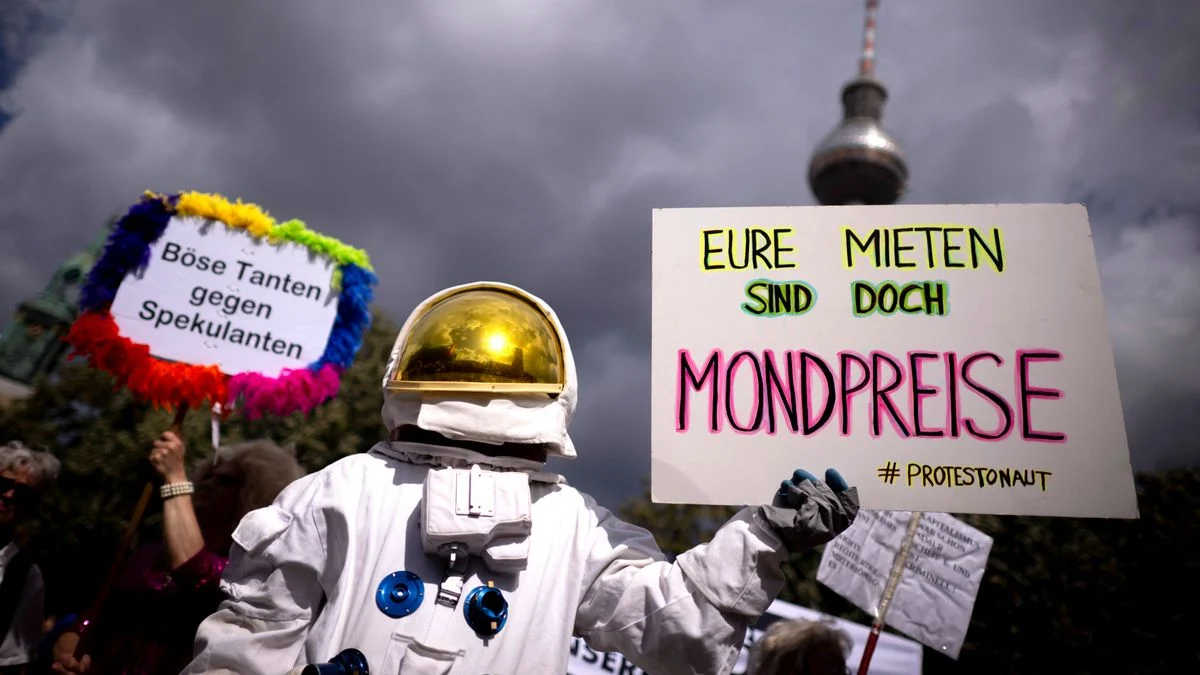
Berlin’s housing crisis is perhaps its most acute social issue. Rapid population growth, coupled with a booming real estate market, has led to skyrocketing rents and a severe shortage of affordable housing. This issue exposes deep ideological fault lines within the R2G constellation.
- The Left is the most vocal proponent of radical intervention. They have actively supported initiatives like "Deutsche Wohnen & Co. Enteignen" (Expropriate Deutsche Wohnen & Co.), a citizens’ initiative advocating for the expropriation of large private housing companies to bring them into public ownership. They demand stringent rent caps, massive public housing construction programs, and a fundamental shift away from market-driven housing policies.
- The Greens also prioritize affordable housing and sustainable urban development. They support rent caps and robust social housing programs but tend to focus more on eco-friendly construction, denser urban planning that minimizes sprawl, and the expansion of green spaces. While sympathetic to the call for more public housing, they are often more cautious about large-scale expropriation, preferring a mix of instruments.
- The SPD seeks to address the housing crisis through a combination of measures: promoting new construction, strengthening rent control mechanisms, and expanding municipal housing companies. They generally support public ownership but are typically hesitant about expropriation, seeing it as a measure of last resort with potentially high legal and financial risks. The core tension lies in finding a consensus on the appropriate balance between market regulation, public ownership, and incentivizing new construction, all while ensuring affordability and social equity. The debate over whether to support the expropriation initiative, for instance, is a litmus test for the coalition’s radicalism.
Transport and Environment: Greening the Metropolis
Transforming Berlin’s transport system and achieving ambitious climate targets are central to the Greens’ platform, but they present significant challenges for the other two parties.
- The Greens advocate for a radical shift towards sustainable mobility: massive expansion of public transport, creation of extensive cycling infrastructure, significant reduction of car traffic, and the eventual goal of a largely car-free city center. They push for ambitious climate protection laws, renewable energy expansion, and ecological urban planning.
- The SPD supports public transport expansion and cycling, but often seeks a more balanced approach that also accommodates car users, particularly in the outer districts. They are pragmatic on climate goals, often emphasizing technological solutions and economic feasibility alongside environmental protection. The SPD aims to modernize the transport system without alienating segments of the population reliant on private vehicles.
- The Left also champions public transport and cycling as socially equitable options, often advocating for reduced fares or even free public transport. They are strong proponents of climate action but emphasize that the transition must be socially just, ensuring that low-income households are not disproportionately burdened by environmental policies.
The debate over specific projects, such as the contentious extension of the A100 urban motorway, often becomes a proxy for these broader ideological clashes, with the Greens fiercely opposing it, while the SPD and even some within The Left grapple with the economic and logistical implications of halting such a project.
Internal Security and Migration: Ideological Divides
Even in areas like internal security and migration, where common ground might seem more elusive, the parties face significant ideological divides.
- The Left is generally critical of increased police powers, advocating for a focus on social prevention and addressing the root causes of crime. They are strong proponents of civil liberties and open, humane migration policies, often calling for the regularization of undocumented migrants and better support for refugees.
- The Greens share concerns about civil liberties and advocate for a nuanced approach to security that combines robust law enforcement with preventative social measures. On migration, they champion humane asylum policies, integration efforts, and swift processing of applications.
- The SPD typically supports a strong police force and adequate resources for law enforcement, while also emphasizing community policing and crime prevention. On migration, they seek a balance between integration and controlled immigration, often aligning with federal policies but also advocating for Berlin-specific solutions to refugee challenges. Disagreements frequently arise over issues such as police funding, data retention, surveillance powers, and the city’s approach to refugee camps or housing.
Education and Social Policy: Investing in the Future
While all three parties agree on the need for more investment in education and social services, their preferred methods and priorities can differ.
- The Left advocates for fully comprehensive schools, free education from kindergarten to university, and a radical reduction in inequality within the education system. They push for robust social welfare programs, including stronger benefits and expanded public health services.
- The SPD focuses on strengthening public schools, expanding early childhood education, and ensuring equal opportunities for all children. They support vocational training and adult education, aiming to equip Berliners for the future job market.
- The Greens emphasize holistic education, environmental education, and inclusive schooling that caters to diverse needs. They advocate for better integration of children with migration backgrounds and a focus on well-being and sustainability in educational institutions.
The common goal of investing in Berlin’s future workforce and social safety net is clear, but the specifics of how to achieve this – from teacher salaries and school renovation budgets to the design of social support systems – require careful negotiation.
Official Responses and Public Scrutiny
Throughout the exploratory and formal negotiation phases, party leaders and lead negotiators regularly face the press. Their statements are carefully calibrated, designed to project an image of constructive dialogue while also signaling their core demands to their respective party bases. Phrases like "tough but fair discussions," "significant progress on key issues," and "a strong will to compromise" become common refrains.
However, the media and the public are quick to highlight areas of friction. Expert commentators dissect every public utterance and leak, speculating on the likelihood of success or failure. Pressure mounts from within each party, with factions and interest groups pushing their representatives to hold firm on certain issues. The public, weary of political instability and eager for solutions to pressing urban problems, monitors the progress with a mixture of hope and skepticism. Social media amplifies both positive and negative sentiments, adding another layer of complexity to the negotiation process.
The Chronology of Deliberation
A typical chronology for such coalition talks unfolds as follows:
- Election Day: The people of Berlin cast their votes, determining the parliamentary composition.
- Initial Bilateral Talks: Within days of the election, the leading party (often the SPD) holds separate meetings with all potential partners to explore common ground.
- Formal Exploratory Talks (Sondierungen): Once R2G emerges as the most viable option, dedicated delegations from the SPD, The Left, and the Greens begin multi-day, intensive discussions, often lasting several weeks. These talks aim to produce a "Sondierungspapier" (exploratory paper) outlining major points of agreement and disagreement.
- Decision to Proceed to Formal Coalition Negotiations: Based on the outcome of the Sondierungen, party executive committees decide whether sufficient common ground exists to enter into full-fledged coalition negotiations.
- Formal Coalition Negotiations: These are highly structured, detailed discussions, often spanning several weeks or even months. Working groups are formed for specific policy areas (e.g., finance, transport, social affairs) to draft the coalition agreement.
- Target Timeline for Coalition Agreement: Negotiators often set ambitious deadlines, aiming to present a complete coalition agreement to their party conventions for approval.
- Party Conventions and Member Referendums: Before the agreement is finalized, it must be approved by each party’s internal structures, sometimes including a full member referendum, particularly for The Left and the Greens, to ensure broad support.
- Election of the Governing Mayor and Formation of the Senate: Once the agreement is approved, the new governing mayor is elected by the House of Representatives, and the Senate (cabinet) is appointed.
Implications for Berlin and Beyond
The success or failure of Berlin’s R2G coalition negotiations carries significant implications, not just for the capital but potentially for German federal politics.
Governing Berlin: Stability vs. Ambition
Should an R2G coalition successfully form, it promises a government committed to progressive change. However, governing Berlin with such a diverse coalition would require continuous compromise and careful management of internal dissent. Implementing ambitious policies on housing, climate, and social justice would be a monumental task, demanding innovative solutions and strong leadership. The challenge would be to deliver tangible improvements for Berliners while maintaining internal cohesion and managing inevitable policy trade-offs. The stability of such a government would depend on its ability to unite its various factions and present a coherent, effective front to the public.
A Signal for Federal Politics?
Berlin, as the capital and a major political laboratory, often sets trends for the rest of Germany. A successful R2G coalition in Berlin could serve as a potential blueprint or a source of inspiration for similar alliances at the federal level or in other German states. Conversely, if the Berlin R2G project were to falter due to irreconcilable differences, it could send a cautionary signal, highlighting the inherent difficulties of uniting disparate progressive forces. The specific issues debated in Berlin – from rent control to climate targets – are often mirrored in national political discourse, making the capital’s experience a valuable case study.
The Future of the Parties
For each of the three parties, the outcome of these negotiations is crucial for their long-term trajectory. For the SPD, successfully leading a progressive coalition in Berlin could reaffirm its relevance and leadership in urban policy. For the Greens, it’s an opportunity to implement their core agenda in a major European capital, demonstrating their capacity to govern. For The Left, participation in a governing coalition could provide a chance to translate their social justice demands into concrete policy, while also navigating the compromises inherent in governance without alienating their grassroots base. Failure, however, could lead to internal recriminations, loss of voter confidence, and a weakening of their respective political positions.
In essence, the Red-Red-Green exploratory talks in Berlin are more than just a bureaucratic process; they are a crucial test of political will, ideological flexibility, and the capacity for compromise in the face of pressing urban challenges. The "substantive hurdles" are real and formidable, but the potential reward – a stable, progressive government for one of Europe’s most dynamic cities – is a prize worth fighting for. The coming weeks will reveal whether Berlin’s progressive forces can forge a common path forward, or if their ambitions will be swallowed by the very differences they seek to bridge.