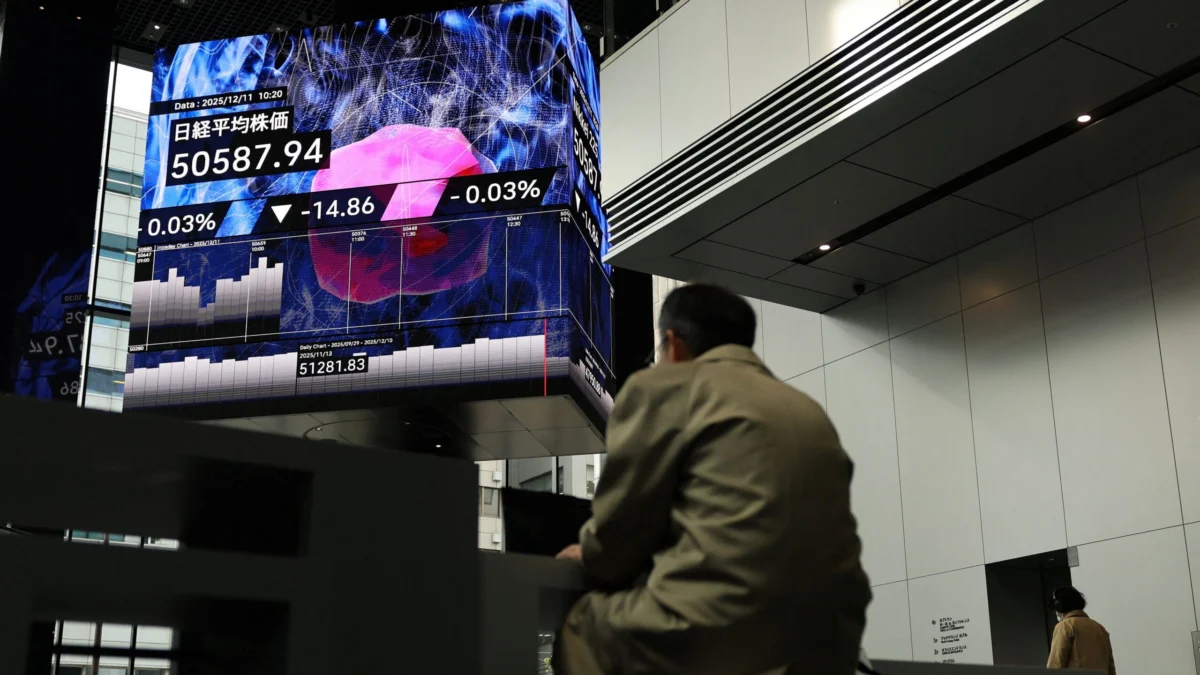
SYDNEY/TOKYO – Asian equity markets opened the week on a robust note, fueled by a dual-engine of renewed enthusiasm for artificial intelligence (AI) stocks and cautious optimism regarding diplomatic overtures in the Middle East. While regional investors remain hypersensitive to geopolitical developments, the allure of the tech-driven bull market appears to be providing a significant floor for valuations.
Main Facts: A Resilient Start to the Trading Week
At the start of the new trading week, major benchmarks across the Asia-Pacific region saw upward momentum. In Tokyo, the Nikkei 225 index reflected a strong appetite for risk, driven largely by the semiconductor and robotics sectors. This bullish sentiment comes despite a backdrop of high volatility elsewhere, particularly regarding the ongoing monitoring of tensions involving Iran and the broader Middle Eastern landscape.
The market narrative is currently defined by a "wait-and-see" approach to geopolitics, contrasted with a "buy-in" approach to structural technological shifts. Investors appear to be banking on the narrative that the transformative potential of AI will continue to generate earnings growth, regardless of macroeconomic headwinds or regional instability.
Chronology of Market Developments
The trading session was marked by a distinct sequence of events that shaped the day’s narrative:
- Early Morning Sentiment: Markets opened with cautious optimism, as reports regarding potential diplomatic progress between the United States and Iran provided a glimmer of relief, dampening concerns over oil supply disruptions and regional instability.
- Mid-Morning AI Surge: By mid-morning, the focus shifted sharply to Tokyo, where robotics and semiconductor-adjacent companies saw significant capital inflows. The sentiment was clear: AI is no longer just a sector; it is a core pillar of the current market cycle.
- Policy Clarity from Beijing: Mid-day trading was anchored by the People’s Bank of China’s (PBOC) decision to maintain the status quo on its Loan Prime Rates (LPR). The announcement that the one-year LPR would remain at 3.0% and the five-year at 3.50% served as a anchor point for regional currency markets.
- Afternoon Profit-Taking: As the session neared its close, select sectors, including specific electronics components manufacturers, saw moderate profit-taking, balancing out the earlier gains.
Supporting Data and Sector Performance
The divergence in stock performance was stark, highlighting a bifurcated market where specific catalysts drove outsized returns.
The AI and Robotics Rally
The standout performers of the day were companies directly tied to the automation and AI infrastructure supply chain.
- Fanuc: The global leader in factory automation saw its shares climb by approximately 8%, buoyed by the growing demand for robotic integration in AI-driven smart factories.
- Yaskawa Electric: Following a similar trend, Yaskawa surged roughly 9%, reflecting a broader industry-wide revaluation of companies that facilitate the "fourth industrial revolution."
The Retail Anomaly
A notable outlier was J. Front Retailing, which recorded a massive 16.2% jump. This surge was attributed to the entrance of an activist investor, signaling that even in a tech-heavy market, traditional sectors can find explosive growth through corporate governance shifts and restructuring efforts.
The Laggards
Conversely, not all sectors participated in the rally. Taiyo Yuden and Tokyo Electric Power (TEPCO) both faced downward pressure, shedding over 3% each. These losses reflect localized concerns—in the case of Taiyo Yuden, exposure to fluctuating demand in the consumer electronics space; for TEPCO, ongoing operational and regulatory scrutiny.
Official Responses and Monetary Policy Implications
The decision by the People’s Bank of China to keep interest rates unchanged for the 13th consecutive month provides significant insight into the current mindset of global central bankers.
Despite an ongoing, multi-year property sector crisis that has hindered domestic demand, the PBOC appears to be signaling a "measured stability" approach. By holding rates steady, Beijing is opting to preserve currency stability rather than resorting to aggressive monetary stimulus that could trigger capital flight or exacerbate inflationary pressures.
Economists note that this decision suggests the Chinese leadership is looking for a "soft landing" in the real estate market rather than a rapid, debt-fueled recovery. For the global investor, this confirms that the "easy money" era in China has concluded, and growth must now be found through organic efficiency gains rather than liquidity injections.
Geopolitical Implications: The Iran Factor
The geopolitical situation remains the "elephant in the room." Wataru Akiyama, an equity strategist at Nomura Securities, underscored the dichotomy facing investors:
"KI-bezogene Unternehmen spielen wieder einmal eine führende Rolle bei der Marktentwicklung. Eine hohe Wachsamkeit hinsichtlich der Entwicklungen im Iran und im Nahen Osten dürfte jedoch anhalten."
(AI-related companies are once again playing a leading role in market development. However, high vigilance regarding developments in Iran and the Middle East is likely to persist.)
The implication is that while investors are currently rewarding the long-term prospects of AI, they are simultaneously hedging against the "tail risk" of a regional conflict. This has led to a market environment where technical bullishness is consistently checked by defensive positioning in energy and safe-haven assets.
The Future Outlook: Tech vs. Macro
As the week progresses, the market will likely be defined by three key variables:
1. The Saturation of AI Hype
Investors are beginning to differentiate between companies that claim to use AI and those that monetize it. As seen with Fanuc and Yaskawa, the market is rewarding companies with tangible industrial applications of automation.
2. The Persistence of Middle Eastern Instability
Should the peace talks between the U.S. and Iran stall, the resulting energy price volatility could undermine the gains made in the tech sector. Energy costs are a critical input for the high-end semiconductor manufacturing facilities that define the current AI boom.
3. The Chinese Property Conundrum
With interest rates held steady, the pressure on Chinese real estate developers will remain high. The global market is now watching to see if this "steady-as-she-goes" approach from the PBOC will lead to a bottoming out of the property crisis or a prolonged period of stagnation.
Conclusion: A Delicate Equilibrium
The Asian markets are currently navigating a delicate equilibrium. On one side, the promise of the AI revolution offers a compelling narrative for growth that transcends borders and political disputes. On the other, the persistent shadow of geopolitical uncertainty—specifically regarding Iran—remains a potent force capable of disrupting global supply chains and investor confidence at a moment’s notice.
For now, the balance is held by the tech sector. As long as robotics and AI firms continue to report strong capital expenditure cycles and clear paths to profitability, the markets are likely to remain resilient. However, institutional investors are advised to maintain a defensive posture, recognizing that in the current climate, news headlines from the Middle East can evaporate market gains as quickly as they were created.
The coming weeks will be a test of whether the "AI narrative" is robust enough to survive a potential flare-up in geopolitical tensions or a protracted period of slow growth in China. Investors are well-advised to focus on balance sheets, debt-to-equity ratios, and the actual implementation of technology in industrial settings rather than mere speculation. In this market, the winners are those who can distinguish between the noise of political tension and the signal of technological progress.