The Militärhistorisches Museum der Bundeswehr (MHMBw) in Dresden has unveiled a provocative and long-awaited exhibition, "Kunst auf Kommando?" (Art on Command?), which provides an unprecedented deep dive into the extensive art collection of the former National People’s Army (NVA) of the German Democratic Republic (GDR). Following the reunification of Germany and the subsequent dissolution of the NVA, the fate of its vast cultural holdings became a matter of historical and bureaucratic scrutiny. Now, decades later, the public is finally invited to engage with this complex visual archive.
The collection, which includes roughly 650 paintings, 550 sculptures, and over 5,200 prints and drawings, offers a stark, multifaceted window into the ideological machinery of the East German state. By displaying 200 of these works, the museum seeks to move beyond the binary of "propaganda versus art," instead choosing to explore the nuance of the socialist aesthetic, the trauma of war, and the shifting responsibilities of the soldier.
The Genesis of the NVA Collection: Ideology and Aesthetics
The NVA did not merely function as a military organization; it acted as a significant patron of the arts. During the GDR era, the military commissioned works directly from artists or purchased pieces through the state-run art trade. The objective was multifaceted: art was intended to decorate military facilities, foster a sense of "socialist patriotism," and, crucially, elevate the morale and "combat readiness" of soldiers.
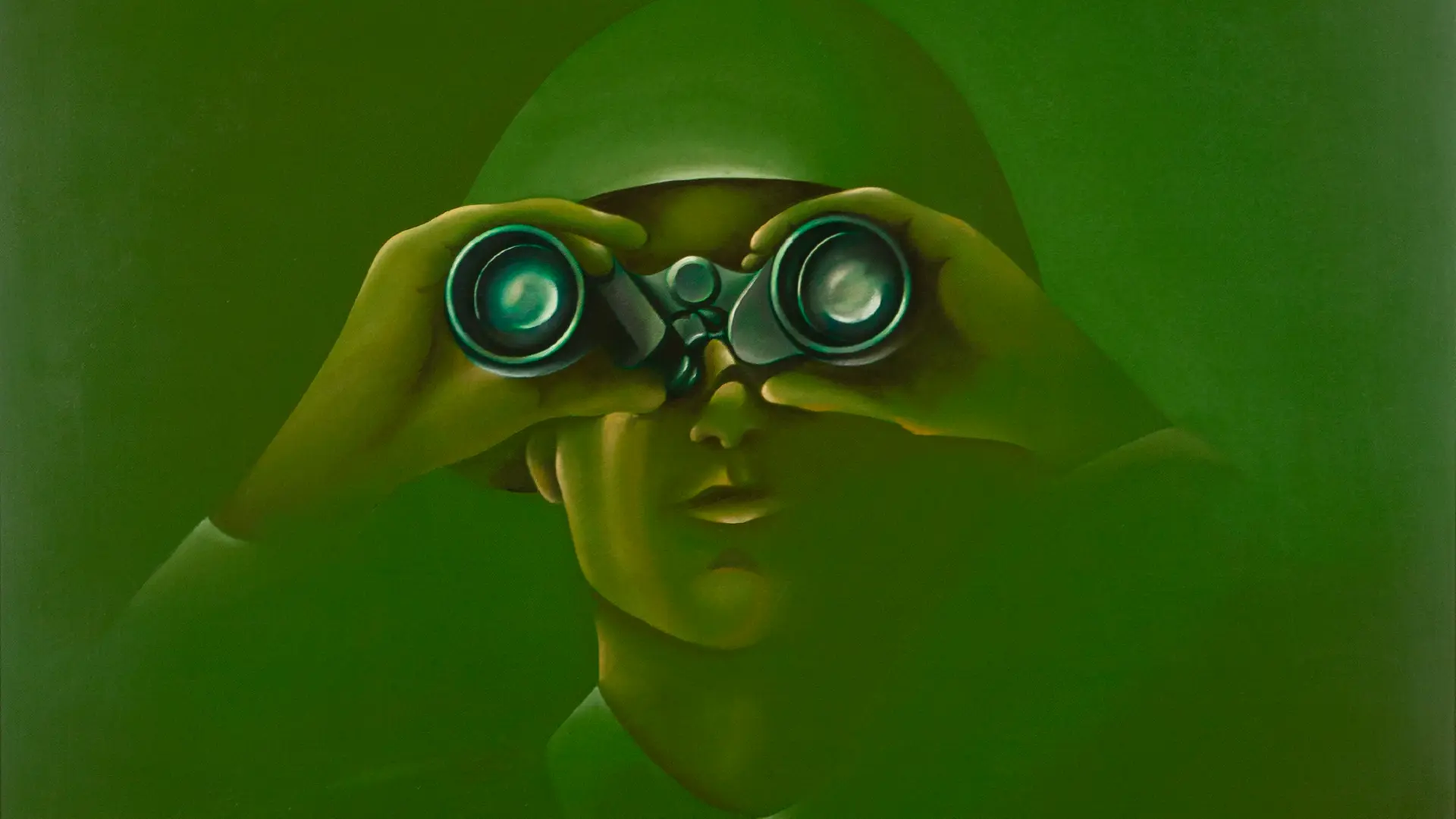
Curator Katja Protte explains that the NVA functioned as a major institutional patron, standing alongside entities like the Free German Trade Union Federation (FDGB) and various state-owned enterprises. The art produced under this patronage ranged from celebratory depictions of military life to somber, introspective reflections on the heavy burden of duty.
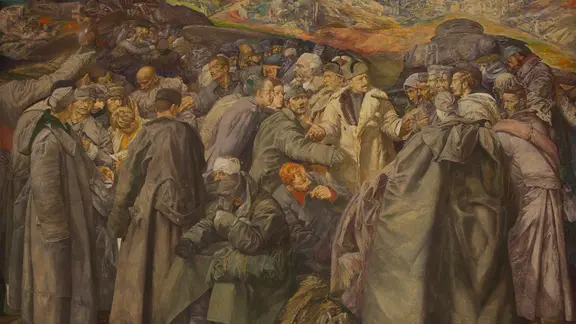
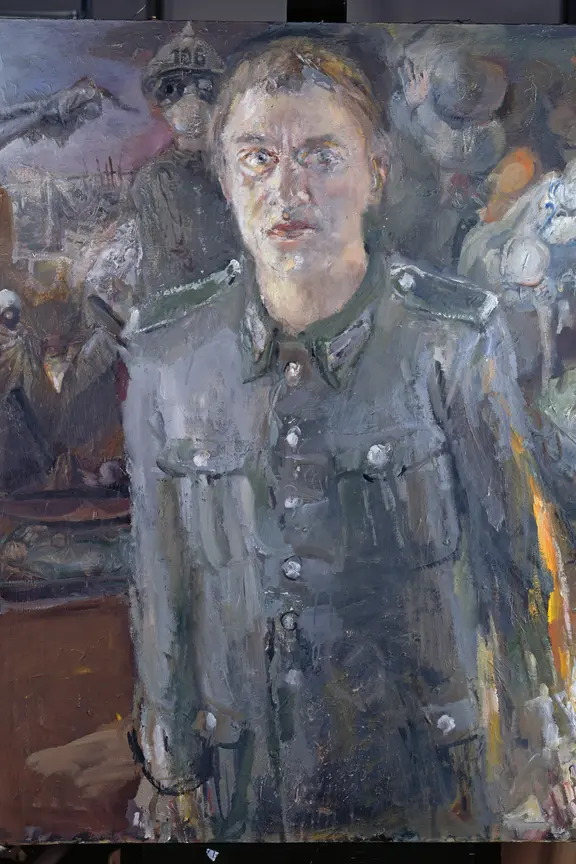
For the modern viewer, the exhibition presents a visual history of how the GDR sought to define the role of the individual soldier. While some pieces are overtly didactic, others—by artists such as Heinz Lohmar, Arno Rink, and Bernhard Heisig—transcend their state-commissioned origins. These works grapple with the haunting ghosts of the Second World War, using the canvas to process collective trauma rather than merely serving as tools for recruitment or state glorification.
A Chronological Perspective: From Cold War Tension to Contemporary Reflection
The exhibition is structured as a chronological and thematic journey. It begins with the early, often rigid artistic interpretations of military duty, moving through the middle years of the GDR, and culminating in a dialogue with contemporary art.
1960s – The Era of Idealism
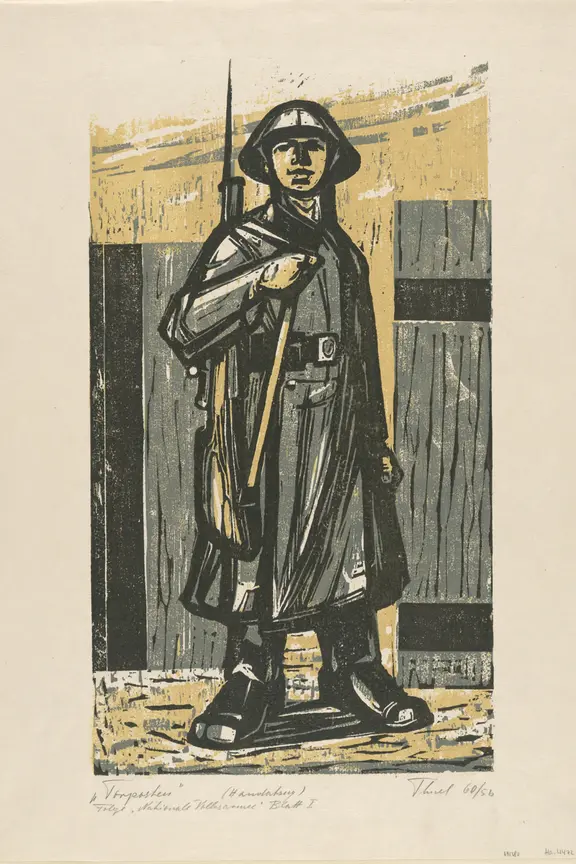
In the early decades, the focus was on themes of "brotherhood in arms." Works like Hans Eickworth’s 1963 sculpture Waffenbrüderschaft (Brotherhood in Arms) depict young soldiers with an almost fragile idealism. These pieces reflect a time when the GDR was actively building its identity, attempting to frame the soldier as a heroic, disciplined defender of the socialist experiment.
1970s and 80s – The Burden of Responsibility
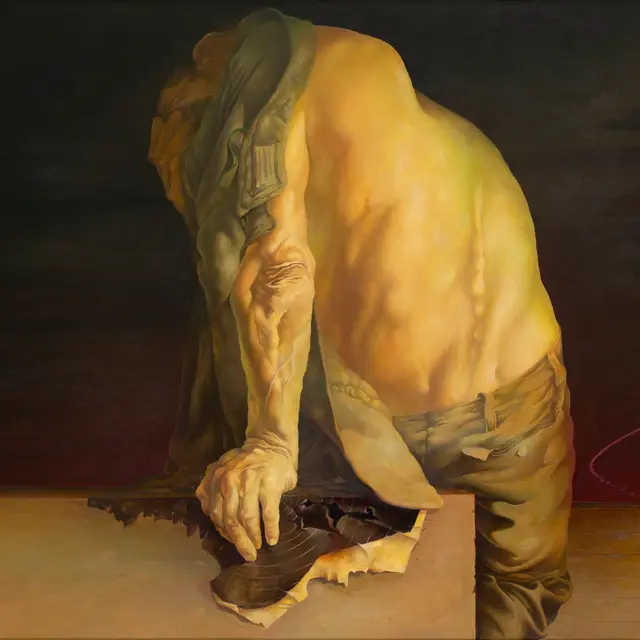
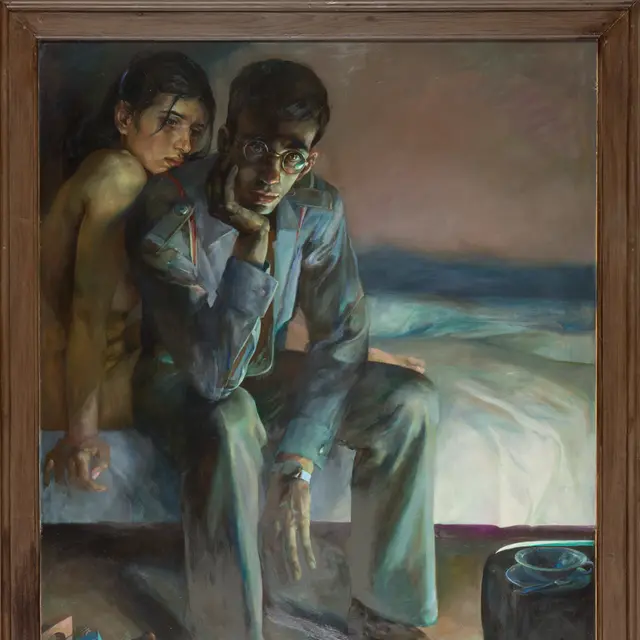
As the Cold War matured, the artistic tone shifted. The exhibition highlights the 1984 painting Die Verantwortung (The Responsibility) by Horst Sakulowski. This piece serves as a cornerstone of the exhibition. It depicts a soldier, shirtless and isolated, turning away in a posture of profound existential despair. While the uniform jacket slipping from his shoulder suggests the border guards of the inner-German border, the painting’s ambiguity is its power.
Curator Katja Protte points out that the painting was once subject to intense debate. Some interpreted the dark, looming skies and the silhouette of a jet—a potential NATO aircraft—as a commentary on the agonizing, split-second decisions a soldier might have to make regarding war and peace. Remarkably, the painting was so significant that it was included in the 1988 Venice Biennale as part of the GDR’s official entry, demonstrating how even "official" art could push the boundaries of what the state considered acceptable.
The Contemporary Intervention
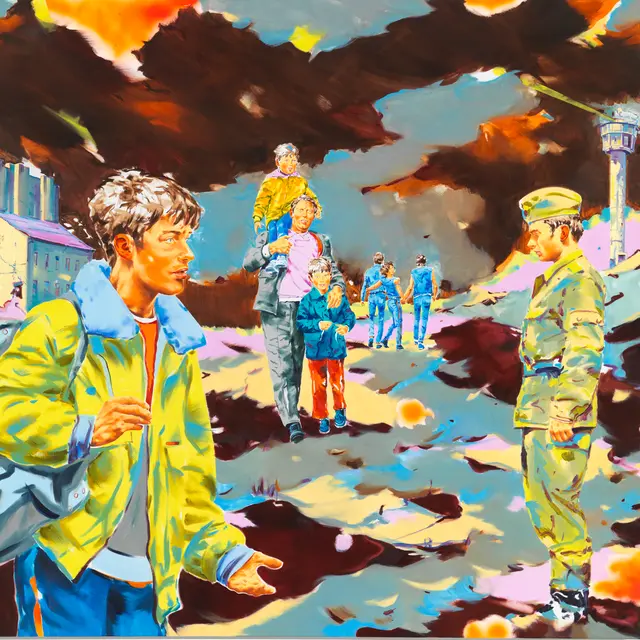
The museum does not leave the historical collection to stand alone. To bridge the gap between the past and the present, five contemporary artists were commissioned to create new works for the exhibition’s exterior. These installations challenge the viewer to engage with the NVA’s legacy from a 21st-century perspective.
Svea Duve’s installation, featuring a guardhouse where visitors can leave their own comments on the modern debate regarding the reintroduction of mandatory military service, serves as a bridge to current political discussions. Similarly, Christof Zwiener’s sound installation, which uses the bronze bodies of military sculptures as a percussion instrument for distorted, haunting renditions of children’s songs, creates an eerie tension between the innocence of youth and the threat of militarism.
Supporting Data and Institutional Scope
The sheer scale of the archive acquired by the Bundeswehr is a testament to the GDR’s institutional investment in art. The collection, now fully accessible to researchers and the public through this exhibition, includes:
- Paintings: 650 pieces, ranging from socialist realism to abstract expressionist influences.
- Sculptures: 550 items, often commissioned for public spaces within barracks or military academies.
- Graphic Works: Over 5,200 prints, sketches, and watercolors, providing a detailed look at the artistic process behind the finished military commissions.
The integration of these works into the Bundeswehr’s collection is historically significant. It signifies a transition where the former "enemy" military’s artistic output is now preserved by the current German armed forces, transforming items of propaganda into historical evidence and academic resources.
Official Perspectives: The Duty to Remember
The museum’s leadership emphasizes that the exhibition is not intended to celebrate the NVA but to interrogate it. By presenting these works, the museum fulfills its mandate as a center for military history to educate the public about the mechanisms of state control and the role of art in the GDR’s military culture.
"The experiences depicted in these works are still very much present in the minds of the older generation," says art historian Elke Neumann, who curated the outdoor exhibition space. "However, these experiences are not often discussed or contextualized. Our goal is to reopen those conversations."
The exhibition also serves as a pedagogical tool. By offering a space where children, students, and former NVA conscripts can stand before the same canvases, the museum facilitates an intergenerational dialogue that is rare in German public life.
Broader Implications: Art, Militarism, and Society
The implications of "Kunst auf Kommando?" reach far beyond the walls of the Dresden museum. In a climate where the debate over military conscription has resurfaced in German politics, the exhibition feels strikingly relevant.
The Question of Complicity
One of the most profound questions the exhibition poses is the role of the artist in an authoritarian regime. Did these artists believe in the cause, or were they merely surviving? By showcasing works like Werner Tübke’s Nationalkomitee Freies Deutschland (1970), the exhibition invites visitors to consider the line between artistic integrity and state-mandated production.
The Lingering Presence of the NVA
The exhibition acknowledges that the NVA was a deeply embedded aspect of life in the GDR. For millions, the "service" was a mandatory rite of passage. By displaying the art that accompanied that service, the exhibition validates the reality of that time while simultaneously critiquing the ideological framework that necessitated it.
A Model for Future Curatorial Practice
The museum’s decision to invite contemporary artists to respond to the historical collection is a model for how museums can handle "difficult heritage." Instead of hiding or purging the propaganda of a fallen regime, the MHMBw has opted for active engagement. By layering contemporary interpretations over historical objects, the museum avoids the pitfalls of both nostalgia and total erasure.
Visiting Information
The exhibition "Kunst auf Kommando?" runs from October 9, 2026, through August 31, 2027. Located at the Militärhistorisches Museum der Bundeswehr at Olbrichtsplatz 2 in Dresden, the exhibition is open to the public with modified hours starting in January 2027.
Admission is priced to be accessible, with a standard fee of 7 euros (4 euros reduced) and free entry for children, youths, and members of the German Armed Forces. This pricing reflects the museum’s commitment to making this historical inquiry as wide-reaching as possible.
As the final, haunting notes of Christof Zwiener’s sound installation linger in the ears of the visitor, one is left with a singular, lingering thought: that art, regardless of whether it is created "on command," ultimately escapes its creator. It becomes a document, a witness, and a provocation. In Dresden, the NVA’s art collection has finally been granted the space to speak for itself, offering a complex, uncomfortable, and essential lesson for a unified Germany.