By Sanny Stephan, SPORT IM OSTEN
Updated: October 22, 2026, 10:03 AM
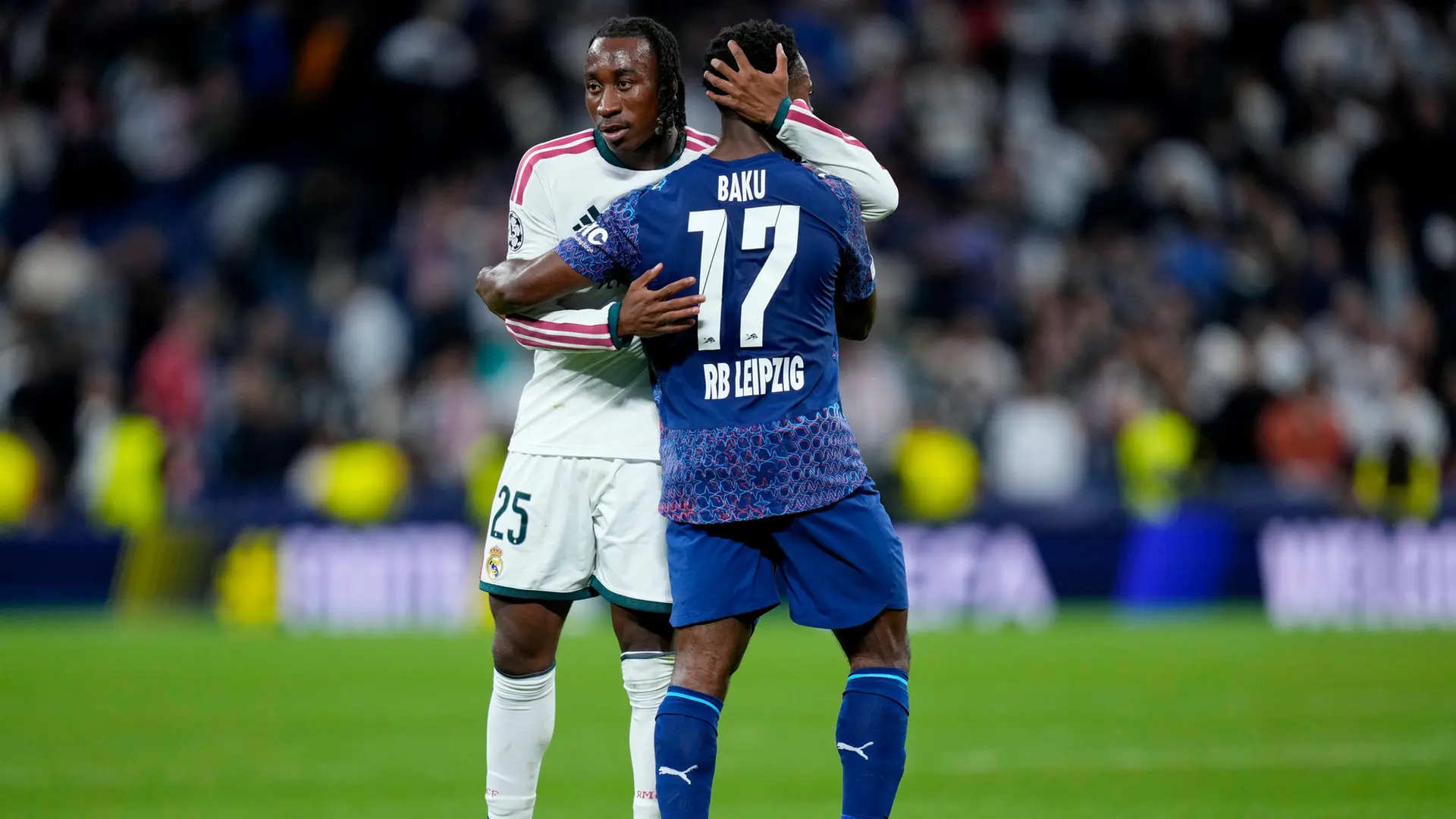
The scoreboard at the Estadio Santiago Bernabéu read 1:4. For RB Leipzig, it was a familiar, stinging result—the fourth time in recent outings that the team has conceded four goals in a single match. Yet, to those who watched the full 90 minutes of this Champions League encounter against Real Madrid, the numbers fail to tell the full story. Unlike the recent 1:6 demolition by Bayern Munich, which saw a team surrender its identity, this performance in the Spanish capital was marked by a defiant, if ultimately futile, character.
For manager Martín Demichelis, the result brings no points, but perhaps a flicker of hope. As Leipzig continues to languish in the lower tiers of the new Champions League league phase—sitting at 29th out of 36 teams—the match served as both a testament to the club’s fighting spirit and a stark, painful reminder of the "RB Dilemma."
A Chronology of a High-Stakes Defeat
The match began with tactical discipline that suggested Leipzig had learned from the tactical collapse in Munich. Demichelis set his side up to be compact, frustrating the Madrid engine room and carving out meaningful transitions. For long stretches of the first half, the German side was arguably the more dangerous entity on the pitch, creating high-quality chances that simply went begging.
However, Champions League football at the Bernabéu is an unforgiving masterclass in efficiency. Just as the visitors seemed to be gaining a foothold, Real Madrid’s individual quality intervened. In the 44th minute, Bernardo Silva broke the deadlock, a sucker-punch that sent Leipzig into the tunnel feeling the weight of missed opportunities.
The second half saw a more clinical Madrid. Arda Güler doubled the lead in the 52nd minute, and as the game opened up, the gulf in individual talent became insurmountable. Kylian Mbappé added a third in the 82nd minute. Though Tidiam Gomis managed a consolation goal in the 85th, assisted by the returning Christoph Baumgartner, Yan Diomande—a former Leipzig player—delivered the final, poetic blow with a brilliant strike to make it 4:1.
The Emotional Return of Christoph Baumgartner
The night was undoubtedly defined by the return of Christoph Baumgartner. After 140 days on the sidelines, the 27-year-old Austrian stepped back onto the pitch, ending a period of isolation that he described as the most difficult of his life.
"I am just happy to be back; I am burning to play," an visibly emotional Baumgartner stated in the post-match interview zone. For a player who had missed a World Cup cycle and endured a grueling rehabilitation process involving surgery in Finland and specialized treatment in the United States, the match was a personal victory.
However, Baumgartner’s assessment of the team’s performance was grounded in professional frustration rather than personal sentiment. "Fighting until the end should be a basic requirement, not a point of pride," he noted candidly. His ability to thread the ball to Gomis for the late goal was a reminder of what the team has been missing in the final third. Yet, his frustration remained palpable: "You simply cannot be 1:0 down at halftime here given the chances we had. If you want to beat the best in the world, everything has to be perfect. Much was good tonight, but not everything."
The "RB Dilemma": A Revolving Door of Talent
While the 1:4 scoreline hurts, the deeper issue for RB Leipzig is symbolized by the man who scored the final goal. Yan Diomande’s performance was a microcosm of the club’s fundamental struggle.
RB Leipzig has successfully established itself as a premier European factory for talent, but it has yet to evolve into a sanctuary where that talent remains to win trophies. The list of graduates is a "who’s who" of elite football: Dani Olmo (Barcelona), Joško Gvardiol (Manchester City), Dominik Szoboszlai and Ibrahima Konaté (Liverpool), Dayot Upamecano (Bayern Munich), Benjamin Sesko (Manchester United), and Xavi Simons (Tottenham).
The financial success of this model is undeniable; the transfer fees generated have allowed the club to remain solvent and competitive in the Bundesliga. But there is a ceiling. When the club’s most brilliant prospects view Leipzig as a mere stepping stone rather than a destination, the team is forced into a state of permanent reconstruction.
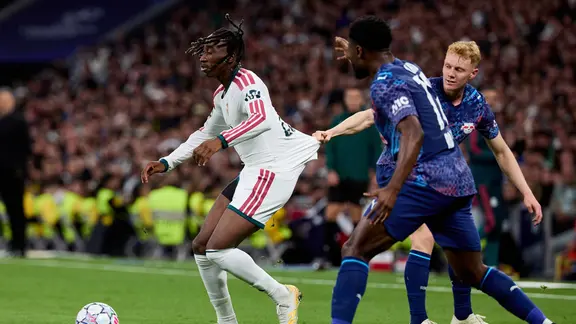
In Madrid, the team played with the tactical maturity of a side that had been together for years, but the reality is that the squad is in a constant state of flux. To compete at the highest level of the Champions League, the club faces a difficult evolution: it must find a way to pivot from being the "world’s best developer" to being a team that can retain its stars when they reach their peak.
Official Responses and Tactical Assessment
Manager Martín Demichelis remains caught in a state of professional conflict. He acknowledged the improvement in defensive stability compared to the Munich debacle, noting that the team was "courageous on the ball" and "significantly more compact."
"I cannot be satisfied after a defeat, especially not a 1:4 loss," Demichelis said. "But I saw a different team than the one we saw in the Bundesliga recently. We didn’t surrender. We tested them."
However, the raw data provides little comfort for the Argentine manager. Leipzig has now lost five consecutive away matches, conceding 19 goals in that span while scoring only four. With only three points from their opening Champions League fixtures, the pressure to secure a top-24 finish is mounting. The gap between the club’s stated ambition—to be a permanent fixture among Europe’s elite—and the current reality of their performance is widening.
Strategic Implications: Where to Go from Here?
As the dust settles on the Bernabéu, the path forward for Leipzig is clear but arduous. The return of players like Baumgartner provides a necessary infusion of experience and leadership, which has been sorely lacking in the absence of veteran figures.
However, the tactical focus must shift toward clinical conversion. As Baumgartner pointed out, being "at least equal" to a side like Real Madrid in open play is a moral victory, but it is a hollow one without points. The team’s inability to capitalize on key chances is not merely a slump in form; it is a symptom of a squad that lacks the cynical, cold-blooded edge of the elite clubs they are chasing.

Furthermore, the club’s hierarchy must address the sustainability of their personnel strategy. While the scouting network remains world-class, the constant churn of players—driven by lucrative offers from the Premier League and La Liga giants—is preventing the chemistry needed for deep European runs.
The match against Real Madrid proved that RB Leipzig has the DNA to compete with giants. They have the structure, the scouting, and the tactical vision. Now, they require the consistency to survive the transition from a talent incubator to a European contender.
With the next few matchdays in the Champions League, Leipzig finds itself at a crossroads. The resilience shown against Real Madrid provided a glimpse of potential, but in the unforgiving landscape of top-tier football, potential without results eventually fades. The season is still young, and if Demichelis can integrate his returning stars and stabilize the defensive unit, there is still time to rescue their European campaign. But for now, the "RB Dilemma" remains the elephant in the room: building a team is only half the battle; keeping it together is where the real challenge lies.