The landscape of professional women’s football is set for a historic transformation. On Thursday, the FIFA Council officially confirmed that the United States will serve as the host nation for the inaugural FIFA Women’s Club World Cup, scheduled to take place in January 2028. This decision marks a significant milestone in the sport’s global commercial and structural development, placing the world’s elite clubs on a singular, high-stakes international stage.
The Core Announcement: A Historic First
The FIFA Council’s decision to award the hosting rights to the United States follows months of speculation regarding which nation would be best positioned to launch such a prestigious tournament. While reports had surfaced suggesting interest from Qatar, the FIFA governing body ultimately favored the American bid, citing the nation’s unparalleled experience in hosting major FIFA tournaments, the world-class quality of its sports infrastructure, and the rapidly growing commercial interest in women’s football across North America.
The tournament is scheduled to run from January 5 to January 30, 2028, featuring a total of 16 top-tier clubs from across the globe. By opting for a January window, FIFA has strategically avoided a conflict with the 2028 Los Angeles Olympic Games, which are set to take place in the summer of that same year. This scheduling ensures that the tournament remains a standalone event, allowing the spotlight to remain firmly fixed on club competition.
Chronology of the Tournament’s Development
The path to the 2028 tournament has been paved with strategic planning that began in earnest in late 2025. FIFA initially confirmed the tournament’s framework—including the number of participating teams and the intended window—during meetings held in December 2025.
For years, the women’s game has lacked a consolidated global club competition comparable to the men’s FIFA Club World Cup. While the UEFA Women’s Champions League has served as the gold standard for club football, there was no bridge connecting the champions of Europe to the powerhouses of the NWSL, the Liga F in Spain, or the burgeoning leagues in Asia and South America. The announcement of the 2028 tournament serves as the culmination of FIFA’s "Vision 2020-2027" strategy, which aims to professionalize the women’s game and create more frequent, high-profile fixtures.
The Infrastructure and Logistical Strategy
The choice of the United States is, in many ways, a logistical necessity. With the recent experience of the 2025 Men’s Club World Cup and the upcoming 2026 Men’s World Cup, the U.S. has proven it can handle the unique pressures of a multi-city, high-capacity tournament.
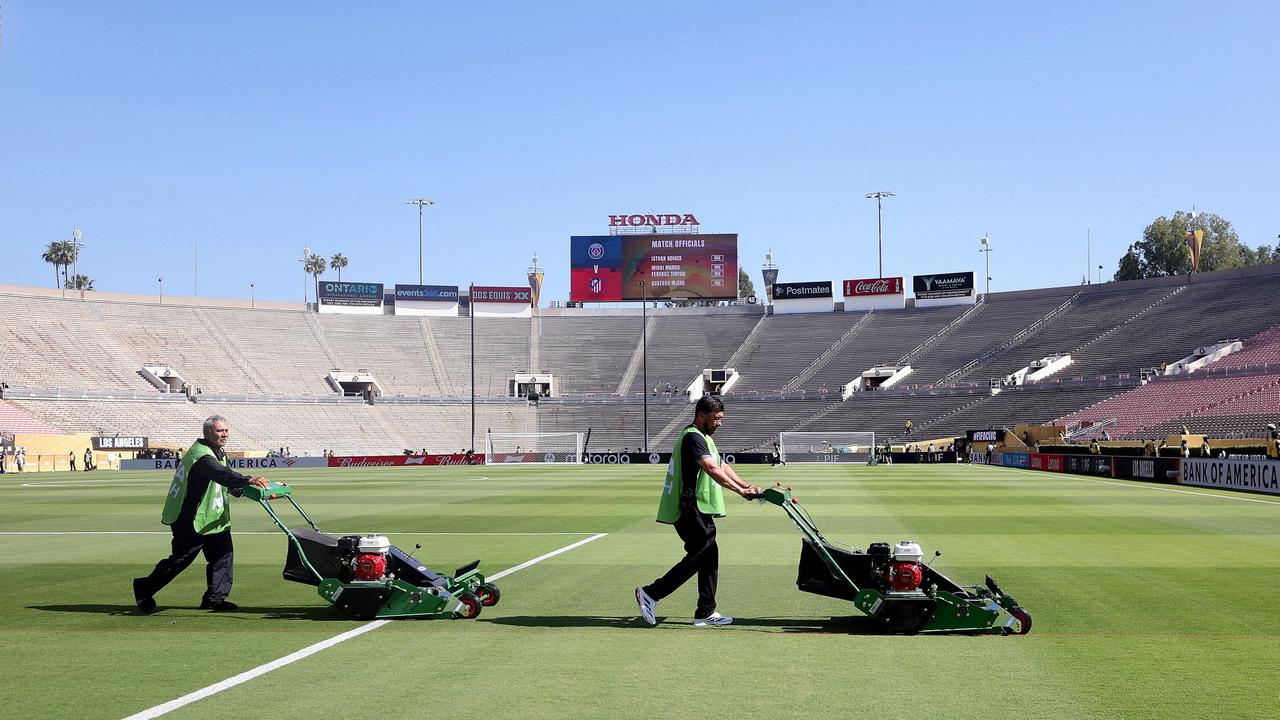
FIFA’s selection committee noted that the existing stadiums—many of which are already optimized for international football standards—will minimize the need for significant new construction, focusing instead on optimizing fan experience and broadcasting capabilities. The use of facilities like the iconic Rose Bowl, which has historically hosted some of the most significant moments in international football, suggests that FIFA intends for this tournament to carry the prestige and scale of a premier global sporting event.
Implications of the "US-FIFA" Connection
The hosting of yet another major tournament in the U.S. has reignited discussions regarding the relationship between FIFA President Gianni Infantino and American political leadership. The proximity of these major tournaments to the U.S. has prompted intense debate in European football circles.
Political analysts and sports journalists have pointed to the close ties between Infantino and the current administration, specifically highlighting the controversial awarding of the "FIFA Peace Prize" to President Donald Trump. This move drew significant backlash from the European football community, which has already been disillusioned by earlier failed attempts at sweeping commercial reforms, including the infamous "investor plans" that were widely perceived as a threat to the traditional structure of European football. As these tournaments proceed, the underlying tension between FIFA’s centralized, often executive-driven decision-making and the resistance from established European stakeholders remains a critical subplot to the growth of the game.
Qualification and Competitive Structure
The road to the 2028 tournament is already underway. Unlike traditional tournaments that might rely on a single qualification match, the Women’s Club World Cup utilizes a complex four-year cycle based on results from the highest-level continental competitions. The qualification period, which runs from 2024 through 2027, ensures that the teams participating are not merely "one-hit wonders" but consistent performers at the elite level.
Distribution of Slots
The slot distribution reflects a deliberate attempt to balance traditional European dominance with the emerging strength of clubs in other confederations. The structure is as follows:
| Confederation | Directly Qualified | Play-In Slots |
|---|---|---|
| UEFA (Europe) | 5 | 1 |
| AFC (Asia) | 2 | 1 |
| CAF (Africa) | 2 | 1 |
| CONMEBOL (South America) | 2 | 1 |
| CONCACAF (North/Central America) | 2 | 1 |
| OFC (Oceania) | 0 | 1 |
This distribution highlights the UEFA dominance, with five teams qualifying directly, plus an additional chance through a play-in tournament. However, by providing pathways for every confederation, FIFA is signaling a commitment to the "globalization" of the sport, ensuring that teams from regions with developing leagues, such as Oceania and Africa, have a genuine opportunity to compete on the world stage.
The Economic Impact of the Tournament
For the host cities, the economic implications are significant. Hosting the inaugural tournament is expected to generate massive interest in ticketing, tourism, and local hospitality. Furthermore, the event will serve as a commercial testing ground. FIFA is looking to monetize the women’s club market, which has seen exponential growth in sponsorship revenue over the last five years.
Media experts suggest that the timing of the tournament in January is also a clever broadcasting play. By holding the event when traditional domestic leagues in Europe are in their winter breaks or mid-season lulls, FIFA captures an audience that is hungry for high-level football. This creates a "premium" broadcasting window, likely to attract record-breaking viewership numbers and high-value media rights deals.
Challenges and Future Outlook
Despite the enthusiasm, challenges remain. The primary concern among players’ unions and club managers is the already congested fixture list. With domestic leagues, continental competitions, and international duty for national teams, the addition of a major club tournament creates a significant physical burden on the athletes. FIFA will need to work closely with organizations like FIFPRO to ensure that the health and performance of the players are protected through appropriate rest periods and rotation strategies.
Furthermore, the integration of 16 teams with varying levels of infrastructure will be a test of FIFA’s operational efficiency. Critics point out that the gap in quality between European giants and clubs from smaller confederations could lead to lopsided scores, potentially undermining the tournament’s brand in its first year. FIFA’s response to this has been to emphasize the "developmental value" of the tournament, arguing that the exposure will force investment in domestic leagues worldwide, effectively narrowing the competitive gap over time.
Conclusion: A Turning Point
The 2028 FIFA Women’s Club World Cup is more than just a tournament; it is a declaration of intent. By launching this competition, FIFA is acknowledging that women’s club football has reached a level of maturity that demands a global showcase. The decision to host in the United States, despite the political and diplomatic noise surrounding the choice, underscores the importance of infrastructure and market potential in FIFA’s eyes.
As the world looks toward January 2028, the focus will shift from boardrooms to the pitch. The qualification period is already shaping the narrative, as clubs across the globe adjust their strategies to earn a spot in this inaugural 16-team field. For the players, it is the realization of a long-held dream: a true world championship of clubs. For the fans, it promises to be a transformative moment in the history of the sport—a spectacle that will undoubtedly define the next decade of women’s football.