By Sport im Osten Editorial Team
Updated: October 23, 2026
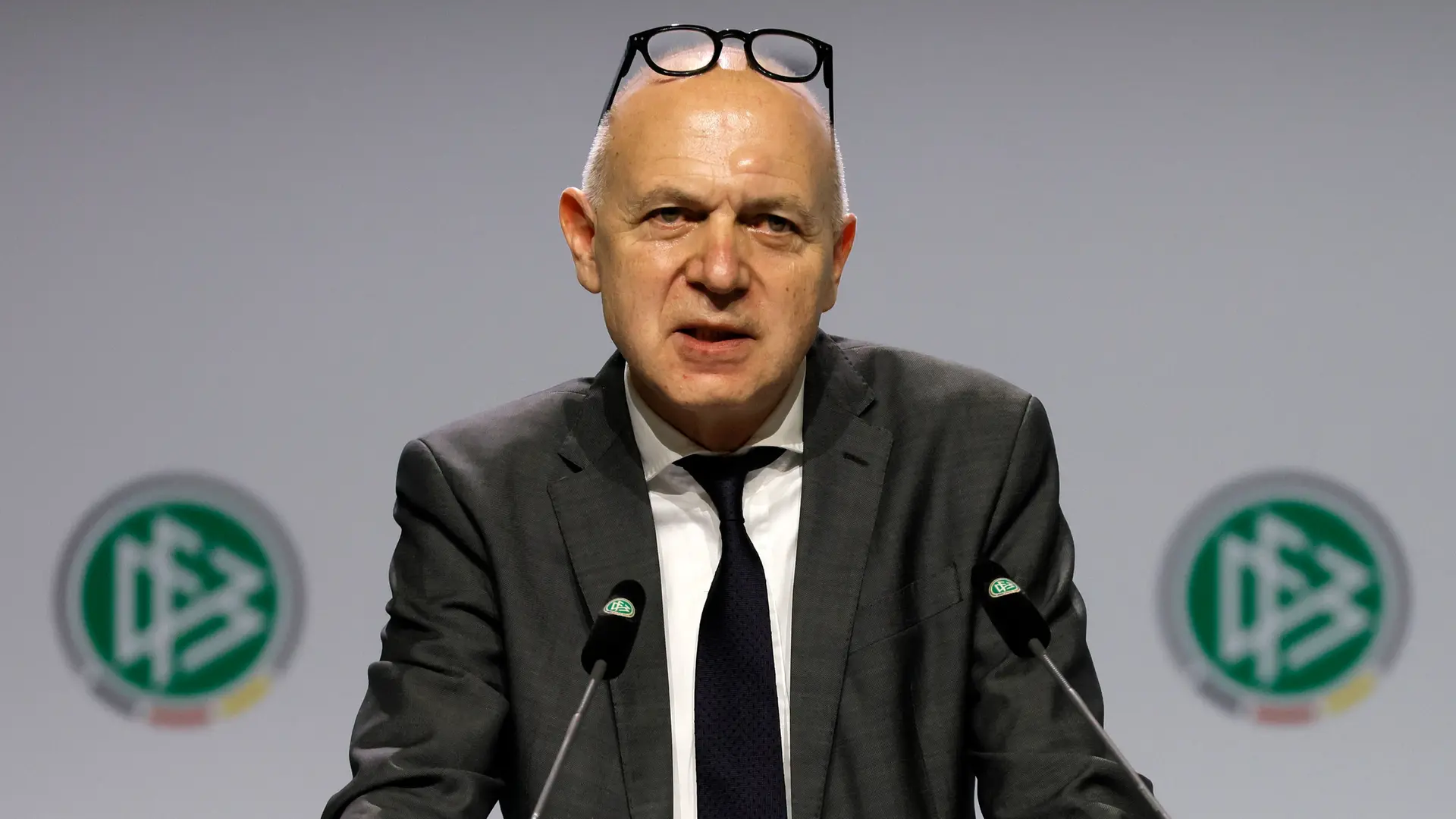
German football is standing on the precipice of its most significant structural transformation in decades. As the Deutscher Fußball-Bund (DFB) prepares for a critical Bundestag meeting this December, the blueprint for the future of the Regionalliga—the country’s fourth tier—has been laid bare. DFB President Bernd Neuendorf has officially presented the "Compass Model," a radical proposal designed to standardize the chaotic landscape of amateur and semi-professional football.
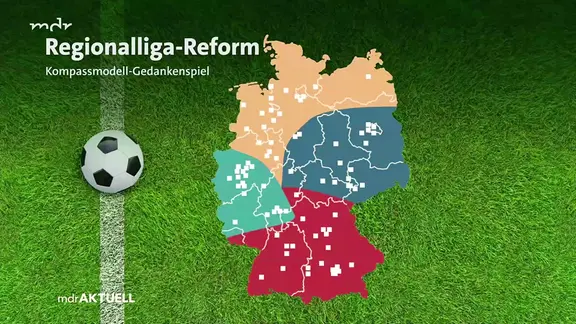
The proposal, which targets implementation for the 2028/2029 season, seeks to replace the current fragmented system of five disparate regional leagues with a unified structure. By introducing four geographic "compass" sectors, each housing 20 teams, the DFB hopes to provide a clearer, more financially sustainable, and competitively balanced pathway to the 3. Liga. However, the path to reform is far from smooth, as deep-seated regional rivalries and concerns over financial autonomy threaten to derail the ambitious project.
The Core of the Compass Model: Standardizing the Fourth Tier
The central pillar of the "Compass Model" is the consolidation of the current structure into four distinct regional divisions. Under the proposal, each of these four leagues will consist of 20 teams. The primary advantage touted by the DFB is the creation of a direct and transparent promotion pathway: the champions of each of the four new leagues will earn an automatic ticket to the 3. Liga.
This shift is intended to eliminate the controversial and often criticized promotion playoffs, which have historically pitted regional champions against one another in high-stakes, high-pressure matchups that frequently left deserving teams stranded in the fourth tier. By guaranteeing promotion to the winners, the DFB aims to incentivize long-term sporting investment, allowing clubs to plan their budgets and squad structures with greater certainty.
Financial Restructuring and Centralization
Perhaps the most significant—and controversial—aspect of the reform is the shift in financial control. Historically, the Regionalligen have been administered by the five regional associations (Nord, Nordost, West, Südwest, and Bayern). The Compass Model proposes to strip these associations of their administrative control, placing the leagues directly under the umbrella of the DFB.
To sweeten the pill, the DFB has pledged a substantial financial package. Under the current draft, each of the five regional associations would receive a compensation payment of €500,000. Furthermore, every participating club is set to receive a direct subsidy of €40,000 per season. These payments are guaranteed for a four-year term, providing a degree of fiscal stability previously unseen at this level of the pyramid.
However, there is a catch: second teams of professional clubs (U23s) are explicitly excluded from these payments. By taking over, the DFB also intends to centralize the marketing and commercial rights of the leagues. This includes the sale of television broadcasting rights and the acquisition of league-wide sponsorship deals, which the federation believes will significantly increase the total revenue pot for the clubs involved.
The Impact on the Regionalliga Nordost
The landscape for clubs in the Northeast (NOFV) is set for a major upheaval. Under the new configuration, the region is slated to receive 14 guaranteed starting spots in the revamped system. This, however, introduces a period of extreme uncertainty for the 2027/2028 season.
Clubs will not be evaluated based on simple historical performance; instead, the NOFV faces the daunting task of defining the criteria for qualification by July 1, 2027. Clubs will have to navigate a "qualification season" where the stakes are elevated to an unprecedented level. The traditional, stable structure of the current Regionalliga Nordost will essentially dissolve, replaced by a transition phase that will force clubs to fight not just for points, but for their very existence in the new four-tier system.
The Challenges of Geography and Tradition
Critics of the Compass Model argue that the plan risks eroding the cultural and historical fabric of German regional football. The Regionalliga is deeply rooted in local identity, with traditional derbies acting as the lifeblood for many clubs.
"The danger is that we lose the regional character that makes these leagues special," one club representative noted. While the DFB insists that geographical proximity will remain a primary factor in assigning teams to the four new divisions, the nature of the model implies that the landscape will be fluid. Depending on the movement of teams between the third and fourth tiers, clubs could find themselves reassigned to different divisions on a periodic basis. This potential for "geographical instability" creates a nightmare for fan travel planning and may diminish the intensity of long-standing local rivalries.
Furthermore, the competitive landscape will be significantly tougher. With 20 teams in each division, the margin for error will decrease. The DFB proposes that four teams be relegated from each of these new leagues annually, meaning the intensity of the relegation battle will match the intensity of the promotion race.
Promotion Dynamics: The "2.5" Problem
The path to the Regionalliga from the fifth tier (the Oberliga) remains a point of contention, particularly for the Northeast and Bavaria. Starting in 2028/2029, 16 teams will be promoted annually to the fourth tier.
The distribution is as follows:
- West and Southwest: 4 promotion spots each.
- North: 3 promotion spots.
- Northeast and Bavaria: 2.5 promotion spots each.
The "half" spot for the Northeast and Bavaria is the most controversial element. It implies that these two regions will have two fixed spots, with a third spot decided by a playoff series between the respective regional representatives. If the NOFV and the Bavarian association cannot agree on a different mechanism, these clubs will be forced into a high-stakes home-and-away series. This proposal has been met with skepticism, as it mirrors the very playoff system the DFB claims it wants to move away from at the higher level.
The Road to the December Bundestag
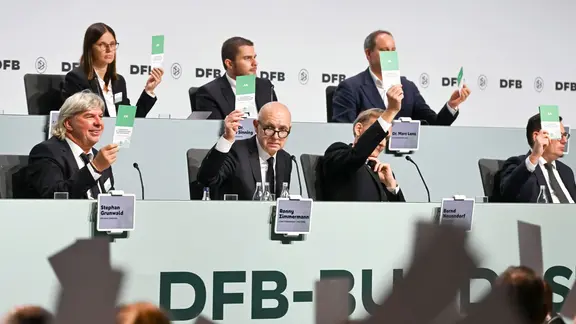
The proposal is currently being debated in the halls of the regional associations. Monday, October 26, marks the first major round of formal discussions, but the final decision is scheduled for the DFB-Bundestag on December 18.
The path to a consensus is narrow. The Bavarian Football Association (BFV) has been a vocal critic of the Compass Model, favoring an alternative approach: expanding the 3. Liga to 22 teams and increasing the number of automatic promotion spots to five, one for each regional association. This would keep the current regional structure intact while providing a more equitable path to the professional ranks.
The DFB, under Bernd Neuendorf, faces a delicate balancing act. They must convince the associations that the loss of autonomy and the risk of moving to a centralized system are outweighed by the long-term financial stability and the streamlined competition structure offered by the Compass Model.
Implications: A Future Defined by Centralization
If the Compass Model is adopted, it will mark a definitive pivot toward the "professionalization" of the fourth tier. By stripping away the administrative layers of the regional associations and bringing the league into the DFB’s central control, the federation is clearly signaling that the current model is no longer fit for purpose in the modern commercial landscape of football.
The implications for the clubs are twofold. For the bigger, more commercially viable clubs, the centralization of marketing rights could lead to a significant increase in visibility and income. For smaller, more tradition-bound clubs, however, the reform represents a threat. The increased travel costs associated with a 20-team league, the potential loss of traditional local rivalries, and the intense pressure of four relegation spots mean that the next three years—the transition period—will be among the most volatile in the history of the lower tiers.
As the footballing world looks toward December, the question remains: is this reform a necessary evolution to ensure the survival and competitiveness of German football’s foundation, or is it a top-down mandate that ignores the regional heart of the sport? For now, the "Compass" is pointing toward a future that is more unified, more commercial, and undeniably more uncertain.