As global temperatures hit record highs and the world braces for an unprecedented super-El Niño, the scientific bedrock of international climate policy is fracturing. A bitter power struggle within the Intergovernmental Panel on Climate Change (IPCC) has stalled the timeline for the critical seventh assessment report (AR7), leaving experts and vulnerable nations fearing a collapse of the diplomatic framework needed to combat the climate crisis.
The IPCC, headquartered in Geneva, is the world’s most influential scientific body regarding climate change. Its comprehensive reports, which synthesize thousands of pages of research from hundreds of scientists across the globe, serve as the definitive "medical chart" of the planet’s health. These findings are not merely academic; they are the mandatory foundation upon which international climate negotiations are built. However, following a disastrous plenary session in Addis Ababa on October 23, 2026, the organization finds itself in its deepest internal crisis since its inception.
The impasse over the timeline for the AR7 report—and a failure to agree on a viable budget—has cast a long shadow over the upcoming COP 33 summit.
The Anatomy of the Stalemate: Chronology of a Crisis
The tension had been simmering for months, but it reached a boiling point during the recent meetings in Ethiopia. The IPCC had originally intended to release central components of the AR7 report in 2028, a date strategically aligned with the COP 33 conference. This release was meant to provide the data necessary for the "Global Stocktake," a vital mechanism to evaluate how close the world is to meeting the goals set by the Paris Agreement.

However, a coalition of nations—led by Saudi Arabia, China, India, and Russia—stalled the proceedings. Their stated position is a demand for a one-year postponement. They argue that the current research framework insufficiently incorporates data and perspectives from the Global South, and that more time is required to ensure a more inclusive and representative assessment.
While the rhetoric focused on inclusivity, insiders describe the deadlock as a transparent stalling tactic. The negotiations in Addis Ababa were so gridlocked that by the end of the week, the assembly had achieved neither a consensus on the calendar nor a basic agreement on the budget required to fund the research process.
"We do not know, as of now, how the coming year will unfold," says Carl-Friedrich Schleussner of the International Institute for Applied Systems Analysis (IIASA) in Laxenburg, Austria. Schleussner, who is actively involved in the current assessment, warns that the lack of financial and scheduling clarity is paralyzing. Essential research workshops are now in jeopardy, particularly for scholars from developing nations who rely entirely on IPCC funding to participate in the collaborative process.
Supporting Data: A Planet in Peril
The timing of this political obstruction could not be more catastrophic. Scientific consensus, despite the diplomatic friction, remains stark. A United Nations report released earlier this week confirmed that the Earth is currently hurtling toward a temperature increase of 2.8 degrees Celsius by the end of the century compared to pre-industrial levels.

This trajectory is a direct contradiction of the 2015 Paris Agreement, which sought to cap global warming at 1.5 degrees Celsius to avert the most severe, irreversible impacts of the climate crisis. Recent data from the Copernicus Climate Change Service suggests that the 1.5-degree threshold may have already been breached on a rolling 12-month basis.
To return to a 1.5-degree pathway, the math is unforgiving. According to climate scientists:
- 2030: Global emissions must drop by 18% compared to 2025 levels.
- 2035: Emissions must be reduced by 45%.
- 2040: A total reduction of 69% is required.
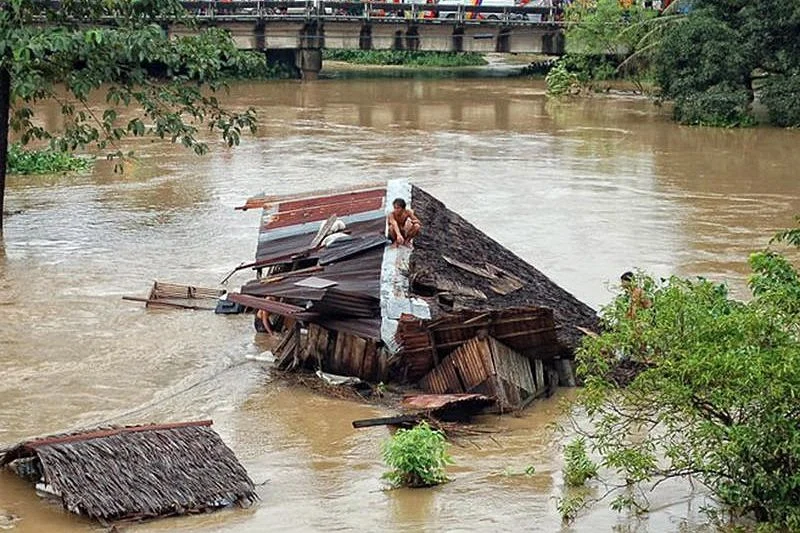
Instead of a downward trend, the Global Carbon Project reports that emissions from fossil fuels have reached an all-time high. Compounding this, the current "super-El Niño" event is expected to break all historical records, triggering extreme droughts in some regions and catastrophic flooding in others. While El Niño is a natural phenomenon, the scientific consensus is that the warming of the oceans—driven by human-induced climate change—is supercharging its intensity.
Official Responses and the "Silent" Majority
The scientific community has reacted with alarm. More than 200 researchers currently working on the AR7 report have issued an open letter, rejecting the claim that the report needs more time to be representative. They maintain that their data set is the most comprehensive in history, covering every continent, discipline, and socioeconomic perspective.

"We will continue to work," the researchers wrote. "We have no time to lose."
The sentiment among nations most vulnerable to climate change is one of betrayal. Jess Gasper, the Environment Secretary for the Marshall Islands—a nation whose very existence is threatened by sea-level rise—was unequivocal in his condemnation. "We cannot allow political interests to decide which science the world is prepared to hear," he stated, as reported by The Guardian. For the Marshall Islands, where the highest point is only two meters above sea level, the prospect of the nation becoming unhabitable within 50 years is a present-day reality, not a distant projection.
The IPCC itself has remained silent, refusing to comment on the internal turmoil or the specific demands of the blocking nations.
Geopolitical Implications: Why the Delay Matters
Why would major powers seek to delay a scientific report? Analysts suggest the motivations go far beyond the stated desire for "more data." The nations pushing for the delay have significant economic stakes in the current fossil-fuel-dependent global order:

- China: As the world’s largest emitter of greenhouse gases, the PRC is under immense pressure to accelerate its green transition.
- Saudi Arabia: As a global titan of oil production, the kingdom faces an existential threat from any aggressive global decarbonization policy.
- India: An emerging economic powerhouse, India faces the complex challenge of balancing rapid industrialization with climate obligations.
- Russia: Already isolated and economically strained by the war in Ukraine, Moscow’s interest in international climate policy has waned, with the government likely viewing the IPCC as an instrument of Western-led global oversight.
- The United States: Under the administration of Donald Trump, the U.S. has signaled a complete withdrawal from the Paris Agreement, effectively removing the world’s second-largest emitter from the table and emboldening other nations to shirk their commitments.
Without the authoritative, evidence-based assessment of the AR7 report, the COP 33 summit risks becoming an empty theater. The "Global Stocktake" requires the latest data to force accountability. If the report is pushed back, the international community loses the leverage required to demand stricter emissions cuts from the world’s largest polluters.
The delay essentially creates a "data vacuum." In the absence of an official, consensus-driven report, political actors can exploit uncertainty to justify inaction, claiming that the "science is not yet settled" or that they require "further review" of the environmental impacts of their industrial policies.
Conclusion: A Race Against Time
The deadlock at the IPCC is a microcosm of the wider geopolitical struggle to define the 21st century. At stake is not just a publication date, but the ability of the international community to function based on shared, objective reality. As the researchers themselves noted, the climate does not negotiate, and it does not wait for consensus.
If the IPCC is indeed forced into a year-long delay, the world will enter the 2030s—a pivotal decade for climate action—without the guidance necessary to navigate the most severe crisis in human history. For the residents of the Marshall Islands and countless other vulnerable communities, this is not just a diplomatic failure; it is a direct threat to their survival. As the clock ticks toward the next climate summit, the world waits to see whether the IPCC can overcome this internal power struggle or if it will be rendered a toothless witness to the acceleration of the climate catastrophe.