


The professional basketball community is in mourning following the tragic news of the deaths of two figures who left indelible marks on the NBA landscape: the active Memphis Grizzlies standout Brandon Clarke and the trailblazing former professional Jason Collins.
The basketball world stands in collective shock following the announcement that both Brandon Clarke, a pivotal figure for the Memphis Grizzlies, and Jason Collins, a historic pioneer of the sport, have passed away. The loss of these two men, separated by a generation and distinct career trajectories, has sent shockwaves through the National Basketball Association (NBA), prompting an outpouring of grief from fans, colleagues, and league officials alike.
The Tragic Loss of Brandon Clarke
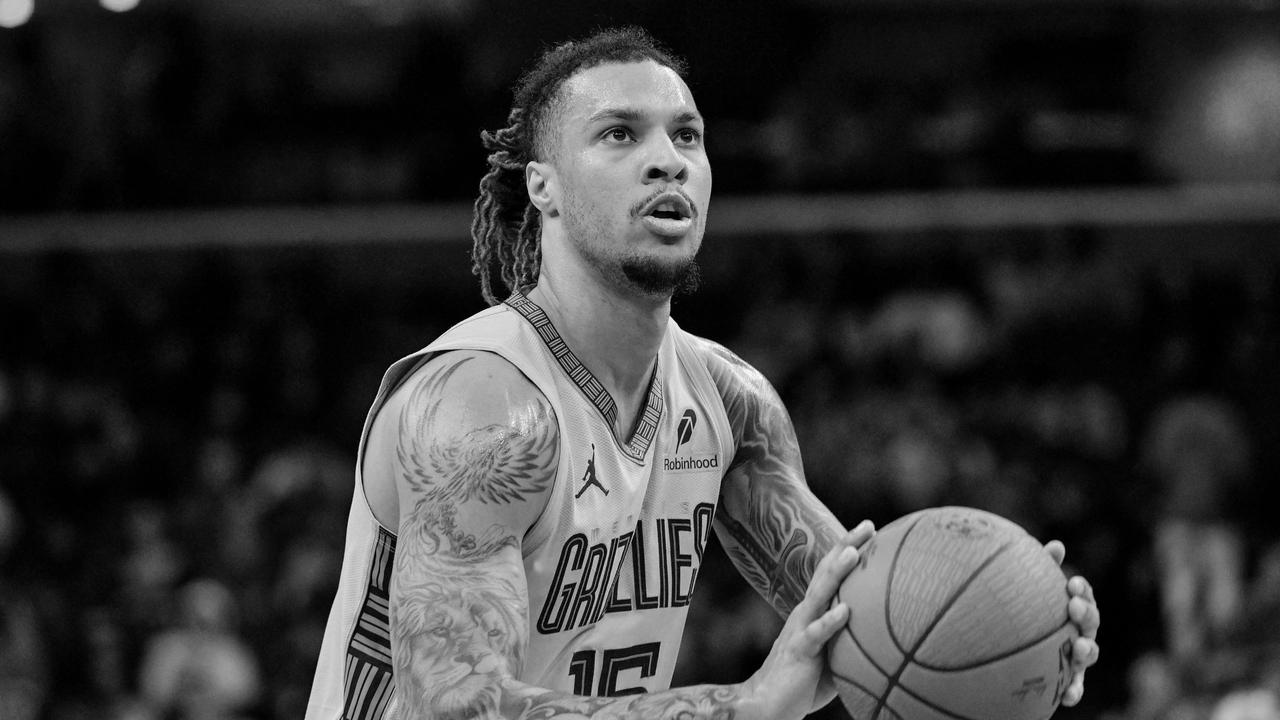
Brandon Clarke, at the young age of 29, was a cornerstone of the Memphis Grizzlies organization. His passing, confirmed by both the Grizzlies franchise and his representation at Priority Sports, has left a void in the locker room and the hearts of the Memphis community. While the specific cause of his death remains undisclosed at this time, the suddenness of the event has left teammates and fans struggling to process the loss of a player who was widely regarded for his infectious energy and professional dedication.
Clarke’s tenure in the NBA was defined by his loyalty and high-level athleticism. Drafted into the league in 2019, he quickly established himself as a versatile power forward capable of changing the tempo of a game. His rookie season was particularly notable, as he earned accolades for his performance and solidified his spot as one of the most promising young talents in the league. Over the years, Clarke became more than just a statistic; he was a fixture in the Memphis community, known for his charitable efforts and his grounded personality.
In the current season, Clarke had been battling injury, appearing in only two games. Despite his limited time on the court, his presence remained vital to the team’s culture. His teammates have described him as a mentor and a steadying force, someone whose commitment to the Grizzlies went beyond the hardwood.
Jason Collins: A Pioneer’s Legacy
While Clarke’s death represents the loss of a bright future, the passing of Jason Collins marks the end of a life that fundamentally altered the trajectory of the league’s social conscience. Collins, 47, died following a courageous battle with a brain tumor.
Collins’ name is etched into history for his decision in 2013 to publicly come out as gay, becoming the first active male athlete in any of the four major North American professional sports leagues to do so. His announcement, made via a cover story in Sports Illustrated, was a watershed moment in the history of American sports.
The journey of his final year was marked by bravery. After being diagnosed with a brain tumor last November, Collins sought treatment in Singapore, undergoing an experimental medical regimen. While the initial results showed promise and a short-lived recovery, the cancer proved aggressive and eventually returned. His family, in a poignant statement, noted that he spent his final months surrounded by love and grace, continuing to inspire those who followed his journey from a distance.
A Chronology of Impact
To understand the weight of these losses, one must look at the distinct paths these two men walked.
The Career of Jason Collins (2001–2014):
- The Early Years: Drafted in 2001, Collins was a reliable interior defender. He began his career with the New Jersey Nets, serving as a key rotation player during their consecutive NBA Finals appearances in 2002 and 2003.
- The Turning Point: In 2013, while a free agent, Collins penned his historic essay. The impact was immediate and widespread. It sparked a national conversation about inclusivity, masculinity, and the professional sports environment.
- The Final Chapter: Collins returned to the Brooklyn Nets (the relocated franchise of his original team) to finish his career in 2014, playing under coach Jason Kidd. His retirement didn’t end his influence; he remained an active voice for diversity and inclusion in sports.
The Rise of Brandon Clarke (2019–2026):
- The Arrival: After a stellar collegiate career at Gonzaga, Clarke entered the NBA with high expectations. He exceeded them immediately, earning a spot on the NBA All-Rookie First Team.
- The Memphis Staple: Over seven seasons, Clarke became the definition of a "Grizzlies player"—hard-nosed, efficient, and team-oriented.
- The Struggle: The final chapter of his career was marred by injury, yet he remained a fixture on the bench, providing leadership to a younger generation of Grizzlies stars.
Official Responses and the Collective Mourning
NBA Commissioner Adam Silver, who holds the responsibility of guiding the league through both celebratory and tragic times, was among the first to offer formal condolences. His statements reflected the different, yet equally significant, roles both men played.
Regarding Jason Collins, Silver noted: "Jason’s impact and influence extended far beyond basketball. He helped make the NBA, the WNBA, and the entire sports world more inclusive and open for future generations." Silver acknowledged that Collins’ bravery provided a template for others to live authentically in high-pressure environments.
Regarding Brandon Clarke, Silver highlighted the human element of professional sports: "We are deeply shaken by the death of Brandon Clarke. As one of the longest-tenured members of the Grizzlies, Brandon was a beloved teammate and leader who played with enormous passion and determination."
The Memphis Grizzlies organization issued a heartfelt statement on the platform X (formerly Twitter): "Brandon was an outstanding teammate and an even better person, whose impact on the club and the entire community of Memphis will not be forgotten. He was so loved by all of us here and by everyone whose life he touched."
Supporting Data and Statistical Legacy
Beyond the emotional weight, the statistical contributions of both players offer a glimpse into their professional lives.
Jason Collins was never a statistical superstar, but he was a coach’s player. Over 735 career games, he provided defensive stability and veteran presence. His value was often found in "the little things"—screens, defensive rotations, and locker room cohesion. His impact was best measured by the barriers he broke, changing the culture of professional sports locker rooms for the better.
Brandon Clarke, conversely, was an analytics darling. Known for his incredible efficiency as a rim-runner and his high basketball IQ, Clarke consistently posted impressive effective field goal percentages. In his prime, he was one of the most efficient per-minute producers in the league. His ability to rebound and defend multiple positions made him an essential component of the Grizzlies’ success during their recent rise to prominence.
The Implications: A League at a Crossroads
The loss of two such different individuals leaves the NBA to reflect on its role in the lives of its players.
The death of Jason Collins serves as a reminder of the fragility of life, even for those who have moved past the intense physical demands of professional basketball. His legacy is one of courage; he forced an industry that was historically resistant to change to confront its biases. The fact that his death has been mourned by figures across the political and social spectrum is a testament to the bridge-building work he did in his final decade.
The death of Brandon Clarke at just 29 years old brings a different kind of pain—the loss of potential and the sudden silencing of a voice in the prime of life. It serves as a somber reminder to the league and its fans that the athletes we watch on television are human beings with lives that extend far beyond the final buzzer.
As the NBA moves forward, the memories of Clarke and Collins will undoubtedly be honored across arenas. For the Grizzlies, the upcoming games will likely be marked by tributes to a man who helped define the franchise’s identity. For the league at large, the legacy of Jason Collins will continue to be a benchmark for the progress made in inclusivity.
In the final analysis, the NBA is not just a collection of teams and statistics; it is a community of individuals. Today, that community is smaller, sadder, and forced to confront the reality that greatness, in all its forms, is fleeting. Both Brandon Clarke and Jason Collins contributed to the rich tapestry of the sport in their own unique ways—one by pushing the boundaries of what a player could be, the other by expanding the definition of who a player could be. Their stories will remain a vital part of the NBA’s history, ensuring that while their lives were cut short, their impact will continue to resonate for years to come.










Leave a Reply