Magdeburg, Germany – In a development sending shockwaves through Germany’s political establishment, the far-right Alternative for Germany (AfD) party has achieved an unprecedented victory in Saxony-Anhalt, with its candidate, Tobias Rausch, elected as the President of the state parliament (Landtag). This marks the first time since the end of World War II in 1945 that a member of a party widely characterized as extremist has ascended to such a high-ranking parliamentary position in Germany. The election, which occurred on Tuesday, was not merely a procedural formality but a stark demonstration of the AfD’s growing influence and its deliberate strategy to normalize its radical agenda, signaling a profound challenge to democratic norms and institutions in the federal state.
The immediate aftermath of Rausch’s election was met with a mixture of dismay and alarm across the political spectrum, with critics warning of a significant erosion of democratic principles. While Rausch himself delivered a subdued, almost perfunctory inaugural address, political observers were quick to interpret his measured tone as a calculated act of "mimicry" – a tactical attempt by the far-right to appear moderate and acceptable, a strategy historically employed by extremist movements. For many, this event is not an isolated incident but a critical turning point, portending a future where Saxony-Anhalt could become a "test laboratory" for the AfD’s ultra-right policies, with potentially far-reaching implications for Germany’s fragile democratic consensus and the welfare of its minority populations.
A Day of Disruptive Dominance: The AfD’s Ascent in Magdeburg
The tone for the tumultuous day was set even before the formal session of the Landtag began. From the hallways outside the parliamentary chamber, the boisterous and triumphant atmosphere emanating from the AfD’s strategic pre-meeting was unmistakably audible. Cheers, applause, and table-thumping resonated, a palpable display of the party’s self-assured dominance following its strong electoral performance. This overt display of power was a precursor to a day marked by symbolic gestures and a deliberate challenge to long-standing parliamentary traditions.

Upon entering the plenary hall, the visual representation of the AfD’s newfound strength was undeniable. Their faction formed a formidable, dense bloc occupying a central position, a strategic seating arrangement they had successfully pushed for, overturning the traditional left-right parliamentary order that has been a hallmark of German democracy since the Frankfurt Paulskirche Assembly in 1848. With 39 deputies, including only two women, the AfD presented itself as the new "middle" of the parliament, despite its well-documented extremist tendencies. This repositioning was not merely about physical space; it was a powerful symbolic assertion of their perceived centrality and legitimacy, a direct affront to established democratic conventions.
The composition of this "brown bloc" is itself a cause for deep concern among democratic observers. It comprises individuals described as "völkisch nationalists" – proponents of an ethno-nationalist ideology rooted in German romanticism and often associated with historical far-right movements. The ranks also include fervent "Putin-fans," indicating a geopolitical alignment that diverges sharply from Germany’s mainstream foreign policy. Allegations of "cronyism" and individuals facing investigations for their continued involvement with banned neo-Nazi organizations further underscore the radical nature of the faction. These elements paint a picture of a party that not only challenges democratic norms but also harbors individuals with ties to anti-constitutional movements.
Adding to the provocative atmosphere, AfD deputy Ulrich Siegmund was observed during the session drinking from a mug emblazoned with the phrase "linke Tränen" (leftist tears), an item concurrently marketed and sold through the AfD’s official merchandise shop. This deliberate act of mockery and contempt for political opponents, broadcast within the hallowed halls of parliament, served as a potent symbol of the party’s confrontational and polarizing agenda. It was a clear message that dialogue and consensus, cornerstones of parliamentary democracy, would be replaced by antagonism and derision.

Further highlighting the AfD’s isolation from foundational democratic principles, the opening address by the Landtag’s interim president, Eva von Angern of the Left Party, received applause from all other parliamentary factions – notably except the AfD. Von Angern’s speech had emphasized the importance of upholding the state constitution and respecting the Constitutional Court, a basic tenet of rule of law. The AfD’s silent dissent underscored their reluctance to endorse even these fundamental principles, reinforcing the perception that their agenda transcends conventional democratic boundaries.
Tobias Rausch: A Figurehead for a Radical Agenda
The climax of the day arrived with the election of Tobias Rausch as Landtag President. Rausch, an AfD member, secured 48 votes, a number significantly exceeding the combined strength of the AfD and the Bündnis Sahra Wagenknecht (BSW) faction, which has been described as a "stirrup holder" for the far-right in certain contexts. This voting pattern strongly suggests that elements within the "crumbling CDU" (Christian Democratic Union) also cast their ballots for Rausch. Such cross-party support for an AfD candidate represents a critical breach of the long-standing "Brandmauer" (firewall) that German mainstream parties have historically maintained against the far-right. The willingness of some CDU members to support an AfD candidate, whether out of protest, strategic miscalculation, or internal divisions, brings the AfD one step closer not only to further destabilizing the CDU but also to potentially forming a future governing majority in the state.
Rausch’s relatively restrained and seemingly innocuous demeanor during his acceptance speech, read blandly from a prepared text, should not be mistaken for a genuine shift towards moderation. As the original article astutely points out, this "mimicry" is a well-known tactic of extremist movements. Beneath the surface, Rausch is deeply entrenched in the AfD’s völkisch ideology and has been implicated in allegations of cronyism, embracing every radical twist and turn of his party’s program. His role as Landtag President, therefore, is not merely administrative; it is a powerful symbolic elevation of a figure deeply committed to the AfD’s anti-democratic vision.

The Landtag President holds a crucial position in German parliamentary democracy. As the presiding officer, they are expected to be a neutral arbiter, ensuring fair debate, upholding parliamentary rules, and representing the dignity and integrity of the institution. The election of a figure from a party widely viewed as extremist to this role undermines the perceived neutrality and impartiality of the parliament itself. It legitimizes a party that often expresses disdain for democratic institutions and minority rights, thus chipping away at the very foundations of the representative system.
Saxony-Anhalt as a "Test Laboratory": Implications and Warnings
The AfD’s first official appearance in the new Landtag leaves no room for doubt: "disruption is on the agenda." The party openly aims to transform Saxony-Anhalt into an "illiberal enclave" within Germany, serving as a "test laboratory for their ultra-right program." This strategy involves systematically dismantling democratic checks and balances, marginalizing dissenting voices, and implementing policies that reflect their exclusionary and nationalistic worldview. The Tuesday’s proceedings were merely the initial steps in constructing this framework.
The implications of this development are particularly dire for minorities within Saxony-Anhalt, for individuals whose identities or lifestyles do not conform to the AfD’s narrow worldview, and for the vibrant civil society that has traditionally championed diversity and human rights. For these groups, the election of an AfD Landtag President signifies a "black day," marking a heightened risk of discrimination, marginalization, and direct challenges to their fundamental freedoms. The AfD’s rhetoric often targets migrants, refugees, LGBTQ+ individuals, and political opponents, and their ascendancy to power positions translates these words into tangible threats.

The broader German political landscape is also grappling with the implications. The event in Saxony-Anhalt represents a significant crack in the "Brandmauer" – the informal but steadfast commitment of mainstream parties not to cooperate or legitimize the AfD. The potential votes from CDU members for Rausch signal a dangerous weakening of this firewall, indicating that some within the established parties might be willing to compromise democratic principles for short-term political gains or out of internal frustration. This erosion of consensus against the far-right could pave the way for similar developments in other states or even at the federal level, especially as the AfD continues to gain strength in eastern Germany.
Economically, the prospect of Saxony-Anhalt becoming an "illiberal enclave" could deter investment, brain drain, and damage the state’s reputation, isolating it from the broader European and international community. The emphasis on nationalistic policies, coupled with a potential disregard for environmental concerns and international cooperation, could stifle innovation and economic growth.
The situation also raises questions about the future of the rule of law and constitutionalism. The AfD’s frequent criticisms of the judiciary, the media, and established institutions suggest a party that, once in power, may seek to undermine their independence. The lack of applause for von Angern’s plea to respect the Constitutional Court is a chilling indicator of their potential approach.

Resistance and the Call to Action
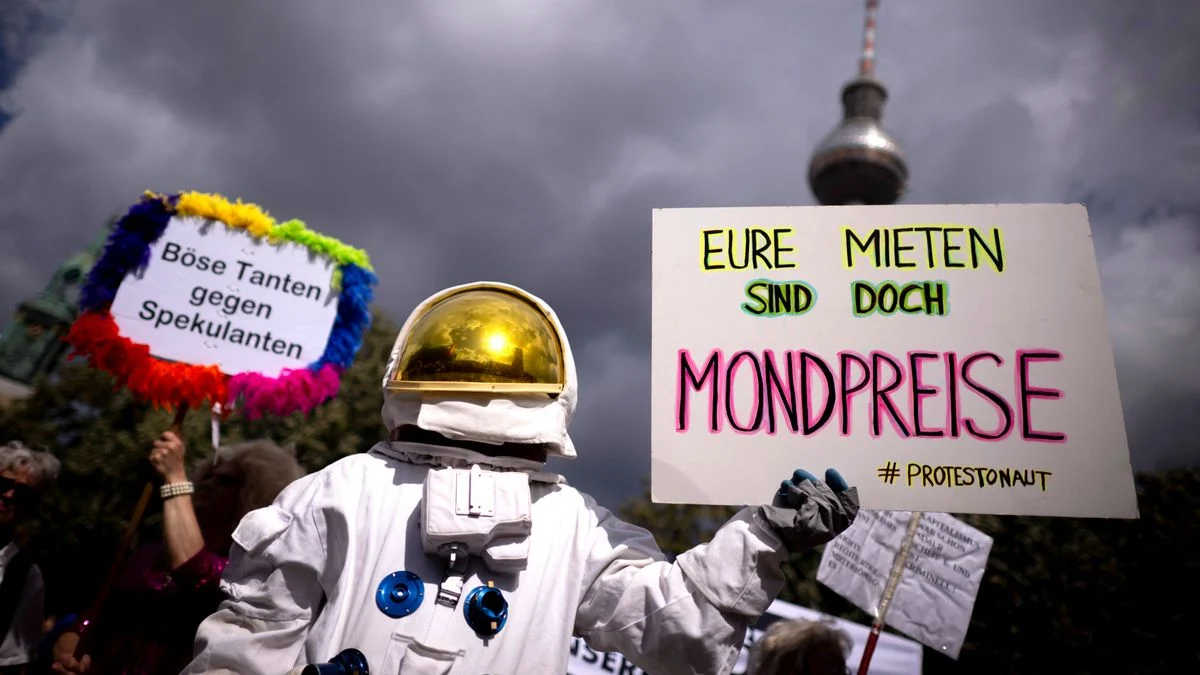
In response to these alarming developments, hundreds of people gathered outside the Landtag building in Magdeburg, protesting against the AfD’s ascendance and sending a clear message of defiance. These protests, often organized by civil society groups, human rights organizations, and concerned citizens, underscore the widespread public concern and the determination of many to resist the far-right’s encroachment on democratic values. Their presence serves as a vital reminder that a significant portion of the populace rejects the AfD’s agenda and stands ready to defend an open, tolerant, and democratic society.
The situation in Saxony-Anhalt is a poignant call to action for civil society, which "must now be all the more resistant." This resistance involves not only street protests but also sustained engagement in public discourse, robust journalistic scrutiny, legal challenges to discriminatory policies, and active participation in local democratic processes. It requires a renewed commitment to education, promoting democratic literacy, and fostering inclusive communities. The historical memory of Germany’s past, particularly the lessons learned from 1933, serves as a powerful imperative against complacency.
The central message reverberating from Magdeburg is unambiguous: "Giving up without a fight must not be an option." This sentiment encapsulates the resolve of many Germans to confront the rising tide of extremism. The election of Tobias Rausch is not merely a political event; it is a profound test for German democracy, demanding vigilance, courage, and unwavering commitment to the principles of freedom, equality, and human dignity. As Germany navigates this challenging period, the eyes of Europe and the world will be on Saxony-Anhalt, watching how its citizens and institutions respond to this unprecedented threat to their democratic fabric. The battle for the future of German democracy, it seems, has just begun.