Washington D.C. — In a move that signals a continued consolidation of President Donald Trump’s media-integrated communications strategy, the White House has officially confirmed the appointment of Katie Zacharia as the new White House Press Secretary. The decision, confirmed by the President on Friday evening, ends weeks of intense speculation within the Beltway regarding who would step into the high-profile role following the departure of Karoline Leavitt.
Zacharia, a figure deeply embedded in the President’s media ecosystem, arrives at the podium with a resume that bridges the gap between digital advocacy, strategic consulting, and partisan broadcasting. Her appointment is widely viewed by political analysts as a definitive shift toward a "media-first" approach, prioritizing direct-to-consumer messaging and the cultivation of loyalist platforms over traditional press corps relations.
The Core Facts: A New Voice for the Administration
The transition from Karoline Leavitt to Katie Zacharia marks the latest evolution in the Trump administration’s communication apparatus. Leavitt, who made history as the youngest-ever White House Press Secretary when she took the position at the start of President Trump’s second term, left the post at the end of August. Her departure was announced abruptly, catching many in the capital off guard and leaving a temporary void in the administration’s public-facing hierarchy.
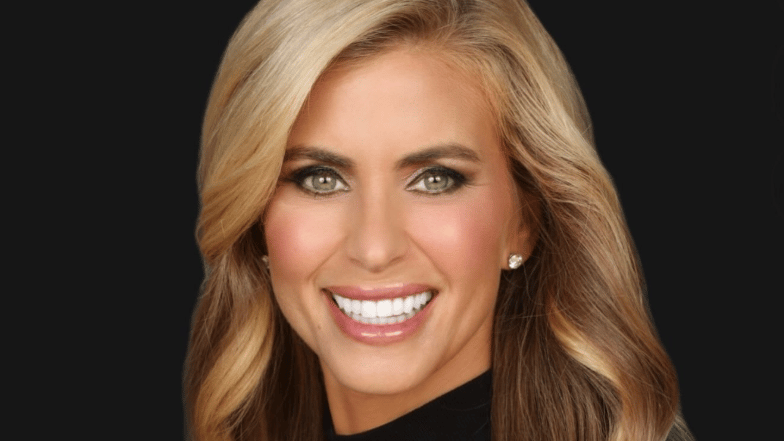
Katie Zacharia enters the role with a background that suggests a seamless integration with the President’s existing digital and media infrastructure. Most recently, she served as a high-level communications advisor for the Trump Media & Technology Group (TMTG), the parent company of the social media platform Truth Social. This background is significant; it underscores the administration’s ongoing effort to treat the White House press briefing room not merely as a venue for institutional information, but as a broadcast studio for the President’s broader digital mission.
Chronology: From Speculation to Confirmation
The path to this appointment was characterized by a period of quiet uncertainty following the sudden announcement of Leavitt’s departure in mid-August.
- Mid-August: President Trump unexpectedly announced the departure of Karoline Leavitt, the youngest Press Secretary in history. No immediate successor was named, triggering a flurry of speculation in Washington media circles.
- Late August: Reports began circulating regarding potential candidates. Several high-profile media personalities and campaign veterans were rumored to be in the running, but the search appeared to narrow as the administration sought a candidate with deep familiarity with the President’s specific communication style.
- Early September: Sources within the transition team and West Wing communications office indicated that discussions with Katie Zacharia had moved to an advanced stage.
- Friday Evening: President Trump confirmed the appointment, ending weeks of conjecture and officially installing Zacharia as the new face of the White House press operation.
The timeline reflects a deliberate, albeit rapid, selection process. By selecting someone from within the orbit of Trump Media & Technology, the administration has opted for continuity in messaging over a pivot to more traditional press management.

Supporting Data: Understanding the New Press Secretary’s Profile
To understand the trajectory of the White House communications strategy, one must examine the career arc of the incoming Press Secretary. Zacharia’s professional history is not that of a career civil servant or a veteran of the traditional Washington press corps. Instead, it is a profile of the "new guard" of political media.
Professional Background and Key Roles
- Trump Media & Technology Group (TMTG): Zacharia served as a key communications strategist. Her role here involved managing the intersection of the President’s digital footprint and his corporate media entities. This experience is expected to be instrumental in how the administration coordinates its "Truth" posts with its official press briefings.
- Department of Homeland Security (DHS): Prior to her work with TMTG, Zacharia held a brief stint as a deputy spokesperson for the U.S. Department of Homeland Security. This provided her with the essential, if limited, experience in handling federal government communications.
- Broadcasting and Commentary: Zacharia has been a consistent presence on conservative media outlets, including Fox News and the more right-leaning Newsmax. These roles provided her with the on-camera experience and the ability to articulate administration policy in the rapid-fire, high-stakes environment of cable news—a skill deemed essential for the modern Press Secretary.
This background suggests that Zacharia is uniquely prepared to manage the narrative not just for the New York Times or the Associated Press, but for the millions of followers on the platforms where the President feels most comfortable communicating.
Official Responses and Internal Dynamics
The announcement has been met with typical partisan bifurcation in Washington. Supporters of the President view the move as a necessary step in cutting through what they term the "hostile bias" of the mainstream media.
"Katie understands the mission," a senior White House aide remarked on condition of anonymity. "She knows that the traditional briefing room is only one part of the equation. Her job is to ensure that the President’s message is coherent, impactful, and delivered directly to the American people, regardless of how the legacy media chooses to interpret it."
Conversely, critics and members of the White House Correspondents’ Association have expressed concern over the shift. The central worry is that the role of Press Secretary is being transformed from a public servant position meant to inform the nation into an advocacy role designed to insulate the President from critical inquiry.
The transition from Leavitt to Zacharia is seen by some observers as a tightening of the message. While Leavitt was viewed as a combative and effective defender of the President’s first year of his second term, there is a perception that Zacharia is being brought in to refine the digital delivery of that defense.

The Implications: A New Era for the Briefing Room
The appointment of Katie Zacharia carries profound implications for the future of the White House press room. We are witnessing the end of the traditional "gatekeeper" model of political communication.
1. The Death of the Traditional Briefing
The traditional press briefing, once a staple of democratic accountability where the President’s spokesperson answered detailed questions from a diverse pool of journalists, is increasingly becoming a secondary priority. Under the guidance of someone with a deep history in digital media, we can expect the focus to shift toward curated video content, direct-to-camera addresses, and the heavy use of social media snippets over long-form, on-the-record press conferences.
2. Prioritizing Alternative Media
Zacharia’s experience with Newsmax and other conservative platforms suggests that the administration will continue to prioritize non-traditional outlets. This strategy effectively creates a "bifurcated reality," where the White House bypasses the skepticism of the mainstream press by providing exclusive, favorable access to friendly media organizations.

3. The Weaponization of Communication
The role of the Press Secretary is increasingly being utilized as a tactical asset in the broader culture war. By selecting someone who is a veteran of the conservative media landscape, the administration is signaling that the briefing room will be used to actively challenge the narratives presented by legacy news organizations. This is not a change in personnel, but a change in the philosophy of governance.
4. Continuity in Policy
Despite the change in personality at the podium, the underlying policies remain fixed. Zacharia’s appointment does not signal a policy pivot; rather, it is a refinement of the delivery mechanism. The administration remains committed to its core platform, and Zacharia’s role is to ensure that this commitment is communicated with maximum efficiency to the President’s base.
Looking Ahead: Challenges for the Incoming Secretary
As Katie Zacharia settles into her office in the West Wing, she faces a set of daunting challenges. She must navigate a hostile press corps that is increasingly skeptical of the administration’s methods, manage the internal expectations of a President who demands absolute loyalty and message discipline, and handle the logistical realities of a 24-hour news cycle that never sleeps.

Furthermore, she must prove that her experience in the digital and cable news sectors translates to the nuanced demands of the White House. The ability to give a punchy soundbite on Newsmax is fundamentally different from the ability to navigate the complex, often contentious, question-and-answer sessions that define the White House press briefing.
Ultimately, the tenure of Katie Zacharia will be defined by how well she balances these competing pressures. If she succeeds, she will be credited with modernizing the executive branch’s communications strategy for the digital age. If she falters, the administration may find itself struggling to maintain a consistent message in an increasingly fragmented and polarized media landscape.
One thing is certain: the eyes of Washington will be on the podium. The selection of Zacharia is a clear declaration that for the Trump administration, the battle for the narrative is the most important fight in town, and they have chosen a strategist who is more than ready to engage.