


The Kölner Haie’s turbulent start to the 2026/27 Deutsche Eishockey Liga (DEL) campaign took another downward turn on Wednesday evening. Despite a promising start to their European campaign, the "Sharks" find themselves struggling to gain traction domestically, falling to a frustrating 1-4 defeat against the Schwenninger Wild Wings at the Lanxess Arena.
The loss, which marks the Kölner Haie’s fourth defeat of the young season, has sent the team sliding into the bottom half of the DEL standings, leaving fans and coaching staff searching for answers to a persistent lack of offensive efficiency.
Main Facts: A Clinical Display from the Visitors
In front of a home crowd that expected a turnaround, the Kölner Haie (KEC) were systematically dismantled by a resilient Schwenningen side. While the scoreline finished at 1-4, it masked a desperate final ten minutes for Cologne.
The match remained a tight, tactical battle for the majority of the evening. Curtis Valk opened the scoring for the visitors in the eighth minute, setting the tone for a defensive masterclass from the Wild Wings. Gregor MacLeod provided a glimmer of hope for Cologne in the second period, leveling the score and igniting the home crowd. However, that would be the only breakthrough Cologne would find.
Schwenningen goaltender Joacim Eriksson proved to be the difference-maker, delivering a performance of immense composure. Facing a barrage of shots from the KEC offense, the 36-year-old Swede recorded a save percentage exceeding 97 percent, frustrating Cologne’s shooters at every turn. The match was ultimately decided by clinical finishing from the visitors, with Mirko Höfflin restoring the lead in the 51st minute, followed by late-game empty-net goals from Valk and former Cologne player Sebastian Uvira, sealing a deserved victory for the Black Forest outfit.
Chronological Breakdown: How the Game Unfolded
The Opening Stanza
The game began with high intensity, but it was the Wild Wings who settled into their rhythm faster. The Haie looked sluggish, struggling to exit their defensive zone with authority. The breakthrough came at 07:44 when Curtis Valk exploited a gap in the Cologne defense, beating the netminder to put Schwenningen ahead 1-0. Despite the deficit, Cologne maintained possession for long stretches but struggled to create high-danger chances against a packed Schwenningen defensive core.
The Middle Frame: A Brief Respite
The second period saw a more assertive Kölner Haie side. They increased the tempo, pressing higher up the ice and forcing turnovers. Their persistence paid off at 24:12 when Gregor MacLeod found the back of the net, drawing the score level. The goal seemed to shift the momentum, and the remainder of the period was defined by sustained pressure from the hosts. However, Eriksson’s brilliance in the Schwenningen net ensured the score remained tied at 1-1 heading into the final intermission.
The Final Push and The Collapse
The third period was a test of endurance. For nearly ten minutes, both teams traded blows in a defensive stalemate. The decisive moment arrived at 50:18 when Mirko Höfflin capitalized on a rare defensive breakdown by the Haie to reclaim the lead.
Facing a one-goal deficit, Cologne head coach opted for an aggressive strategy, pulling his goaltender for an extra attacker with minutes remaining. The gamble failed to produce an equalizer. Instead, the tactical decision left the net exposed, allowing Curtis Valk to secure his brace and Sebastian Uvira to add the final insult against his former club, finalizing a 4-1 scoreline.
Supporting Data: The Efficiency Gap
Statistical analysis of the match highlights the fundamental issue plaguing Cologne this season: an inability to convert high-volume pressure into tangible results.
- Shot Conversion Rate: Cologne dominated the shot clock for large segments of the match, yet failed to beat Eriksson more than once.
- The "Eriksson Factor": The Schwenningen goalie’s performance was statistically elite, holding a save percentage of over 97%—a number that is rarely sustainable but proved lethal against an inconsistent Cologne attack.
- Special Teams: While both sides managed their disciplinary duties, the Haie’s inability to capitalize on key moments highlighted a lack of "killer instinct" in the power play, which has been a recurring theme throughout the first seven games.
- League Position: With this loss, Cologne drops to 9th place, a position that does not reflect the ambitions of a club aiming for the top of the table.
The Dichotomy: Champions League vs. DEL
One of the most intriguing aspects of the Kölner Haie’s season is the stark contrast between their performance in European competition and their domestic form. In the Eishockey Champions League (CHL), the team has looked formidable, showcasing a disciplined, high-scoring style of play that has seen them win every match to date.
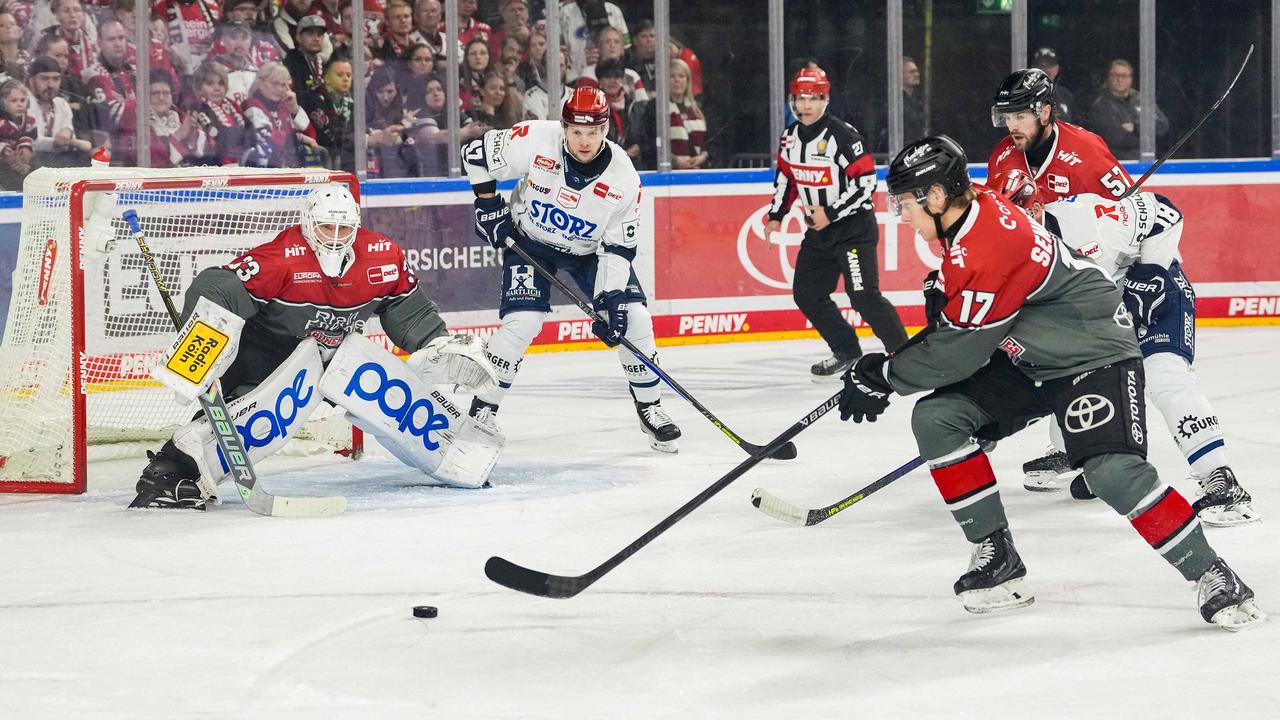
Analysts are struggling to pinpoint why this success has not translated to the DEL. Some suggest that the physical, grinding nature of the German league requires a different tactical approach than the more open style found in European cross-border play. Others point to the psychological pressure of playing at home in Cologne, where expectations are sky-high and the crowd can turn restless when early leads are not established.
"We are seeing two different teams," noted one hockey pundit post-match. "In Europe, they play with freedom. In the DEL, they seem to be carrying the weight of their expectations, leading to forced passes and hesitation."
Implications: A Crucial Weekend Ahead
The implications of this loss are immediate. By sliding to the 9th position, the Haie are now firmly in the middle-of-the-pack battle, a precarious place to be in a league as competitive as the DEL. The pressure on the coaching staff is mounting, and the locker room atmosphere is reportedly tense.
The upcoming fixture against the Nürnberg Ice Tigers on Sunday is no longer just another game; it is a "must-win" scenario. A victory would restore confidence and help the team climb back into the top six, whereas another slip-up could trigger significant questions regarding the team’s tactical direction and roster composition.
For Schwenningen, the victory is a turning point. Securing their first win in 60 minutes after seven attempts provides a much-needed morale boost, proving that their defensive system can hold up against the league’s top-tier teams.
Official Responses and Reflections
In the immediate aftermath of the game, the mood in the Cologne locker room was one of quiet frustration.
"We had our chances, but we didn’t bury them," said one of the team’s veteran leaders. "When you play against a goalie who is seeing the puck like that, you have to find ways to create traffic, to get rebounds. We didn’t do enough of that in the critical moments. We gave them the empty-netters because we were desperate to get back into it. It’s a bitter pill, but we have to move on to Sunday."
The team’s management has remained calm publicly, emphasizing the need for patience. However, insiders suggest that if the team does not show improvement against Nürnberg, internal discussions regarding personnel adjustments could intensify.
As the Kölner Haie prepare for their next challenge, the message from the fanbase is clear: the time for excuses is over. The team has the talent, the pedigree, and the experience to compete for the championship, but they must find the consistency that has so far eluded them in the 2026/27 campaign. Whether they can bridge the gap between their European success and their domestic struggles will determine the trajectory of their entire season.
The road to recovery begins Sunday in Cologne, where the Ice Tigers will arrive to find a team desperate to prove that the "Sharks" still have plenty of bite left in them.












