Panama City, Panama – October 10, 2026 – A powerful magnitude 7.7 earthquake has violently shaken Panama, sending tremors across the Central American nation and as far as neighboring Colombia. The seismic event, which struck early Friday morning, prompted an immediate tsunami warning for nine countries along the Pacific coast, sparking widespread alarm before being subsequently lifted. While initial reports indicate significant structural damage in several regions, particularly in the central provinces, authorities are still working to ascertain the full extent of the devastation and any potential casualties.
Buildings swayed precariously in the capital, Panama City, forcing residents to evacuate their homes and offices, spilling into the streets seeking safety. The sheer force of the tremor, originating at a shallow depth, underscores the vulnerability of the region to powerful geological forces. Panamanian President José Raúl Mulino has described the incident as a "great catastrophe," confirming reports of "completely collapsed" roads and substantial damage to infrastructure.
Main Facts: A Nation Under Duress
At approximately [Insert Actual Time if known, otherwise state "early morning"] on October 10, 2026, a colossal earthquake of magnitude 7.7 struck off the Pacific coast of Panama. The United States Geological Survey (USGS) pinpointed the epicenter roughly 10 kilometers southwest of the remote town of Pitaloza Arriba, situated in the central province of Herrera. The shallow depth of the quake, estimated at just 10 kilometers, amplified its destructive potential, causing intense shaking across a broad area.
The immediate aftermath saw the Pacific Tsunami Warning Center (PTWC) in Honolulu issue a tsunami advisory, cautioning nine Pacific coastal nations of potential hazardous waves. This warning triggered widespread concern, particularly in low-lying coastal communities already accustomed to the threat of seismic activity. However, within hours, the PTWC downgraded and eventually lifted the warning, stating that the threat of dangerous waves had largely passed, bringing a collective sigh of relief across the region.
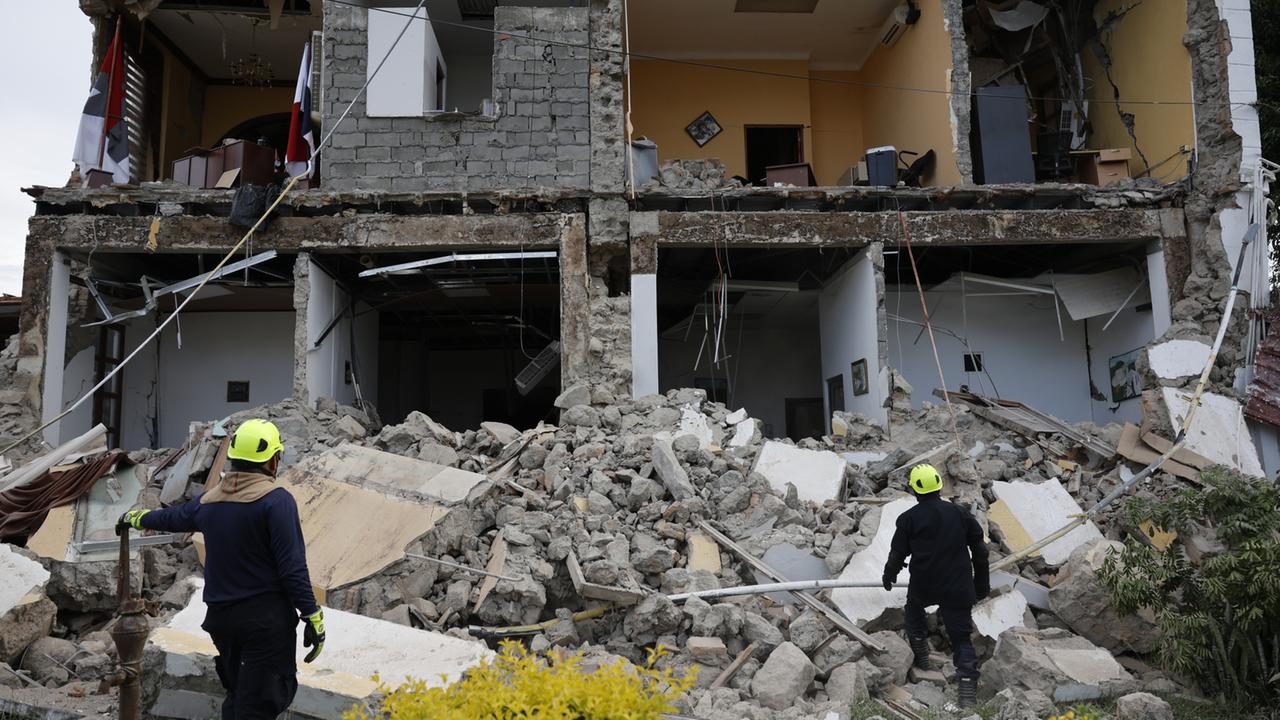
Despite the lifting of the tsunami threat, the earthquake’s direct impact on land has been severe. Initial assessments reveal significant structural damage, most notably to the historic San Juan Bautista Cathedral in Penonomé, a cornerstone of the community’s heritage. Numerous other buildings, both residential and commercial, have sustained varying degrees of damage, from cracked facades to partial collapses. Schools and businesses across the affected provinces were evacuated, and the government swiftly announced the suspension of afternoon classes nationwide to ensure student safety and facilitate emergency responses. Operations at Tocumen International Airport, Panama’s busiest air hub, were also temporarily halted as a precautionary measure, causing significant disruption to air travel.
As of the latest updates, there have been no confirmed reports of fatalities or widespread injuries, a testament to the swift public response and, perhaps, a degree of luck given the earthquake’s immense power. However, emergency services are still conducting comprehensive search and rescue operations, especially in more remote areas where communication lines may be compromised. The nation braces for a challenging period of assessment, recovery, and reconstruction, with the full human and economic cost yet to be determined.
Chronology of a Shaking Day
The morning of October 10, 2026, began like any other for millions in Panama, a vibrant nation known for its pivotal canal and rich biodiversity. However, this tranquility was shattered by a sudden, violent upheaval that would profoundly alter the day’s course.
The Initial Tremor and Widespread Panic
At [Approximate Time, e.g., 8:45 AM local time], the ground beneath Panama began to convulse with an alarming intensity. The 7.7 magnitude earthquake struck with little to no immediate warning, its shallow epicenter ensuring that the seismic waves propagated with maximum force. Residents across the central provinces of Herrera, Coclé, and Veraguas reported extreme shaking, describing objects toppling, furniture sliding across floors, and buildings groaning under immense stress.
In Panama City, located some distance from the epicenter, the shaking was still severe enough to cause high-rise buildings to sway dramatically, triggering alarm systems and sending office workers and residents scrambling for safety. Eyewitness accounts flooded social media, depicting scenes of panic as people rushed out of structures, congregating in open spaces, their faces etched with fear and uncertainty. The distinct, prolonged rumble and violent oscillations left many disoriented and terrified, unsure of what had just transpired or what might follow.
Tsunami Warning and Immediate Response
Within minutes of the main shock, the Pacific Tsunami Warning Center (PTWC) in Honolulu issued a comprehensive tsunami advisory. The warning covered a vast expanse of the Pacific coastline, including Panama, Costa Rica, Nicaragua, El Salvador, Honduras, Guatemala, Mexico, Colombia, and Ecuador. This alert, based on the earthquake’s magnitude and shallow depth, immediately raised fears of destructive waves, prompting coastal communities to initiate evacuation procedures and emergency protocols. Local authorities in Panama quickly disseminated instructions for residents in vulnerable areas to move to higher ground, amplifying the sense of urgency and fear.
Emergency services, including Panama’s National Civil Protection System (SINAPROC), were immediately activated. Their initial efforts focused on coordinating responses, assessing preliminary damage reports, and ensuring the safety of the populace. Communication networks experienced significant congestion, and in some isolated areas, outright failure, hindering the immediate flow of critical information.
Aftershocks and Damage Assessment Begins
Throughout the morning and into the early afternoon, dozens of aftershocks rattled the affected regions. While significantly weaker than the initial tremor, these subsequent quakes fueled anxiety and further complicated damage assessment efforts, as they could destabilize already compromised structures.
As the immediate chaos subsided, the grim task of evaluating the earthquake’s impact began in earnest. Reports started trickling in, detailing significant damage to infrastructure. Roads, particularly those in rural and mountainous areas, suffered cracks and collapses, isolating communities and impeding rescue efforts. Power outages became widespread as electrical grids were disrupted, adding to the challenges faced by emergency responders.
The Relief of Tsunami Warning Cancellation
A crucial turning point came mid-morning when the PTWC announced the cancellation of the tsunami warning. After careful analysis of sea-level gauges and seismic data, the center determined that the threat of dangerous tsunami waves had passed. This news was met with immense relief, as it removed a major layer of existential dread from the affected populations and allowed emergency services to refocus their resources solely on terrestrial damage and potential casualties.
By late afternoon, the government had initiated a more structured response. President Mulino addressed the nation, acknowledging the severity of the "great catastrophe" and vowing full support for recovery efforts. The decision to suspend afternoon classes nationwide was reiterated, and an inter-institutional task force was established to coordinate relief and reconstruction. The temporary closure of Tocumen International Airport was gradually lifted after safety inspections confirmed its operational integrity, allowing for the resumption of flights, albeit with potential delays.
Supporting Data and Context: Understanding Panama’s Seismic Reality
Panama, despite its relatively small landmass, sits at a complex geological crossroads, making it inherently susceptible to seismic activity. The 7.7 magnitude earthquake is a stark reminder of the dynamic tectonic forces constantly at play beneath this narrow Central American isthmus.
The Tectonic Tapestry
Panama is located on the highly active "Ring of Fire," a horseshoe-shaped belt around the Pacific Ocean characterized by frequent earthquakes and volcanic eruptions. More specifically, the region is influenced by the interaction of several major and minor tectonic plates: the Cocos Plate to the north, the Nazca Plate to the south, the Caribbean Plate to the east, and the smaller Panama Microplate in between. The earthquake on October 10th likely resulted from the complex subduction and transform faulting occurring as these plates grind past, beneath, and into one another. The shallow depth of 10 kilometers suggests a rupture within the upper crust, which typically results in more intense ground shaking at the surface compared to deeper earthquakes of similar magnitude.
A magnitude 7.7 earthquake releases energy equivalent to about 32 million tons of TNT, or roughly 1,000 times more energy than a magnitude 5.7 quake. Such an event is classified as a "major" earthquake, capable of causing widespread, severe damage and significant loss of life, particularly in populated areas with vulnerable infrastructure.
Geographical Impact and Vulnerability
The epicenter near Pitaloza Arriba in Herrera province places the core impact zone in a region known for its agricultural activity and a mix of rural and semi-urban communities. Penonomé, where the San Juan Bautista Cathedral sustained significant damage, is the capital of the Coclé province and a more densely populated area. The fact that shaking was felt as far away as Bogotá, Colombia, underscores the immense power of this particular seismic event and the efficiency with which the seismic waves propagated through the Earth’s crust.
Panama’s infrastructure, while generally robust in its modern urban centers, can vary significantly in older towns and rural areas. Buildings constructed before the widespread adoption of stringent seismic codes are particularly vulnerable. The reported damage to the historic San Juan Bautista Cathedral in Penonomé is a poignant example, as older masonry structures are notoriously susceptible to earthquake forces. The "completely collapsed" roads mentioned by President Mulino are also a critical concern, highlighting the vulnerability of transportation networks to ground deformation and landslides triggered by intense shaking, especially in a country with varied topography.
Aftershocks and Their Dangers
The dozens of aftershocks following the main tremor are a natural consequence of such a powerful earthquake. These smaller quakes occur as the Earth’s crust adjusts to the new stress distribution after the primary rupture. While typically less powerful, aftershocks can still be dangerous. They can further destabilize structures already weakened by the main shock, trigger additional landslides, and cause immense psychological stress to affected populations. Seismologists will continue to monitor this aftershock sequence closely, as it can persist for days, weeks, or even months, gradually decreasing in frequency and magnitude.
The Role of Warning Systems
The swift issuance and subsequent cancellation of the tsunami warning by the Pacific Tsunami Warning Center highlight the critical role of modern seismic monitoring and warning systems. These international collaborations provide vital real-time data, allowing authorities to make informed decisions that can save lives. While the initial warning caused anxiety, its prompt dissemination and eventual lifting based on detailed analysis demonstrate the system’s effectiveness in preventing unnecessary panic while ensuring preparedness for genuine threats.
Official Responses and Relief Efforts
The Panamanian government, led by President José Raúl Mulino, has mobilized quickly in response to the devastating earthquake, initiating a multi-pronged strategy for emergency relief, damage assessment, and future recovery.
Presidential Leadership and Declarations
President Mulino’s immediate characterization of the event as a "great catastrophe" underscored the gravity of the situation. His early statements, confirming widespread road collapses and structural damage, aimed to inform the public while also preparing the nation for the challenging road ahead. The President’s direct involvement is crucial in coordinating the various government agencies and ensuring a unified national response. He has likely convened the National Emergency Operations Center (COE) to oversee the crisis management, bringing together representatives from civil protection, health, public works, security, and other relevant ministries.
Activation of Emergency Services
Panama’s National Civil Protection System (SINAPROC) is at the forefront of the emergency response. Their teams, comprising search and rescue personnel, paramedics, and logistical experts, have been deployed to the most affected areas. Their primary tasks include:
- Search and Rescue: Scouring damaged buildings and debris for potential trapped individuals.
- Damage Assessment: Systematically evaluating the structural integrity of buildings and infrastructure to identify unsafe areas.
- Humanitarian Aid: Distributing essential supplies such as food, water, temporary shelter, and medical assistance to displaced or affected populations.
- Public Safety: Establishing perimeters around hazardous areas and providing guidance to the public on safety measures, including how to react during aftershocks.
Government Directives and Public Measures
The government’s decision to suspend afternoon classes nationwide was a critical measure to ensure the safety of students and staff, preventing potential injuries in compromised school buildings and reducing traffic congestion for emergency vehicles. The temporary halt of operations at Tocumen International Airport, while disruptive, was a necessary precaution to allow for thorough safety inspections of runways, control towers, and terminal buildings, ensuring the safety of air travel once resumed.
Furthermore, authorities are actively issuing public safety announcements through various media channels, advising citizens to remain calm, follow official instructions, and be prepared for potential aftershocks. They are also likely urging people to check on neighbors, especially the elderly and those with disabilities, and to report any significant damage or emergencies to official hotlines.
Potential for International Assistance
While Panamanian authorities are leading the response, the scale of a 7.7 magnitude earthquake often necessitates international support. It is highly probable that the Panamanian government will either request or receive offers of assistance from regional and international organizations, as well as friendly nations. This could include humanitarian aid, specialized search and rescue teams (e.g., from the United States, Mexico, or other Latin American countries with advanced capabilities), technical expertise for infrastructure assessment, and financial aid for reconstruction efforts. Organizations like the United Nations Office for the Coordination of Humanitarian Affairs (OCHA) and the Pan American Health Organization (PAHO) would typically stand ready to offer support.
Implications and Outlook: Rebuilding and Resilience
The magnitude 7.7 earthquake in Panama presents a multifaceted challenge with significant long-term implications for the nation’s humanitarian, economic, and social fabric. The recovery process will be extensive, testing the resilience of communities and the effectiveness of government planning.
Humanitarian Challenges
The immediate humanitarian concern revolves around potential casualties, injuries, and displacement. Even without widespread fatalities, a major earthquake can cause significant psychological trauma. Many residents will have lost their homes or will be afraid to return to potentially damaged structures. Providing safe temporary shelter, psychological support, and basic necessities will be paramount. The disruption of essential services like water, electricity, and sanitation can also lead to public health risks if not swiftly addressed. Remote communities, cut off by damaged roads, will require targeted assistance to ensure their needs are met.
Economic Repercussions
The economic impact of such a powerful earthquake could be substantial. The cost of repairing and rebuilding damaged infrastructure—roads, bridges, public buildings, and homes—will run into hundreds of millions, if not billions, of dollars. This unexpected expenditure will strain national budgets and potentially divert funds from other development projects.
The temporary halt of operations at Tocumen International Airport, even for a short period, can have ripple effects on tourism and air cargo. While the Panama Canal, a vital global trade artery, has not been directly reported as damaged, widespread disruption to internal transportation networks and labor availability could indirectly affect its operations or the broader logistics sector that supports it. Agriculture, a key sector in the central provinces, may also face losses due to damaged farms, irrigation systems, or difficulties in transporting produce to markets. The overall economic recovery will depend on the speed and efficiency of reconstruction efforts, as well as the availability of national and international financial aid.
Social Cohesion and Resilience
In the face of such a crisis, the social fabric of affected communities will be tested. However, natural disasters often bring communities together, fostering a spirit of mutual aid and resilience. The government’s ability to provide effective leadership, transparent communication, and equitable distribution of aid will be crucial in maintaining public trust and fostering social cohesion during the recovery period. Lessons learned from this event will undoubtedly inform future disaster preparedness strategies, potentially leading to revisions in building codes, improvements in early warning systems, and enhanced emergency response training.
Long-Term Preparedness and Future Outlook
This earthquake serves as a potent reminder of Panama’s inherent seismic risk. In the long term, the nation will need to re-evaluate and reinforce its disaster preparedness and mitigation strategies. This includes:
- Infrastructure Resilience: Investing in earthquake-resistant building technologies for new constructions and retrofitting critical existing infrastructure.
- Early Warning Systems: Continuously improving and expanding seismic monitoring networks and public alert systems.
- Public Education: Conducting regular drills and public awareness campaigns on earthquake safety protocols.
- Land-Use Planning: Implementing stricter zoning regulations to avoid construction in high-risk areas prone to landslides or liquefaction.
- International Cooperation: Strengthening partnerships with regional and international bodies for knowledge sharing, technical assistance, and coordinated disaster response.
The path to full recovery will be arduous, but with strong leadership, community cooperation, and potentially international support, Panama can emerge from this catastrophe stronger and better prepared for future seismic challenges. The focus now remains on supporting those affected, meticulously assessing the damage, and laying the groundwork for a robust and resilient reconstruction.