In the quiet town of Blankenburg, located in the heart of Germany’s Harz region, an unconventional social experiment has been quietly thriving for nearly two decades. Within a single building, the laughter of toddlers intermingles with the gentle, sometimes reflective conversations of the elderly. This Mehrgenerationenhaus (multi-generational house) serves as a living laboratory for a model that many experts believe could be a crucial, underutilized weapon in the global battle against dementia and social isolation.
The Core Concept: Life Under One Roof
At its heart, the Blankenburg project operates on a simple but profound premise: proximity fosters connection. On a typical afternoon, the scene in the facility’s garden is one of spontaneous joy. Ninety-two-year-old Werner Bannasch sits in a row of chairs, waiting for his counterparts. Suddenly, the silence is broken by a stampede of children from the integrated daycare center.
"Sitzfußball!" (Sitting soccer), a child shouts, as the group scrambles to arrange themselves for the game. For Bannasch, whose own children and grandchildren live far from the Harz region, these moments are not just entertainment; they are a vital lifeline. "The best part is the games we play," he says. "There is always something happening."
This isn’t a forced, clinical interaction. The residents have the autonomy to retreat to quiet, private spaces whenever they wish. However, the structure of the facility encourages organic engagement: joint baking sessions, shared walks, and activities centered around the garden’s Kneipp therapy pool. It is an environment designed to combat the "invisibility" that so often plagues the elderly in modern society.
Chronology of a Success Story
The inception of the Blankenburg project was, as is often the case with social innovation, born from necessity. Nearly twenty years ago, the local administration faced two distinct logistical problems: a daycare facility with 100 slots was suffering from under-enrollment, while a local nursing home under the same administrative umbrella was struggling to meet modern regulatory standards.
The decision to merge the two entities was a pragmatic gamble. Doreen Irrgang, the facility’s director, recalls that the transition was initially met with skepticism. However, as the years passed, the benefits became self-evident. "Healthy aging is fundamentally tied to social interaction," Irrgang notes.
The integration evolved beyond mere architectural proximity. It required a fundamental shift in the daily rhythms of both the staff and the residents. Over the last two decades, the model has matured, moving from a survival strategy for two failing institutions to a blueprint for community health that is now attracting interest from across the country.
The Neuroscientific Perspective: Can Emotion Combat Dementia?
The scientific community is increasingly paying attention to projects like Blankenburg. While lifestyle factors such as hypertension, diabetes, and smoking remain the primary focus of dementia prevention, researchers are acknowledging the "protective" power of social integration.
Francisca Rodriguez, a lead researcher at the German Center for Neurodegenerative Diseases (DZNE), specializes in psychosocial epidemiology. She points out that while the direct impact of children on the progression of dementia is still being mapped, the indirect benefits are undeniable.
"Social contacts, in and of themselves, are generally protective," says Dr. Rodriguez. The DZNE estimates that the number of people living with dementia in Germany is expected to climb to 2.7 million by 2050, up from 1.8 million in 2023. Given that this figure already exceeds the prevalence of many major cancers, the search for non-pharmacological interventions is urgent.
The Role of Emotional Resonance
One of the most heart-warming, yet scientifically significant, phenomena observed by the staff in Blankenburg is the reaction of dementia patients to music and children. "Even when a process of cognitive decline is well underway, memories are often triggered by the children," Irrgang explains. "When we sing songs together, the residents join in. It’s a recurring moment of surprise—and it is utterly heart-warming."
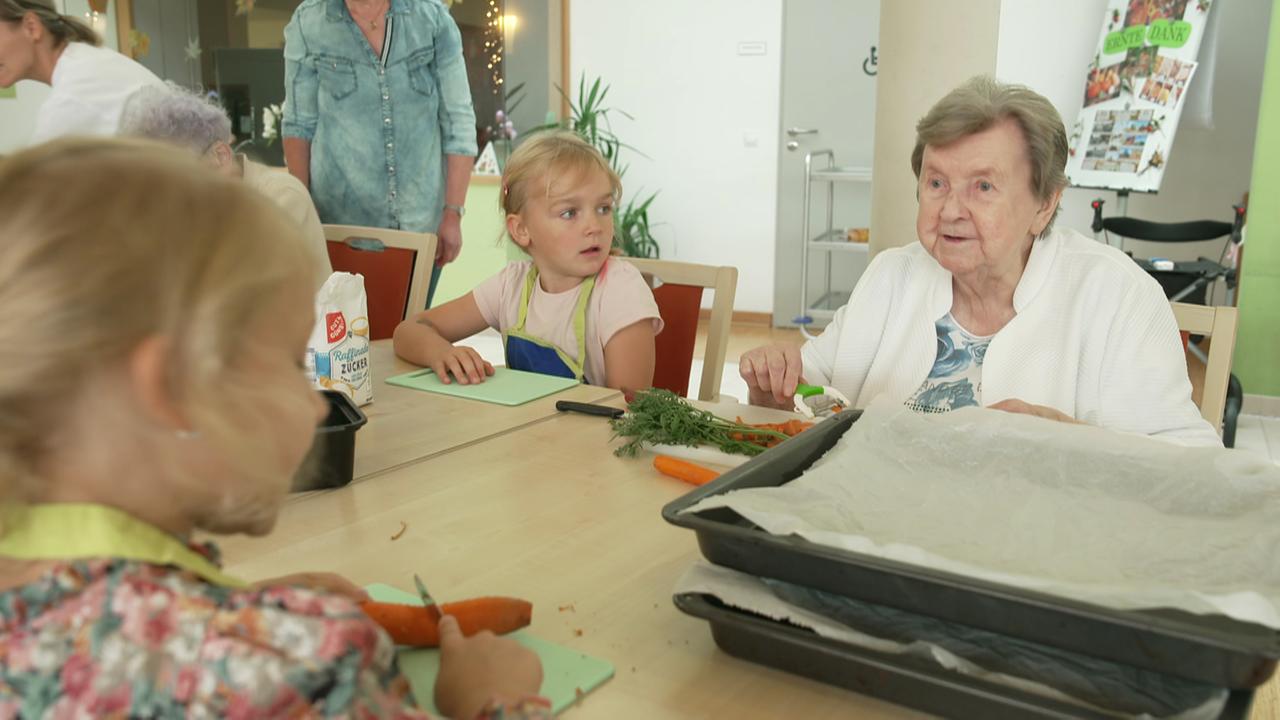
Dr. Rodriguez notes that research into creative activities—dancing, music, and play—shows measurable impacts on the neuropsychiatric symptoms of dementia. "We don’t yet fully understand the mechanism, but these emotional triggers have a profound effect on well-being and the clinical trajectory of the disease," she adds.
Economic Implications: The Cost of Isolation
The financial argument for multi-generational living is as compelling as the social one. In 2023, direct medical costs for dementia care in Germany reached approximately 38 billion euros. When the economic value of informal, unpaid care provided by relatives—estimated at 45 billion euros—is factored in, the total burden is massive.
Dr. Rodriguez suggests that if such projects can successfully maintain a person’s individual capacity and delay the need for intensive, specialized care, they represent a significant cost-saving measure for the healthcare system. "If we can maintain participation and reduce the severity of symptoms through these programs, we are looking at a long-term reduction in general healthcare expenditures," she explains.
A Model for the Future?
Despite the success in Blankenburg, the model remains an outlier in Germany. Other notable examples exist, such as the multi-generational campus operated by the German Red Cross in Weißenfels, the cooperation between the Paul-Riebeck-Stiftung and a Montessori school in Halle, and a new project currently under construction in Cunewalde.
However, scaling these projects requires overcoming significant bureaucratic and structural hurdles.
The Challenge of Specialized Staffing
The primary challenge, according to Director Irrgang, is not the residents or the children—it is the workforce. "After twenty years, our staff has grown together, but it is not simple," she explains. Because daycare centers and nursing homes are usually governed by entirely different legal and regulatory frameworks, the "middle ground"—the time spent facilitating the interaction—is often not accounted for in standard staffing ratios.
Irrgang advocates for a policy shift that recognizes the value of these "interface moments." She argues that policymakers must adjust staffing keys to provide dedicated personnel for the collaborative activities that make these houses successful.
Lessons Beyond the Elderly
The impact of this experiment is bidirectional. While the elderly benefit from cognitive stimulation and a sense of purpose, the children are gaining something equally valuable: a normalized, healthy relationship with the aging process.
In Blankenburg, the children grow up witnessing the realities of life—not just the joys of play, but the presence of wheelchairs, the quiet decline of health, and even the natural cycles of grief and loss. Simultaneously, they witness the beauty of aging: the formation of new, genuine friendships and the enduring capacity for human connection at any stage of life.
Ingrid Schrader, an 89-year-old resident and former infant nurse, captures the essence of the facility perfectly. Sitting with four-year-old Meena, she watches the child play. When asked if the noise ever bothers her, she shakes her head. "Sometimes they are loud, but when we tell them to be quiet, they listen. They are very well-behaved."
As the two share a smile, the long waiting list for a spot at the Blankenburg house stands as a testament to the fact that, in an increasingly fragmented world, the most innovative solution to modern problems might just be the oldest one: bringing people together.