

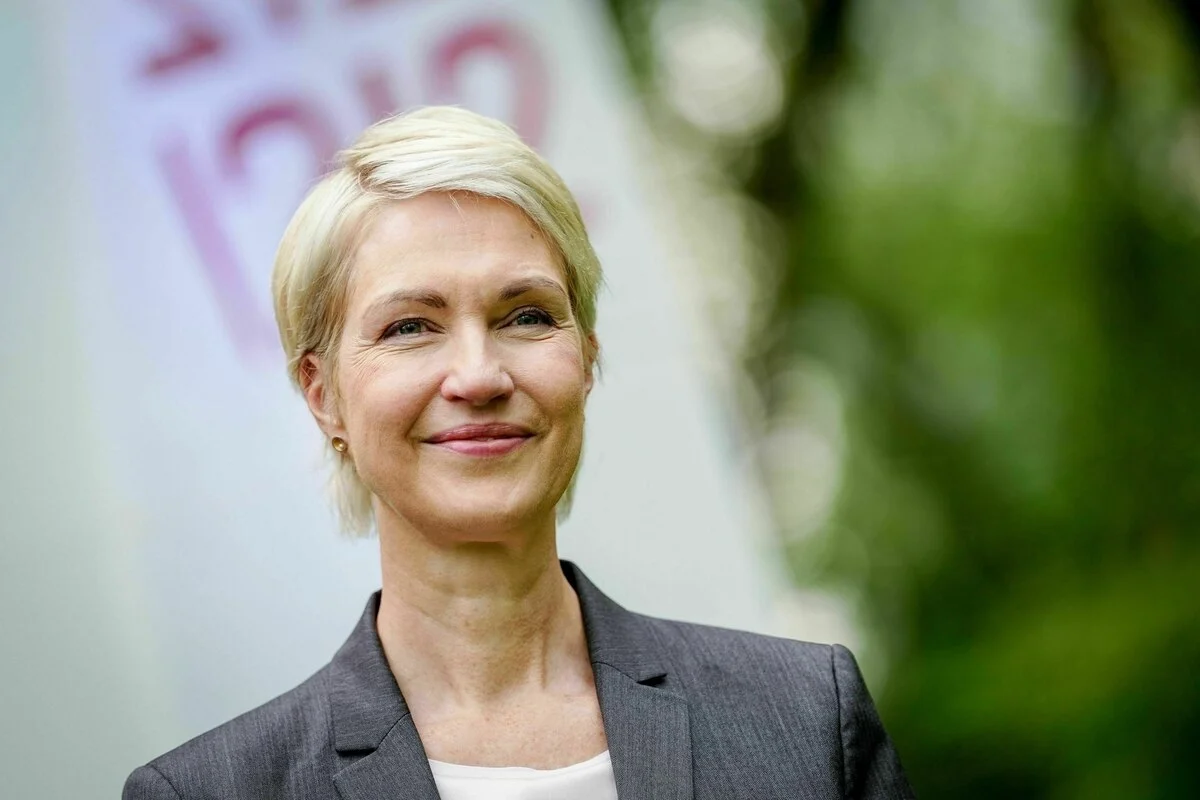
Schwerin, Germany – In stark contrast to the often-contentious political landscape of the federal capital, Berlin, the northeastern German state of Mecklenburg-Vorpommern (MV) has quietly and efficiently concluded its preliminary coalition talks. After three weeks of intensive discussions behind closed doors, the Social Democratic Party (SPD), The Left (Die Linke), and Alliance 90/The Greens (Bündnis 90/Die Grünen) have unanimously recommended to their respective party committees that formal coalition negotiations commence. This swift agreement signals a commitment to a governing alliance founded on "reliability, stability, and trust," as stated in a joint declaration from Schwerin, the state capital. The outcome positions Minister-President Manuela Schwesig (SPD) for another term at the helm, leading a coalition that is seen as the only viable democratic option in a state marked by significant right-wing populist influence.
The ease with which these three parties reached an understanding stands in sharp relief against the protracted and often fractious exploratory talks simultaneously unfolding in Berlin, where similar Red-Red-Green constellations have faced considerable public and internal scrutiny. The Mecklenburg-Vorpommern agreement provides a potential model for pragmatic cooperation, focusing on core policy areas deemed essential for the state’s future development and social cohesion.
Chronology of Negotiations: Three Weeks Behind Closed Doors
The path to this impending coalition in Mecklenburg-Vorpommern began shortly after the state elections on September 20, 2021. The SPD, under the leadership of the popular Minister-President Manuela Schwesig, emerged as the clear victor, securing 35.5 percent of the vote. However, their previous coalition partner, The Left, saw its support significantly diminish to 6.5 percent, meaning the existing red-red alliance no longer commanded a parliamentary majority. This necessitated the inclusion of a third partner, with Alliance 90/The Greens, who achieved 5.7 percent, being the natural choice for a progressive alliance.
Exploratory talks between the three parties commenced with an air of discretion, a deliberate strategy to foster an environment of trust and mutual understanding away from the glare of intense media scrutiny. For three weeks, representatives from the SPD, The Left, and The Greens engaged in detailed discussions, systematically addressing key policy areas and identifying common ground. This period was characterized by a concerted effort to bridge ideological differences and forge a consensus on the fundamental direction of the state for the coming legislative period.
The culmination of these preliminary talks was the presentation of an exploratory paper, a comprehensive document outlining the shared vision and concrete policy intentions of the prospective coalition. This paper, a copy of which was obtained by the German newspaper taz, served as the foundation for the recommendation to formally enter into coalition negotiations. The next crucial steps involve the internal approval processes within each party: the state executive boards of the SPD and The Left are scheduled to meet on Friday evening to endorse the decision, while The Greens will hold an extraordinary small state party conference in Rostock on Saturday to formally decide on entering coalition talks. This structured and relatively swift process underscores a shared political will to form a stable government without delay.
Key Policy Agreements and Omissions: A Closer Look at the Exploratory Paper
The exploratory paper outlines a range of policy priorities designed to address the socio-economic and environmental challenges facing Mecklenburg-Vorpommern. While some initiatives build upon previous governmental efforts, others signal new directions for the potential Red-Red-Green alliance.
Social and Health Initiatives: Prioritizing Families and Healthcare
At the heart of the social agenda is the commitment to maintain free kindergartens, a measure aimed at alleviating financial burdens on families and ensuring equitable access to early childhood education. This policy is particularly significant in a state grappling with demographic shifts and the need to retain young families. Complementing this, the prospective coalition plans to introduce mandatory language support for preschoolers, recognizing the critical role of early language development in educational success and social integration.
In the realm of healthcare, a crucial commitment has been made to preserve all existing hospital locations. This pledge is especially vital for a large, sparsely populated state like Mecklenburg-Vorpommern, where access to medical care in rural areas is a constant concern. Maintaining a decentralized healthcare infrastructure ensures that residents, regardless of their geographical location, have reasonable access to essential medical services.
Economic and Environmental Policy: Balancing Growth and Sustainability
Economically, the parties have agreed to retain the reduced 7 percent Value Added Tax (VAT) for the gastronomy and hotel industry. This measure is a direct response to the economic challenges faced by the hospitality sector, a cornerstone of MV’s tourism-dependent economy, and aims to provide crucial support for businesses recovering from recent crises.
Environmentally, the paper emphasizes strengthening the acceptance of renewable energy sources. Mecklenburg-Vorpommern, with its extensive coastline and open spaces, possesses significant potential for wind and solar energy. The agreement also includes a commitment to direct more financial benefits from wind energy projects to local communities, aiming to foster greater local buy-in and ensure that residents directly profit from the energy transition in their vicinity.

The document also features a "commitment to small and medium-sized enterprises (SMEs)", acknowledging their vital role in the state’s economy. However, critics note a significant omission here: the paper currently lacks specific details regarding financial or regulatory support mechanisms for these businesses, suggesting that concrete strategies will need to be developed during the formal coalition negotiations.
Democracy and Security: Enhancing Participation and Public Safety
A key democratic initiative outlined in the paper is the intention to enable more citizen participation. This aims to deepen democratic processes by giving residents a greater voice in local and state-level decision-making.
In matters of security and justice, the prospective coalition plans to establish a parliamentary investigative committee on right-wing extremist networks. This is a direct response to the documented presence and activities of far-right groups within the state, signaling a firm commitment to combating extremism and uncovering its structures. Furthermore, the paper outlines the creation of 6,200 new positions for the police force alongside a commitment to providing "modern technical equipment," aiming to bolster public safety and law enforcement capabilities.
Youth and Mobility: Connecting Generations
For younger generations, the exploratory paper proposes a youth tariff for the "Deutschlandticket" (Germany Ticket). This initiative would make public transportation more affordable and accessible for young people across the state and potentially beyond, promoting sustainable mobility and offering greater freedom of movement for students and apprentices.
Areas for Improvement and Critical Gaps
Despite the comprehensive nature of the exploratory paper, it has drawn some criticism for what it omits. Notably, the document is thin on concrete ideas for enhancing the safety of individuals facing racism and antisemitism, particularly given the "egregious and violent right-wing extremism" prevalent in the state. This absence is particularly striking in light of the AfD’s significant electoral performance and the state’s historical challenges with extremism.

Furthermore, the paper contains no explicit mention of feminist measures, the protection of queer life, or broader gender equality initiatives. These omissions have raised concerns among civil society organizations and advocates who argue that a progressive coalition should prioritize these aspects in its governing agenda. The lack of detailed financial or regulatory support for SMEs also represents a potential weakness, leaving a crucial economic sector without clear assurances.
The taz article also implicitly raises the question of why some of the "new ideas" presented, such as mandatory language support for preschoolers or increased local benefits from wind energy, were not already implemented by the previous SPD-Left state government. This suggests that the inclusion of The Greens in the coalition may be a catalyst for addressing previously overlooked or postponed policy objectives.
Official Responses and Party Dynamics
The initial reactions from within the prospective coalition parties have been largely positive, albeit with nuanced considerations, particularly from The Left.
The Left’s Perspective: Balancing Coalition and Identity
Wenke Brüdgam, the deputy federal chair of The Left and a member of the Mecklenburg-Vorpommern state parliament, expressed optimism regarding the exploratory paper. "The paper is a strong signal and contains important principles with which one can work," she stated. Brüdgam attributed the successful outcome to the "trusting relationship between the participants" in the negotiation process.
However, Brüdgam also voiced a crucial concern reflecting internal party dynamics within The Left. She acknowledged that some members in Mecklenburg-Vorpommern remain critical of government participation. A significant argument against joining a coalition, especially as a smaller partner alongside the stronger SPD, is the perceived risk that "left-wing positions will be crushed." Brüdgam therefore urged her party to maintain "a clear Left profile" throughout the coalition negotiations and the subsequent legislative period. "So that we are still visible in five years," she emphasized, highlighting the strategic imperative for The Left to carve out and defend its distinct ideological identity within the tripartite alliance. This reflects a broader debate within The Left about the compromises inherent in coalition governments and the need to remain electorally distinct.

SPD and Greens: Seeking Stability and Progress
While the article does not contain direct quotes from SPD or Green representatives on the exploratory paper, their agreement to the document and the subsequent recommendation for formal talks signify their alignment with the outlined agenda. For the SPD, led by Manuela Schwesig, the swift formation of a stable government allows them to continue their work and capitalize on their electoral success. For The Greens, entering government represents an opportunity to implement their environmental and social policies, particularly those related to renewable energy and citizen participation, which may have been less prioritized in the previous red-red administration.
The AfD’s Role: A Singular Opposition
The political landscape in Mecklenburg-Vorpommern is notably shaped by the strong presence of the Alternative for Germany (AfD). In the federal election preceding the state polls, the AfD emerged as the strongest party in Mecklenburg-Vorpommern, securing a striking 38.2 percent of the vote. Despite this significant public support, the AfD is categorically excluded from any coalition government by the SPD, The Left, and The Greens, as well as other democratic parties.
This categorical exclusion is rooted in the AfD’s classification by many as a far-right, in some cases extremist, party. The article highlights recent controversies, such as the meeting between AfD state parliament members Stephan Reuken and Kevin Kurtze with Polish right-wing extremist Grzegorz Braun, ostensibly to discuss economic policy. Such associations, often involving individuals with openly antisemitic views, reinforce the democratic parties’ refusal to cooperate. Consequently, should the Red-Red-Green coalition materialize, the AfD will become the sole opposition party in the state parliament, a position that will undoubtedly shape the dynamics of legislative debate and public discourse in the coming years.
Broader Implications: A Model for Stability or a Compromised Vision?
The smooth progression of coalition talks in Mecklenburg-Vorpommern carries significant broader implications, both for the state itself and for the national political discourse.
The MV Model vs. Berlin’s Tumult
The "geräuschlos" (noiseless or smooth) agreement in Mecklenburg-Vorpommern stands in stark contrast to the highly publicized and often difficult exploratory talks in Berlin, where a similar Red-Red-Green coalition has faced intense scrutiny. Wenke Brüdgam offered insight into this divergence, suggesting that "the witch hunt against The Left in Berlin and the pressure from outside made it necessary for the three parties in Berlin to first reach a more precise understanding." She also commended the fact that "antisemitism was discussed there," indicating that the Berlin process, despite its difficulties, addressed crucial societal issues. Brüdgam concluded by expressing her wish for the Berlin parties to "now also succeed in agreeing on a coalition to jointly make Berlin more just." This comparison highlights how local political cultures, internal party dynamics, and external pressures can profoundly influence the efficiency and tenor of coalition-building.

Political Landscape in Mecklenburg-Vorpommern
The formation of a Red-Red-Green government is not merely a political choice but a pragmatic necessity in Mecklenburg-Vorpommern. As the article states, it is "the only possible constellation in which democratic parties can govern" following the September 20 election. The SPD (35.5%), The Left (6.5%), and The Greens (5.7%) collectively command 39 out of 71 seats in the state parliament, forming a stable majority. The Christian Democratic Union (CDU), traditionally a major political force, suffered a historic defeat, failing to clear the five percent hurdle for the first time in its history with only 4.9 percent. This electoral shift underscores the profound changes in the state’s political allegiances and the necessity for new governing alliances. With the AfD as the sole opposition party, the new government will face a powerful and often confrontational challenge, requiring robust and unified responses.
Future Challenges for the Coalition
While the exploratory paper lays a solid foundation, the true test for the Red-Red-Green coalition will lie in its ability to translate these agreements into effective policy. The identified gaps, particularly concerning explicit measures against racism, antisemitism, and for gender equality, will need to be addressed comprehensively during the formal coalition negotiations and subsequently in legislative action. The commitment to SMEs, currently lacking concrete financial details, will also require significant elaboration to ensure meaningful support for the state’s economy.
Moreover, the challenge for The Left, as articulated by Wenke Brüdgam, to maintain "a clear Left profile" while navigating the compromises inherent in a three-party government will be an ongoing dynamic. For Manuela Schwesig and the SPD, leading this diverse coalition will demand strong leadership and consensus-building skills. The stability and success of this government will not only impact the lives of Mecklenburg-Vorpommern’s citizens but also serve as an important case study for progressive coalitions in other German states and potentially at the federal level, particularly given the ongoing shifts in Germany’s political landscape. The quiet efficiency of Schwerin may well offer a valuable lesson in effective governance in an increasingly complex political environment.




















