By Sports Editorial Desk
Updated: October 9, 2026
In the history of German tennis, the shadow cast by the legendary Boris Becker has loomed large for decades. Since the mid-1990s, the world number one ranking in men’s tennis has remained an elusive peak for German athletes. Now, at the age of 29, Alexander Zverev is standing on the precipice of history. Following a season defined by resilience, tactical evolution, and consistency, Zverev is mathematically guaranteed to conclude the 2026 season as the top-ranked player in the world, marking a monumental shift in the ATP landscape.
The Catalyst: Sinner’s Season-Ending Setback
The narrative of the 2026 season was expected to be a grueling, neck-and-neck battle between the established guard and the rising challengers. However, the trajectory of the ATP rankings was irrevocably altered on October 6, 2026, when current world number one Jannik Sinner announced the premature end of his campaign.
The 25-year-old Italian, who had maintained a formidable lead throughout the summer, cited chronic knee issues that rendered him unable to compete at the intensity required for the tour’s final stretch. "It is a difficult decision to make," Sinner stated in a press release, "but my health must be the priority if I want to sustain my career at the highest level."
Sinner’s withdrawal acts as a vacuum in the points race. Because he is unable to defend the massive point hauls he accumulated during his spectacular autumn run in 2025—which included titles in Vienna, Paris-Bercy, and the ATP Finals—his points tally will plummet as these results fall off his 52-week rolling total.
Chronology of a Coronation
The road to the top for Zverev has been paved with patience. After recovering from significant injury setbacks in previous years, the 29-year-old German has curated a "phenomenal year," as he characterized it in a recent press conference.
- Early 2026: Zverev focused on deep runs in the major tournaments, securing his legacy as a two-time Grand Slam champion.
- Summer 2026: While Jannik Sinner maintained a slight lead, Zverev remained the most consistent player in the Top 5, rarely suffering early-round exits.
- September 2026: The gap between the two narrowed significantly following Zverev’s strong showing in the North American swing.
- October 6, 2026: Sinner officially announces his withdrawal from the remainder of the 2026 season.
- October 7, 2026: The ATP live rankings confirm a gap of 1,270 points, with Zverev perfectly positioned to bridge the divide during the Asian and European indoor swings.
Supporting Data: The Mathematics of the Throne
The structure of the ATP points system is unforgiving to those who cannot defend their titles. For Sinner, the absence from the tour means the automatic forfeiture of 3,550 points earned in the final months of 2025.
The Defending Points Breakdown
| Tournament | Max Points Available | Sinner’s Defending | Zverev’s Defending |
|---|---|---|---|
| Vienna | 500 | 500 | 330 |
| Paris-Bercy | 1,000 | 1,000 | 400 |
| ATP Finals | 1,500 | 1,500 | 200 |
| Total | 3,000 | 3,000 | 930 |
The discrepancy is stark. Zverev enters the final quarter of the year with significantly less "defensive weight" on his shoulders. In the worst-case scenario—where Zverev fails to win another match for the rest of the calendar year—he would still finish with approximately 8,750 points, while Sinner is mathematically projected to drop to 7,950 points. This provides a safety net that effectively guarantees Zverev the top spot by the season’s end.
The Alcaraz Factor: A Threat Neutralized
For a brief window, Spanish sensation Carlos Alcaraz appeared to be the only player with a theoretical mathematical path to the world number one spot. However, that path required a "perfect storm" of events: Zverev losing every match he played, and Alcaraz sweeping the Shanghai Masters, the Paris Masters, and the ATP Finals.
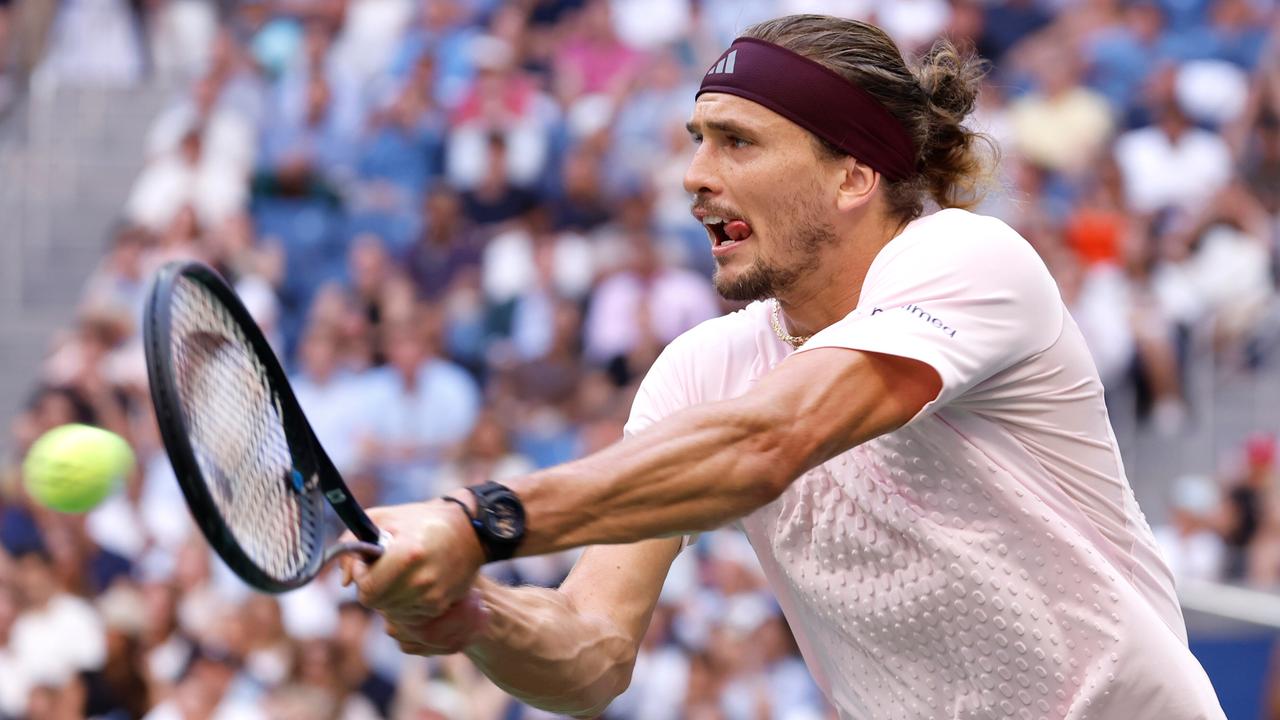
With Zverev’s recent victory in Shanghai against Wu, this scenario has been rendered obsolete. Alcaraz, despite his immense talent and current world number three standing, lacks the points buffer to overcome the deficit against the surging German. The battle for the number one spot has effectively become a formality, with only the exact date of Zverev’s coronation remaining in question.
Official Responses and Strategic Outlook
Alexander Zverev has remained characteristically focused despite the media frenzy surrounding his impending rise. "I am not looking at the ranking as a trophy that I have already won," Zverev noted during a post-match interview in Shanghai. "I am looking at the matches ahead. I want to earn this number one spot by continuing to play high-level tennis. The goal is to remain consistent, focused, and healthy for the remainder of the year."
His coaching team has emphasized that the transition to world number one is merely a reflection of the work put in during the off-season. There is no plan to scale back his schedule; rather, Zverev intends to participate in the upcoming Vienna tournament with the aim of potentially sealing the top ranking there, rather than waiting for the season-ending ATP Finals in Turin.
Implications for the Sport
The ascent of Alexander Zverev to world number one signals a changing of the guard in professional tennis.
- German Tennis Resurgence: Zverev becoming the first German man to reach the summit since Boris Becker provides a massive boost to the sport’s popularity in Germany. It serves as an inspiration for the next generation of players and is expected to drive increased investment in German tennis infrastructure.
- The "Post-Big Three" Era: With the retirement of Roger Federer and the intermittent participation of Novak Djokovic and Rafael Nadal, the tour has been seeking a definitive leader. Zverev’s climb suggests that the 2026 season has finally birthed a clear, dominant figure around whom the tour can organize its marketing and promotional efforts.
- The Physical Toll: Sinner’s injury highlights the brutal nature of the modern ATP calendar. As the game becomes faster and more physically demanding, the ability to manage workload and injury prevention is becoming as important as the talent to hit a forehand winner. This will undoubtedly trigger debates regarding the length of the season and the density of the tournament schedule in the coming years.
Conclusion: The Final Stretch
As the tour moves toward the indoor hard courts of Europe, all eyes will be on Alexander Zverev. The path is clear, the math is settled, and the opportunity is historical. Whether he secures the top ranking in the historic halls of Vienna or holds his nerve until the final week of the season, Zverev’s status as the king of the 2026 tennis season is no longer a question of "if," but "when."
For a player who has already conquered Olympic gold and Grand Slam stages, the world number one ranking represents the final, missing piece of a storied career. If his performance in Shanghai is any indication, he is not just accepting the crown; he is ready to defend it with the intensity of a man who knows that staying at the top is far more difficult than reaching it.