

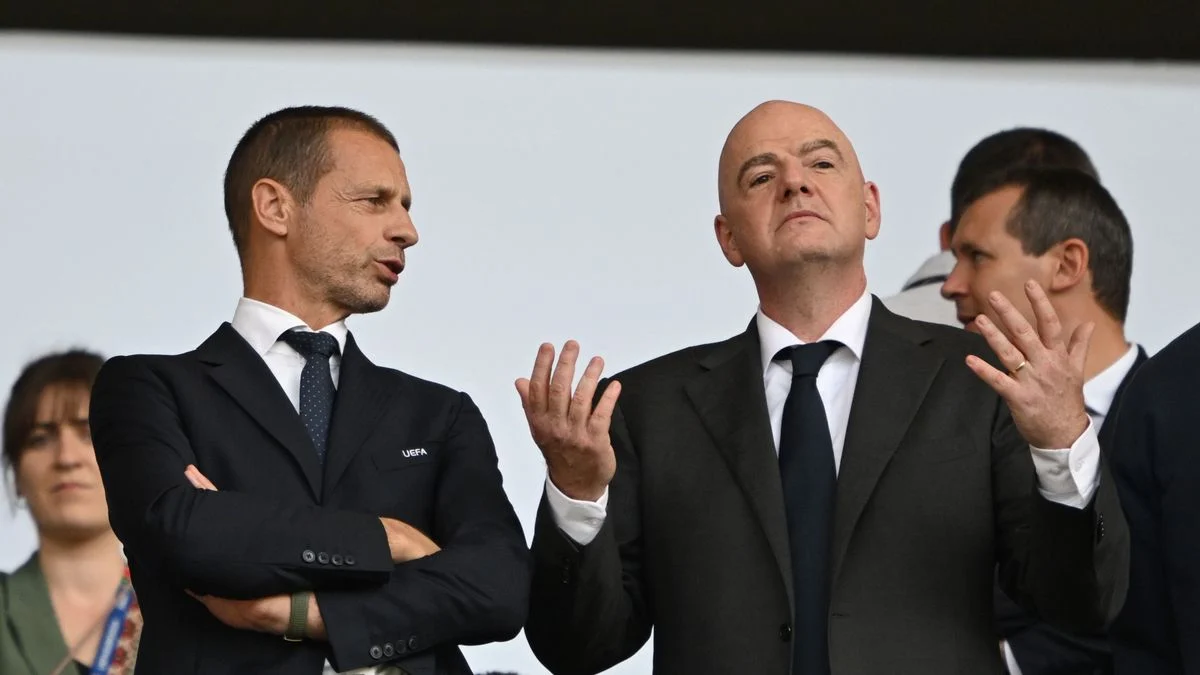
Introduction: A Changing Landscape
The corridors of power in European football are undergoing a seismic shift. As the UEFA executive committee and leading stakeholders gather in Berlin, the agenda extends far beyond the typical administrative duties of a continental governing body. Under the leadership of President Aleksander Čeferin, UEFA is orchestrating a series of strategic maneuvers designed to consolidate its influence, fend off internal challenges from breakaway factions, and redefine the commercial and sporting standards of the global game.
This summit in Germany’s capital represents a pivotal moment in football history. As the sport grapples with the pressures of private equity, the rise of sovereign wealth funds, and the existential threat of the European Super League (ESL), UEFA is positioning itself not just as a regulator, but as the architect of a new, modernized era.
Main Facts: The Core Objectives of the Berlin Summit
The Berlin meeting is centered on three primary pillars: the implementation of the new UEFA Champions League format, the integration of sustainability protocols in host nations, and a tightening of Financial Sustainability Regulations (FSR).
- The "Swiss Model" Revolution: Beginning with the 2024/25 season, the Champions League will abandon the traditional group stage in favor of a single league table featuring 36 teams. This change, approved in Berlin, is designed to increase high-stakes matchups between elite clubs, thereby maximizing broadcasting revenue.
- Economic Governance: UEFA is introducing stricter oversight on squad cost ratios. Clubs competing in European competitions will be limited to spending 70% of their revenue on wages, transfers, and agent fees by the 2025/26 season.
- The Anti-Super League Stance: The meeting serves as a show of force against the proponents of the European Super League. UEFA is leveraging its legal victory at the European Court of Justice (ECJ) to reaffirm that it remains the sole governing authority, effectively closing the door on unregulated private tournaments.
Chronology: The Road to the Berlin Summit
The path to this summit was paved by a series of crises that tested the very fabric of the UEFA structure.
- April 2021: The ESL Shock: The announcement of the European Super League by 12 of Europe’s biggest clubs sent shockwaves through the continent. The project collapsed within 48 hours due to fan protests and political pressure, but the underlying grievances remained.
- December 2022: The Governance Review: UEFA commissioned an internal audit of its competition structure, leading to the "Vision 2030" strategy document.
- December 2023: The ECJ Ruling: The European Court of Justice ruled that while FIFA and UEFA cannot prevent clubs from forming new competitions, they are not obligated to authorize them either. This nuance provided UEFA with the legal framework to enforce its monopoly on European football.
- May 2024 (Current): The Berlin Summit: Stakeholders convene to finalize the transition to the new league phase and integrate new commercial partners for the upcoming multi-year cycle.
Supporting Data: Commercial Growth vs. Sporting Integrity
The drive for reform is fueled by aggressive financial forecasting. Data presented in Berlin suggests that the move to the "Swiss Model" will increase total revenue from European club competitions by roughly 35% over the next three years.
| Metric | Current Cycle | Projected (2024-2027) |
|---|---|---|
| Total Matches | 125 | 189 |
| Broadcasting Revenue | €2.8B (Annual) | €3.7B (Annual) |
| Solidarity Payments | €177M | €240M |
Critics argue, however, that this expansion places an unsustainable burden on player health. With the addition of the expanded FIFA Club World Cup, the calendar for elite players is reaching a breaking point. Statistics from the Professional Footballers’ Association (PFA) indicate that top-tier players are now involved in over 70 matches per season, a figure that medical experts warn is linked to a 20% increase in soft-tissue injuries.
Official Responses and Stakeholder Views
The atmosphere in Berlin is one of cautious optimism, though not without friction.
Aleksander Čeferin, UEFA President:
"We are not merely reacting to market forces; we are leading them. The new structure ensures that football remains accessible, competitive, and financially sound. Our solidarity payments have increased, ensuring that the wealth generated at the top flows back to the grassroots level where the game truly lives."
The European Club Association (ECA):
Representing the interests of the elite clubs, the ECA has largely backed the changes. Their leadership noted, "The current model was stagnant. We needed a system that rewards excellence while ensuring the long-term viability of the clubs that bear the highest operational risks."
Fan Groups (Football Supporters Europe):
In contrast, fan representatives have expressed deep concern. A spokesperson stated, "While the revenue figures are impressive, the cost to the fans—in terms of travel, ticket prices, and the loss of traditional sporting logic—is too high. We fear the ‘Swiss Model’ is a concession to commercialism that ignores the cultural history of the competition."
Implications: The Future of Global Football
The implications of the Berlin Summit are profound. By centralizing power and modernizing its tournament formats, UEFA is effectively creating a "fortress Europe" model for football.
1. The Consolidation of Power
The shift to the 36-team league format effectively eliminates the "surprise" element of smaller teams qualifying for late stages. By guaranteeing more matches for the biggest clubs, UEFA is insulating them from the volatility of traditional cup formats, effectively creating a "super league" under the UEFA umbrella.
2. The Battle for Player Welfare
The clash between the football calendar and the physical limitations of the athletes will be the defining political issue of the next five years. If UEFA and FIFA continue to expand their portfolios, players and their unions are likely to resort to industrial action, including strikes, to demand a cap on total matches.
3. The Digital Transformation
Part of the discussion in Berlin involves the "digitalization of the fan experience." UEFA is looking to launch its own OTT (Over-The-Top) streaming platforms in markets where broadcast rights are undervalued. This move could eventually see UEFA competing directly with traditional broadcasters, fundamentally changing the relationship between the governing body and the media giants that have funded football for decades.
4. Regulatory Resilience
Finally, the Berlin Summit serves as a warning to external investors. By formalizing Financial Sustainability Regulations, UEFA is signaling that private equity firms seeking to purchase clubs cannot simply inject unlimited cash. The era of "state-owned" dominance is being challenged by a bureaucracy that prioritizes revenue-based spending caps, ensuring that even the wealthiest owners must play by the rules of the ecosystem.
Conclusion
As the summit concludes, the message from Berlin is clear: UEFA is determined to retain its status as the supreme arbiter of European football. Through a combination of fiscal tightening, format expansion, and legal maneuvering, the organization is attempting to build a system that is profitable enough to deter rivals but stable enough to survive the scrutiny of fans and regulators alike. Whether this delicate balance holds—or whether the sheer weight of commercial pressure leads to the very fracture it seeks to avoid—remains the defining question of the decade.
The sport has entered a period of professionalization that is as cold as it is calculated. For the millions of fans watching, the product on the pitch will undoubtedly be faster and more frequent, but the spirit of the game now rests firmly in the hands of those managing the balance sheets in Berlin.












