

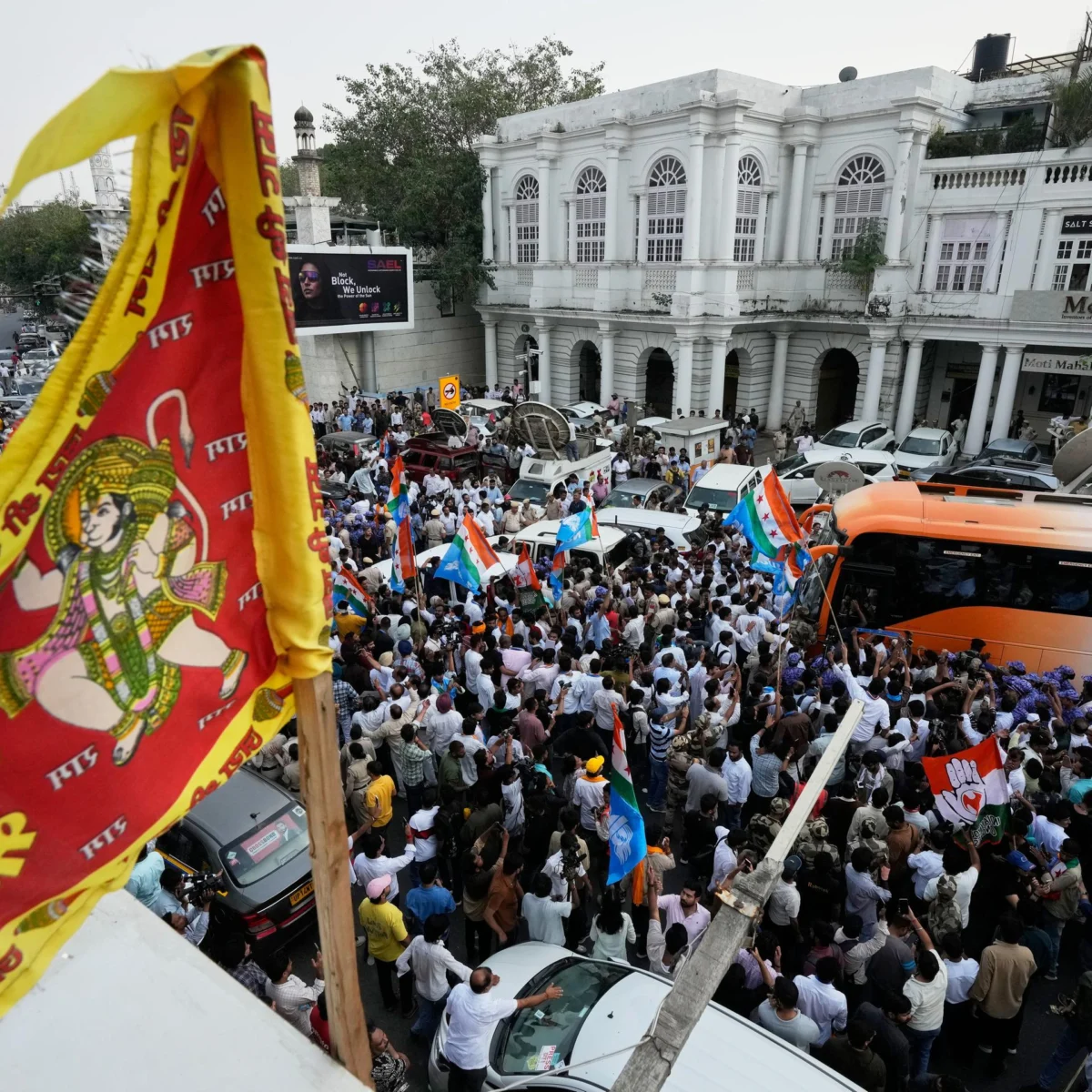
NEW DELHI, India – October 9, 2026 – India, the world’s largest democracy, is currently embroiled in a significant electoral controversy, as thousands of citizens, spearheaded by the opposition Congress Party and various activist groups, took to the streets of New Delhi today. Their unified demand: an immediate halt to the ongoing revision of voter lists, which has seen an unprecedented 130 million entries removed across the nation. The protests underscore deep-seated concerns over potential disenfranchisement and the integrity of the upcoming electoral processes.
The Election Commission of India (ECI) and the government maintain that these deletions target "duplicate or illegal" entries, a necessary measure to ensure the accuracy and fairness of voter rolls. However, the opposition vehemently disputes this narrative, alleging that the process disproportionately affects their supporters and risks undermining the democratic fabric of the nation. With millions of citizens having lodged objections against their removal, the path to reinstatement remains fraught with difficulty, casting a long shadow over the future of Indian elections.
The Heart of the Matter: Main Facts Unfolding
Today’s demonstrations in the bustling capital of New Delhi brought together a diverse coalition of activists and political workers, all united by a common grievance. Chanting slogans and carrying placards, protestors marched towards key government institutions, demanding transparency and accountability from the Election Commission. The sheer scale of the deletions – 130 million individuals removed from voter rolls – represents a staggering number, impacting a significant portion of India’s vast electorate. To put this into perspective, this figure exceeds the total population of many large countries, raising alarms both domestically and internationally.
The official justification for these widespread removals hinges on identifying and eliminating duplicate entries, deceased voters, and those deemed "illegal" for various reasons, such as having multiple registrations or incorrect demographic details. The Election Commission asserts that such clean-up operations are routine and essential to prevent electoral fraud and ensure that only eligible citizens cast their ballots. However, critics argue that the methodology employed has been flawed, opaque, and prone to errors, leading to the arbitrary disenfranchisement of genuine voters.
The Congress Party, India’s principal opposition force, has been particularly vocal in its condemnation, asserting that the deletions are politically motivated. They claim that a disproportionate number of deleted entries belong to demographics traditionally supportive of opposition parties, suggesting a deliberate attempt to alter the electoral landscape ahead of crucial state and national elections. While the term "Kakerlakenbewegung" (Cockroach Movement) was used in earlier German reports, it appears to be a colloquial or misconstrued reference. More accurately, the protests are being driven by the Congress Party alongside a broad coalition of civil society organizations, human rights advocates, and local activist groups concerned about electoral transparency and the fundamental right to vote.
The logistical challenge of reinstatement for those wrongly removed is immense. Millions have already filed formal objections, but the bureaucratic hurdles, combined with the sheer volume of appeals, mean that many may struggle to regain their voting rights before the next election cycle. This difficulty fuels further public distrust and exacerbates fears of widespread disenfranchisement.
A Timeline of Electoral Roll Revisions and Growing Discontent
The process of maintaining and updating voter lists is a continuous and complex exercise in a country as vast and populous as India. Typically, the Election Commission undertakes periodic summary revisions, allowing citizens to register, update details, or object to entries. However, the current revision cycle has been marked by an unusual scale of deletions and a significant lack of public confidence.
- Early 2025: The Election Commission of India initiates a comprehensive drive to clean up electoral rolls across all states and union territories. This drive is framed as a proactive measure to enhance the accuracy and integrity of voter lists, particularly in anticipation of upcoming state assembly elections and the next general elections. The ECI emphasizes the use of technology, including data analytics and deduplication software, to identify discrepancies.
- Mid-2025 to Early 2026: Initial phases of the revision focus on identifying duplicate entries, deceased voters, and those who have moved residence without updating their registration. Booth Level Officers (BLOs) conduct door-to-door verification in many areas. However, reports of arbitrary deletions, particularly in marginalized communities and urban slums, begin to surface from local media and activist groups.
- March-April 2026: The Election Commission publicly announces that a significant number of entries have been flagged for deletion. While specific state-wise figures are released, the cumulative national total begins to climb rapidly. Opposition parties and civil society organizations express initial concerns, citing a lack of transparency in the deletion criteria and verification process.
- July 2026: The ECI confirms that over 100 million entries have been removed from the voter lists nationwide. This announcement triggers a wave of alarm among political analysts and human rights groups. The opposition Congress Party officially launches a campaign to monitor the revision process and assist citizens in filing objections.
- August-September 2026: Millions of affected citizens, often with assistance from political parties and NGOs, file objections to their removal. However, reports emerge about the cumbersome nature of the appeals process, including long queues, insufficient staff, and a perceived lack of responsiveness from electoral authorities.
- October 9, 2026: The cumulative figure of deletions reaches 130 million, prompting large-scale protests in New Delhi and other major cities. The opposition intensifies its demands for an immediate suspension of the deletion drive and a thorough, transparent review of all removed entries.
This chronological progression highlights a gradual escalation of the issue, from a routine administrative exercise to a full-blown national controversy threatening the bedrock of India’s democratic process.
Supporting Data and the Magnitude of the Challenge
The figure of 130 million deleted entries is staggering, representing approximately 13-14% of India’s total eligible voting population, which stood at around 970 million in the last general elections. Such a large-scale removal has precedents in other parts of the world, but rarely at this magnitude without significant controversy and questions regarding due process.
The Election Commission’s primary justification centers on the need for "clean" rolls. In previous elections, allegations of ‘bogus voters’ and duplicate entries have indeed surfaced, leading to calls for stricter verification. The ECI points to instances where individuals might be registered in multiple constituencies, or even multiple times within the same constituency, often due to migration, marriage, or clerical errors. Furthermore, the ECI regularly removes names of deceased individuals based on data from civil registration systems.
However, the critics argue that the methodology for identifying these "duplicate or illegal" entries is flawed. They point to:
- Lack of Public Scrutiny: The specific algorithms or manual processes used for identifying duplicates are not fully transparent, making it difficult for external observers to verify the accuracy of the deletions.
- Insufficient Verification: While door-to-door verification by Booth Level Officers (BLOs) is mandated, its effectiveness varies widely. In many cases, deletions might be based solely on database matching without proper physical verification, leading to genuine voters being mistakenly removed.
- Digital Divide: A significant portion of India’s population, particularly in rural and marginalized areas, has limited access to digital resources. They may not be aware of their deletion until election day, or they may struggle to navigate the online and offline processes for checking their status and filing objections.
- Disproportionate Impact: Anecdotal evidence and reports from ground-level activists suggest that the deletions are not uniformly distributed. Areas with high concentrations of migrant workers, minorities, and economically disadvantaged communities appear to be disproportionately affected. These groups often face greater challenges in re-registering due to lack of documentation, mobility, or awareness.
- The Appeals Process: While the ECI allows for objections and appeals, the success rate of reinstatement is reportedly low. Many individuals who have filed objections complain of bureaucratic delays, lost paperwork, and a general lack of clear communication regarding the status of their appeals. This effectively disenfranchises individuals who have taken the initiative to correct the error.
Data from civil society organizations indicates that in some states, the deletion rates have been as high as 15-20% of the local electorate. While the ECI releases cumulative figures, a detailed breakdown of the types of deletions (e.g., deceased, duplicate, shifted, "illegal") and their geographical distribution is often not made readily available, further fueling suspicions.
Official Responses and Justifications
The Election Commission of India (ECI), a constitutional body tasked with overseeing elections, has consistently defended its actions, emphasizing its constitutional mandate to ensure free, fair, and transparent elections.
In recent press conferences, ECI officials have reiterated:
- Integrity of the Electoral Process: The primary objective of the revision is to maintain the purity of the electoral rolls. "A clean electoral roll is the foundation of a fair election," stated a senior ECI official.
- Combating Electoral Fraud: Deleting duplicate and erroneous entries is crucial to prevent individuals from casting multiple votes, thereby safeguarding the integrity of the electoral outcome.
- Use of Technology: The ECI highlights its investment in advanced software and data analysis tools to identify discrepancies that manual verification might miss. They argue that this technological approach allows for a more efficient and comprehensive clean-up.
- Due Process Followed: The ECI asserts that all deletions are carried out after following prescribed procedures, including public notification, opportunities for objections, and verification by Booth Level Officers. They emphasize that any individual whose name is proposed for deletion is given a chance to respond before the final decision is made.
- Open for Grievances: The ECI maintains that its grievance redressal mechanisms are robust and that individuals can approach district election officers or the ECI directly with their complaints. They encourage citizens to actively check their names on the voter list and report any discrepancies.
The Union Government has largely supported the ECI’s stance, portraying the exercise as a necessary administrative reform. Government spokespersons have dismissed opposition claims of political motivation as "baseless allegations" and "attempts to politicize a routine administrative function." They argue that a clean voter list benefits all political parties by ensuring a level playing field. However, critics point out that the government’s strong backing might undermine the perceived independence of the ECI, particularly given the political stakes involved.
Implications for India’s Democracy and Future Elections
The mass deletion of 130 million names from India’s voter lists carries profound implications for the country’s democratic health, electoral integrity, and social cohesion.
- Disenfranchisement and Democratic Right: At its core, the controversy is about the fundamental right to vote. If genuine voters are mistakenly removed and face insurmountable barriers to reinstatement, it represents a significant erosion of democratic participation. This can lead to a sense of alienation and distrust among affected citizens, particularly those from marginalized communities who already feel underrepresented.
- Impact on Electoral Outcomes: Even a small percentage of disenfranchised voters can significantly alter electoral outcomes, especially in closely contested constituencies. The sheer scale of the current deletions means that the composition of the electorate could be fundamentally reshaped, potentially benefiting the incumbent party if the deletions disproportionately affect opposition strongholds or specific demographic groups. This raises serious questions about the fairness and legitimacy of future elections.
- Political Polarization and Distrust: The controversy has further deepened political polarization in India. The opposition’s allegations of political manipulation, even if unsubstantiated by concrete proof, sow seeds of distrust in the electoral process. This can lead to increased political instability, protests, and a refusal by losing parties to accept election results, mirroring trends seen in other democracies grappling with electoral integrity issues.
- Credibility of the Election Commission: The ECI’s reputation as an impartial and independent body is under intense scrutiny. While it has historically been lauded for conducting massive and complex elections efficiently, the current controversy, coupled with perceptions of opacity and unresponsiveness, risks damaging its long-standing credibility. A loss of public trust in the ECI could have long-term detrimental effects on India’s democratic institutions.
- Social Cohesion and Inclusivity: If specific communities or demographics are disproportionately affected by the deletions, it can exacerbate existing social divisions and deepen feelings of exclusion. This is particularly concerning in a diverse country like India, where electoral participation is often seen as a crucial avenue for marginalized groups to assert their rights and voice their concerns.
- Call for Reform and Transparency: The controversy highlights the urgent need for comprehensive electoral reforms, particularly concerning voter registration and list maintenance. Calls for greater transparency in the ECI’s processes, clearer guidelines for deletions, and more accessible and efficient grievance redressal mechanisms are likely to intensify. Independent audits of the voter lists and the deletion process may also become necessary to restore public confidence.
- International Scrutiny: As the world’s largest democracy, India’s electoral processes are watched closely by international observers and democratic institutions. The current controversy is likely to attract significant international attention, with concerns raised about the health of democratic norms and the protection of voting rights in India.
In conclusion, the mass deletion of 130 million names from India’s voter lists is far more than a mere administrative exercise. It has ignited a political firestorm, bringing thousands to the streets and sparking a national debate about the fundamental principles of democracy. As India approaches its next electoral cycle, the ability of the Election Commission and the government to address these concerns transparently and effectively will be crucial in safeguarding the integrity of its democratic institutions and ensuring that every eligible voice is heard. The protests today in New Delhi serve as a powerful reminder of the vigilance required to protect the democratic rights of millions.
















