


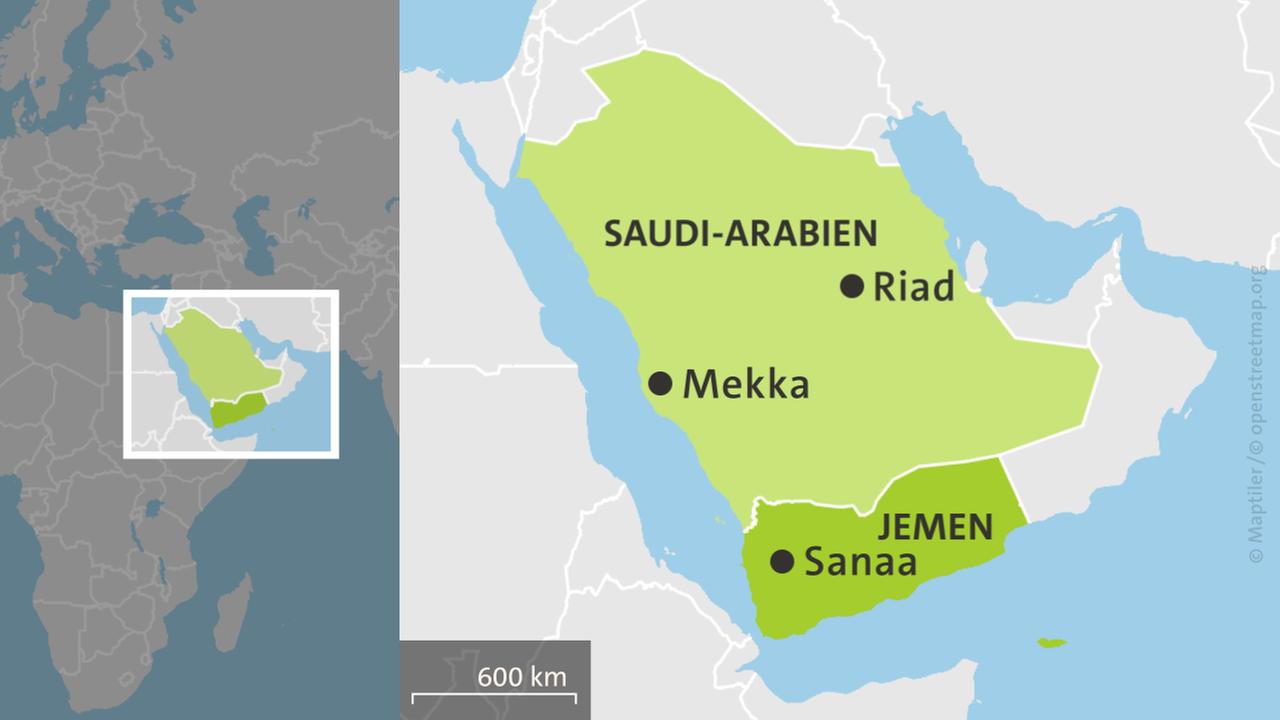
Riyadh, Saudi Arabia – October 8, 2026 – The protracted conflict between Saudi Arabia and Yemen’s Iran-aligned Houthi militia has reached a new and alarming phase, marked by a fresh Houthi missile strike on King Khalid International Airport in the Saudi capital, Riyadh. This latest attack, claimed by Houthi military spokesperson Jahja Sari, underscores a significant escalation in a conflict that has already devastated Yemen and increasingly threatens regional stability. Saudi air defenses successfully intercepted multiple projectiles, mitigating direct impact, but the incident caused minor damage from falling debris and prompted international concern, including a suspension of flights to Riyadh by the Lufthansa Group.
The attack on Riyadh follows a series of deadly assaults on Saudi airports in recent days, for which the Kingdom has vowed severe retaliation. In response, the Saudi-led military coalition has launched an extensive operation against Houthi targets within Yemen, destroying dozens of military installations. The relentless exchange of fire and the widening scope of targets signal a dangerous trajectory for the conflict, with potential ramifications extending far beyond the immediate belligerents, drawing in other regional actors and exacerbating an already dire humanitarian crisis.
Main Facts: A Spiral of Violence
The early hours of October 8, 2026, saw Riyadh once again become the target of Houthi aggression. The Houthi military, through its spokesperson Jahja Sari, swiftly claimed responsibility for firing a ballistic missile towards King Khalid International Airport. Saudi authorities, via Colonel Turki al-Maliki, spokesperson for the Saudi-led coalition, confirmed the interception of two missiles aimed at Riyadh and an additional projectile targeting Khamis Mushait in the country’s southwest. Witnesses in Riyadh reported hearing multiple loud explosions, indicative of the defensive measures taken.
While direct casualties from the intercepted missiles were avoided, falling debris caused structural damage. The Saudi Civil Defense reported minor damage to a kindergarten and a clinic complex in Riyadh, highlighting the indiscriminate nature of such attacks even when intercepted. Furthermore, sources within Saudi airport circles indicated that debris from the intercepted projectiles impacted a terminal building at King Khalid International Airport, disrupting operations.
This latest strike is not an isolated incident but part of a discernible pattern of intensifying Houthi attacks on Saudi civilian infrastructure. Just a day prior and the day before that, Saudi airports had been subjected to similar assaults, resulting in three fatalities and numerous injuries. Saudi Arabia unequivocally attributed these attacks to the Houthi militia, promising a robust response. True to its word, the Saudi-led coalition initiated a "comprehensive operation" deep inside Yemeni territory, targeting a vast array of Houthi military assets.
Chronology of Escalation: A Week of Retaliation and Threat
The past week has witnessed a rapid and dangerous acceleration of hostilities, pushing the long-running Yemen conflict into a new, more volatile phase.
October 6-7, 2026: Preceding Airport Attacks and Saudi Vows of Retaliation
The immediate precursors to the latest Riyadh attack were a series of Houthi assaults on other Saudi airports. While specific details on which airports were targeted remain partially undisclosed, Saudi authorities confirmed that these attacks resulted in three deaths and numerous casualties among civilians and airport personnel. The precision and frequency of these strikes demonstrated an enhanced Houthi capability and resolve to project power beyond Yemen’s borders, directly challenging Saudi security. The Saudi-led coalition wasted no time in condemning these "brutal attacks on civilians and civilian facilities," issuing a stern warning via its official X (formerly Twitter) account that such actions "would not go unpunished." This public declaration set the stage for an imminent and forceful response.
October 8, 2026 (Early Hours): Houthi Strike on Riyadh
The Houthi militia followed through on its aggressive posture by launching a ballistic missile at King Khalid International Airport in Riyadh. Houthi military spokesperson Jahja Sari confirmed the strike, reiterating the group’s capacity to reach deep into Saudi territory. The interception of these missiles by Saudi air defenses, as confirmed by Colonel Turki al-Maliki, prevented a potentially catastrophic outcome, yet the sheer audacity of targeting the capital’s main international gateway underscored the Houthis’ intent to inflict maximum psychological and economic pressure. The reported damage to civilian structures from falling debris, though minor, served as a stark reminder of the inherent dangers to civilian populations in such conflicts.
October 8, 2026 (Later): Saudi-led Coalition’s "Comprehensive Operation"
Hours after the Riyadh attack, the Saudi-led coalition unleashed a massive retaliatory strike across multiple Houthi-controlled provinces in Yemen. Colonel al-Maliki announced that the operation had successfully destroyed 82 distinct Houthi military targets. These targets, strategically located in the provinces of Saada, Marib, Al-Jawf, and Al-Hodeidah, included critical infrastructure such as missile launching sites, command and control centers, and extensive missile and weapons storage facilities. The scale and coordination of this operation suggested a pre-planned response, triggered by the escalating Houthi aggression. However, independent verification of these claims remains challenging given the inherent difficulties of reporting from conflict zones.
Houthi Counter-Claims and On-the-Ground Reports
In a predictable counter-narrative, the Houthi-affiliated Al-Masirah television network reported a barrage of Saudi airstrikes on the western Yemeni port city of Hodeidah, as well as other areas. Residents of Hodeidah corroborated parts of these reports, describing powerful explosions and plumes of smoke rising near the city’s vital port facilities. This tit-for-tat dynamic highlights the cyclical nature of violence in the conflict, where each offensive action is met with an immediate, often more intense, counter-response.
Supporting Data and Analysis: The Broader Context
The recent surge in hostilities cannot be viewed in isolation. It is a manifestation of a long-standing and deeply entrenched proxy conflict, exacerbated by evolving military capabilities and shifting regional alliances.
Military Capabilities and Strategic Targeting:
The Houthis’ ability to launch ballistic missiles and drones deep into Saudi territory has been a game-changer. While the effectiveness of these weapons in causing significant direct damage to hardened targets like airports or oil facilities is often mitigated by advanced Saudi air defense systems, their psychological and economic impact is undeniable. The repeated targeting of civilian airports aims to disrupt daily life, instill fear, and pressure the Saudi government. Similarly, Houthi warnings about targeting "all oil facilities" of Saudi Arabia, referencing past attacks on Aramco infrastructure, underscore their intent to leverage economic vulnerabilities. Saudi Arabia, a global energy giant, relies heavily on its oil infrastructure, making it a high-value target for asymmetrical warfare.
The Saudi-led coalition, in contrast, possesses overwhelming air superiority. Its "comprehensive operation" targeting 82 Houthi sites demonstrates a capacity for widespread, coordinated strikes. The specific focus on missile launchers, command centers, and weapons depots indicates an effort to degrade the Houthis’ offensive capabilities and disrupt their operational command. However, the dispersed and often mobile nature of Houthi assets, coupled with their integration within civilian areas, makes complete eradication challenging and often results in unintended civilian casualties.
The Humanitarian Catastrophe in Yemen:
Beneath the headlines of missile exchanges and military operations lies the deepening tragedy of Yemen, which the United Nations has repeatedly labeled the world’s worst humanitarian crisis. The recent escalation has directly exacerbated this catastrophe. According to the International Organization for Migration (IOM), the number of internally displaced persons (IDPs) has surged dramatically. Since mid-September, over 200,000 people have been forced to flee their homes, a stark increase from the 76,000 recorded just weeks prior. The IOM describes the situation as "alarming," with millions already facing famine, lack of access to clean water, and the constant threat of disease. The "fierce fighting" – particularly the Yemeni government’s declared "major offensive" to reclaim Houthi-occupied territories – is directly contributing to this mass displacement, pushing an already vulnerable population to the brink. Aid organizations struggle to reach those in need amidst ongoing hostilities and blockades, compounding the suffering.
Official Responses and International Ripples
The recent escalation has elicited strong statements from all parties involved, while also signaling potential shifts in broader regional dynamics.
Houthi Militia’s Defiant Stance:
Beyond claiming responsibility for the Riyadh attack, the Houthi militia issued stark warnings to the international community. Their spokesperson explicitly stated that "all oil facilities" in Saudi Arabia could become legitimate targets for their forces, a threat that sends ripples through global energy markets. Furthermore, the militia renewed its call for international airlines to cease all flights to Saudi Arabia, with the sole exception of airspace over the holy cities of Mecca and Medina. This strategic exemption is likely an attempt to avoid provoking a broader Islamic backlash, while still aiming to exert economic and psychological pressure.
Saudi-led Coalition’s Unwavering Resolve:
The Saudi-led coalition’s response has been one of unwavering resolve and a commitment to retaliation. Colonel Turki al-Maliki’s prompt confirmation of missile interceptions and the detailed announcement of the "comprehensive operation" underscore Saudi Arabia’s determination to defend its territory and punish those it deems responsible for attacks. The coalition’s public statement on X, threatening that "brutal attacks…will not go unpunished," serves as a clear declaration of intent, signaling that Saudi Arabia views these attacks as a direct challenge to its sovereignty and security that demands a forceful response.
Yemeni Government’s Offensive:
The internationally recognized Yemeni government, backed by Saudi Arabia, also announced a "major offensive" to retake all Houthi-occupied territories. This offensive, initiated on Sunday, reflects a renewed push to alter the military landscape within Yemen, potentially aiming to weaken the Houthis’ ability to launch cross-border attacks. However, such large-scale operations inevitably lead to intensified fighting and further displacement of civilians.
International Actors and the "Mecca Alliance":
The escalating conflict is now drawing in other regional powers, signaling a potential widening of alliances and battlefronts.
- Syria’s Potential Intervention: In a significant development, reports citing a Syrian official and a US representative indicated that the government in Damascus is considering sending military units to support Saudi Arabian troops. While the precise nature and scale of this potential intervention remain unclear, it suggests a convergence of interests between Syria and Saudi Arabia, possibly driven by shared concerns over regional stability or a broader anti-Houthi/Iran alignment. Such a move would mark a notable shift in regional dynamics and could introduce a new dimension to the Yemen conflict.
- Turkey and Pakistan’s Prior Pledges: This potential Syrian involvement comes on the heels of earlier commitments from Turkey and Pakistan, both of whom previously pledged military assistance and announced their intention to dispatch troops to Saudi Arabia. These pledges were made within the framework of the "Mecca Alliance," a term often used to describe a broader security cooperation initiative aimed at bolstering Saudi Arabia’s defense capabilities. The involvement of these diverse regional powers highlights the increasingly complex web of alliances and rivalries that characterize the Middle East, with Saudi Arabia actively seeking to consolidate support against perceived threats.
Airline Industry Response:
The Houthi warnings to airlines had immediate repercussions. The Lufthansa Group, a major European carrier, announced the suspension of its flights to Riyadh until October 16th, inclusive. This decision underscores the real-world impact of such threats on international travel and commerce, reflecting concerns over passenger safety and operational risks in a volatile environment. Other airlines may follow suit if the security situation does not stabilize.
Implications: A Region on the Brink
The recent escalation carries profound implications, threatening to destabilize an already fragile region and exacerbate a dire humanitarian catastrophe.
Risk of Broader Regional Conflict: The involvement of external actors like Syria, Turkey, and Pakistan, even if limited to military support, significantly raises the stakes. What began as a localized civil war in Yemen has long since evolved into a proxy battleground, and the current trajectory suggests an increasing risk of direct regional confrontation. A miscalculation or an unchecked escalation could easily draw in more players, leading to a wider and more destructive conflict.
Economic Fallout: The repeated targeting of airports and the explicit threats against oil facilities pose a substantial economic risk. Saudi Arabia is the world’s largest oil exporter, and any significant disruption to its production or export capabilities would send shockwaves through global energy markets, potentially triggering a surge in oil prices and impacting the global economy. The disruption of air travel, as demonstrated by Lufthansa’s decision, also has economic consequences for trade, tourism, and business connectivity.
Deepening Humanitarian Crisis: For the people of Yemen, the escalating conflict means an intensification of suffering. The surge in displacement, coupled with the ongoing destruction of infrastructure and the disruption of aid routes, will undoubtedly worsen the already catastrophic humanitarian situation. Famine, disease, and lack of basic services will continue to claim lives, particularly among the most vulnerable populations. The international community’s capacity to respond to such a rapidly deteriorating situation is already stretched thin.
Challenges to Diplomacy and Peace: The current climate of heightened aggression and retaliation leaves little room for diplomatic breakthroughs. Decades of peace efforts have yielded limited results, and the entrenched positions of the belligerents, coupled with the influence of regional sponsors, make a political resolution seem increasingly distant. The latest escalation further entrenches hardline stances and diminishes trust, pushing the prospect of a lasting peace further out of reach.
In conclusion, the Houthi missile strike on Riyadh’s airport and the subsequent robust Saudi retaliation mark a dangerous turning point in the Yemen conflict. With a clear pattern of escalating attacks on civilian infrastructure, threats to vital economic assets, and the potential involvement of new regional players, the conflict is entering a perilous new chapter. The international community watches with bated breath, as the stability of the Gulf region and the fate of millions in Yemen hang precariously in the balance.
















