

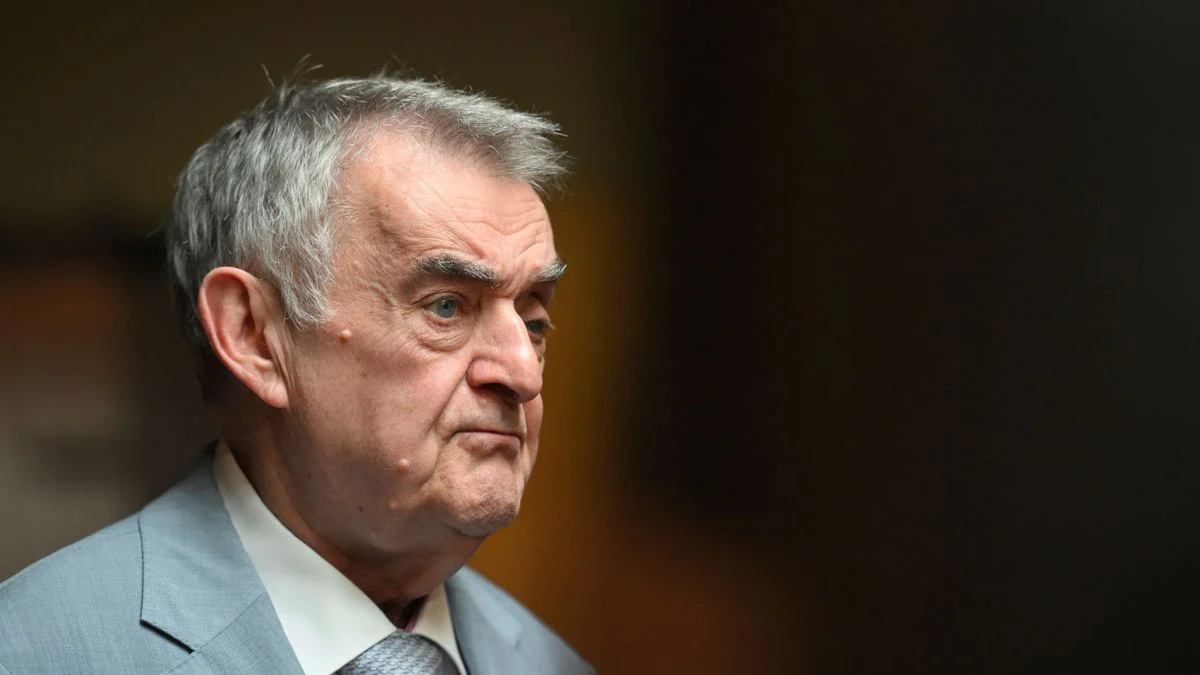
Düsseldorf, North Rhine-Westphalia – Herbert Reul, the veteran Interior Minister of North Rhine-Westphalia (NRW) and a prominent figure within the Christian Democratic Union (CDU), has made a candid public disclosure regarding his health. The 74-year-old politician, known for his direct approach and deep engagement in public safety matters, revealed before a regular session of the state’s Interior Committee that he is experiencing a "sprachlich etwas lädiert" – a condition best translated as being "somewhat verbally impaired." This unexpected revelation has drawn attention not only to the minister’s personal well-being but also to the immense pressures faced by public officials during times of crisis.
Minister Reul’s announcement offered a rare glimpse into the personal sacrifices sometimes made in the line of public duty. He explained that his current speech impediment emerged following a medical procedure he underwent during the summer holidays to address a persistent hand tremor. What complicates the situation, and what Reul himself hypothesises, is that his recovery period was abruptly cut short due to a massive wildfire that engulfed the Hürtgenwald forest – an event he deemed significant enough to warrant his immediate presence and leadership, potentially leading him to leave the hospital prematurely.
Despite the ongoing medical uncertainty surrounding the exact cause of his speech issue, Minister Reul assured the public and his colleagues of his overall health. "I am healthy and cheerful, but somewhat verbally impaired," he stated, reaffirming his commitment to his ministerial responsibilities. The incident underscores a deeper narrative of political dedication, the complexities of public health disclosures, and the demanding nature of high-profile government roles, particularly in Germany’s most populous state.
Main Facts
Herbert Reul, the long-serving Interior Minister for North Rhine-Westphalia, Germany’s most populous federal state, has publicly addressed recent changes in his speech, attributing them to post-operative complications potentially exacerbated by his early return to duty during a major crisis. The CDU politician, aged 74, proactively informed members of the state’s Interior Committee about his condition, stating he was "sprachlich etwas lädiert," or somewhat verbally impaired. This candid admission pre-empted potential speculation and underscored his characteristic transparency.
The genesis of his current condition, as explained by Reul, traces back to an operation performed during the summer break. The surgical intervention was intended to alleviate a persistent hand tremor, a common neurological condition that can affect fine motor skills. While the operation itself was aimed at improving his quality of life and functionality, it appears to have introduced an unforeseen complication related to his speech.
Reul’s narrative then pivots to a critical moment for NRW: the devastating wildfire that swept through the Hürtgenwald forest. This environmental disaster, described as the largest in NRW’s history, compelled the minister to cut short his post-operative recovery. Driven by a sense of duty and the urgent need for visible leadership during a crisis impacting public safety and resources, Reul cancelled his remaining vacation and swiftly returned to the front lines. He posited that this early departure from the hospital, undertaken to be present at the scene of the wildfire, might have contributed to the development of his current speech impediment.
Crucially, Minister Reul conveyed a message of reassurance regarding his overall health. He clarified that despite the speech issue, which doctors are still investigating to pinpoint its precise origin, he feels "healthy and cheerful." His primary objective in making this personal disclosure was to provide an explanation for his altered speech patterns, which he acknowledged might have been noticeable to those around him in recent weeks. This proactive communication strategy aims to maintain trust and focus on his continued ability to perform his demanding role as the state’s chief security officer.
Chronology of Events
The timeline surrounding Minister Reul’s health disclosure illustrates a sequence of personal medical decisions intersecting with critical public service obligations, culminating in his candid explanation to the Interior Committee.
Summer Holidays: Operation for Hand Tremors
The sequence of events began during the summer recess, a period typically designated for rest and personal matters for politicians. It was during this time that Herbert Reul underwent a planned surgical procedure. The purpose of this operation was to address a long-standing issue of hand tremors. While the exact nature of the tremor (e.g., essential tremor, Parkinsonian tremor) was not specified, such procedures often involve neurosurgical interventions aimed at modulating brain activity to control involuntary movements. The expectation would have been a period of convalescence and recovery following such an invasive procedure.
Hürtgenwald Wildfire: A State-Wide Emergency
Shortly after his operation, and during what should have been his recovery period, North Rhine-Westphalia was plunged into a significant environmental crisis. A massive wildfire erupted in the Hürtgenwald, a densely forested area with historical significance. This fire quickly escalated, growing to become the largest wildfire in the state’s recorded history. The scale of the blaze presented immense challenges to emergency services, local authorities, and the state government, demanding rapid coordination, resource deployment, and strategic decision-making. As the Interior Minister, Reul holds ultimate responsibility for public safety, including disaster management, police forces, and fire services. The escalating crisis naturally placed him at the heart of the response effort.
Early Discharge Hypothesis: Duty Over Recovery
Faced with the severity of the Hürtgenwald wildfire, Minister Reul made a critical personal decision. He chose to cancel his remaining vacation and, by his own account, potentially left the hospital earlier than medically advised. His motivation was clear: to be physically present at the scene, to oversee the emergency response, and to provide visible leadership during a time of significant public concern. This decision, driven by a profound sense of duty, is now believed by Reul himself to be a possible contributing factor to his current speech impediment. The hypothesis suggests that the physical and mental stress of an early return to a demanding role, coupled with incomplete post-operative recovery, might have triggered or exacerbated a neurological or physiological response affecting his speech. The precise medical link, however, remains under investigation.
Public Disclosure: The Interior Committee Setting
The culmination of these events was Minister Reul’s public announcement before a regular sitting of the NRW Interior Committee. This setting, a formal parliamentary body responsible for overseeing the Interior Ministry, was chosen by Reul as the appropriate forum for his personal explanation. By addressing his colleagues directly and openly, Reul demonstrated his commitment to transparency and sought to provide clarity before any speculation could arise regarding his altered speech. His statement served as both a personal update and a subtle reaffirmation of his continued capacity to lead despite the health challenge.
Ongoing Investigation: Unraveling the Cause
Currently, the exact medical reason for Minister Reul’s speech problem remains undetermined. He explicitly stated that medical professionals are still working to understand "why it occurred." This indicates that while the minister has his own hypothesis linking it to the wildfire response, a definitive medical diagnosis is still pending. The situation highlights the complexities of human physiology and the challenges of diagnosing post-operative complications, especially when compounded by external stressors.
Supporting Data and Context
To fully appreciate the significance of Herbert Reul’s disclosure, it is essential to contextualise his role, the severity of the crisis he responded to, and the general medical landscape surrounding his condition.
Herbert Reul’s Political Career and Reputation
Herbert Reul is a political heavyweight in North Rhine-Westphalia and within the CDU. Born in 1952, his political career spans decades, beginning with his entry into the CDU in 1971. He served as a Member of the European Parliament from 2004 to 2017, where he gained a reputation as a pragmatic and influential voice, particularly on issues of industry, research, and energy. In 2017, he returned to state politics to assume the critical portfolio of Interior Minister in NRW under Minister-President Armin Laschet, a role he continued under Hendrik Wüst.
As Interior Minister, Reul is responsible for the state’s police force, fire departments, disaster control, and internal security. This makes him one of the most powerful and visible ministers in the state government. He is known for his hands-on approach, his clear and often blunt communication style, and his unwavering focus on law and order. During his tenure, he has faced numerous challenges, including the fight against organised crime, managing large-scale public protests, ensuring security at major events, and responding to natural disasters. His public image is that of a dedicated, no-nonsense politician deeply committed to the safety and well-being of NRW’s 18 million residents. This latest health disclosure aligns with his reputation for transparency, as he chose to proactively address a personal issue that could impact his public function.
Significance of the Interior Minister Role
The Interior Minister’s portfolio is arguably one of the most demanding in any German federal state. It encompasses a vast array of responsibilities directly impacting the daily lives and security of citizens. The minister commands the state police force, overseeing thousands of officers and complex operations from crime fighting to traffic control. Furthermore, disaster management, including the coordination of fire brigades and civil protection units during emergencies like floods or wildfires, falls under their purview. During crises, the Interior Minister is expected to be a highly visible and decisive leader, communicating directly with the public, reassuring affected communities, and coordinating a multi-agency response. Reul’s decision to return to duty during the Hürtgenwald fire exemplifies this expectation of leadership and immediate presence, highlighting the immense pressure associated with the role.
Medical Context: Hand Tremors and Speech Impediments (General Information)
Hand tremors are involuntary, rhythmic muscle contractions that cause shaking movements in the hands. They can range from mild to severe and can significantly impact daily activities. Common causes include essential tremor, Parkinson’s disease, and certain medications. Treatment options vary, from medication to more invasive procedures like deep brain stimulation (DBS) or focused ultrasound thalamotomy, which aim to interrupt abnormal brain signals responsible for the tremor. Reul’s mention of an "Eingriff" (intervention/procedure) suggests a surgical approach.
Speech impediments, or dysarthria, involve difficulty with the articulation of words due to problems with the muscles that produce speech. This can manifest as slurred, slow, or difficult-to-understand speech. Causes are diverse and can include neurological conditions (stroke, Parkinson’s, multiple sclerosis), brain injuries, or certain medical procedures that might affect neural pathways or muscle control. While the specific link between a hand tremor operation and a speech impediment is not immediately obvious without further medical details, the brain is a complex organ, and any neurosurgical intervention carries potential risks to adjacent or related functions. Stress, fatigue, and incomplete recovery can also exacerbate or unmask subtle neurological issues. It is crucial to reiterate that Reul’s exact medical diagnosis for his speech issue is still pending, and any general medical information here serves only as background context.
The Hürtgenwald Wildfire in Detail
The wildfire in the Hürtgenwald, which erupted in August 2022, was indeed a crisis of unprecedented scale for North Rhine-Westphalia. The Hürtgenwald is a large, heavily forested area in the Eifel region, known for its challenging terrain and historical significance (site of fierce battles in WWII). The fire, fueled by dry conditions and strong winds, spread rapidly, consuming vast tracts of forest. At its peak, it was declared the "größter Waldbrand in NRW Geschichte" (largest wildfire in NRW history), necessitating a massive deployment of firefighters, civil protection units, and even military support.
The ecological impact was severe, destroying habitats and threatening biodiversity. Economically, it led to significant losses in timber value and tourism potential. The psychological impact on local communities, particularly those who remembered previous forest fires or lived in close proximity to the blaze, was also considerable. The crisis required robust leadership, efficient coordination of resources, and clear communication with the public. Reul’s presence on the ground was therefore not merely symbolic but a practical necessity for effective crisis management, showcasing his commitment to leading from the front, even at a personal cost.
Official Responses and Public Reaction
Minister Reul’s disclosure, while deeply personal, immediately became a matter of public and political interest, prompting a wave of reactions and setting a precedent for transparency in leadership.
Reul’s Own Statements: Transparency and Commitment
Minister Reul’s decision to proactively address his health condition before the Interior Committee was a deliberate act of transparency. His statements, "You have probably noticed in recent weeks that my pronunciation has changed a bit," and "I am healthy and cheerful, but somewhat verbally impaired," were carefully chosen to inform without alarming, and to explain without eliciting undue sympathy. By stating his intention to "gern erklären" (gladly explain), he took ownership of the narrative, preventing rumour and speculation. This approach is characteristic of Reul’s direct style and reinforces his image as a politician who prioritises clear communication with the public and his peers. His continued assertion of being "healthy and cheerful" despite the speech issue clearly communicates his intention to remain fully functional and dedicated to his ministerial duties. This self-assessment is critical for maintaining confidence in his leadership capabilities.
Reactions from Political Colleagues: Solidarity and Support
While initial reports on the disclosure did not detail specific immediate reactions from political counterparts, it is customary in German politics for colleagues across the political spectrum to express solidarity and support in such personal circumstances. Given Reul’s long-standing career and respected position, it is highly probable that he received messages of understanding and well wishes. Members of his own CDU party would naturally rally behind their minister, praising his courage and dedication. Leaders of coalition partners would likely offer support, emphasising the importance of his role and wishing him a swift and full understanding of his condition. Even opposition parties, while maintaining their critical oversight function, would typically acknowledge the personal aspect of such a disclosure and express wishes for his health, often commending the transparency shown. Such gestures contribute to a functioning democratic culture where personal integrity and health disclosures are treated with appropriate respect.
Party Stance (CDU): Full Confidence
The Christian Democratic Union (CDU) in North Rhine-Westphalia would undoubtedly stand firmly behind Minister Reul. His transparency about his health issues, coupled with his narrative of self-sacrifice during the Hürtgenwald wildfire, reinforces the party’s image of dedicated public service. The party leadership would likely issue statements affirming their full confidence in Reul’s ability to continue in his role. They would highlight his extensive experience, his proven track record, and his commitment to the state. Any suggestion of his unfitness for office due to a speech impediment would be swiftly countered by emphasising his mental acuity and the ongoing medical investigation. The CDU would likely frame his disclosure as an example of responsible leadership, demonstrating that even in personal adversity, the minister prioritises openness with the electorate.
Public Opinion and Media Commentary: Appreciation for Candour
The public and media reaction to such a disclosure in Germany tends to be nuanced. There would likely be widespread appreciation for Reul’s candour and his willingness to address a personal health matter openly. Many would view his actions during the Hürtgenwald fire as commendable, embodying a strong sense of duty. Media commentary would likely praise his transparency as a positive example for public officials. However, there would also be legitimate journalistic inquiry into the specifics of his condition, its potential impact on his long-term effectiveness, and the broader implications of politicians pushing themselves to the limit during crises. The narrative of "duty over self" often resonates positively with the public but can also spark debate about the support systems in place for high-ranking officials and the expectations placed upon them. The general sentiment would likely be one of concern for his well-being combined with respect for his continued service.
Implications
Herbert Reul’s health disclosure carries several implications, touching upon his immediate future in office, the broader expectations of political transparency, and the perennial debate about the demands of public service.
Impact on Reul’s Role and Public Appearances
The most immediate implication concerns Minister Reul’s ability to effectively carry out his demanding duties. While he has unequivocally stated his health and cheerfulness, a speech impediment, even if minor, can affect public communication, which is a crucial aspect of a minister’s role. Public speeches, press conferences, and parliamentary debates require clear and articulate delivery. Reul’s direct communication style has been a hallmark of his public persona; any alteration might require adjustments to his presentation. While his mental faculties and decision-making capabilities are not in question, the public and political observers will naturally monitor how the condition manifests in his official appearances. This might lead to an increased focus on his non-verbal communication and the substance of his statements, rather than the delivery. It could also prompt further medical investigations to gain a clearer understanding of the condition and potential remedies, which might entail temporary adjustments to his schedule or public engagements.
Precedent for Transparency in Public Office
Reul’s decision to proactively disclose his health issue sets a significant precedent for transparency in German politics. In an era where public trust in institutions is frequently scrutinised, an open approach to personal challenges can foster greater confidence. By choosing to explain his situation rather than allowing rumours to fester, Reul reinforced the idea that public officials have a responsibility to be forthright, especially when personal circumstances might affect their public function. This act of candour could encourage other politicians to be more open about health matters, thereby normalising discussions around the human element of leadership and potentially reducing the stigma associated with health challenges in public life. It underscores that leadership does not equate to invulnerability.
Broader Discussion on Political Responsibility and Self-Care
The narrative of Minister Reul cutting short his recovery to respond to a major wildfire ignites a broader discussion about the immense pressures on politicians during crises and the balance between public duty and personal well-being. On one hand, Reul’s actions embody a deeply ingrained sense of responsibility and dedication, which is often expected and admired in public servants. His desire to be "vor Ort" (on site) during a critical emergency reflects a commitment to visible leadership and hands-on management.
On the other hand, his self-diagnosed hypothesis that "Möglicherweise habe er das Krankenhaus zu schnell verlassen" (possibly he left the hospital too quickly) raises questions about the systemic pressures that might lead politicians to prioritise duty over their own health. It prompts reflection on whether the culture of relentless public service adequately supports recovery and self-care, or if it inadvertently encourages sacrifices that could have long-term personal consequences. This incident serves as a poignant case study for discussing the ethical and practical implications of pushing oneself beyond medical recommendations in the name of public duty, and whether such "heroic" actions are sustainable or even advisable for long-term effective governance.
Future Outlook: Continued Service and Medical Updates
Looking ahead, the immediate expectation is that Minister Reul will continue in his role, fully supported by his party and colleagues. However, there will be an ongoing interest in his health and any further medical updates. The search for a definitive diagnosis for his speech impediment will likely continue, and any new information would be of public interest. His ability to maintain his high-energy public presence and articulate communication will be implicitly, if not explicitly, monitored. Reul’s handling of this personal challenge will likely become another chapter in his extensive political career, shaping perceptions of his resilience and his commitment to the citizens of North Rhine-Westphalia. His transparency in this matter has set a tone, and the continued professional execution of his duties will be the ultimate measure of its impact.


















