As the planet faces a biodiversity emergency, the World Wide Fund for Nature (WWF) has released its latest Living Planet Report, painting a stark picture of the health of our natural world. While the overall trajectory remains deeply concerning, targeted conservation efforts offer a glimmer of hope in an otherwise bleak landscape.
Executive Summary: A World in Flux
The latest data from the Living Planet Report, published in October 2026, confirms what scientists have feared for decades: the Earth is undergoing a massive, human-driven loss of biodiversity. Analyzing trends from 1970 to 2022, the report utilizes the Living Planet Index (LPI)—a robust scientific framework maintained by the Zoological Society of London—to track the population sizes of 5,790 vertebrate species.
The findings are catastrophic. On average, wildlife populations have seen staggering declines. Freshwater ecosystems have been hit the hardest, with an 85% reduction in population sizes. Terrestrial and marine environments have seen declines of 69% and 59%, respectively. These figures are not merely statistics; they represent the unraveling of the complex web of life that sustains human civilization.
Chronology of the Crisis: Tracking the Decline
To understand the current state of the planet, one must look at the timeline of human expansion and industrialization since 1970.
- 1970–1990: The Era of Unchecked Expansion. This period marked the beginning of rapid industrial acceleration. The demand for timber, land for agriculture, and urban infrastructure began to exert unprecedented pressure on global habitats.
- 1990–2010: The Acceleration of Loss. As global trade expanded and energy consumption spiked, the degradation of freshwater systems—often ignored in broader climate discussions—became acute. Dammings, pollution, and the channelization of rivers decimated migratory species.
- 2010–2022: The Climate-Biodiversity Nexus. In the last decade, the intersection of climate change and habitat loss became undeniable. The report highlights that the primary drivers remain systemic: global food production, energy policies, and financial systems that prioritize short-term profit over ecological stability.
The Data: Breaking Down the Living Planet Index
The strength of the Living Planet Report lies in its methodology. By monitoring 5,790 species of mammals, birds, fish, reptiles, and amphibians, the report provides a representative look at approximately 7.4% of all known vertebrate species.
Regional and Ecosystem Vulnerability
- Freshwater Systems (85% decline): Freshwater habitats act as the "canaries in the coal mine." Because they are downstream from almost all human activity, they capture the runoff of agricultural chemicals, industrial waste, and the physical barriers of hydroelectric dams. Species such as otters, hippos, and river-dwelling turtles are currently at a critical tipping point.
- Terrestrial Ecosystems (69% decline): Deforestation for soy, palm oil, and cattle ranching remains the primary engine of terrestrial population collapse. The fragmentation of corridors prevents migration and genetic exchange, leading to "extinction debt."
- Marine Ecosystems (59% decline): While the decline in the oceans is marginally slower than on land, it is no less significant. Industrial overfishing, acidification, and plastic pollution continue to threaten the stability of the marine food chain.
Success Stories: Where Conservation Works
Despite the overwhelming negative trend, the report provides a crucial nuance: the collapse is not uniform. Approximately 50% of the monitored populations are currently stable or experiencing growth. This indicates that extinction is not an inevitable outcome of human existence, but rather a result of specific, manageable policy choices.
The Thunfisch (Tuna) Case Study
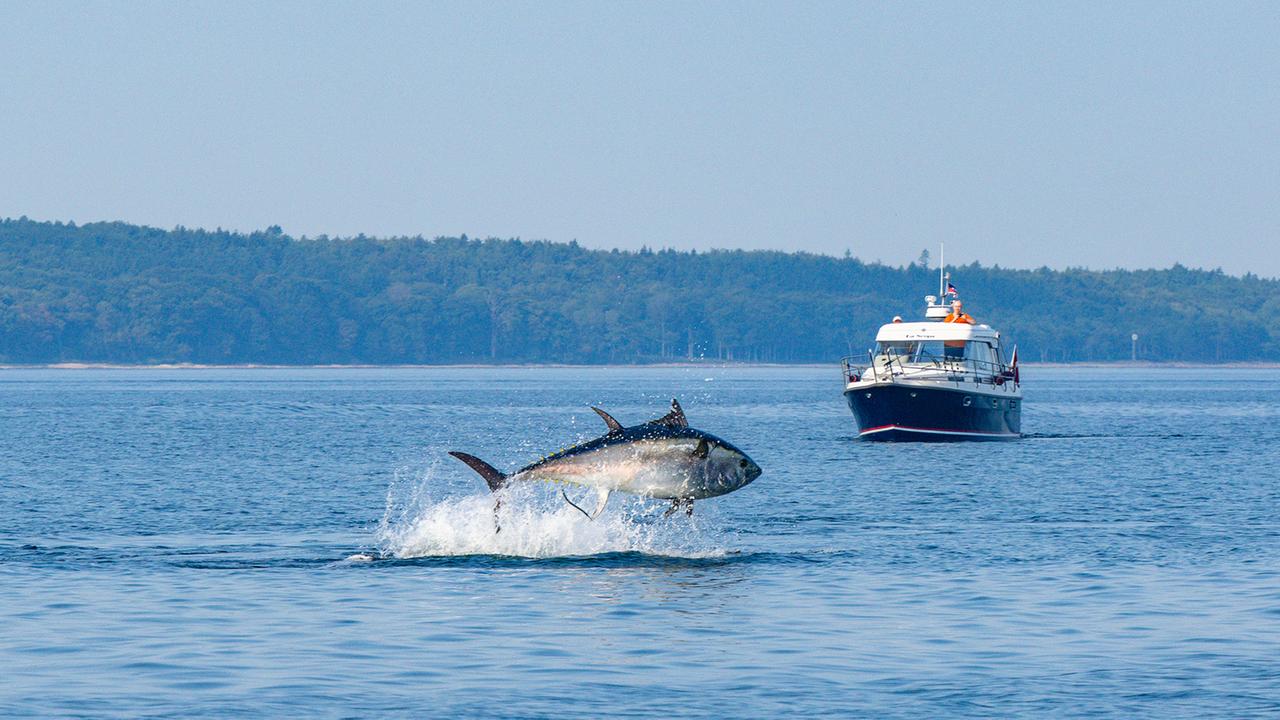
The recovery of certain tuna populations serves as a benchmark for international cooperation. By implementing stringent, science-based catch quotas and significantly increasing maritime patrols to curb illegal, unreported, and unregulated (IUU) fishing, international regulatory bodies have proven that population rebound is possible. These measures have stopped the decline of specific species, demonstrating that when economic interests are tempered by ecological limits, nature responds with resilience.
Targeted Protection Measures
The report emphasizes that species-specific intervention—such as the creation of marine protected areas (MPAs), the restoration of river connectivity, and the protection of biodiversity corridors—yields measurable results. Where the "average" shows a 73% decline across all tracked indices, the positive outliers prove that local and regional management can defy the global trend.
Official Responses and Systemic Implications
The WWF’s findings serve as an urgent call to action for world leaders, financial institutions, and the agricultural sector.
The Role of Financial Systems
A central pillar of the report is the critique of current financial systems. The WWF argues that capital flows are currently incentivizing the destruction of the very natural capital upon which the global economy relies. Without a radical shift in how global subsidies are distributed—moving away from harmful agricultural practices toward regenerative ones—the downward trend in the LPI is unlikely to reverse.
Infrastructure and Energy
The report highlights that the energy transition must be "nature-positive." While moving away from fossil fuels is essential for climate mitigation, poorly planned hydroelectric projects or large-scale solar arrays built on critical habitats risk shifting the crisis from the atmosphere to the ecosystem. The report calls for integrated planning that prioritizes site selection to avoid high-biodiversity areas.
Implications: Why This Matters to Humanity
The decline of vertebrate populations is a symptom of a broader planetary dysfunction. When ecosystems lose their constituent species, they lose their ability to provide essential services:
- Pollination: Essential for the majority of the world’s food crops.
- Water Filtration: Natural ecosystems provide clean water that would otherwise require multi-billion dollar infrastructure.
- Carbon Sequestration: Healthy forests, peatlands, and oceans act as the planet’s primary carbon sinks.
The loss of 73% of these populations (on a weighted average) implies that the "machinery" of the planet—the systems that clean our water, stabilize our climate, and produce our food—is breaking down.
Conclusion: A Turning Point
The Living Planet Report 2026 is not merely a document of loss; it is a roadmap for potential recovery. It identifies the systemic flaws in our food, energy, and financial models that drive biodiversity loss. However, it also proves that nature is resilient.
When human societies choose to enforce quotas, protect habitats, and prioritize long-term ecological health over immediate extraction, the decline halts. The challenge for the coming decade is to move these success stories from the margins to the mainstream. The survival of global wildlife—and by extension, the stability of human society—depends on our willingness to transition from a philosophy of exploitation to one of stewardship.
As the data makes clear, the window of opportunity is narrowing, but the path toward recovery is visible. The question remains whether the global community possesses the political and economic will to change course before the damage becomes irreversible.