For decades, history books have credited Walt Disney’s "Snow White and the Seven Dwarfs" (1937) as the progenitor of the feature-length animated film. Yet, an examination of cinematic history reveals a startling truth: eleven years before Disney’s masterpiece, a German visionary named Lotte Reiniger had already perfected the medium. Her 1926 film, "The Adventures of Prince Achmed," remains the oldest surviving animated feature, a masterpiece of shadow and light that continues to cast a long, elegant silhouette over the history of cinema.
The Genesis of a Masterpiece: Main Facts
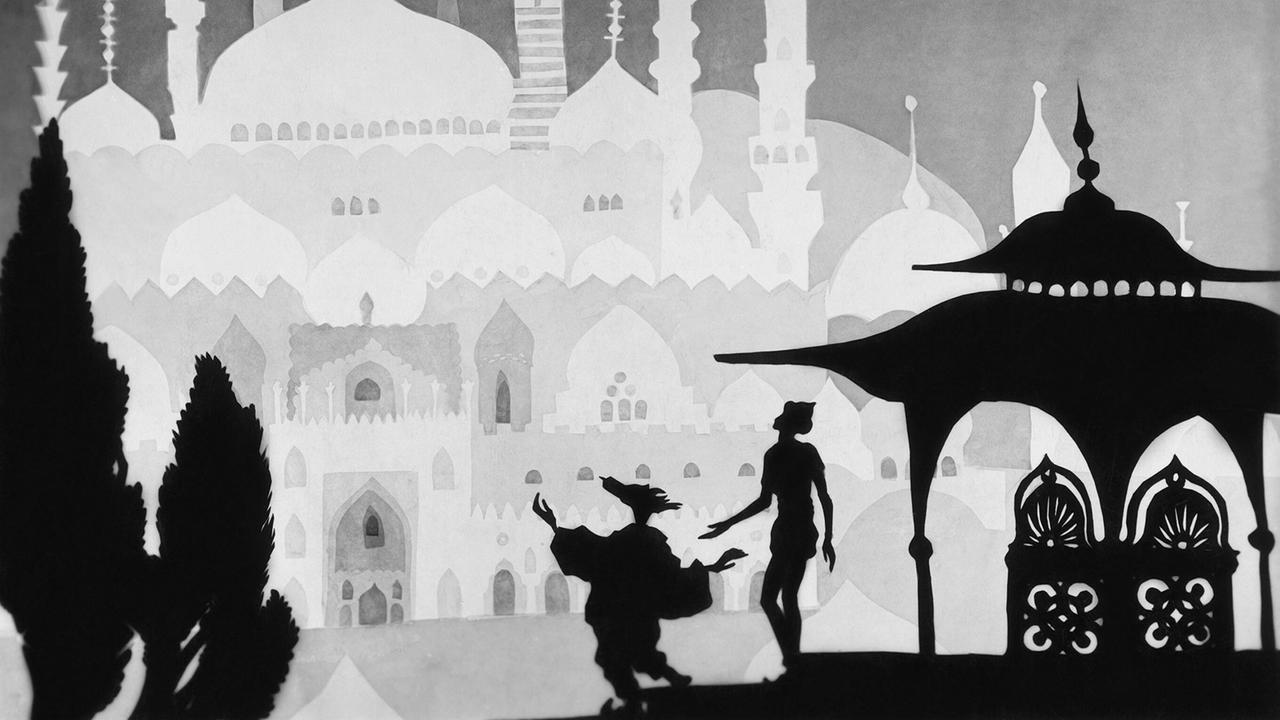
At the heart of the animation canon lies "The Adventures of Prince Achmed," a 66-minute visual odyssey inspired by the tales of One Thousand and One Nights. While modern audiences are accustomed to the fluid, colorful frames of computer-generated imagery, Reiniger’s work was a triumph of the analog: the painstaking, frame-by-frame manipulation of intricate paper silhouettes.
Using a technique she pioneered, Reiniger placed her cut-out characters on a glass-topped animation table, lit from below to create stark, high-contrast shadows. Every movement—the flick of a cape, the flight of a magic horse, the swing of a sword—required manual adjustment, totaling nearly 250,000 individual photographs to produce the final 96,000-frame film.
The film is not merely a technical curiosity; it is a work of profound aesthetic discipline. By blending the ornate, geometric motifs of Moorish art with the fluid grace of fairy-tale storytelling, Reiniger created a visual language that was entirely her own. Her work was not just an animation; it was a rhythmic, silent performance that remains as hypnotic today as it was in the Weimar Republic.
A Chronological Journey: From Berlin Theaters to Global Recognition
The Early Influences
Lotte Reiniger’s path to animation was paved by her fascination with the theater. In the 1910s, as a teenager, she became a fixture behind the scenes at Max Reinhardt’s Deutsches Theater in Berlin. It was here that she caught the eye of Paul Wegener, the legendary star of the silent film The Golem. Wegener was captivated by the 16-year-old’s ability to capture the likenesses of actors in paper silhouettes. He became her mentor, commissioning her to create animated intertitles for his films. Her first professional animation work, in 1919, saw the rats of Hamelin dancing off the screen in Wegener’s The Pied Piper of Hamelin.
The Perfection of the Craft
In 1919, Reiniger directed her first short, The Ornament of the Loveless Heart, at the newly founded Institute for Cultural Research in Berlin. It was here she met Carl Koch, her future husband and lifelong creative collaborator. Together, they refined the technical process of shadow animation. While Koch handled the technical rigors of photography and film mechanics, Reiniger served as the visionary designer and animator, a partnership that would prove essential for the monumental undertaking of Prince Achmed.
The "Achmed" Production (1923–1926)
In 1923, amidst the economic turmoil of the German hyperinflation, banker Louis Hagen provided the funding for Reiniger to pursue a feature-length project. He provided an atelier above his garage in Potsdam, along with the necessary food and film stock for a five-person team. For three years, they labored in near-seclusion. It was during this period that Reiniger and Koch invented the first multi-plane camera—an innovation that utilized layers of glass to create a sense of depth in the background, a technology later popularized and patented by Disney.
Global Debut and Subsequent Years
The film premiered privately in Berlin in May 1926, followed by a grand public debut at the Gloria-Palast in September. Critics were stunned. The film toured Europe to immense acclaim. However, the sheer labor required for a 66-minute shadow film made a second feature impossible for Reiniger, who returned to shorter works and collaborations with luminaries like Jean Renoir and G.W. Pabst. The rise of the Nazi regime forced her and Koch into exile, during which time the mainstream narrative of animation history shifted toward the emerging juggernaut of the American studio system.
Supporting Data: The Technical Marvel
The magnitude of Reiniger’s achievement can be quantified by the scale of her labor.
- Production Duration: 3 years (1923–1926).
- Total Frames Photographed: ~250,000.
- Final Film Length: ~96,000 frames (approx. 66 minutes).
- Technical Legacy: The development of the first multi-plane camera, which allowed for parallax-like depth, a cornerstone of modern animation.
Evamarie Blattner, a curator at the Stadtmuseum Tübingen—which houses Reiniger’s vast estate—notes that the artistry lies not just in the numbers, but in the physical delicacy of the figures. "How she used such empathy and manual skill to cut these figures—it is a skill set that she mastered like almost no one else in history," Blattner observes.
Official Responses and Posthumous Validation
For many years, Reiniger’s contribution was relegated to the status of a footnote. However, the 21st century has seen a massive resurgence in interest. In 2024, the Academy of Motion Picture Arts and Sciences and the wider animation community posthumously honored Reiniger with an Annie Award, the "Oscar" of the animation world.
This recognition marks a turning point in how film historians classify the "first" animated feature. While Disney’s Snow White was the first to use cel animation at that scale, Reiniger’s Prince Achmed was undeniably the first to demonstrate that animation could sustain a complex, long-form narrative structure. The Tübingen museum reports a surge in research requests from academic institutions in the United States, Australia, and Asia, confirming that Reiniger’s work is now being integrated into the global curriculum of film studies.
Implications: Why Reiniger Matters Today
The implications of Reiniger’s work extend beyond historical accuracy. Her films serve as a reminder that animation is a medium of infinite potential, not confined to the blockbuster budgets of major corporations.
- Cultural Universality: As Blattner highlights, Reiniger’s work transcends borders. The stories from One Thousand and One Nights—and the visual language of the silhouette—are understood as clearly in the Middle East as they are in Europe or the Americas. This "silent" language of silhouettes allows for a unique, borderless communication.
- The Persistence of Craft: In an era dominated by AI-generated imagery and high-speed digital rendering, Reiniger’s labor-intensive approach serves as a philosophical anchor. Her work proves that the "human touch"—the slight imperfection of a hand-cut piece of paper—creates a resonance that software cannot replicate.
- The Redefinition of "First": The transition from labeling Snow White as the "first" to acknowledging Prince Achmed is not just about pedantry. It is about inclusivity. It reminds the film industry that the foundations of the medium were laid by women, by independent artists, and by pioneers working under extreme economic pressure.
As we look at the legacy of Lotte Reiniger, we see a woman who didn’t just cut paper; she cut a path for every animator who followed. Her "Prince Achmed" remains a shimmering testament to the power of imagination, a reminder that even the darkest shadows, when handled with enough genius, can light up the screen. One hundred years later, the magic of the silhouette remains as unbroken as the day it first danced across the silver screen.