In a display of tactical discipline and individual brilliance, the SC Magdeburg (SCM) handball team successfully navigated one of the most hostile environments in European sports, securing a commanding 35:30 victory over Industria Kielce. The win maintains Magdeburg’s unbeaten streak in the EHF Champions League and sends a clear message to their continental rivals.
The Main Facts: A Statement Win in Poland
In the high-stakes theater of the EHF Champions League, the German powerhouse SC Magdeburg once again demonstrated why they are considered one of the elite forces in world handball. Traveling to the Hala Legionów in Kielce, Poland, head coach Bennet Wiegert’s side delivered a masterclass in resilience and offensive efficiency, defeating the Polish champions 35:30.
The victory was anchored by an extraordinary performance from the SCM backcourt, specifically the duo of Omar Ingi Magnusson and Gísli Þorgeir Kristjánsson. Both players were instrumental in dismantling the Kielce defense, each netting 11 goals. For the SCM faithful, the sight of the explosive Icelandic playmaker Kristjánsson back on the court—after missing the domestic clash against Erlangen due to injury—was the most encouraging development of the evening. His seamless return to form, combined with the unwavering composure of Magnusson from the seven-meter line, ensured that the German side never lost control of the tempo, even when the pressure from the home crowd reached a boiling point.
Chronological Breakdown: A Game of Two Halves
The match began with a frantic pace, typical of high-level European clashes. From the opening whistle, it was clear that the atmosphere in Kielce was designed to unsettle the visitors. However, the Magdeburg squad remained unfazed, largely due to the early heroics of goalkeeper Matej Mandic.
The First Half: Mandic’s Wall and Early Dominance
The first twenty minutes belonged to Mandic. The Croatian shot-stopper provided a platform for his team to build a lead, stringing together four consecutive saves that left the Polish attack struggling for rhythm. This defensive stability allowed the SCM to transition with lethal efficiency. By the 20th minute, Magdeburg had established a comfortable four-goal cushion (13:9).
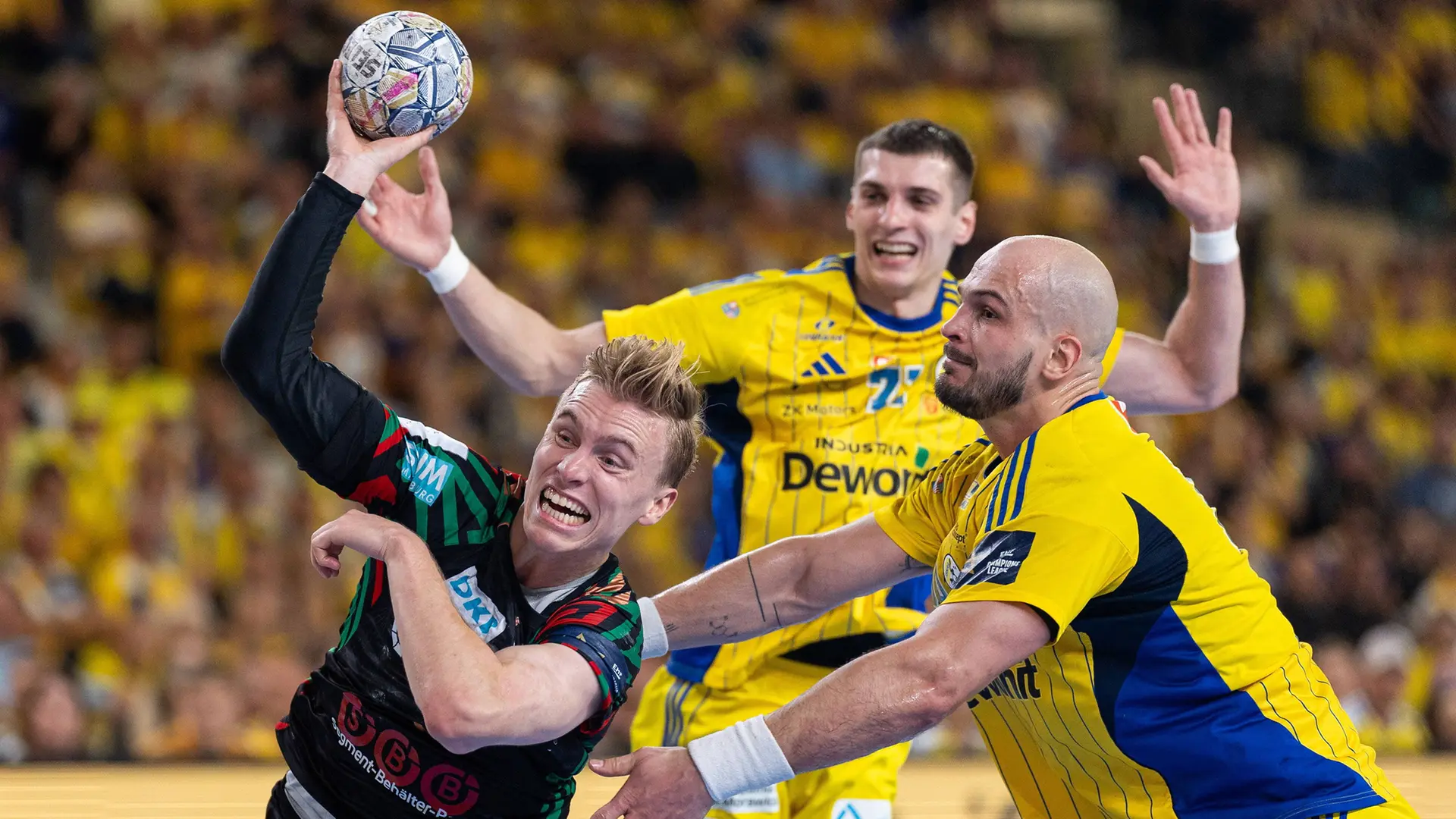
However, Kielce, known for their tactical ingenuity and physical tenacity, refused to crumble. As the first half drew to a close, a lapse in concentration from the visitors allowed the Polish side to claw their way back. The tension was palpable when the score leveled at 17:17 with just 90 seconds remaining in the half. It was in this pivotal moment that the pedigree of the German champions shone through; Kristjánsson and Magnusson orchestrated a final push, ensuring Magdeburg entered the dressing room with a slim, but psychologically significant, two-goal lead (19:17).
The Second Half: Maintaining the Margin
Coach Bennet Wiegert made a tactical adjustment at halftime, introducing Dominik Kuzmanovic into the goal. The move proved inspired. As Kielce tried to find a way back into the game through the efforts of Aleks Vlah—who ended the night as the host’s top scorer with eight goals—Kuzmanovic stifled the momentum with three consecutive saves around the 48th minute.
At 28:23, the game appeared to be slipping away from the hosts. Yet, Kielce’s persistence forced a minor dry spell from Magdeburg, allowing the gap to narrow to 30:28 with seven minutes left on the clock. It was here that the maturity of the SCM roster was on full display. Instead of panicking under the weight of the crowd’s noise, the team returned to their fundamental principles: disciplined ball movement and clinical finishing. Kristjánsson, showing no signs of fatigue, added two crucial late goals to stretch the lead back out, effectively killing off any hopes of a Polish comeback.
Supporting Data and Key Performances
The statistics from the match highlight a rare level of synergy between two primary scorers. Scoring 22 of their team’s 35 goals, Magnusson and Kristjánsson operated with a level of precision that few defenses in Europe can contain.
- Top Scorers (SCM): Omar Ingi Magnusson (11), Gísli Þorgeir Kristjánsson (11).
- Top Scorer (Kielce): Aleks Vlah (8).
- Goalkeeping Impact: Matej Mandic’s early run of four consecutive saves acted as the catalyst for the lead, while Dominik Kuzmanovic’s second-half contribution (three consecutive saves) proved vital in repelling the Kielce comeback attempt.
- Match Atmosphere: Over 4,200 spectators created an intense, high-pressure environment that tested the mental fortitude of the visitors, who proved equal to the challenge.
The defensive unit, led by Magnus Saugstrup, also deserves recognition. Their ability to force turnovers and facilitate fast-break opportunities allowed the backcourt to operate with more space than a set defense would typically provide.
Strategic Implications: A Look Ahead
This result is more than just two points in the group stage; it is a significant psychological blow to a direct rival for the top of the table. By maintaining their "white vest"—the perfect record in the competition—Magdeburg has signaled their intention to finish at the top of their group.
The schedule, however, provides no time for celebration. The fixture list has delivered a rare and difficult quirk: the two teams are set to meet again in just one week’s time, this time in the GETEC Arena in Magdeburg. The return leg will be a litmus test for both sides. Kielce will arrive in Germany with the knowledge that they were competitive for large stretches of the match and will likely adjust their defensive scheme to better neutralize the influence of Kristjánsson and Magnusson. For Magdeburg, the goal will be to replicate their defensive intensity and avoid the "small phases of weakness" that allowed Kielce to threaten a comeback in both halves.
Official Commentary and Tactical Analysis
While post-match quotes were focused on the short turnaround, the tactical consensus among analysts is that Magdeburg’s strength lies in their depth and their ability to adapt to game states. Coach Wiegert’s decision to rotate his goalkeepers was a masterstroke, keeping the Kielce shooters guessing and maintaining a high level of intensity in the net for the full 60 minutes.
The ability of the team to score 35 goals away from home against a defense as storied as Kielce’s is a testament to the offensive system in place. The SCM attack does not rely on a single point of failure; if the wings are closed down, the backcourt drives; if the middle is clogged, the pivots like Saugstrup find space.
Furthermore, the successful return of Kristjánsson provides a massive boost to the team’s morale and tactical versatility. His ability to penetrate the defense and create scoring opportunities for himself or others remains the most dangerous weapon in Magdeburg’s arsenal.

Conclusion: A Season of High Ambitions
As the European season progresses, this victory in Poland will likely be viewed as a turning point. Winning on the road in the Champions League is notoriously difficult, and doing so against a team of Kielce’s caliber suggests that the SC Magdeburg is firing on all cylinders.
With the return leg looming, the handball world will turn its eyes to Magdeburg. If the German champions can secure a sweep of this double-header, they will solidify their position as one of the favorites to reach the EHF Final Four. For now, however, the focus remains on recovery, tactical refinement, and preparing for the second act of a high-octane rivalry. The Polish giants will be seeking retribution, but after tonight’s performance, the confidence within the Magdeburg camp is at an all-time high.
The path to the title is long and arduous, but for the SC Magdeburg, the road through Poland has proven to be a triumphant one, reinforcing their status as a dominant force in modern European handball.