

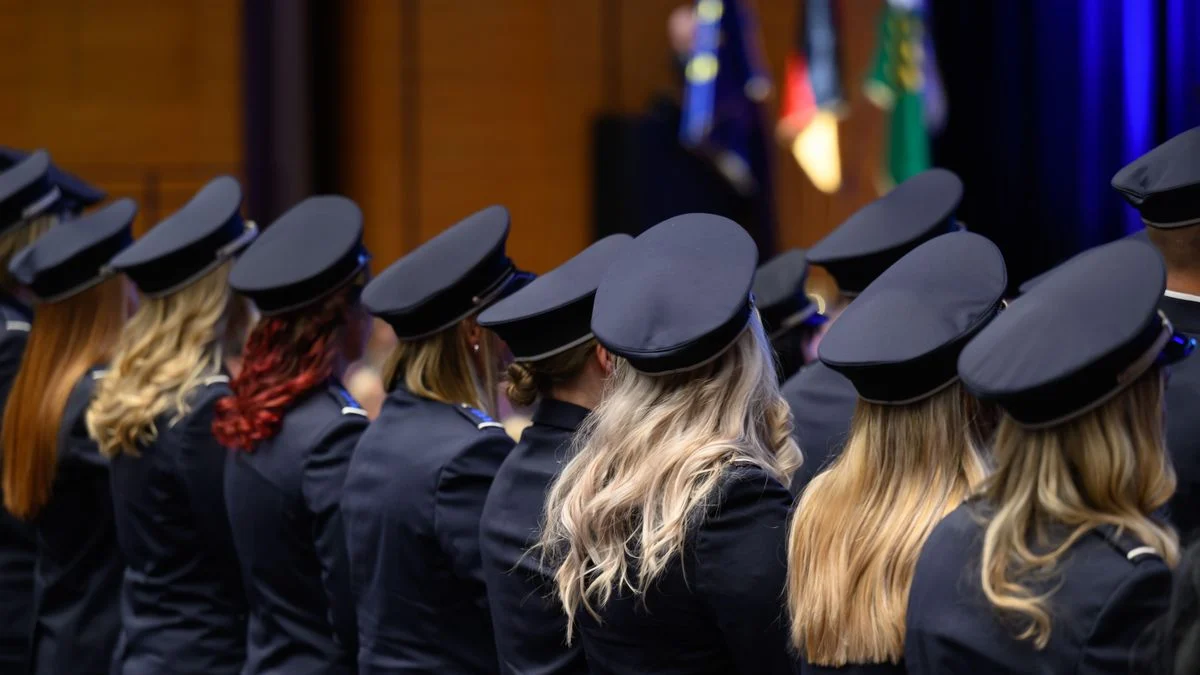
A landmark research project has pulled back the curtain on the internal culture of the Saxony State Police, revealing a pervasive environment of structural sexist discrimination. The findings suggest that despite modernization efforts, female officers continue to face physical harassment, verbal abuse, and professional marginalization, prompting a defensive but conciliatory response from police leadership.
1. The Core Findings: A Culture Under Scrutiny
The report, titled "Sexism in Service," is the product of a deep-dive investigation conducted by the University of Leipzig as part of the broader research project "Gender and Police." The study, which utilized in-depth interviews with personnel across various ranks and departments, paints a troubling portrait of an institution struggling to shed regressive social norms.
According to the researchers, sexist discrimination within the Saxony police is not merely the result of a few "bad apples." Instead, it is embedded in the structural foundations of the organization. The study identifies three primary manifestations of this behavior: physical, verbal, and structural.
The findings highlight a workplace where female officers are frequently subjected to unwanted physical contact—including instances of groping—and a barrage of sexualized comments. Verbal abuse, ranging from derogatory epithets like "whore" to persistent critiques of a woman’s physical appearance or voice, serves to undermine the authority of female officers. On a structural level, the research points to a "division of labor" that often relegates women to less prestigious tasks, such as administrative "cleanup" duties or the delivery of death notifications, rather than core operational roles.
2. Chronology of the Investigation
The research project, commissioned through the Saxon Institute for Police and Security Research (SIPS), was designed to provide a qualitative counterpoint to broader administrative data.
- November 2023 – April 2024: The research team conducted 23 extensive, semi-structured interviews with male and female police officers. These participants represented a diverse cross-section of the force, encompassing different seniority levels, specialized units, and geographic service areas.
- Methodology: Unlike quantitative surveys that rely on broad checkboxes, these interviews were intended to capture the nuance of lived experience—the "emotional momentum" of working within a male-dominated hierarchy.
- Present Day: The qualitative report has now been released, while a second, broader quantitative study involving 3,500 employees is currently undergoing final analysis. This dual-track approach is intended to provide both the "what" (the scale of the problem) and the "how" (the specific cultural mechanisms at play).
3. The Myth of the "Good Female Officer"
One of the most revealing sections of the study concerns the rigid gender archetypes forced upon female officers. Co-author Sophia Weißer described the pervasive "ideal image" of the "good female officer" held by many of her male counterparts.
In this stereotype, a woman is expected to be "pretty and cute," yet simultaneously not "too tall" or "too muscular." This creates a paradox: if a woman fits the physical archetype, she is often infantilized and not taken seriously in high-stakes operational environments. If she does not—if she is strong, physically capable, or assertive—she is frequently belittled for her "squeaky voice" or her perceived lack of "femininity."
Perhaps most damning is the expectation of compliance. The study found that female officers are often pressured to accept the sexualization of their bodies as the "price of admission" for being treated as an equal. Those who push back, reject unwanted advances, or call out sexist comments are swiftly labeled "sensitive," "humorless," or "spoil-sports." This social ostracization serves as a powerful deterrent against reporting harassment, effectively silencing victims through the threat of professional isolation.
4. Institutional Failures and the Protection Gap
Thomas Schmidt-Lux, the lead researcher of the study, emphasized that this is not an issue isolated to law enforcement. "This is not an exclusive problem of the police," Schmidt-Lux stated during the presentation of the results. "It is a broad societal phenomenon, but it manifests in specific ways within institutions that have a monopoly on power and a rigid hierarchical structure."
The study highlights a significant "protection gap." While the Saxony police force possesses formal reporting mechanisms and equality policies, these systems are often viewed as ineffective or dangerous by those they are meant to protect. When women attempt to utilize existing channels to combat sexism or racism, they frequently encounter institutional apathy or are met with retaliation.
"The support mechanisms do not reach those who need them most," Schmidt-Lux noted. "Especially when women seek support to defend themselves against sexism and racism, the significant institutional weaknesses of the force become visible."
5. Official Responses: A Leadership in Crisis
The publication of the findings has sent shockwaves through the upper echelons of the Saxony police. State Police President Jörg Kubiessa, responding to the report, offered a candid, albeit pained, admission of the scope of the problem.
"I thought we were further along," Kubiessa remarked, expressing his gratitude to the officers who participated in the interviews despite the risks to their careers. "It still hurts when I hear these things, but we have to work on it."
Kubiessa’s acknowledgment reflects a growing realization that the culture of the police must undergo a fundamental transformation if the institution is to maintain its legitimacy. He has since announced the formation of a special task force designed to implement immediate remedial steps. This working group will operate in tandem with the ongoing evaluation of the 3,500-person quantitative survey to develop long-term policy shifts, training protocols, and, potentially, an overhaul of the disciplinary procedures regarding sexual harassment.
6. Broader Implications for Law Enforcement
The implications of the Leipzig study extend far beyond the borders of Saxony. In many Western democracies, police forces have struggled to diversify their ranks. However, as this study demonstrates, simple recruitment quotas are insufficient if the internal culture remains hostile to those who do not fit the traditional, hyper-masculine mold of a "policeman."
The "Blue Wall" of Silence
The findings suggest that the "blue wall"—a term historically used to describe the tendency of officers to protect each other from public scrutiny—is also used internally to shield perpetrators of sexual harassment. When sexism is treated as an acceptable "locker room" behavior, it undermines the professional integrity of the entire force. If an officer cannot respect a female colleague, how can the public trust that officer to protect the rights of female victims of crime?
The Necessity of Cultural Reform
The Saxony case study serves as a warning for other public institutions. The researchers stress that training sessions and posters are not enough. True reform requires:
- Independent Reporting Channels: Moving reporting mechanisms outside the immediate chain of command to prevent the "bosses protecting the boys" dynamic.
- Cultural Accountability: Shifting the focus from individual "bad actors" to the systemic environment that allows such behavior to thrive.
- Active Bystander Intervention: Training officers not just to be "good" themselves, but to actively intervene when they witness sexist or discriminatory behavior among their peers.
7. Looking Ahead: A Turning Point?
The Saxony police force now finds itself at a critical juncture. The publication of the "Sexism in Service" study has stripped away the veneer of normalcy, forcing the institution to confront a reality that many within its ranks have long experienced in silence.
While the announcement of a new task force is a necessary first step, critics argue that the true test will be the willingness of the leadership to enact painful, structural changes. This includes holding high-ranking officers accountable for the culture of their units and ensuring that the forthcoming quantitative data is used to drive substantive reform rather than being buried in bureaucratic archives.
As the police force in Saxony prepares to integrate these findings into its future strategy, the eyes of the public and the political establishment remain fixed on the outcome. The survival of the force’s reputation—and its ability to effectively serve an increasingly diverse society—depends on whether it can move beyond the current cycle of "painful awareness" and into an era of genuine, irreversible cultural change.
The researchers at the University of Leipzig have provided the blueprint for what is wrong. Now, the burden of proof lies with the police leadership to show that they have the courage to fix it.

























