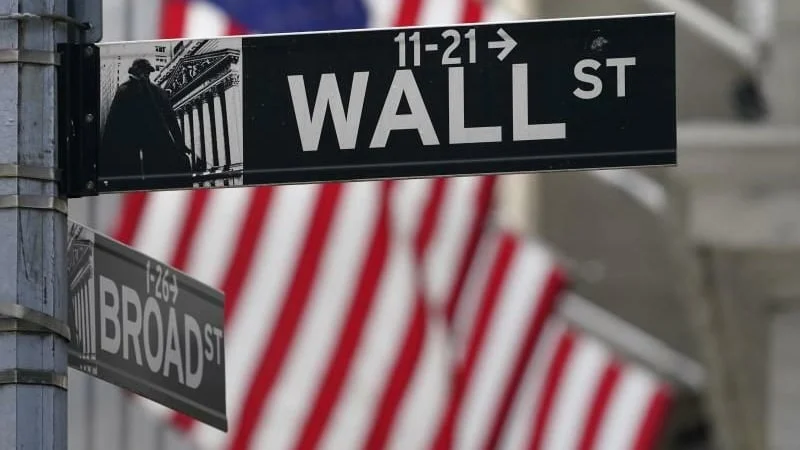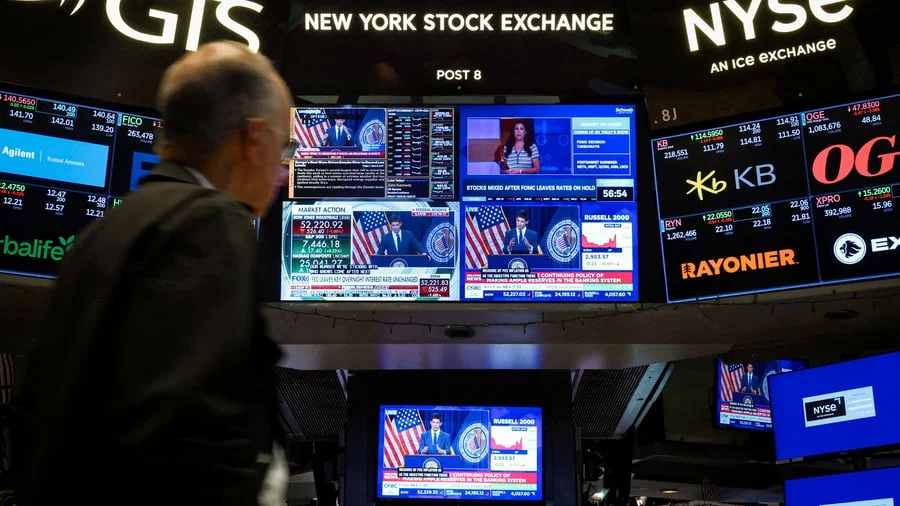
The global financial landscape is currently navigating a period of heightened sensitivity, defined by a dramatic ascent in US Treasury yields—the bedrock of international borrowing costs—to levels not seen in over two decades. As investors grapple with the dual pressures of restrictive central bank policy and volatile energy markets, a recent US Treasury auction provided a rare moment of stability, signaling that institutional demand remains robust even amidst macroeconomic uncertainty.
Main Facts: The Anatomy of the Bond Market Squeeze
The yield on the benchmark 10-year US Treasury note serves as the "risk-free" anchor for global asset pricing. On Wednesday, this critical metric reached an intraday peak of approximately 5.35 percent, a level unseen since 2002. Simultaneously, the 30-year long bond mirrored this trajectory, climbing above the 5.7 percent threshold—a figure that has sent tremors through equity markets and real estate sectors alike.
The primary driver of this sell-off is the "higher-for-longer" narrative regarding Federal Reserve interest rates. Investors are recalibrating their portfolios to account for a central bank that appears committed to maintaining restrictive financial conditions to dampen persistent inflationary pressures.
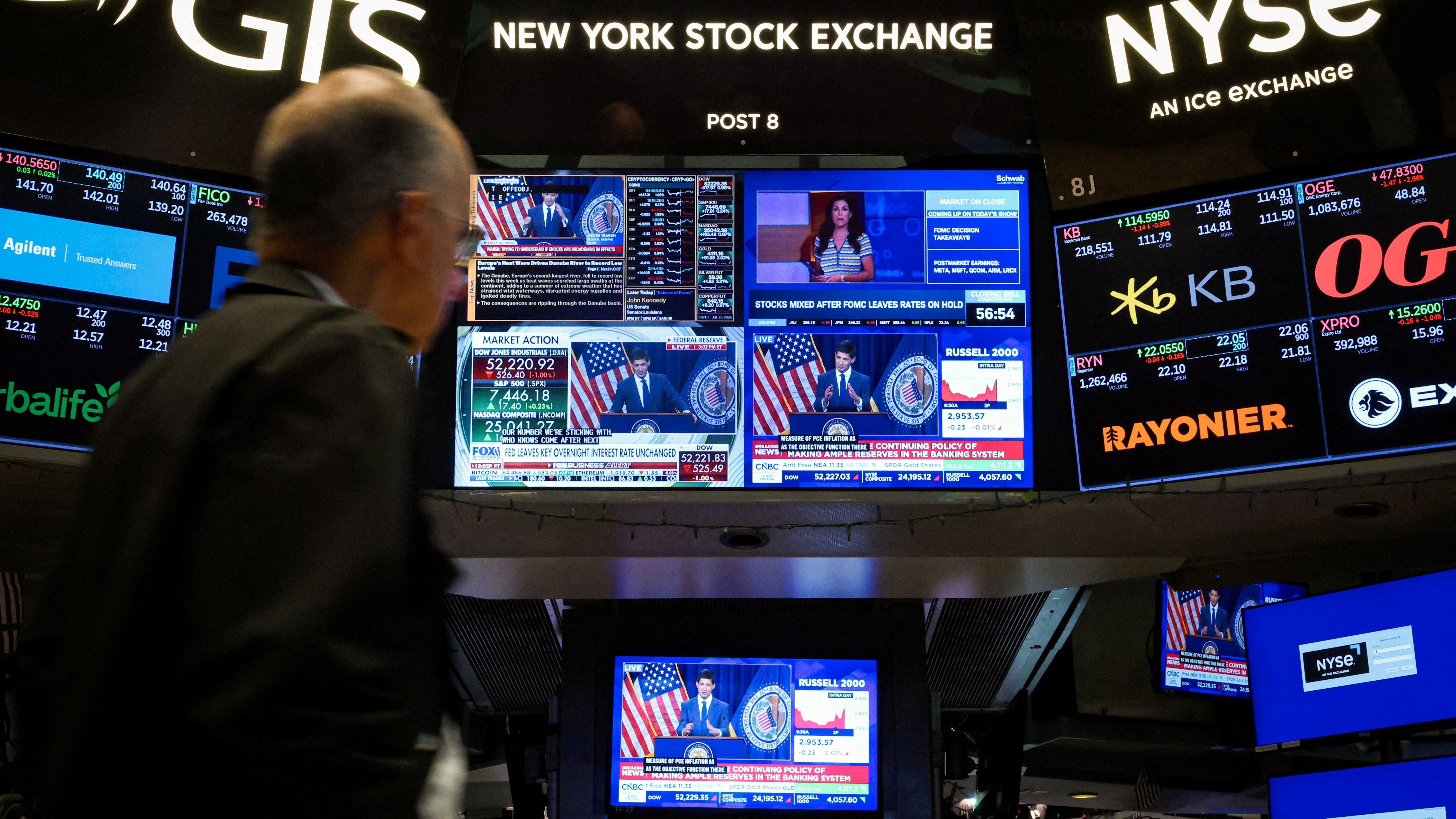
However, the tide showed signs of shifting on Wednesday when the US Treasury Department conducted an auction for $39 billion in 10-year notes. Contrary to fears that investors might shun government debt in a high-rate environment, the auction saw robust participation. Buyers accepted a yield of 5.30 percent, which sat slightly below the levels demanded by the market immediately prior to the sale. This "tail" (or lack thereof, in this case) indicates that institutional appetite for US sovereign debt remains fundamentally sound, providing a temporary buffer against the relentless climb of interest rates.
Chronology: A Week of Volatility
The week began with a pervasive sense of caution among market participants. As geopolitical tensions escalated following renewed reports of conflict in the Strait of Hormuz, global energy markets reacted sharply. The price of Brent crude surged past the $102-per-barrel mark, reigniting fears of "cost-push" inflation that could force the Federal Reserve to maintain its aggressive tightening cycle.
Monday: Yields began an early-week climb as traders digested hawkish rhetoric from regional Fed presidents, suggesting that the "pivot" to rate cuts might be further away than previously anticipated.

Tuesday: The momentum accelerated. The 10-year yield pushed closer to the 5.35 percent mark. Equity markets, particularly interest-rate-sensitive technology and growth stocks, faced significant selling pressure as the "discount rate" for future earnings rose.
Wednesday (The Pivot Point): Morning trading saw yields hit their multi-decade highs. However, the midday announcement regarding the 10-year note auction changed the technical setup. As the auction results were released—showing higher-than-expected demand—a wave of short-covering ensued. Traders who had bet on ever-higher yields rushed to lock in profits, causing the 10-year and 30-year yields to retreat from their daily highs.
Supporting Data: The Oil-Bond Correlation
The correlation between oil prices and Treasury yields has become the central focus for macro-strategists. Energy is a foundational cost in the global supply chain; when oil prices rise, they function as a tax on consumers and businesses, simultaneously fueling inflation expectations.
Data from the energy sector highlights why the bond market remains on edge. The breach of the $100 mark for Brent crude is viewed by analysts as a "psychological ceiling." When this level is broken, it forces a repricing of inflation models. If inflation is expected to remain "sticky" due to energy costs, the "real yield" (the nominal yield minus expected inflation) must adjust upward to attract capital.
Furthermore, the yield curve—the spread between short-term and long-term interest rates—has become a focal point of intense scrutiny. The fact that the long end of the curve (10-year and 30-year) is rising suggests that the market is beginning to question the long-term fiscal trajectory of the United States. With the federal deficit continuing to expand, the Treasury must issue more debt to fund the government, creating a supply-demand imbalance that exerts upward pressure on yields.
Official Responses and Market Sentiment
Market strategists are currently divided between those who believe the bond sell-off is reaching a "climax" and those who warn that the structural changes in the economy necessitate a permanent shift to a higher yield environment.

Evelyne Gomez-Liechti, an influential analyst at Mizuho International, articulated the prevailing sentiment during an interview with Bloomberg. "We are still of the view that the market is torn between attractive yields and an oil dynamic that simply won’t let up," she remarked. Her assessment highlights the tug-of-war between value-seeking investors—who view 5.3 percent as a historic opportunity to lock in returns—and macro-driven traders who are terrified of the inflationary consequences of the current energy crisis.
Institutional investors are also monitoring the Federal Reserve’s "Balance Sheet Normalization" (Quantitative Tightening). By allowing bonds to roll off its balance sheet, the Fed is effectively reducing the amount of liquidity in the financial system. This reduction in the "buyer of last resort" means that private investors must absorb more supply, which can only be accomplished through higher yields.
Implications: What This Means for the Global Economy
The surge in US Treasury yields has profound implications that extend far beyond the trading floors of New York and London.

1. The "Risk-Free" Benchmark
Because US Treasuries are considered the benchmark for virtually all other financial assets, their rise ripples through the entire economy. Mortgage rates, which are closely tethered to the 10-year yield, have surged in response. This creates an immediate cooling effect on the housing market, potentially leading to a broader slowdown in construction and consumer spending.
2. Emerging Markets and Debt Sustainability
Many emerging market economies borrow in US dollars. When US yields rise, the cost of servicing this debt increases, and the US dollar typically strengthens. This "double whammy" puts significant pressure on developing nations, forcing them to raise their own domestic interest rates to prevent capital flight, which in turn can choke off their own economic growth.
3. Corporate Financing and Valuations
For corporations, the cost of capital has fundamentally changed. Companies that rely on debt financing to fuel expansion or buybacks are finding that the "cheap money" era is well and truly over. From a valuation perspective, the high-yield environment acts as a gravity force on stock prices; as the risk-free rate rises, the present value of future corporate cash flows must be discounted more heavily, leading to lower equity valuations.

4. The Path Forward
The immediate "atempause" provided by Wednesday’s auction should not be mistaken for a permanent resolution. The fundamental drivers—geopolitical instability, high oil prices, and the fiscal requirements of the US government—remain firmly in place.
Looking ahead, the market will likely remain in a state of high volatility until there is concrete evidence that the inflationary impulse from energy prices is fading. Investors are now looking toward the next Federal Reserve meeting, searching for any sign of a shift in tone regarding the terminal rate. Until such clarity emerges, the bond market will remain a battlefield, with yields acting as the primary gauge of investor confidence in the future of the global economy.
In conclusion, while the robust demand for the latest 10-year note auction provides a glimmer of hope that the bond market can find a floor, the environment remains precarious. The interplay between energy-driven inflation and the necessity for higher yields to attract capital in an era of fiscal expansion suggests that we are witnessing a structural transition. For investors, businesses, and policymakers alike, the era of "low and stable" is in the rearview mirror, replaced by a new reality where yield volatility is the defining feature of the financial landscape.