By International Business Desk
Updated: October 6, 2026 | 14:09 GMT
In a landmark shift for European defense industrial capabilities, German defense giant Rheinmetall has officially commenced the serial production of advanced surveillance satellites at its new facility in Neuss. This move marks the company’s definitive entry into the aerospace manufacturing sector, signaling a strategic evolution from a traditional ground-combat equipment manufacturer to a diversified, multi-domain defense provider.
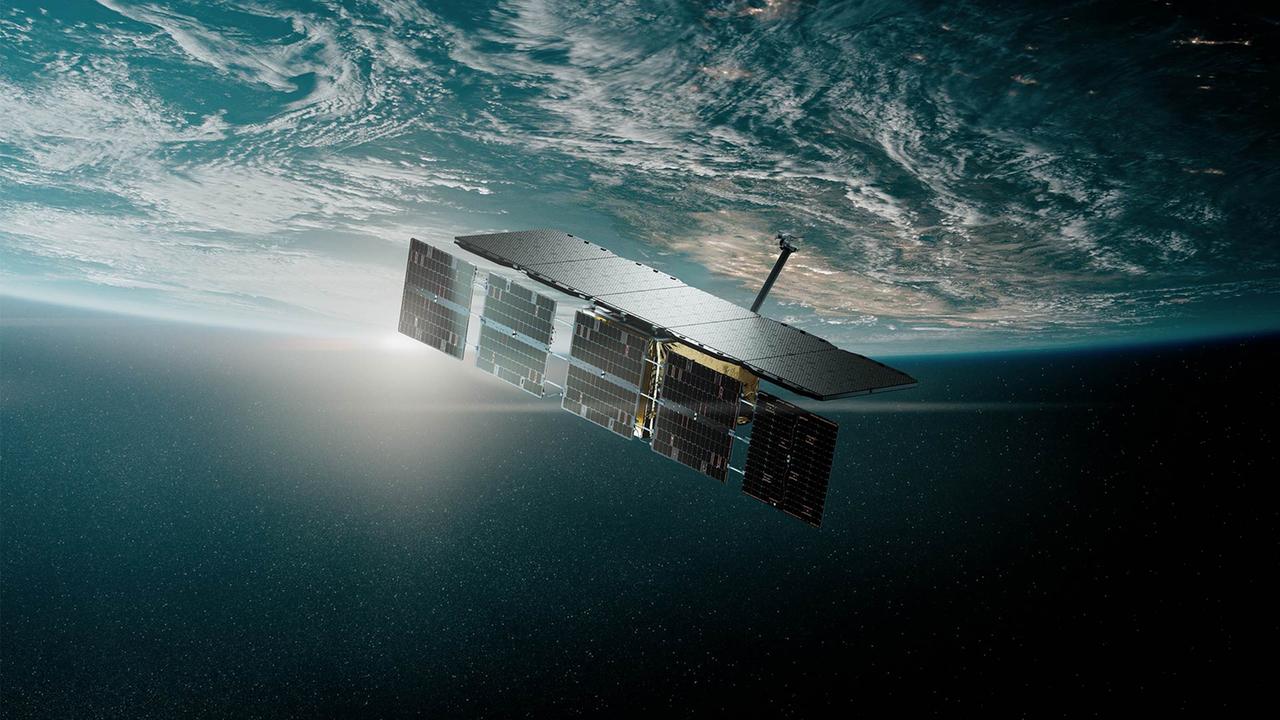
The initiative, conducted in partnership with the Finnish space technology specialist ICEYE, aims to manufacture approximately 50 Synthetic Aperture Radar (SAR) satellites annually. With Rheinmetall holding a 60 percent stake in the joint venture, the project represents a significant investment in sovereign European reconnaissance technology.
The Strategic Importance of SAR Technology
Synthetic Aperture Radar (SAR) technology has rapidly become the cornerstone of modern military intelligence. Unlike traditional optical satellites that rely on sunlight and are easily thwarted by cloud cover, smoke, or darkness, SAR satellites utilize radar waves to "see" through adverse weather conditions and penetrate the veil of night.
The satellites produced in Neuss will be equipped with sophisticated onboard processing capabilities, integrating Artificial Intelligence (AI) to analyze data in real-time. This allows for the immediate identification of troop movements, logistical chains, and heavy hardware deployment. In the context of a "transparent battlefield," where information superiority is the primary determinant of success, the ability to maintain a constant, unblinking eye on an adversary is considered an essential requirement for NATO-aligned forces.
A Multi-Billion Euro Commitment
The production ramp-up is underpinned by a massive 1.7-billion-euro, multi-year contract with the German Bundeswehr. This agreement grants the German military exclusive access to a significant portion of the satellite constellation’s output, with provisions for future expansions as the network grows.
Current defense intelligence relies on a patchwork of legacy systems. The Bundeswehr’s existing access to SAR data has been limited, making the partnership with Rheinmetall and ICEYE a critical upgrade for national security. By domesticating the manufacturing process, Germany is not only securing its supply chain but also reducing its reliance on foreign providers, ensuring that sensitive data flows remain under national control.
The first unit to roll off the assembly line in Neuss is scheduled for a SpaceX launch in early 2027. Each satellite is a compact, high-performance instrument, measuring 3.3 meters by 0.8 meters and weighing approximately 220 kilograms.
Chronology: From Ground Combat to Orbit
- 2007: The Bremen-based firm OHB becomes a pioneer in the German space sector, launching its first SAR-capable satellite.
- 2022: Following the Russian invasion of Ukraine, the strategic importance of satellite-based reconnaissance leads to a massive surge in demand for ICEYE’s existing constellation of 35 satellites.
- 2024: Rheinmetall announces its intention to diversify into the aerospace sector to complement its ground-based portfolio.
- Late 2025: Negotiations for the 1.7-billion-euro contract with the German government are finalized, setting the stage for the Neuss production facility.
- October 2, 2026: Rheinmetall confirms the successful launch of an early-warning satellite developed in collaboration with Italy’s Argotec, utilizing a SpaceX vehicle.
- October 6, 2026: Official start of serial production at the Neuss facility.
Supporting Data and Technical Specifications
The scaling of satellite manufacturing in Germany is a logistical feat. The Neuss plant is designed to handle the integration, testing, and final assembly of the 220kg SAR units.
| Feature | Specification |
|---|---|
| Primary Role | All-weather, day-and-night reconnaissance |
| Sensor Type | Synthetic Aperture Radar (SAR) |
| Dimensions | 3.3m x 0.8m |
| Mass | ~220 kg |
| Annual Target | 50 units |
| Key Partner | ICEYE (Finland) |
| Contract Value | 1.7 Billion EUR (Bundeswehr) |
The integration of AI-driven analytics means that the satellites do not simply relay raw data back to ground stations; they filter and categorize intelligence, reducing the latency between "event detection" and "command awareness."
Official Responses and Expert Analysis
Rheinmetall CEO Armin Papperger emphasized the industrial significance of the Neuss facility during the ribbon-cutting ceremony. "The successful production start in Neuss demonstrates that we are not merely providing innovative space technology; we are demonstrating the ability to scale complex industrial processes within Germany," Papperger stated.
Defense experts have hailed the move as a long-overdue modernization of German military assets. Juliana Süß of the German Institute for International and Security Affairs (SWP) noted that the current security climate makes such systems indispensable. "In a modern conflict, the ability to track heavy equipment and tactical movements in real-time is the difference between defense and defeat," Süß explained. "The Bundeswehr’s previous reliance on limited SAR resources was a vulnerability. This partnership directly addresses that gap, significantly enhancing the operational readiness of the armed forces."
Implications for the Competitive Landscape
Rheinmetall’s expansion puts it in direct competition with established aerospace heavyweights like Airbus Defence and Space and OHB. By leveraging its vast financial reserves and political clout as a primary defense contractor, Rheinmetall is effectively challenging the traditional boundaries of the defense market.
The company’s strategy is clear: to become a "one-stop-shop" for NATO members. By offering a product portfolio that spans from 155mm artillery shells and Main Battle Tanks to cutting-edge satellite surveillance and drone swarms, Rheinmetall is attempting to capture the entire lifecycle of modern warfare requirements.
Financial Market Paradox: Innovation vs. Stock Performance
Despite the strategic success and the acquisition of the multi-billion euro government contract, the financial markets have reacted with skepticism. The Rheinmetall stock has faced significant headwinds, losing over half of its value since its peak in mid-January.
Market Context
The stock’s decline is largely a correction of the explosive growth seen following the start of the Ukraine conflict. In 2022, the markets re-rated all defense companies, pricing in long-term increases in military budgets. However, as the geopolitical landscape remains volatile, investors are now shifting focus toward companies benefiting from the Artificial Intelligence boom, which has propelled the DAX and US indices like the Nasdaq 100 to new record highs.
On the day of the announcement, Rheinmetall was the weakest performer in the DAX, even as the index rose by 0.7 percent to 25,436 points. Market analysts suggest that while the satellite production is a long-term strategic win, investors are currently prioritizing short-term tech-sector gains, viewing the defense sector’s growth as already "baked into" existing valuations.
Conclusion
The launch of the Neuss satellite production facility is more than a new revenue stream for Rheinmetall; it is a declaration of Germany’s intent to re-assert itself as a technological powerhouse in the space-defense domain. While the stock market may remain focused on the immediate fluctuations of the tech sector, the geopolitical reality is that the "glass battlefield" of the future will be dominated by those who own the eyes in the sky. By securing its role in this domain, Rheinmetall has positioned itself at the nexus of the next generation of European defense.