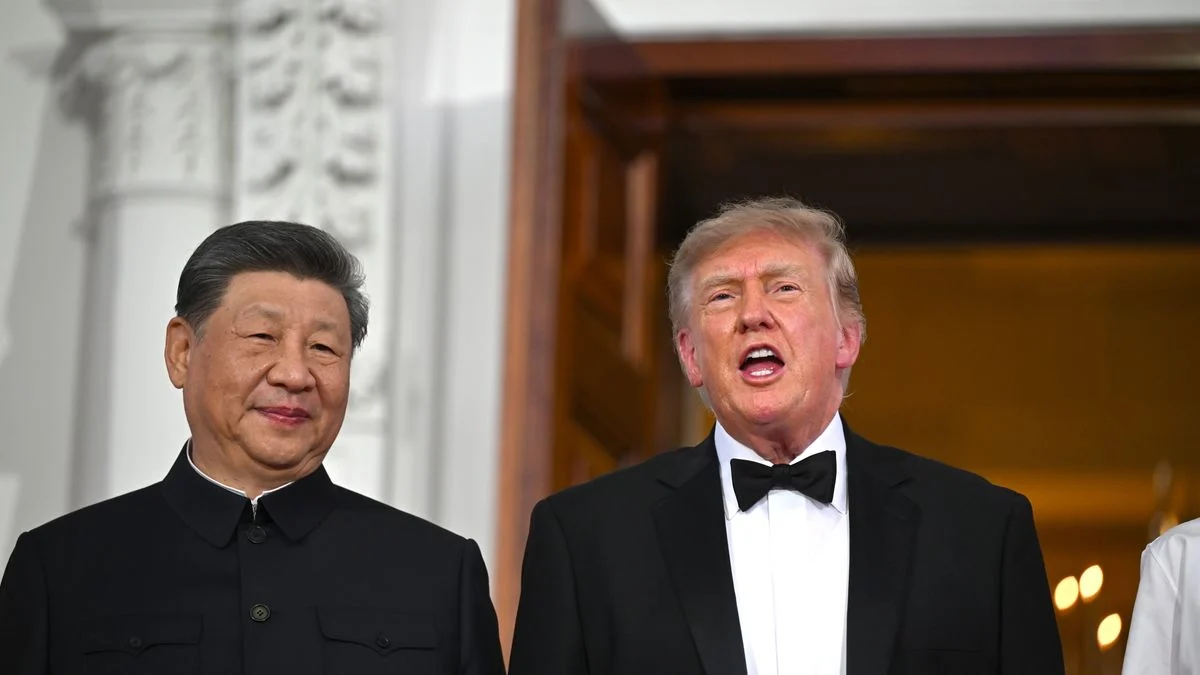
In a landmark development for global technological governance, the United States and China have formally agreed to establish a dedicated, direct communication channel specifically designed to manage incidents and risks associated with advanced artificial intelligence. This agreement, announced by the White House following a high-stakes three-day state visit, signals a thawing of tensions between the world’s two dominant technological powers and marks a significant shift in how these nations perceive the existential and strategic challenges posed by rapidly evolving AI systems.
The core of this new diplomatic framework is the "US-Chinese Dialogue on Superintelligence." By creating this forum, Washington and Beijing intend to share insights on the risks, opportunities, and potential "black swan" events that could emerge as AI capabilities surpass current benchmarks.
The Genesis of the Agreement: From Cold War Analogies to Global Stability
The impetus for this diplomatic breakthrough did not emerge in a vacuum. For months, international observers, led most notably by UN Secretary-General António Guterres, have been sounding the alarm on the lack of guardrails for AI development. Guterres had repeatedly urged Washington and Beijing to establish a structured dialogue, drawing an explicit parallel to the "hotlines" and communication channels that existed between the United States and the Soviet Union during the height of the Cold War.
The intent behind these proposals was to prevent the "thucydides trap" of the digital age—a scenario where mutual suspicion and a lack of clear communication regarding technological capabilities could lead to catastrophic misunderstandings. By formalizing this channel, the two nations are essentially attempting to create a "safety valve" that prevents AI-driven incidents—whether military, economic, or systemic—from escalating into geopolitical crises.
Rebranding the Future: The Rise of "Superintelligence"
Perhaps the most unconventional aspect of this new diplomatic chapter is the terminology itself. In a notable departure from standard scientific and policy nomenclature, the White House has announced that both parties have agreed to replace the term "artificial intelligence" with "superintelligence."
This semantic shift, championed by U.S. President Donald Trump, reflects a broader skepticism within the current administration toward existing frameworks of international oversight. During the recent UN General Debate, President Trump made his position clear: he considers the term "superintelligence" to be "much better" and "far more appropriate" for the capabilities currently being developed.
However, this rebranding carries deeper policy implications. President Trump has explicitly voiced his opposition to binding international regulations, stating in the lead-up to the summit that he wants "everything to remain exactly as it is." This stance creates an interesting, if complex, alignment with Beijing. While the U.S. president pushes for a deregulated environment that favors rapid, market-led advancement, China’s leadership—under President Xi Jinping—has adopted a more nuanced, albeit state-centric, approach. President Xi has frequently emphasized the "responsibility" of both nations to develop and manage AI for the "common good," while ensuring that the technology remains under strict human control.
Chronology of the Diplomatic Breakthrough
The agreement was the culmination of an intensive, three-day state visit by President Xi Jinping to the United States. The schedule of events leading to the announcement highlights the methodical nature of this diplomatic rapprochement:
- Day 1: Setting the Stage. The leaders focused on bilateral trade, setting the groundwork for the economic agreements that would follow.
- Day 2: The "Superintelligence" Dialogue. The primary negotiations regarding AI policy took place. Both sides acknowledged the need for a crisis communication channel, moving beyond previous public rhetoric to private, structural commitments.
- Day 3: The Formal Announcement. The White House confirmed the existence of the "US-Chinese Dialogue on Superintelligence," alongside a suite of trade agreements, including the importation of ten million tons of U.S. coal by China and new, favorable customs conditions for non-sensitive goods.
Looking ahead, the diplomatic calendar is already filling up. Both leaders have confirmed follow-up meetings at the APEC summit in Shenzhen this November and the G20 summit in Miami this December. These upcoming meetings will be critical in testing the durability of the current "superintelligence" agreement.
Supporting Data and Economic Ties
While the technological dialogue grabbed the headlines, the summit was equally defined by a tangible, if somewhat eclectic, array of economic and diplomatic deliverables. The White House highlighted that China has agreed to import at least ten million tons of coal from the U.S. across 2027 and 2028. This move is seen by analysts as a strategic effort to balance trade deficits and secure long-term energy cooperation between the two nations.
Furthermore, the "non-sensitive goods" agreement is a vital step toward de-escalating the trade tensions that have characterized the last several years. By clarifying which sectors of the economy are considered "sensitive" and thus subject to heightened scrutiny, both nations are attempting to provide businesses with the stability needed for long-term planning.
In a move that serves as both a diplomatic gesture and a symbolic olive branch, the White House also announced that a U.S. zoo is set to receive two giant pandas from China. While seemingly minor in the context of global AI governance, such "panda diplomacy" has historically been a strong signal of warming bilateral relations and improved cultural cooperation.
Divergent Philosophies: Control vs. Competition
The implications of this agreement are profound. By adopting the term "superintelligence," both powers are acknowledging that they are moving beyond simple machine learning into a realm of unprecedented capability. However, the philosophy behind how that power is managed remains a point of contention.
President Trump’s desire to keep the current trajectory of development unencumbered by international law suggests a preference for a competitive model, where the U.S. maintains its edge through private-sector dominance. Conversely, President Xi’s emphasis on "human control" and "common good" suggests a model where the state acts as the ultimate arbiter of AI’s trajectory.
The success of the newly formed communication channel will depend on whether these two philosophies can coexist. If the channel is used merely for crisis management, it may be effective at preventing war. If it is used to negotiate the fundamental rules of the road for the next century of technological progress, it may represent one of the most important diplomatic achievements of the modern era.
Implications for the Global Community
The global community is watching these developments with a mix of relief and anxiety. For smaller nations, the prospect of a U.S.-China conflict over AI dominance is a worst-case scenario. A direct line of communication between the two giants serves as a safeguard for the entire world, potentially mitigating the risk of inadvertent escalation.
However, there is also the concern that a U.S.-China "duopoly" on AI governance could marginalize other countries, international bodies, and the private sector. If Washington and Beijing decide the rules of the road between themselves, they may inadvertently create a global standard that ignores the needs and values of the rest of the world.
As it stands, the diplomatic thaw is a welcome development. The movement from open hostility to structured dialogue—even if that dialogue is labeled with unconventional terminology—is a necessary step toward the responsible management of technologies that will inevitably shape the future of human civilization. Whether this partnership can withstand the inevitable pressures of geopolitical competition remains the defining question for the coming decade.
For now, the focus shifts to the upcoming summits in Shenzhen and Miami. There, the world will see if this "superintelligence" dialogue is a mere diplomatic formality or the beginning of a truly sustainable framework for international cooperation in the age of advanced technology.