Introduction: A Legacy Embedded in Stone
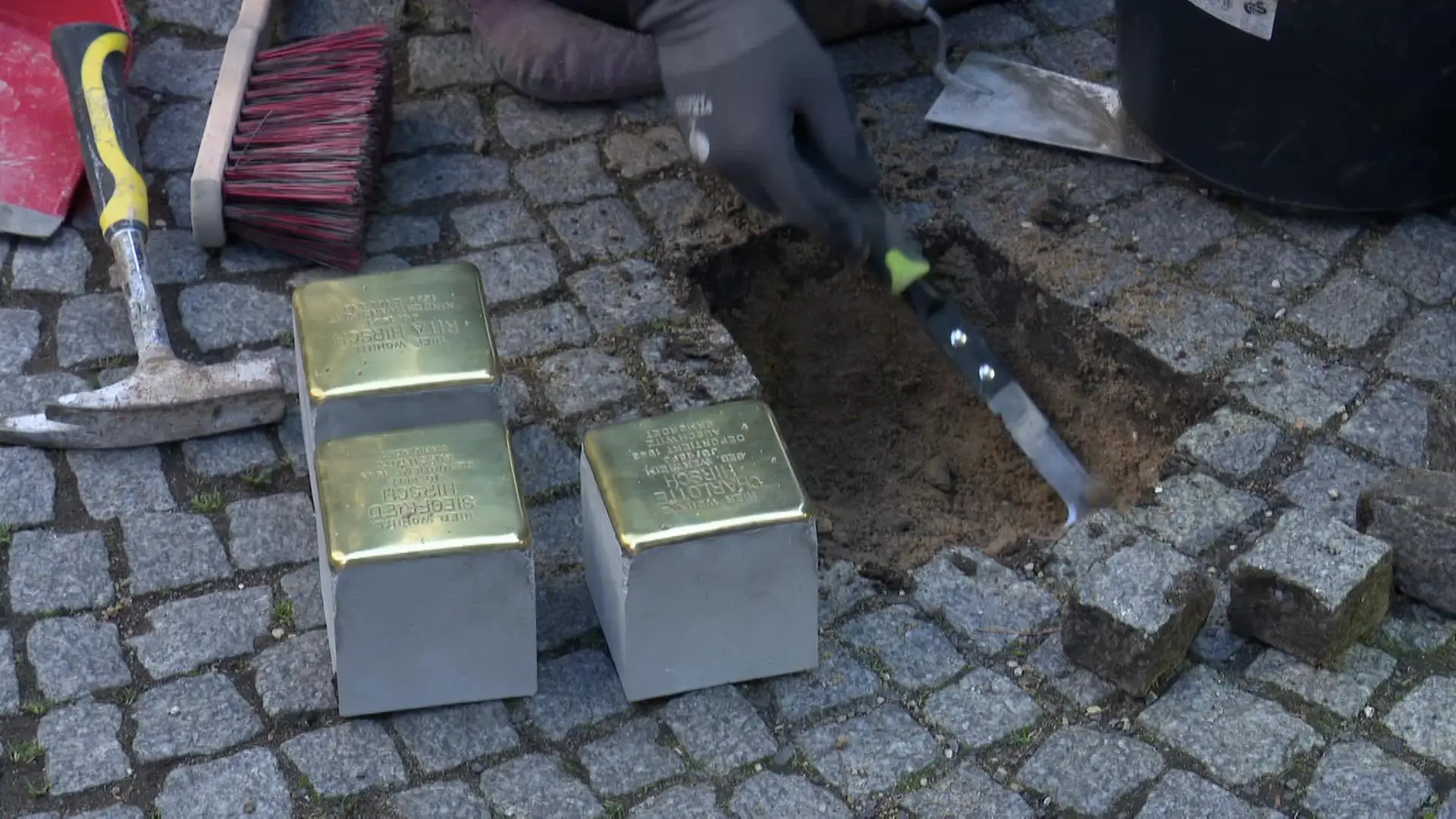
In the bustling urban landscape of Leipzig, a city that breathes history, a quiet, methodical act of remembrance took place this Tuesday. With practiced precision, volunteers knelt on the sidewalk of Davidstraße, carefully clearing the mortar from between cobblestones. They removed one standard stone and, in its place, embedded a brass-topped cube—a Stolperstein, or "stumbling block." This was not an isolated event; it was the 900th such installation in the city.
While these brass markers—now numbering over 116,000 across Europe—serve as a testament to the lives extinguished by the Nazi regime, a recent, contentious decision in the Saxon town of Heidenau has ignited a national debate. The local council there has voted against the installation of further Stolpersteine, arguing that walking over the names of victims is an inappropriate form of commemoration. As Germany navigates the delicate balance between public memorialization and respectful remembrance, the contrast between Heidenau’s rejection and Leipzig’s steadfast commitment highlights a deeper struggle over how a nation processes its darkest chapter.
The Story of Kurt Kaiser: A Life Reclaimed
The centerpiece of Tuesday’s installation in Leipzig was a tribute to Kurt Kaiser. For his great-niece, Maria Kny, who traveled from Nuremberg to witness the ceremony, the stone represents more than a memorial—it represents the restoration of a stolen truth.
For decades, the Kaiser family was fed a web of lies regarding Kurt’s fate. Official documentation provided by the Nazi authorities claimed he had died of a heart attack while in a psychiatric clinic. It was only five years ago, after exhaustive research into historical archives, that the family discovered the harrowing reality: Kurt Kaiser had been murdered at the Pirna-Sonnenstein killing center, a site notorious for its role in the "T4" euthanasia program, where thousands of individuals with physical and mental disabilities were systematically gassed.
"We find it important to set these signs, because it must not be forgotten," Kny stated, placing a single rose beside the newly laid brass plate. "The story we were told—the place, the date of his death—was all a fabrication. He was murdered in a concentration camp."
The project in Leipzig, coordinated by Achim Beier of the Archiv Bürgerbewegung, relies heavily on such archival research. Beier notes that many of the stories he helps uncover exist only in sparse, clinical medical files. By bringing these names out of the dusty corners of bureaucratic archives and into the sunlight of public streets, the Stolpersteine project transforms abstract statistics into tangible human lives.
Chronology and Evolution of the Stolperstein Project
The Stolpersteine project, initiated by artist Gunter Demnig in the mid-1990s, has grown into the world’s largest decentralized memorial. The concept was simple yet profound: to reclaim the memory of victims where they lived, worked, or were abducted.
- 1996: The first "stumbling blocks" were placed illegally in Berlin, marking the beginning of a grassroots movement that would eventually gain municipal approval across thousands of European cities.
- 2000s: The project gained significant momentum as families of victims began proactively seeking out the histories of their ancestors.
- 2010s–Present: The project expanded beyond Germany into neighboring countries, including Austria, Poland, and the Netherlands, creating an interconnected map of Holocaust history that spans the continent.
Today, the process is largely driven by families who wish to bridge the gaps in their own personal histories. Unlike grand monuments that stand apart from the rhythms of daily life, the Stolpersteine are designed to be part of the pavement. They are, quite literally, encountered by passersby. As Beier explains, the innovation lies in this everyday collision with history. "They are placed where people once laughed, where they were happy, and where they were torn from their lives," he says. "The stones emphasize the life that was lived, not just the death that was suffered."
Supporting Data: The Magnitude of Remembrance
The scale of the project is staggering. With over 116,000 stones laid, the project serves as a permanent, decentralized museum of the Holocaust.
- Funding: The project is entirely financed through private donations, reflecting a broad, citizen-led consensus that memory should not be solely a state-mandated task.
- Demographics of Victims: While the majority of stones commemorate Jewish victims, they also honor Sinti and Roma, political dissidents, LGBTQ+ individuals, Jehovah’s Witnesses, and those persecuted under the Nazi "euthanasia" programs.
- Geographic Reach: The stones can be found in over 2,000 cities and towns across 30 countries, making it the most visible form of Holocaust commemoration globally.
The 900th stone in Leipzig is a milestone that underscores the city’s commitment to maintaining this tradition, even as other municipalities move in the opposite direction.
Official Responses: The Heidenau Controversy
The decision in Heidenau to halt the project has drawn sharp criticism from historians, civil society groups, and the Jewish community. The motion, backed by a coalition of local council members, suggested that the act of "stepping on" a memorial is inherently disrespectful.
Achim Beier, who has spent years managing the logistics of remembrance, views this justification as a thin veil for deeper political resistance. "It is hypocritical," Beier asserts. "People lean against monuments, they walk past them. We exist in public space. The argument that one is ‘stepping on’ the victims is used by those who either want to suppress this civil-society culture of remembrance or who simply find the project itself to be an irritant."
Critics of the Heidenau decision point out that the Stolpersteine are designed specifically to be looked down at—to force the passerby to stop, bow their head, and read the name of the victim. It is a physical act of reflection, not an act of trampling. By removing these markers from the public sphere, critics argue that Heidenau is essentially choosing to return to a state of public silence regarding the victims of the Nazi era.
Implications: The Future of Memorial Culture
The divide between Leipzig and Heidenau reveals a critical juncture in German memory culture. As the last survivors of the Holocaust pass away, the responsibility for maintaining the memory of the genocide shifts to the next generations.
1. The Privatization of Memory vs. State Duty
The reliance on private funding and family-led research is both the project’s strength and a potential vulnerability. While it fosters deep, personal connections to history, it also means that the survival of the project depends on the continued engagement of citizens. If local councils begin to restrict the placement of stones, the "map of memory" could become fragmented.
2. The Normalization of History
There is a fear among historians that by integrating memorials into the mundane reality of street life, the shock value of the Holocaust could be diluted. However, proponents argue the opposite: that the "museumification" of the Holocaust—placing it behind glass in a building—allows people to distance themselves. The Stolpersteine, by contrast, make it impossible to walk through a city without acknowledging the ghosts of the past.
3. Political Polarization
The involvement of various political parties in the Heidenau decision suggests that the "culture of remembrance" (Erinnerungskultur) has become a political battleground. In a climate where right-wing populism is rising, the physical presence of these stones serves as a litmus test for a community’s willingness to confront its history.
Conclusion: Why We Must Continue to "Stumble"
The ceremony in Leipzig serves as a potent reminder of why the Stolpersteine project remains vital. When Maria Kny laid a flower for her great-uncle, she was not just honoring a dead relative; she was reclaiming a narrative that the perpetrators had tried to erase through deception and violence.
The debate in Heidenau, while distressing to many, has inadvertently strengthened the resolve of proponents elsewhere. It has brought the question of "how we remember" to the forefront of the national conversation. As long as the stones continue to be laid—as long as people like Achim Beier continue to scrub the mortar from the street to make room for a name—the victims will continue to exist in the present, forcing us to pause, to look down, and to remember.
For the survivors, the families, and the citizens of a country still processing the weight of the 20th century, the "stumbling" is not a nuisance—it is a necessity. It is the friction that prevents the smooth, unthinking flow of daily life from burying the truth of the past. As we move further into the 21st century, these small, brass-topped cubes remain the most powerful tools we have to ensure that, while the people may be gone, they are never truly absent.