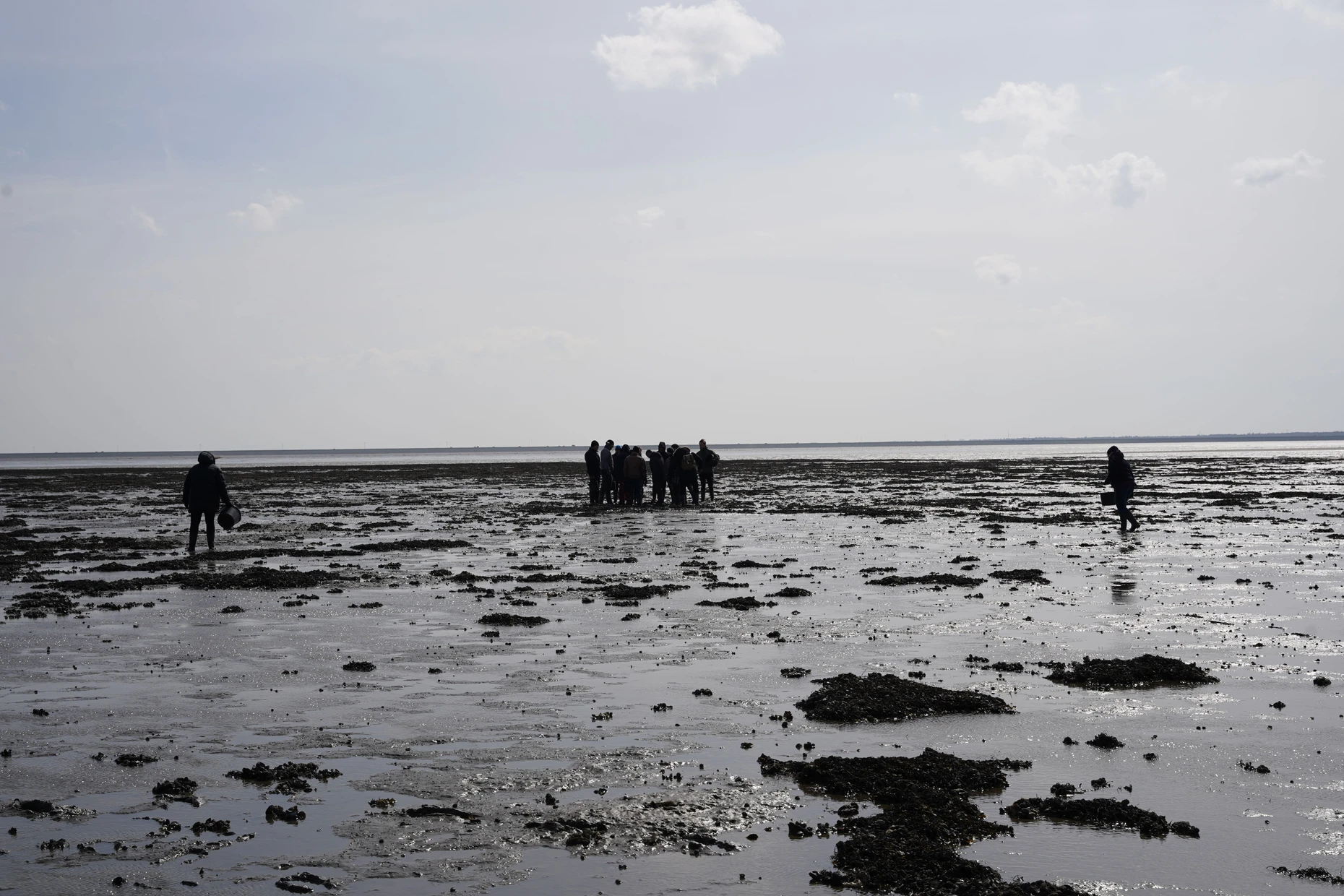
The sun hangs low over the Wadden Sea, casting a sharp, golden light across the vast, mud-slicked expanse between the Danish island of Rømø and the mainland. Despite the warmth of the light, a biting, relentless wind whips across the tidal flats, cutting through layers of windproof jackets and thick wool hats. A small group of foragers stands in the sludge, eyes scanning the terrain with the intensity of treasure hunters. They are not here for gold, but for dinner—specifically, the wild Pacific oysters that have claimed this UNESCO World Heritage site as their own.
In the waters off Rømø, the rules of gastronomy are rewritten. Here, at low tide, the seafloor becomes a free-access larder. Anyone with a pair of rubber boots, a bucket, and a sense of adventure can wander into the mud and harvest their fill. It is a peculiar, exhilarating experience: foraging for one of the world’s most coveted delicacies in the heart of a protected national park.
The Geography of the Hunt
The Rømø landscape is defined by its scale. To the west, a fourteen-kilometer-long beach stretches out, so wide that cars are permitted to drive directly onto the sand. While neighboring Sylt faces the constant threat of erosion, Rømø is still gaining ground, with the North Sea depositing new sediment year after year.
However, the foragers are not on the beach. They are in the "Jagdrevier" (hunting grounds)—a dark, gray expanse of mudflats far removed from shipping lanes or urban sprawl. In the distance, wind turbines spin rhythmically against the horizon, the only mechanical intrusion in a landscape dominated by the rhythm of the tides.
For the uninitiated, the mud is deceptive. It is a chaotic mosaic of mussel shells, tangled seaweed, and shifting sediment. To the untrained eye, every rock looks like a mollusk and every clump of weed hides a potential catch. "You get an eye for it quickly," says Per, a biologist and guide at the Naturcenter Tønnisgård. Per leads these safaris in Danish, German, and English, embodying the casual, egalitarian spirit of Danish culture. In Denmark, the formality of "Siezen" (the formal address) is largely absent, replaced by a relaxed, first-name basis that cuts through social strata—even in professional settings.
A Chronology of the Harvest
The expedition begins at the dike. As the group heads out, they pass locals and tourists returning with buckets overflowing with shells. While the official "rule of thumb"—a hatful per person, much like foraging for wild mushrooms—is the baseline, the reality is often more generous, provided the harvest is for personal consumption.
The Seasonal Constraint
The hunt is strictly governed by nature. Oysters can only be gathered during "months with an R"—the cooler months of the year. In the summer, the oysters spawn, and the harvest is closed to allow the population to recover. This creates a paradox: Rømø is a quintessential summer destination, yet its most unique culinary offering is reserved for the hardy, weather-beaten visitors who arrive in the autumn and winter.
The Technique
As the group ventures deeper, the mud becomes increasingly unforgiving. Per offers a masterclass in survival: "Lift your heel first to break the vacuum, then move on your tiptoes. Keep your steps small." On a nearby sandbank, a colony of seals watches with apparent amusement as the humans struggle to maintain their balance, arms flailing in the mud.
After an hour of training the eye, the breakthrough occurs. The group begins to spot the "commas"—the distinctive, curved shape of the Pacific oyster—hidden beneath tangles of seaweed. The process is tactile and physical: reaching into the cold mud, pulling the shells free, snapping off the clinging blue mussels, and rinsing them in a puddle of seawater.
Supporting Data: The Rise of an Invasive Species
The presence of these oysters in the Wadden Sea is a relatively recent phenomenon with complex ecological roots. The native European oyster (Ostrea edulis) went extinct in this region roughly a century ago. The current bounty is the result of the Pacific rock oyster (Crassostrea gigas), which was introduced to the area in the 1980s by commercial farmers on the island of Sylt.
Marketed as "Sylter Royal," the species proved to be an aggressive colonizer. It was first documented in Denmark in 1996 and has since spread along the North Sea coast as far north as Norway. Marine biologists estimate that the Danish Wadden Sea alone hosts over 70,000 tons of these oysters.
Contrary to their name, these oysters do not require rocks to thrive. They rely on the common blue mussel (Mytilus edulis). Mussels anchor themselves to the mud with protein-based threads, forming stable reefs. These structures act as nurseries for oyster larvae, allowing the two species to form a symbiotic, albeit invasive, architectural bond that has fundamentally altered the seafloor.
The Culinary Payoff
Back at the Naturcenter Tønnisgård, the atmosphere shifts from wilderness to workshop. Under the guidance of Marit, a German volunteer, the group scrubs their haul with wire brushes. The facility is prepared for the final stage of the safari: a communal feast.
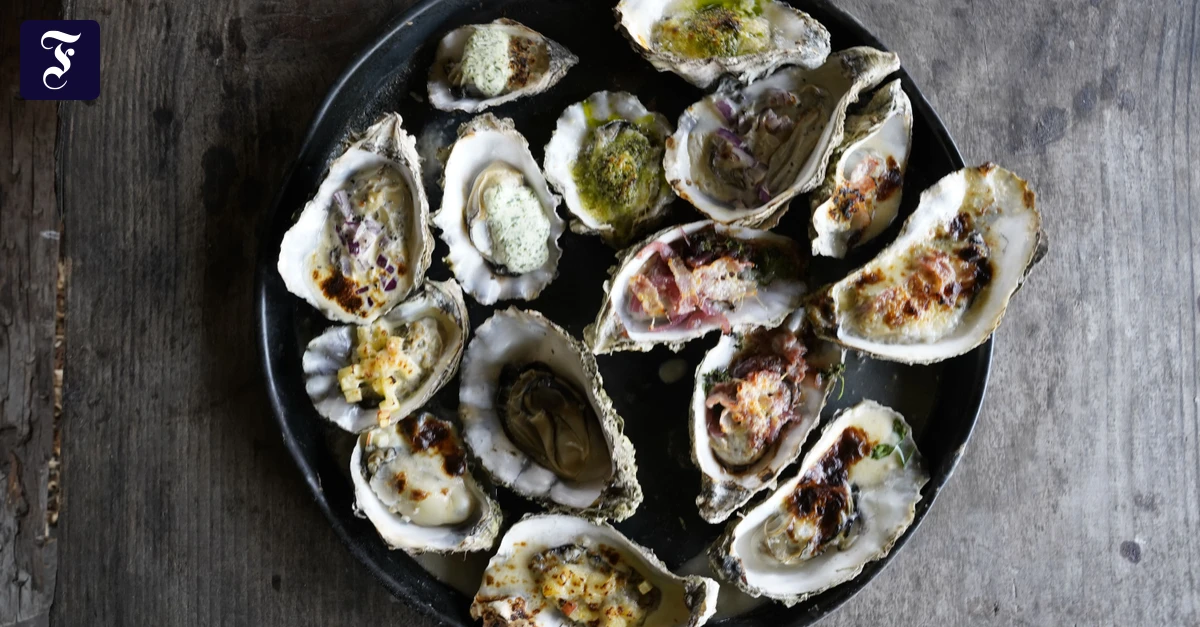
A fire is stoked in the grill hut, accompanied by local berry wines—blackberry and gooseberry—and an array of gourmet toppings: garlic sour cream, pickled onions, apple bits, breadcrumbs, Parmesan, Worcestershire sauce, and wild garlic pesto.
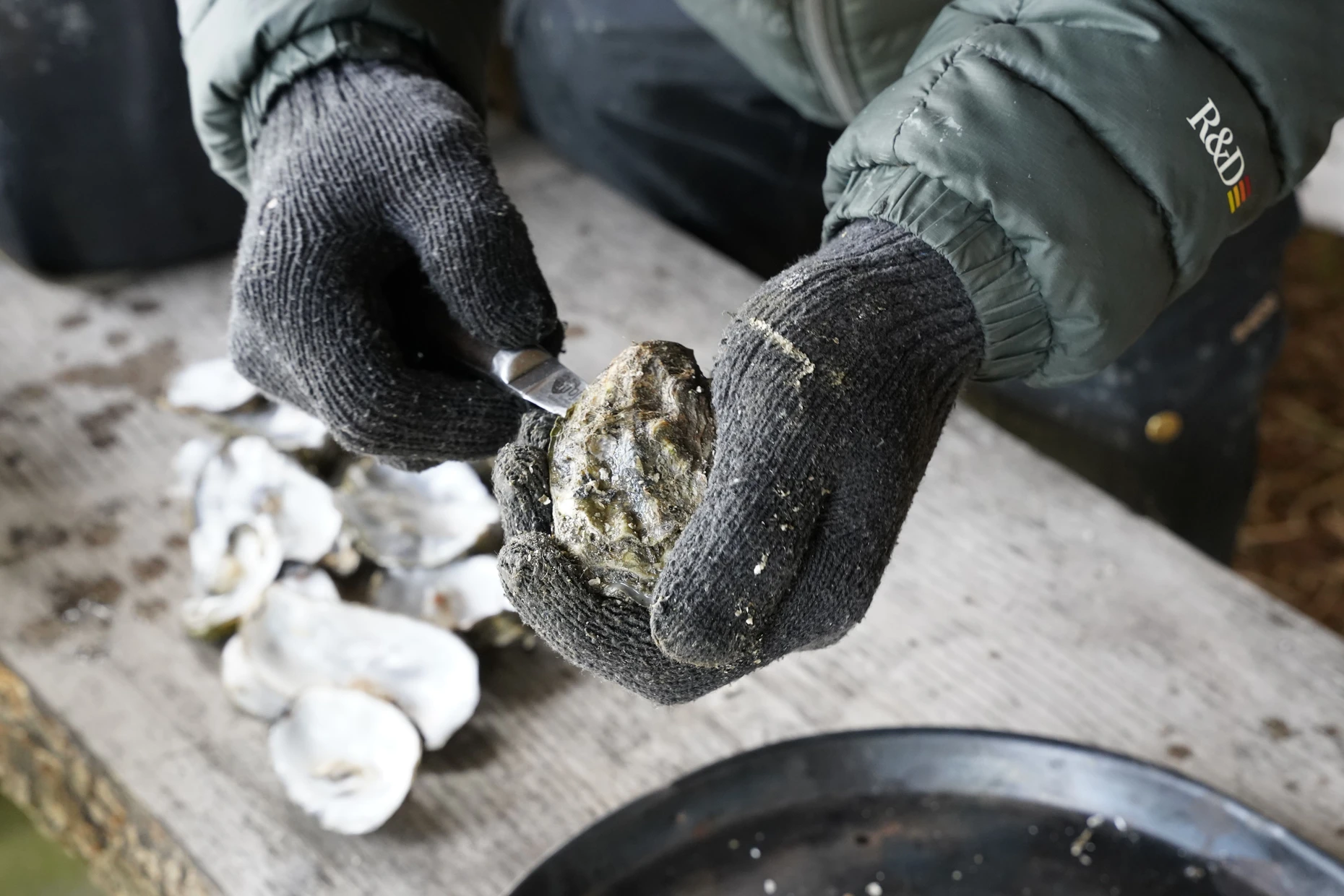
The opening of an oyster is an act of primal effort. It requires a heavy glove, a sharp knife, and the steady application of force at the "hinge." When the lid finally pops, the reward is immediate. The meat is tender and beige, glistening in its shell. A squeeze of lemon and a drop of whiskey completes the transformation. The taste is a visceral experience—a concentrated hit of salt, brine, and the raw, unadulterated essence of the North Sea.
Implications: A Democratic Delicacy
The oyster industry in Denmark has undergone a radical transformation. Once an exclusive luxury for the elite, the overabundance of the Pacific oyster in the Wadden Sea has turned it into a "democratic delicacy."
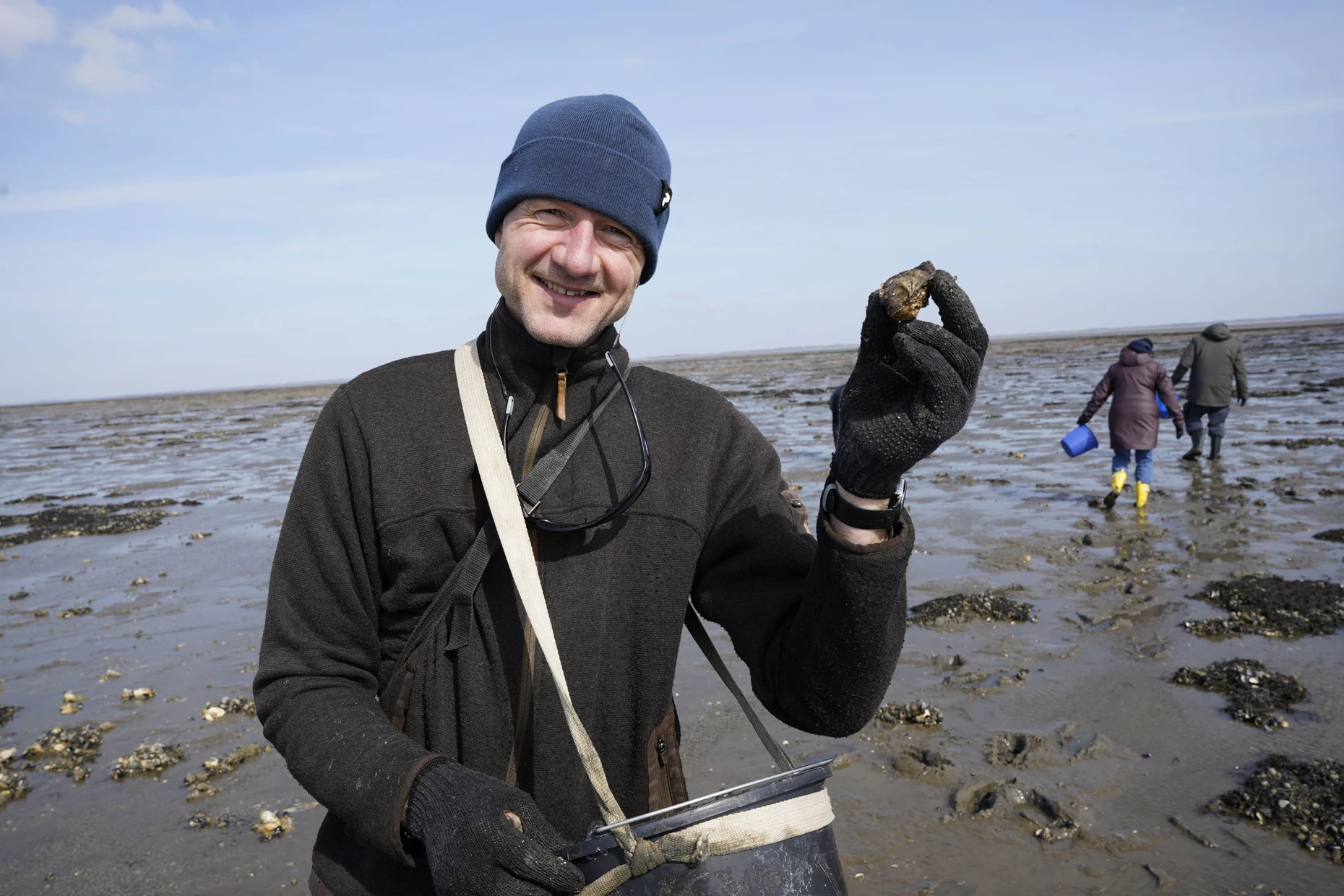
"You can eat them raw, baked, or fried in beer batter," Per explains, noting that even children often take to the fried variety. This shift has implications for both tourism and local food sovereignty. It encourages a deeper connection to the environment, forcing visitors to engage with the elements—the wind, the cold, and the tide—to earn their meal.
The success of the Tønnisgård safaris suggests that modern travelers are increasingly seeking "experiential consumption"—where the story behind the food is as important as the flavor. As the group sits by the fire, sharing their harvest, the physical discomfort of the mud and the cold fades. What remains is a sense of accomplishment and a profound realization: in a world of packaged, standardized convenience, the most satisfying meal is the one you have to fight the tide to obtain.
The next season for these safaris begins on October 3rd. For those willing to brave the Danish autumn, the Wadden Sea offers not just a harvest, but a reminder of the raw, wild beauty that exists just beneath the surface of the tide.