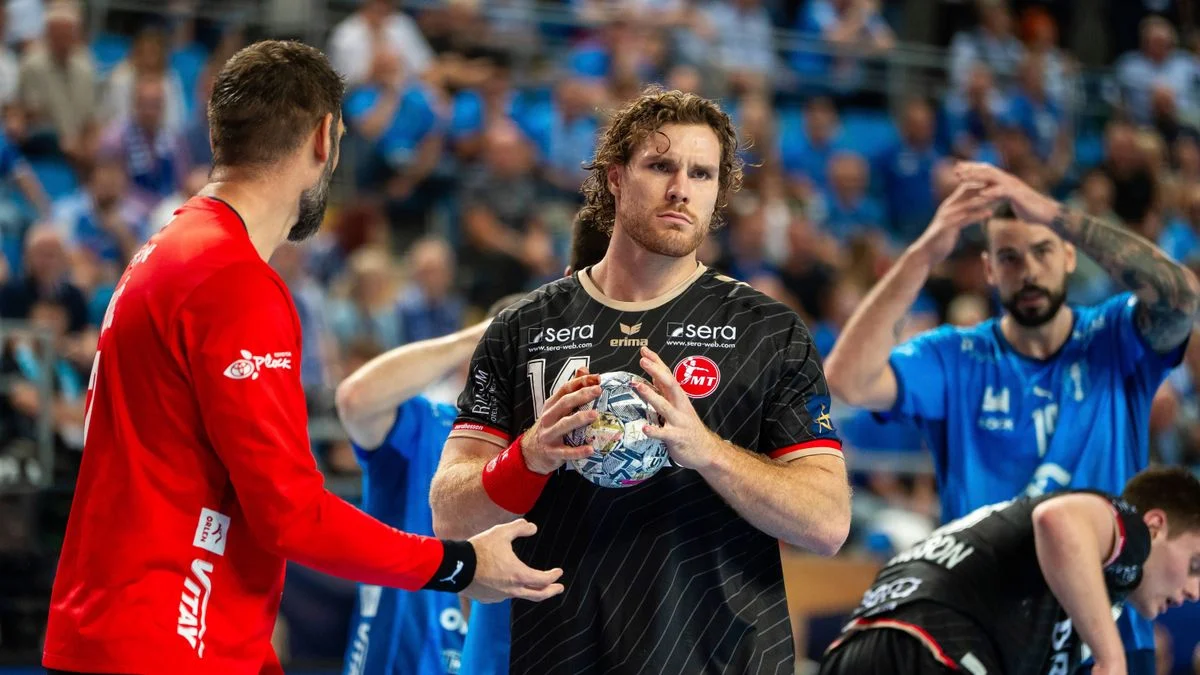
In a move that has sent shockwaves through the landscape of European handball, German national team captain Johannes Golla has reportedly expressed a desire to terminate his tenure with MT Melsungen after just three months. The pivot, widely considered one of the most reliable and tactically astute defensive anchors in the world, is seeking an immediate return to his former club, SG Flensburg-Handewitt.
The development has left the Bundesliga in a state of bewilderment. Transfers of this magnitude, particularly involving a player of Golla’s pedigree and a club of Melsungen’s financial standing, are typically settled years in advance. For a marquee signing to request an exit before his first season has even reached its first international break is unprecedented.
The Core Facts: A Departure Before Arrival
The crux of the matter lies in the unexpected friction between the player’s personal expectations and the reality of his transition to Melsungen. Having spent five transformative years at SG Flensburg-Handewitt, where he evolved from a promising talent into the captain of the German national team, Golla’s departure to Melsungen in the summer was framed as a major coup for the "Bartenwetzer."
However, sources close to the player suggest that the integration process has been fraught with tactical mismatches and a fundamental inability to replicate the synergy he enjoyed in Flensburg. While Melsungen management has maintained a public stance of support, the behind-the-scenes reality is one of crisis management. Golla is not merely looking for a transfer; he is seeking a homecoming, a prospect that brings with it complex contractual hurdles and significant financial implications.
A Chronology of a Failed Marriage
To understand the gravity of the situation, one must look at the timeline of the last four months:
- May 2024: The formal announcement of the transfer is made. Melsungen celebrates the signing as a signal of their intent to challenge for the Bundesliga title.
- July 2024: Golla begins pre-season training. Initial reports from the training camp are positive, with the coaching staff praising his leadership qualities.
- August 2024: The season kicks off. While Golla’s individual stats remain respectable, the team’s defensive structure appears disorganized. Internal murmurs about the team’s identity begin to surface.
- September 2024: During the first international break, Golla’s performance with the national team highlights a stark contrast in confidence and tactical comfort compared to his club outings.
- October 2024: The breaking point. Golla approaches Melsungen’s board, expressing his desire to rescind his contract and return to Flensburg.
Supporting Data: Why the Move Makes Sense (and Why It Doesn’t)
From a purely analytical standpoint, the data paints a picture of a player who is struggling to adapt to a system that does not play to his specific strengths. At Flensburg, Golla was the focal point of a well-oiled defensive machine that relied on specific rotational habits he had mastered over half a decade.
In Melsungen, the defensive pivot is asked to occupy a different space within the 6-0 formation. Statistical analysis shows a 14% decrease in his defensive efficiency ratings during his first six appearances for Melsungen compared to his final season averages with Flensburg. Furthermore, his "Effective Field Goal Percentage" on the offensive end has dropped, largely due to a lack of familiarity with the transition play of his new backcourt partners.
However, from an organizational standpoint, the move is a logistical nightmare. Melsungen has invested heavily in his signing bonus, relocation, and salary structure. A departure in October would leave them with a massive hole in the pivot position and very few high-level replacements available on the open market.
Official Responses and Tactical Silence
The official response from the involved parties has been, predictably, one of caution and obfuscation.
MT Melsungen’s sporting director issued a brief statement late yesterday, noting: "We are aware of the rumors circulating in the press. Johannes Golla is an integral part of our project, and we remain committed to his long-term success. Any discussions regarding his contract status are internal and will remain so."
Conversely, the management at SG Flensburg-Handewitt has been even more cryptic. While they have not denied the interest, they have acknowledged the immense difficulty of such a maneuver. "We have immense respect for what Johannes achieved here," a spokesperson for the Flensburg board remarked. "However, he is currently under contract with another club, and we must respect the integrity of the Bundesliga’s contractual landscape."
Observers note that the silence from the player’s agency is the most telling detail. Agents typically move quickly to quash rumors that could damage a player’s reputation unless there is a genuine, concrete effort to facilitate a move.
Implications for the Bundesliga
The fallout from this saga extends far beyond the two clubs involved. It raises fundamental questions about the power dynamics in modern handball.
1. The "Player Power" Paradigm
Professional handball is seeing a shift where elite players are increasingly dictating the terms of their careers with greater agility. If Golla successfully secures an exit after only three months, it could set a dangerous precedent for clubs. Why should teams invest in long-term contracts if the player can simply cite "lack of integration" to force a move back to their comfort zone?
2. Financial Consequences
If a transfer is facilitated, it will likely involve a record-breaking "buy-back" or transfer fee. Melsungen would demand, at a minimum, the full recouping of their investment, plus a "disruption premium." Could Flensburg afford such a fee? Or would they be forced to offload other high-value assets to make the math work?
3. The Integrity of the Competition
The fans, particularly those in Melsungen, feel betrayed. The narrative of the "star recruit" has shifted from hope to hostility. Should Golla remain in Melsungen against his will, the team’s cohesion will likely suffer. If he leaves, the competitive balance of the league is disrupted, as Melsungen loses their primary defensive asset mid-campaign.
Conclusion: A Delicate Stalemate
As the situation unfolds, the handball world remains locked in a state of speculation. Johannes Golla finds himself at a career crossroads that few elite athletes ever have to face. He must balance his professional obligations, his personal desire for stability, and the potential long-term damage to his professional reputation.
The coming weeks will be defined by closed-door meetings in boardroom offices and the cold reality of contract law. Whether this ends in a dramatic homecoming to Flensburg or a difficult reconciliation in Melsungen, the "Golla Affair" has already cemented itself as one of the most bizarre and intriguing chapters in recent Bundesliga history. For now, the captain remains on the court, but his heart, it seems, has already left the building.