

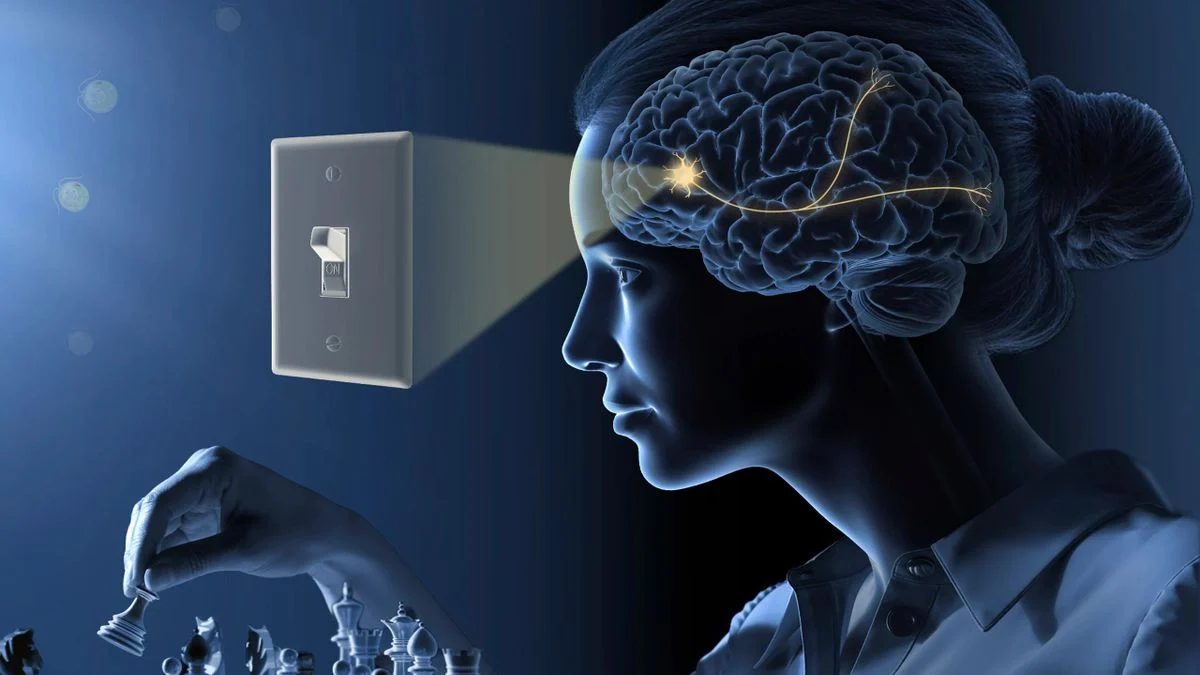
The history of neuroscience is punctuated by moments of profound clarity, where a new tool allows researchers to peer into the "black box" of the human brain with unprecedented precision. Among these, the development of optogenetics stands as a watershed moment. By combining optics and genetics, scientists have gained the ability to manipulate specific neurons with the speed and precision of a light switch, transforming our understanding of everything from addiction and depression to motor control and memory.
This article explores the technical foundations, the historical trajectory, and the far-reaching implications of a discovery that effectively rewrote the rulebook for biological research.
Main Facts: The Convergence of Light and Life
At its core, optogenetics is a biological technique that involves the use of light to control cells in living tissue, typically neurons, that have been genetically modified to express light-sensitive ion channels.
The breakthrough relies on proteins known as opsins—specifically, microbial opsins found in single-celled organisms like algae. These organisms use opsins to detect light and navigate toward it. When these genes are introduced into mammalian neurons, the neurons begin to express these light-sensitive proteins on their membranes.
When researchers shine a specific wavelength of light (delivered via fiber-optic cables or LED implants) onto these neurons, the ion channels open or close, triggering an electrical impulse or silencing the cell instantly. Unlike traditional electrical stimulation, which fires every neuron in a general area, optogenetics allows for the control of specific cell types, leaving neighboring cells unaffected. This level of specificity is what allows scientists to "map" the functional architecture of the brain.
Chronology: The Road to the Nobel
The development of optogenetics was not the work of a single moment but a gradual synthesis of decades of biological research.
The Foundation (1970s–1990s)
The journey began with the study of halorhodopsins and channelrhodopsins in microorganisms. Scientists were fascinated by how these simple creatures processed light. By the late 1990s, researchers like Peter Hegemann and Georg Nagel were isolating these opsins, though the application to complex mammalian brains remained theoretical.
The Breakthrough (2002–2005)
The pivotal moment arrived in 2005, when Karl Deisseroth, Ed Boyden, and their colleagues at Stanford University published a landmark paper in Nature Neuroscience. They successfully expressed the channelrhodopsin-2 (ChR2) protein in cultured neurons and demonstrated that they could induce precise, rapid firing of action potentials using pulses of blue light. This provided the "proof of concept" that the scientific community had been waiting for.
Rapid Proliferation (2006–2015)
Following the initial success, the field exploded. Researchers began using optogenetics in animal models, from fruit flies to rodents, to study neural circuits in real-time. This era saw the discovery of neural pathways involved in fear conditioning, reward-seeking behavior, and sleep regulation.
Recognition (2010–Present)
The technique was named the "Method of the Year" by Nature Methods in 2010. Since then, the integration of optogenetics with high-resolution imaging and large-scale data analysis has pushed the field toward the Nobel Prize, recognizing the technique as one of the most significant advancements in the history of neuroscience.
Supporting Data: Why Precision Matters
Traditional neuroscience relied heavily on pharmacological interventions (drugs) or electrical stimulation (electrodes). However, both have significant limitations.
- Pharmacology: Drugs travel through the bloodstream and bathe the entire brain in chemical agents. They are slow, imprecise, and often have systemic side effects.
- Electrical Stimulation: While faster, electrodes are "blunt instruments." They stimulate all neurons within a radius of the electrode, making it impossible to determine whether a behavior is caused by a specific type of neuron or a mix of excitatory and inhibitory cells.
Optogenetic data demonstrates:
- Temporal Resolution: Optogenetics can trigger a neuron in milliseconds, matching the speed of natural neural signaling.
- Spatial Resolution: It allows researchers to target neurons based on their genetic signature (e.g., dopamine-producing neurons in the VTA) rather than just their location.
- Reversibility: Unlike lesion studies, where a brain area is physically damaged to see what happens, optogenetics is fully reversible. The light is turned off, and the brain returns to its baseline state instantly.
Official Responses and Ethical Considerations
The global scientific community has hailed optogenetics as a "transformative" technology. The Nobel Committee and various international science academies have emphasized that the tool is not merely an improvement on existing methods, but a fundamental paradigm shift.
However, the power to "control" neural activity has raised significant ethical questions. While current applications are strictly limited to basic research in animal models, the prospect of human clinical trials—particularly for treating conditions like Parkinson’s disease, blindness, or severe depression—brings a host of moral complexities.
The primary concern among ethicists is the potential for "neuro-enhancement" or the involuntary manipulation of behavior. Furthermore, the invasive nature of current optogenetic techniques—requiring genetic modification (often via viral vectors) and the surgical implantation of light-delivery hardware—remains a major hurdle for translation into human clinical practice.
Implications: The Future of Medicine
The implications of optogenetics extend far beyond the laboratory bench.
1. Neurological and Psychiatric Treatments
For decades, we have treated psychiatric disorders with "chemical soups"—medications that affect the whole brain. Optogenetics offers a vision of "circuit-based medicine." If scientists can identify the exact neural circuit responsible for a depressive state, they might one day develop targeted therapies that modulate only those specific cells, eliminating the debilitating side effects of traditional psychotropic drugs.
2. Restoring Sensory Function
Optogenetic therapy is already showing promise in the field of ophthalmology. By introducing light-sensitive proteins into the remaining cells of the retina in patients with degenerative eye diseases, scientists hope to restore a form of functional vision. This would essentially turn the retina itself into an optogenetic sensor.
3. Mapping the Connectome
The brain is the most complex structure in the known universe. Optogenetics is providing the map to this complexity. By turning circuits on and off, researchers are finally able to build a functional "connectome," a comprehensive map of how neural pathways interact to create human experience, consciousness, and memory.
4. Technological Synergy
The future of the field lies in miniaturization. Current research is focusing on wireless, battery-less light sources and "up-conversion" nanoparticles that can convert non-invasive near-infrared light (which can penetrate skin and bone) into the visible light required to activate opsins. This could eventually lead to non-invasive brain modulation therapies.
Conclusion
The "light switch" for the brain has moved neuroscience from the era of observation to the era of intervention. By decoding the language of neural circuits, optogenetics has provided humanity with the tools to potentially "debug" the hardware of the mind. While the journey from laboratory success to human clinical application is long and fraught with ethical challenges, the progress made over the last two decades is undeniable.
We are no longer merely spectators of the brain’s activity; we are becoming its architects. As we continue to refine these techniques, the line between biological reality and controlled precision will continue to blur, promising a future where the deepest mysteries of the mind are not just understood, but illuminated.
For more in-depth analysis on the evolution of neuroscience and the latest breakthroughs in biotechnology, subscribe to our premium digital access. Unlock full archives, exclusive newsletters, and the weekly digital edition of the magazine today.

























