

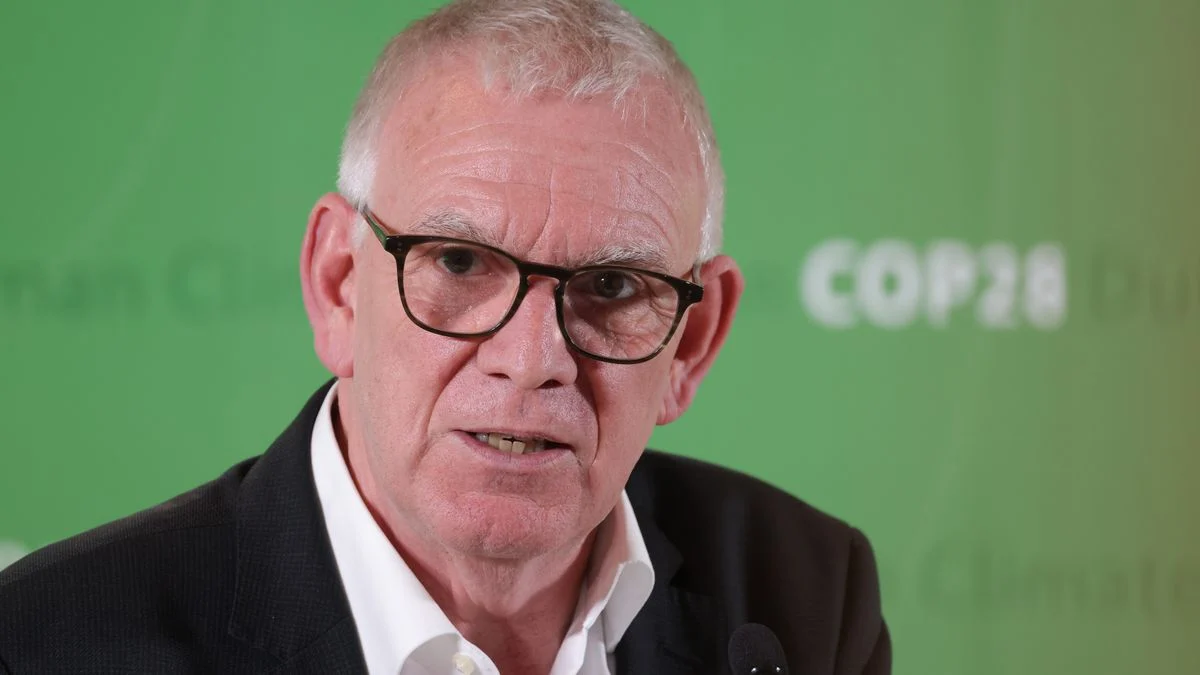
Berlin/The Hague – Jochen Flasbarth, one of Germany’s most seasoned and influential figures in environmental and climate policy, is set to embark on a new chapter, leaving his post as State Secretary in the Federal Ministry for the Environment, Nature Conservation, Nuclear Safety and Consumer Protection (BMUV). The move will see him transition to the forefront of international climate action, taking on the prestigious role of Chief Executive Officer at the European Climate Foundation (ECF), one of the world’s most significant philanthropic organizations dedicated to climate protection.
The decision, confirmed by the ECF’s supervisory board on Monday evening, marks a pivotal moment for both German and international climate governance. Flasbarth, 64, will succeed the distinguished French climate diplomat Laurence Tubiana, widely celebrated as one of the principal architects of the landmark 2015 Paris Agreement. His appointment signals a clear intent from the ECF to further bolster its strategic influence and operational reach at a critical juncture for global climate efforts.
While Flasbarth is slated to officially commence his duties at the ECF in February of the coming year, sources within the ministry indicate he will relinquish his current governmental position as early as the beginning of November. His departure necessitates a swift succession within the BMUV, with Heike Henn, currently heading the ministry’s department for international environmental and climate protection, poised to take over as the new State Secretary. This swift transition underscores the urgency and strategic importance placed on maintaining continuity within Germany’s environmental policy apparatus.
Flasbarth’s move represents the culmination of a long-held aspiration to contribute more directly to international climate policy, a desire that has seen him pursue global roles in the past. His extensive experience, strategic acumen, and deep understanding of both national and multilateral environmental frameworks are expected to significantly enhance the ECF’s capacity to drive impactful climate initiatives across Europe and beyond.
A Career Dedicated to Environmental Stewardship: A Chronology
Jochen Flasbarth’s career trajectory is a testament to decades of unwavering commitment to environmental and climate protection, spanning leadership roles in non-governmental organizations, federal agencies, and ministerial positions. His journey reflects a deep understanding of the evolving challenges and opportunities within the environmental sphere, from local conservation efforts to complex international negotiations.
Born in 1961, Flasbarth first rose to prominence in the German environmental movement. From 1992 to 2003, he served as the Director of the Naturschutzbund Deutschland (Nabu), one of Germany’s largest and most respected nature conservation organizations. Under his leadership, Nabu significantly expanded its reach and influence, advocating for biodiversity protection, sustainable land use, and robust environmental policies at both regional and national levels. This period provided him with invaluable experience in grassroots activism, public advocacy, and coalition building, laying the groundwork for his subsequent roles in government.
In 2003, Flasbarth transitioned into federal service, joining the then Federal Ministry for the Environment, Nature Conservation and Nuclear Safety (BMU) as head of the nature conservation department. His expertise in this domain was instrumental in shaping Germany’s national biodiversity strategy and contributing to international conventions. His analytical rigor and ability to bridge the gap between scientific findings and policy implementation quickly made him a respected figure within the ministry.
His ascent continued in 2009 when he was appointed President of the Umweltbundesamt (UBA), Germany’s primary environmental protection agency. As head of the UBA until 2013, Flasbarth oversaw a vast portfolio of scientific research, environmental monitoring, and policy advice. The agency plays a crucial role in providing the scientific basis for German environmental policy, from air quality and water management to climate change mitigation and adaptation. His tenure at UBA further solidified his reputation as a pragmatic and evidence-based policymaker, capable of translating complex environmental data into actionable strategies.
The period from 2013 to 2021 saw Flasbarth return to the Federal Environment Ministry, this time as State Secretary. These eight years were characterized by a significant elevation of climate and species protection on Germany’s political agenda. As State Secretary, he was deeply involved in preparing Germany’s positions for international climate negotiations, including the crucial COP21 in Paris, which culminated in the historic Paris Agreement. He played a key role in shaping Germany’s Energiewende (energy transition) policies, advocating for ambitious renewable energy targets and the phasing out of fossil fuels. During this time, Germany positioned itself as a leading voice in global climate action, and Flasbarth was often at the forefront of these efforts.
Following a four-year stint as State Secretary in the Federal Ministry for Economic Cooperation and Development (BMZ), where he likely focused on integrating climate resilience and sustainable development into Germany’s international aid efforts, Flasbarth returned to the BMUV in May 2025. This latest return, though brief, placed him once again at the heart of German environmental policymaking, albeit under vastly different geopolitical and economic circumstances.
Flasbarth’s long-standing ambition for a significant international role has been well-documented. On two previous occasions, he vied for the leadership of the United Nations Environment Programme (UNEP), the principal UN body for environmental issues. In 2016, he was a strong candidate to succeed Achim Steiner but was ultimately outmaneuvered by Norway’s Erik Solheim. His second attempt in 2018 also fell short, with Denmark’s Inger Andersen securing the position. These earlier efforts underscore his consistent drive to operate on a global stage, recognizing that many environmental challenges, particularly climate change, demand concerted international cooperation. His new role at the European Climate Foundation finally realizes this long-cherished ambition, positioning him at the helm of an organization with profound international influence.
The European Climate Foundation: A Powerhouse in Philanthropy
Jochen Flasbarth’s appointment as CEO of the European Climate Foundation (ECF) places him at the helm of an organization widely regarded as one of the world’s most influential and substantial funders of climate policy projects. Headquartered in The Hague, Netherlands, the ECF plays a pivotal role in shaping climate action across Europe and beyond, operating as a key strategic philanthropic partner for a vast network of NGOs, think tanks, and research institutions.
The ECF’s mission is to foster the development of a low-carbon society and to help Europe play a leading international role in mitigating climate change. It achieves this by providing strategic grants to hundreds of organizations working on various aspects of climate policy, including advocacy, research, communications, and legal challenges. Its work spans critical sectors such as energy, transport, industry, and finance, aiming to accelerate the transition away from fossil fuels and towards a sustainable, climate-resilient future. The foundation’s influence extends beyond mere funding; it acts as a convener, facilitator, and strategic advisor, helping to coordinate efforts and amplify the impact of climate initiatives across a diverse and complex European landscape.
The scale of the ECF’s operations is impressive. In 2025, the foundation commanded a budget approaching €258 million, a substantial sum that underscores its capacity to drive significant change. This funding is predominantly sourced from other major philanthropic organizations, forming a powerful coalition dedicated to climate action. Prominent among its funders are global giants such as the Gates Foundation, known for its extensive work in global health and development, and Bloomberg Philanthropies, which has made climate change a cornerstone of its charitable endeavors. Other significant contributors include the IKEA Foundation, renowned for its commitment to sustainable living, and the Robert Bosch Stiftung, a leading German foundation supporting science, health, and societal issues. This diverse funding base highlights the ECF’s robust financial health and its appeal to a broad spectrum of philanthropic entities committed to addressing the climate crisis.
The foundation’s impact is felt across various policy domains. It supports initiatives that push for stronger EU climate targets, advocate for the deployment of renewable energy technologies, promote energy efficiency, and accelerate the transition to sustainable mobility. By funding independent research and providing evidence-based analysis, the ECF empowers policymakers and civil society organizations with the knowledge and tools necessary to advocate for more ambitious and effective climate policies. Its strategic approach involves identifying critical leverage points within the policy landscape and investing in interventions that can yield the greatest impact.
Succeeding Laurence Tubiana, a figure synonymous with the diplomatic breakthroughs of the Paris Agreement, presents both a challenge and an opportunity for Flasbarth. Tubiana’s tenure saw the ECF deepen its strategic partnerships and expand its influence, particularly in the lead-up to and aftermath of major international climate conferences. Flasbarth’s extensive experience in multilateral negotiations and his deep understanding of the interplay between national interests and global climate goals make him a fitting successor to build upon this strong legacy.
Germany’s Shifting Climate Priorities and the Global Context
Flasbarth’s departure from the German Environment Ministry comes at a complex and challenging moment for climate policy, both domestically and internationally. For many years, Germany positioned itself as a global leader in climate action, pioneering the Energiewende and advocating for ambitious emissions reduction targets. However, recent geopolitical and economic upheavals have demonstrably altered the political landscape, leading to a perceived down-prioritization of climate protection within the federal government’s agenda.
The primary catalyst for this shift has been the brutal aggression of Russia against Ukraine, which triggered a profound energy crisis across Europe. The urgent need to secure energy supplies, coupled with soaring energy prices, forced Germany to make difficult decisions, including temporarily reactivating coal-fired power plants and securing alternative fossil fuel sources. While the long-term commitment to renewable energy remains, the immediate focus shifted to energy security and affordability, inevitably diverting political attention and resources from pure climate mitigation efforts.
Adding to the complexity is the volatile international political environment, particularly the potential implications of a second presidency for Donald Trump in the United States. Trump’s previous administration withdrew the U.S. from the Paris Agreement and actively rolled back environmental regulations, creating significant headwinds for global climate cooperation. The prospect of such a stance returning casts a shadow over international efforts and places increased pressure on other major economies, including Germany and the EU, to maintain their climate commitments.
These external pressures, combined with internal economic challenges and social concerns about the cost of the energy transition, have led to what many observers describe as climate protection "slipping significantly down" the list of political priorities for the current German government. While the rhetoric of climate ambition persists, practical implementation has faced hurdles, and public discourse has often been dominated by concerns over inflation, economic stability, and security.
Despite this challenging domestic environment, sources within government circles suggest that this shifting priority list was not the primary driver for Flasbarth’s decision to leave. On the contrary, it is reported that the recent challenges motivated him to redouble his efforts in defending existing achievements and advocating for continued climate action within the ministry. However, this commitment to domestic policy was ultimately outweighed by his deeply rooted and long-standing desire to operate on an international stage, where he believes he can make an even greater impact on the global climate crisis. His move to the ECF therefore represents a strategic choice to leverage his expertise where he feels it can be most effective, rather than a retreat from the German policy arena due to disillusionment.
Official Responses and the Succession at BMUV
The announcement of Jochen Flasbarth’s departure has been met with acknowledgment from government circles, though no direct official statements regarding his motivations have been released beyond the attributions to "ministry circles." The focus of official communication will likely shift to the smooth transition within the Federal Environment Ministry.
Heike Henn, currently leading the department for international environmental and climate protection within the BMUV, has been designated as Flasbarth’s successor as State Secretary. This appointment signals a commitment to continuity and leverages existing internal expertise. Henn’s background in international climate policy makes her a natural fit for a ministry deeply involved in global climate negotiations and collaborations. Her prior role would have seen her working closely with Flasbarth, suggesting a seamless handover of responsibilities. The appointment of an internal candidate also indicates a desire to maintain stability and avoid any perceived disruption during a period of significant change for the ministry.
While no explicit official responses to potential criticisms have been made public, the government will undoubtedly be aware of the scrutiny that often accompanies high-profile transitions from public service to private or philanthropic sectors, particularly when the new role is closely related to the former one. Such transitions can raise questions about the "revolving door" phenomenon, where individuals leverage their public office experience, contacts, and confidential information for private gain or influence.
The German Federal Civil Servants Act (Bundesbeamtengesetz) contains provisions to address such concerns. It stipulates that a new job closely related to a former official activity may be subject to notification for up to five years after the end of public service. In extreme cases, a new employment can even be prohibited if there is a risk that "official interests would be impaired." This legal framework is designed to prevent conflicts of interest, safeguard the integrity of public administration, and ensure fair competition. While Flasbarth’s move to a non-profit foundation might be viewed differently than a switch to a corporate lobbying firm, the principles of transparency and avoiding undue influence remain relevant. It can be anticipated that any formal procedures required under this law will be meticulously followed to ensure compliance and mitigate potential criticism, with the government likely emphasizing adherence to these regulations should questions arise.
Implications: A New Era for ECF and German Climate Policy
Jochen Flasbarth’s transition to the European Climate Foundation carries significant implications for both the future direction of European climate philanthropy and the ongoing trajectory of German climate policy.
For the ECF, Flasbarth’s appointment marks a strategic infusion of high-level diplomatic and policy expertise. His deep understanding of the intricacies of national governments, the European Union, and international climate negotiations will be invaluable. He brings a unique perspective honed through decades of engaging with diverse stakeholders, from grassroots activists to heads of state. Under his leadership, the ECF could potentially refine its strategic focus, emphasizing areas where his experience can yield the greatest leverage. This might include strengthening the foundation’s role in influencing EU climate legislation, fostering deeper collaboration between member states, or enhancing its engagement with emerging economies. His track record suggests a pragmatic yet ambitious approach, which could translate into a renewed push for actionable, evidence-based solutions that bridge the gap between policy ambition and practical implementation. The ECF, already a formidable player, is poised to become an even more sophisticated and impactful force in the global climate landscape with Flasbarth at its helm.
For German climate policy, Flasbarth’s departure creates a vacuum, albeit one that the appointment of Heike Henn is intended to fill. While Henn brings significant experience, Flasbarth’s unique blend of long-standing political relationships, institutional memory, and deep policy insights will be difficult to replace immediately. His absence from the BMUV could, in a subtle way, further underscore the challenges faced by the ministry in navigating the current political climate where climate priorities are competing with other urgent concerns. His move might be interpreted by some as a tacit acknowledgement that the most impactful battles for climate action are increasingly being fought on the international stage and through non-governmental channels, rather than solely within the confines of national ministries grappling with domestic political pressures.
The "revolving door" debate surrounding Flasbarth’s immediate move from State Secretary to a closely related climate foundation is an important one. While his motivation is understood to be a continuation of his life’s work in climate protection, the proximity of his former and new roles inevitably raises questions. Critics might argue that such transitions, even to a non-profit, could create an appearance of impropriety or potential for undue influence, regardless of actual intent. Proponents, however, might counter that allowing experienced public servants to apply their expertise in the philanthropic sector is a valuable way to leverage knowledge for the public good, provided strict ethical guidelines and legal frameworks are observed. The Bundesbeamtengesetz serves as a crucial safeguard in this regard, ensuring that such transitions are transparent and do not compromise official interests. The manner in which this transition is handled will set a precedent and contribute to the ongoing discussion about the ethics of public servants moving into related private roles.
In essence, Jochen Flasbarth’s move to the European Climate Foundation marks a significant shift in his illustrious career, signaling a renewed focus on international climate action at a pivotal moment for the planet. His departure from the German Environment Ministry underscores the dynamic and often challenging landscape of climate policy, both nationally and globally. As he steps into this influential new role, the international climate community will be watching to see how his extensive experience and strategic vision will shape the ECF’s efforts to accelerate the transition to a sustainable future.


















