

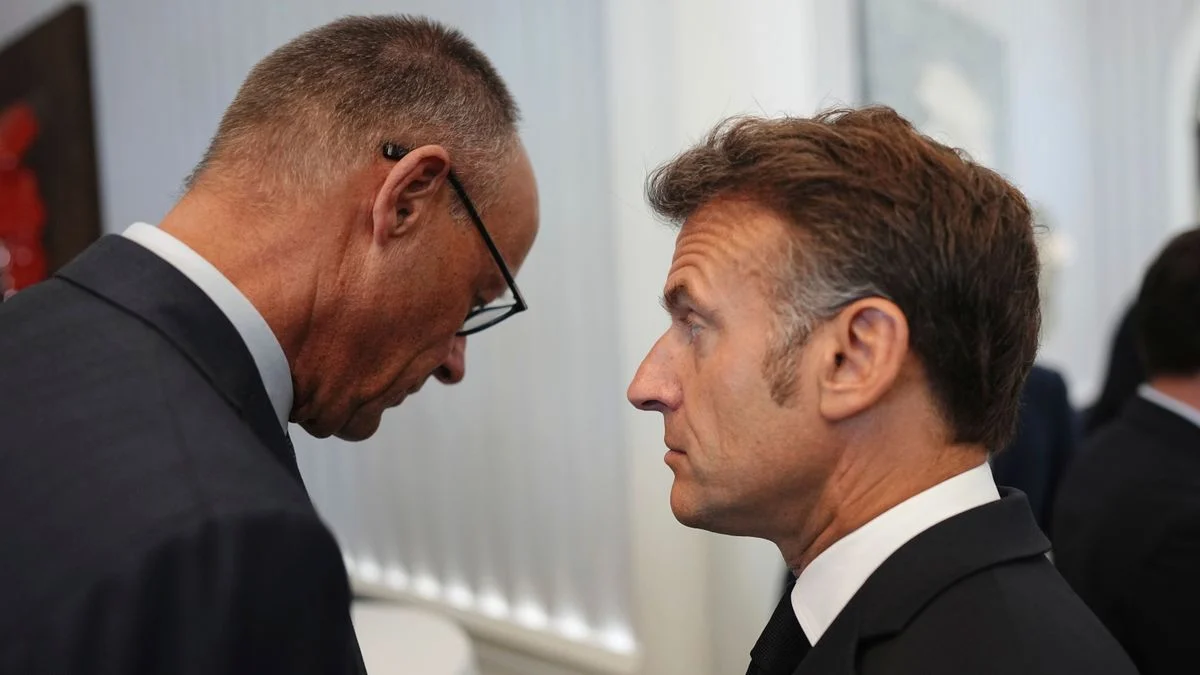
Brussels, Belgium – As the European Union braces for a crucial summit expected to address its complex relationship with China, a powerful call for a significantly tougher and more unified stance is emanating from two of Europe’s most influential political figures: French President Emmanuel Macron and German opposition leader Friedrich Merz. Their concerted push signals a deepening concern within Europe’s political elite regarding China’s economic practices, human rights record, and increasing geopolitical assertiveness, urging the bloc to move beyond a purely transactional relationship towards one defined by resilience, reciprocity, and shared values.
This concerted pressure comes at a time when the EU is grappling with how to navigate its role as both a major trading partner and a "systemic rival" to Beijing. The upcoming summit is anticipated to be a pivotal moment for solidifying the EU’s evolving China strategy, with Macron and Merz advocating for a robust framework that prioritizes European strategic autonomy and economic security in the face of escalating global tensions. Their alignment, particularly between the leader of Europe’s second-largest economy and the head of Germany’s influential Christian Democratic Union (CDU), underscores a growing consensus that the era of uncritical engagement with China is unequivocally over.
Main Facts: The Growing Call for EU Assertiveness
The core of the argument advanced by President Macron and Friedrich Merz centers on the urgent need for the European Union to adopt a more assertive, coherent, and strategically autonomous approach to China. This push is not merely rhetorical; it reflects a fundamental re-evaluation of the risks and opportunities presented by Beijing’s rise. Their primary contention is that the EU, as a collective, must reduce its critical dependencies on China, particularly in vital supply chains and advanced technologies, while simultaneously defending its democratic values and international norms.
Ahead of the highly anticipated EU summit, both leaders have voiced strong concerns over several key areas. Economically, they highlight China’s state-backed industrial policies, which are often perceived as distorting global markets and disadvantaging European businesses. The massive trade imbalance, intellectual property theft, and non-reciprocal market access are frequently cited grievances. Geopolitically, China’s increasingly assertive posture in the Indo-Pacific, its stance on the Russia-Ukraine war, and escalating tensions around Taiwan are viewed as direct challenges to global stability and the rules-based international order. Furthermore, persistent human rights abuses, particularly in Xinjiang and Hong Kong, continue to be a significant moral and political concern for European policymakers.
Macron, known for his emphasis on European strategic autonomy, argues that the EU must carve out its own path, avoiding being drawn into a binary confrontation between the United States and China, but doing so from a position of strength and unity. Merz, representing the leading opposition party in Germany, has been a vocal critic of what he perceives as the current German government’s overly cautious approach to China, advocating for a more principled stand that aligns economic interests with democratic values and security imperatives. Together, their voices amplify a broader sentiment across European capitals that the time for equivocation is over, and a decisive shift towards "de-risking" – rather than outright "decoupling" – is imperative for the EU’s future prosperity and security.
Chronology: Tracing Europe’s Evolving China Calculus
Europe’s relationship with China has undergone a profound transformation over the past three decades, evolving from an era of optimistic engagement to one marked by cautious skepticism and strategic competition. Understanding this trajectory is crucial to grasping the urgency behind Macron and Merz’s current calls.
Early Engagement and Economic Optimism (Pre-2010s)
In the decades following the Cold War, European policy towards China was largely driven by economic opportunity. China was seen as a vast market for European goods and a cost-effective manufacturing hub. Bilateral trade agreements flourished, and European companies invested heavily in the burgeoning Chinese economy. The prevailing belief was that economic integration would inevitably lead to political liberalization within China. The EU consistently referred to China as a "strategic partner," emphasizing areas of cooperation on global issues like climate change and nuclear non-proliferation. German chancellors, notably Gerhard Schröder and Angela Merkel, spearheaded frequent high-level visits, often accompanied by large business delegations, cementing Germany’s role as China’s primary European economic partner.
Growing Disillusionment and Rising Concerns (Mid-2010s)
By the mid-2010s, cracks began to appear in the façade of unbridled optimism. European businesses increasingly reported unfair competition, forced technology transfers, and intellectual property theft. China’s ambitious Belt and Road Initiative (BRI), initially welcomed by some, started to raise concerns about debt traps and geopolitical influence, particularly in Eastern and Southern Europe. Human rights issues, especially the crackdown on dissent and the escalating situation in Xinjiang and Hong Kong, became more difficult for European leaders to ignore. The EU’s 2016 "Elements for a new EU strategy on China" document subtly shifted the tone, acknowledging "growing challenges" alongside opportunities.
The "Systemic Rival" Shift (2019)
A watershed moment arrived in March 2019 when the European Commission and the European External Action Service (EEAS) published "EU-China – A Strategic Outlook." This landmark document redefined China across three dimensions: a cooperation partner, an economic competitor, and, crucially, a "systemic rival" promoting alternative models of governance. This reclassification, spearheaded by figures like then-President of the European Commission Jean-Claude Juncker and High Representative Federica Mogherini, marked a significant hardening of the EU’s official stance. Ursula von der Leyen, who became Commission President later that year, and Josep Borrell, the new High Representative, further solidified this strategic framework, emphasizing the need for a more balanced and assertive approach.
The Pandemic and Geopolitical Realignment (2020-Present)
The COVID-19 pandemic starkly exposed Europe’s vulnerabilities, particularly its over-reliance on China for critical medical supplies and other essential goods. China’s "mask diplomacy" and aggressive "wolf warrior diplomacy" further strained relations. The subsequent Russian invasion of Ukraine in February 2022 and China’s ambiguous but de facto support for Moscow became a major turning point. Beijing’s refusal to condemn the invasion and its continued economic ties with Russia deepened European concerns about China’s role in global security. Tensions in the Taiwan Strait, fueled by increased Chinese military drills, also raised fears of a potential conflict with severe global repercussions.
Macron’s Strategic Autonomy Push
President Macron has been a leading voice in advocating for "European strategic autonomy," a concept that seeks to empower Europe to act independently on the world stage, free from undue influence by either the United States or China. While sometimes interpreted as a desire to distance Europe from the US, Macron’s vision is fundamentally about strengthening Europe’s capacity to define and defend its own interests. His visits to China, often generating headlines for their nuanced approach, are part of this strategy: engaging Beijing directly while simultaneously pushing for a more coherent and robust European position on critical issues. He consistently stresses that Europe must not become a "vassal" in a new Cold War, but rather a powerful, united third pole.
Merz and the German Opposition’s Critique
Friedrich Merz, as the leader of Germany’s CDU/CSU parliamentary group, has been a consistent and increasingly vocal critic of Chancellor Olaf Scholz’s government’s China policy. He and his party argue that Germany, and by extension the EU, has been too slow to adapt to China’s evolving nature, prioritizing short-term economic gains over long-term security and human rights. Merz has called for a comprehensive, values-based German China strategy that aligns with broader European interests, demanding greater transparency, reciprocity, and a clear commitment to democratic principles. His position often reflects a hawkish wing within German politics that advocates for a faster reduction of economic dependencies and a more critical stance on China’s human rights record.
"De-risking" Enters the Lexicon (2023)
In a significant policy speech in March 2023, European Commission President Ursula von der Leyen popularized the term "de-risking" as the new guiding principle for EU-China relations. She explicitly stated that "de-risking, not decoupling" should be Europe’s approach, emphasizing the need to reduce critical dependencies and enhance supply chain resilience without severing economic ties entirely. This concept, quickly embraced by G7 leaders, provides a framework for the current debate, aiming to strike a balance between continued engagement and safeguarding European interests against potential geopolitical and economic coercion.
Supporting Data: The Pillars of Concern
The calls from Macron and Merz are underpinned by a wealth of data and empirical evidence illustrating the multifaceted challenges posed by China. These concerns span economic imbalances, human rights violations, and increasing geopolitical assertiveness.
Economic Imbalance and Dependency
The economic relationship between the EU and China is vast but increasingly imbalanced. In 2022, the EU’s trade deficit with China soared to a record €396 billion, highlighting Europe’s heavy reliance on Chinese imports while facing significant barriers to market access for its own goods and services. This deficit is not merely a matter of trade volume; it reflects critical dependencies in strategic sectors.
- Critical Raw Materials: China dominates the supply chain for numerous critical raw materials essential for European industries, including rare earths, lithium, and magnesium. This dependency creates a strategic vulnerability, as demonstrated by past instances where China has used its control over these resources for political leverage.
- Key Technologies: Europe’s reliance on China extends to crucial components for solar panels, batteries for electric vehicles, and certain pharmaceuticals. While Europe is striving to build its own capacities, the transition is slow, leaving it exposed to potential supply disruptions.
- Market Access and Level Playing Field: European businesses frequently report non-tariff barriers, discriminatory regulations, and forced technology transfer as preconditions for operating in China. The European Chamber of Commerce in China’s annual surveys consistently highlight a worsening business environment, with a record low in business confidence due to regulatory hurdles, geopolitical tensions, and an unpredictable policy landscape.
- State Subsidies: China’s extensive state subsidies for its industries, particularly in sectors like steel, aluminum, and increasingly electric vehicles, are seen as distorting global competition and undermining European industrial competitiveness.
Human Rights Record
The EU has consistently raised concerns about China’s deteriorating human rights situation, which forms a significant ethical and political dimension of the relationship.
- Xinjiang: Reports from human rights organizations, UN experts, and investigative journalists detail widespread abuses against the Uyghur Muslim minority in Xinjiang, including mass arbitrary detention in "re-education camps," forced labor, surveillance, and cultural eradication. The UN Human Rights Office concluded that China’s actions in Xinjiang "may constitute international crimes, in particular crimes against humanity."
- Hong Kong: The imposition of the National Security Law in 2020 severely curtailed the city’s autonomy, democratic freedoms, and judicial independence, leading to the arrest of pro-democracy activists, journalists, and politicians. This has been widely condemned by the EU as a violation of the "One Country, Two Systems" principle.
- Tibet and Internal Dissent: Continued suppression of dissent across mainland China, censorship, and the deteriorating situation in Tibet remain persistent concerns.
Geopolitical Assertiveness
China’s increasingly assertive foreign policy and military modernization pose significant geopolitical challenges.
- South China Sea: China’s extensive territorial claims and militarization of artificial islands in the South China Sea are seen as undermining international law and freedom of navigation.
- Taiwan Strait: Beijing’s growing military pressure on Taiwan, including large-scale military drills and rhetoric, raises fears of a potential conflict that would have catastrophic global consequences, including for Europe’s economy.
- Belt and Road Initiative (BRI): While offering infrastructure development, the BRI has been criticized for creating debt traps in developing nations and serving China’s strategic interests by expanding its influence and control over critical infrastructure.
- Cyber Warfare and Espionage: European intelligence agencies have repeatedly warned about state-sponsored cyber-attacks originating from China, targeting critical infrastructure, corporate secrets, and political institutions.
EU Public Opinion and Business Sentiment
Public opinion in Europe has demonstrably hardened towards China. Surveys by organizations like the Pew Research Center show a significant increase in negative views of China across most EU member states. Similarly, the European business community, while still valuing the Chinese market, has become increasingly wary. Reports from the European Chamber of Commerce in China indicate that companies face growing uncertainty, regulatory pressure, and the weaponization of economic ties, pushing many to re-evaluate their investment strategies and consider diversification.
Official Responses: Navigating Divergent Views
The calls from Macron and Merz, while influential, are part of a broader, often complex and sometimes divergent, conversation within Europe. The official responses from various EU institutions and member states reflect the challenges of forging a truly common foreign policy towards a power as significant as China.
The European Commission’s Stance (Ursula von der Leyen)
The European Commission, under President Ursula von der Leyen, has been instrumental in shaping the "de-risking" narrative. Her speeches and policy documents consistently emphasize the need for Europe to enhance its resilience, reduce critical dependencies, and ensure a level playing field for European companies. The Commission advocates for a multi-pronged approach that includes strengthening trade defense instruments, implementing investment screening mechanisms, and developing an anti-coercion instrument to deter economic bullying. While acknowledging the need for dialogue on global challenges, von der Leyen insists that defending European values and security interests cannot be compromised. Her position generally aligns with the more assertive stance favored by Macron and Merz, particularly in advocating for a united EU front.
The German Government’s Position (Olaf Scholz)
Germany’s official position, led by Chancellor Olaf Scholz, has often been characterized by a delicate balancing act. As Europe’s largest economy with deep industrial ties to China, Germany has historically prioritized economic engagement. While Scholz’s government has published its own China strategy, acknowledging the "systemic rival" dimension and the need for diversification, critics like Merz argue it remains overly cautious and lacks sufficient urgency in reducing dependencies. The strategy aims to reduce risks without abandoning the Chinese market, reflecting the powerful lobbying of German industrial giants. This approach often leads to perceived hesitancy compared to the more vocal assertiveness of France or the Commission, creating a tension that Macron and Merz seek to resolve through a more unified EU approach.
The French Government’s Approach (Emmanuel Macron)
President Macron’s approach, while advocating for a tougher EU stance, is also deeply rooted in his concept of "strategic autonomy." He believes Europe must engage China directly and robustly, asserting its own interests rather than simply following the lead of the United States. This includes maintaining high-level diplomatic channels, as evidenced by his own visits to Beijing, where he emphasizes reciprocity and the need for China to respect international norms. Macron’s vision is not one of confrontation for its own sake, but rather of leveraging Europe’s collective economic and political weight to shape China’s behavior in a way that benefits European interests and values, distinguishing Europe as a distinct global actor.
Varied Member State Perspectives
The EU’s 27 member states do not speak with one voice on China, making the formation of a truly unified policy a significant challenge.
- Hawks: Countries like Lithuania and the Czech Republic have adopted particularly assertive stances, often driven by their own experiences with authoritarian regimes and a strong commitment to democratic values. Lithuania, for instance, faced economic coercion from China after strengthening ties with Taiwan.
- Doves/Pragmatists: Other member states, such as Hungary, Greece, and Portugal, have historically maintained closer economic ties with China, often welcoming Chinese investment through initiatives like the BRI. Their priorities tend to lean towards continued economic engagement, which can sometimes dilute the EU’s collective resolve.
- Overall Consensus: Despite these divergences, there is a growing, albeit sometimes reluctant, consensus across the bloc that China represents a multifaceted challenge. The debate now is less about if the EU needs a stronger China policy, but rather how assertive and unified that policy should be, and what specific tools it should employ.
China’s Official Reaction
China’s government has consistently rejected European accusations of unfair trade practices or human rights abuses. Beijing views the "de-risking" narrative as a thinly veiled attempt at protectionism and a continuation of Cold War mentality, often accusing the EU of being unduly influenced by the United States. Chinese officials regularly emphasize the mutual benefits of economic cooperation, highlight China’s contributions to global growth, and seek to exploit any divisions within the EU. They often reiterate their commitment to multilateralism while simultaneously challenging the existing rules-based international order when it conflicts with their national interests.
Implications: A Crossroads for European Strategy
The concerted push by Macron and Merz for a tougher EU stance on China has profound implications, potentially shaping the bloc’s internal dynamics, its external relations, and its role on the global stage for years to come.
EU Unity and Cohesion
The most immediate implication is the test of EU unity. Forging a common foreign and economic policy towards China requires overcoming the diverse interests and historical perspectives of 27 member states. While Macron and Merz represent a strong Franco-German axis (albeit with Merz representing the opposition), their alignment could galvanize a more cohesive European approach. However, any significant divergence, particularly between major economic players or along ideological lines, could weaken the EU’s leverage and allow China to exploit internal divisions. A unified stance is essential for the EU to act as a credible global player, rather than a collection of individual states.
Economic Repercussions
A tougher stance will undoubtedly have significant economic repercussions. The emphasis on "de-risking" implies:
- Supply Chain Diversification: European companies will be encouraged, and potentially incentivized, to diversify their supply chains away from China, seeking alternative suppliers in friendly nations or even reshoring production. This could lead to increased costs in the short term but enhanced resilience in the long run.
- Increased Investment Screening: Expect stricter scrutiny of foreign direct investment into critical European sectors, particularly from Chinese state-backed entities, to prevent the acquisition of strategic assets or sensitive technologies.
- Trade Defense Instruments: The EU is likely to more frequently deploy its trade defense instruments, such as anti-dumping and anti-subsidy duties, against unfair Chinese trade practices. The new anti-coercion instrument could also be activated to counter economic blackmail.
- Impact on European Industries: Industries heavily reliant on the Chinese market or Chinese components will face significant adjustments. While some may suffer short-term losses, others may benefit from increased domestic production and diversification efforts.
Geopolitical Alignment
A more assertive EU China policy could bring Europe into closer alignment with the United States on key geopolitical issues, particularly concerning human rights, maritime security, and democratic values. However, Macron’s emphasis on "strategic autonomy" suggests that Europe aims to avoid becoming a junior partner in a US-China rivalry. The EU seeks to maintain its own diplomatic channels and pursue its own interests, which may not always perfectly coincide with Washington’s. This delicate balancing act will define Europe’s geopolitical positioning in an increasingly multipolar world.
Future of EU-China Relations
A tougher EU stance could lead to increased friction with Beijing, potentially resulting in retaliatory measures. However, it could also compel China to address European concerns more seriously, especially regarding market access and fair competition, if it wishes to maintain its extensive trade ties with the bloc. Dialogue channels on global issues like climate change and pandemic preparedness will likely remain open, but the overall tone of the relationship will shift towards one of greater strategic competition.
Internal European Dynamics
The push from Macron and Merz highlights the ongoing evolution of the Franco-German engine within the EU. If their combined influence can successfully drive a more cohesive China strategy, it would reaffirm the axis’s power to shape European policy. Furthermore, Merz’s strong advocacy as an opposition leader underscores the growing cross-party consensus in Germany regarding the need for a more robust China policy, potentially influencing future governmental approaches regardless of who holds power.
Tools for the Future
The EU is actively developing and refining a suite of tools to implement its "de-risking" strategy. These include:
- Outbound Investment Screening: Mechanisms to scrutinize European investments abroad, particularly in sensitive Chinese technologies, to prevent unintended transfers of critical know-how.
- Export Controls: Stricter controls on the export of dual-use technologies that could have military applications in China.
- Critical Entity Resilience Directive: Strengthening the resilience of European critical infrastructure against foreign interference.
- Economic Security Strategy: A comprehensive framework to identify, assess, and manage risks to the EU’s economic security.
In conclusion, the unified call from Emmanuel Macron and Friedrich Merz for a harder EU line on China marks a significant moment in Europe’s strategic re-evaluation. As the EU summit approaches, their advocacy underscores a growing determination to protect European values, enhance economic security, and assert the bloc’s strategic autonomy in a rapidly changing global landscape, signaling a decisive shift from engagement at any cost to engagement on Europe’s terms.


















