In the landscape of contemporary German theater, there is a growing trend of "slow art"—productions that refuse to conform to the standard two-hour format, opting instead for an immersive, day-long experience. Following the acclaimed success of the seven-hour "Wallenstein" in Munich, the Schauspiel Leipzig has now ventured into similar territory with a staggering, high-stakes production of Matthew López’s The Inheritance (Das Vermächtnis). This marathon production serves as the final opening-night premiere under the outgoing Intendant Enrico Lübbe, marking a poignant and ambitious coda to his tenure.
Main Facts: A Generational Saga
Matthew López’s The Inheritance is a sprawling, deeply emotional epic that chronicles the lives, loves, anxieties, and political struggles of a group of gay men in New York City. Spanning from the early 1980s to the present day, the play explores the trauma of the HIV/AIDS epidemic and the subsequent evolution of queer identity, community, and political activism.
While the subject matter is specific to the queer experience in America, the production at Schauspiel Leipzig, helmed by Enrico Lübbe, transcends cultural and identity-based boundaries. It speaks to universal themes of human fragility, the weight of history, the search for meaning, and the complexity of interpersonal relationships. The production is a feat of endurance for both the performers and the audience, clocking in at seven hours total, including three intermissions.
The Chronology of the Production
The journey of The Inheritance in Leipzig began with significant anticipation, as it represents the last major artistic project of Enrico Lübbe’s leadership. The rehearsal process was intensive, requiring an ensemble capable of navigating not just the physical demands of a seven-hour stage time, but the emotional volatility of the text.
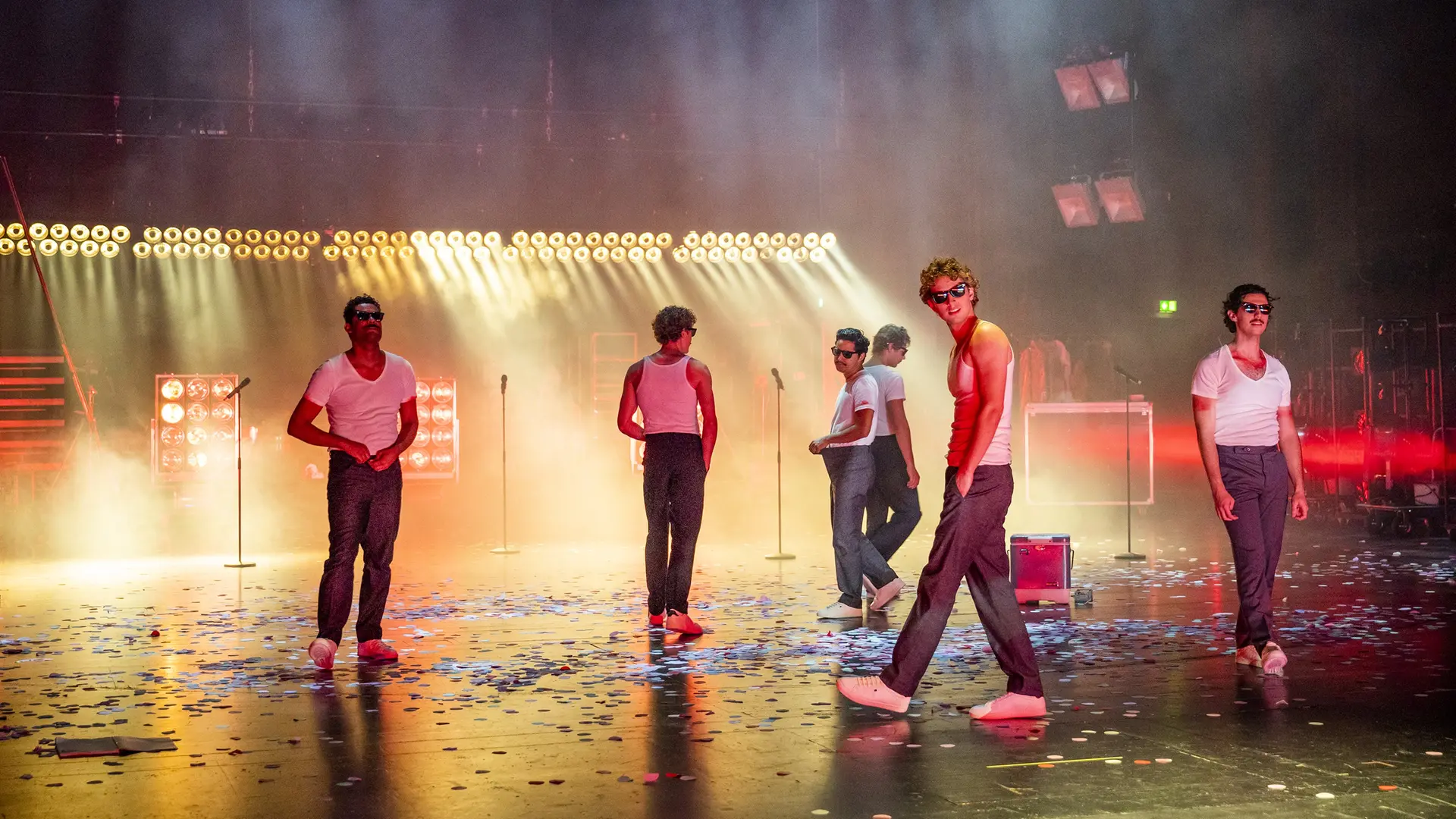
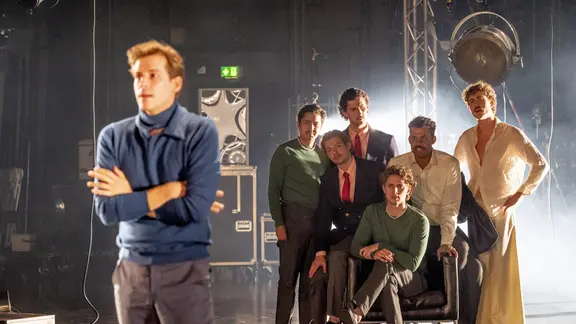
- Pre-production: The theater team focused on stripping back the stage design to highlight the intimacy of the narrative. Katrin Nottrodt provided a sparse, open stage, while Sabine Blickenstorfer designed a uniform aesthetic for the male cast, emphasizing the interconnectedness of the characters.
- The Premiere: The opening weekend solidified the production’s status as a "must-see" event. Critics and audiences alike remarked on the seamless transition between the play’s various timelines.
- The Structure: The play begins with a group of young men in an almost meditative state of self-discovery. As the narrative progresses, it introduces a "Game Master" figure—modeled after the British author E.M. Forster—who serves as a bridge between generations. The later acts introduce a broader scope, incorporating the perspectives of the older generation who lived through the height of the AIDS crisis, contrasting their experiences with the newfound, yet still fragile, freedoms of the younger generation.
Supporting Data and Artistic Choices
The success of such an expansive work relies heavily on the strength of the ensemble. Lübbe directed a cast of eleven men and one woman, Katja Gaudard, whose appearance towards the end of the production provides a shattering, cathartic conclusion to the epic.
The Ensemble’s Performance
The casting choices reflect a deliberate balance between seasoned theater actors and emerging talent:
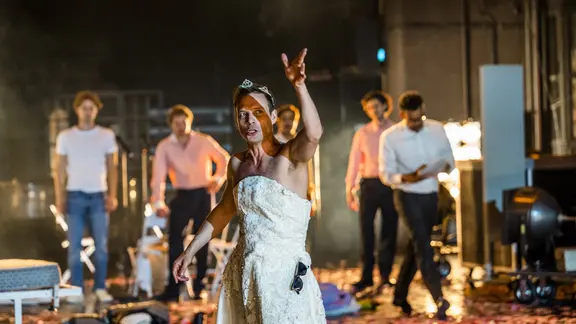
- Dirk Lange: As the "Morgan" figure (the Forster stand-in) and half of an older couple, Lange’s performance is noted for its gravitas. His ability to hold a massive hall in silence during a monologue serves as one of the production’s emotional peaks.
- Wenzel Banneyer: Playing opposite Lange as the partner, Henry, Banneyer captures the quiet desperation and eventual tragedy of a generation forced to live in the shadows.
- Niklas Wetzel: A standout among the younger actors, Wetzel shifts seamlessly between the persona of an ambitious Broadway star and the raw, vulnerable character of Leo, portraying a visceral emotional arc.
- Nicolas Streit and Julius Forster: As the central couple, Toby and Eric, these actors anchor the narrative, using physical comedy and irony to navigate the script’s darker, more painful moments.
Staging and Technical Execution
The decision to stage the play on a minimalist set allows the focus to remain strictly on the dialogue and the shifting power dynamics of the characters. The use of light (Veit-Rüdiger Griess) and video projection (Matthias Gruner) subtly marks the passage of time without relying on heavy set changes, which would have been impractical for a seven-hour show.
Official Responses and Critical Reception
The critical response has been overwhelmingly positive, with many observers noting that the length is not merely a gimmick but a necessary vehicle for the depth of the story. While some critics noted minor issues—such as the tendency for younger actors to speak too quickly during intense segments—the consensus is that the production is a "grand achievement."
The theater management has positioned this piece as the centerpiece of the current season, offering multiple viewing options:

- The Marathon Version: A single-day, seven-hour experience with three intermissions, designed for the most committed theatergoers.
- The Split Version: An alternative format where the play is broken into two distinct evenings, allowing for a more paced consumption of the material.
However, the prevailing advice from those who have witnessed the work is to experience it in its full, seven-hour glory to truly grasp the intended emotional weight of the arc.
Implications: A Legacy Defined
Enrico Lübbe’s choice to end his tenure with this specific production is highly symbolic. By choosing a play that deals with the "inheritance" of history—what the past owes the future and how trauma shapes subsequent generations—Lübbe is effectively offering a commentary on the role of the theater itself.
The Future of the Schauspiel Leipzig
This production proves that the Schauspiel Leipzig, under the current administration, has the technical and artistic capacity to execute "XXXL" scale theater. It raises the bar for future productions and confirms that the institution is willing to prioritize challenging, long-form storytelling over safe, commercial choices.
The Societal Mirror
Beyond the internal politics of the theater world, The Inheritance serves a vital social function. By bringing the history of the queer community—specifically the devastation wrought by the HIV/AIDS epidemic—to a mainstream audience in Central Germany, the play fosters a broader understanding of the struggles for equality. It demonstrates that while the context of the struggle may change, the core human requirements for empathy, recognition, and the right to exist remain constant.
Final Thoughts
As the curtains close on the seven-hour marathon, the audience is left not with a feeling of fatigue, but with a sense of profound exhaustion that borders on the spiritual. The "inheritance" described by López is not just the burden of history, but the promise of a future built on the lessons of that history.
For those planning to attend the remaining performances through 2027, the recommendation is clear: prepare for a journey. The production is a testament to the power of the stage to encapsulate an entire era of human experience, provided one is willing to sit with it long enough to truly listen. Enrico Lübbe’s final bow as Intendant is, therefore, not just a conclusion, but an invitation—a challenge to the audience to remain present, to engage with the uncomfortable, and to acknowledge the ghosts that define our collective identity.