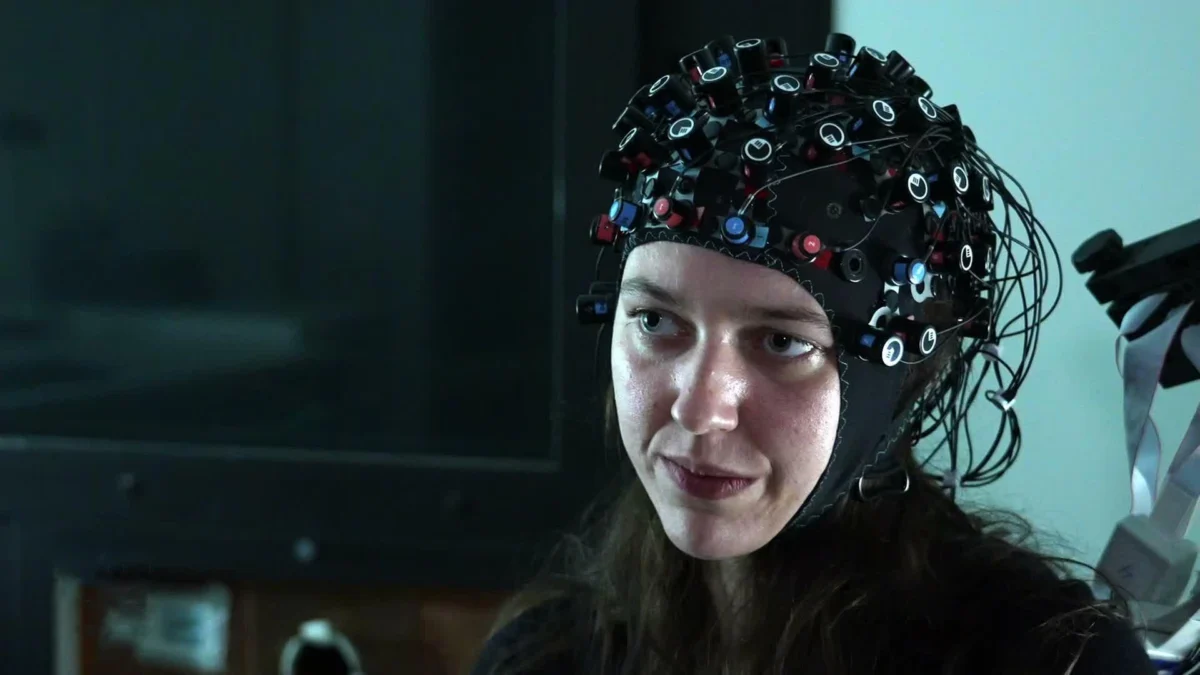
In the quiet, academic halls of the Philipps-University Marburg, a quiet revolution in mental health care is taking shape. It looks, at first glance, like a piece of experimental science fiction—a specialized cap adorned with sensors that resembles a modernized, high-tech bathing cap. Yet, this device is the cornerstone of "MindShift," a pioneering research project aimed at tackling one of the most stubborn and debilitating challenges in modern medicine: treatment-resistant depression.
As mental health crises continue to rise across Europe, the limitations of current psychiatric interventions have become glaringly apparent. While traditional psychotherapy and pharmacological approaches offer relief for many, they remain ineffective for a significant subset of the population. MindShift seeks to bridge this gap by merging the precision of Artificial Intelligence (AI) with the physiological potential of neurostimulation, offering a beacon of hope for patients who have found no respite in conventional methods.
The Reality of Treatment-Resistant Depression
Depression is far more than a temporary state of sadness; it is a complex, pervasive condition that affects nearly one in ten people in Germany at some point in their lives. The symptoms—persistent low mood, anhedonia (the loss of ability to feel pleasure), and crippling fatigue—can render basic daily tasks, such as getting out of bed or maintaining social connections, monumental challenges.
For the vast majority of patients, a combination of selective serotonin reuptake inhibitors (SSRIs) and Cognitive Behavioral Therapy (CBT) provides a path to recovery. However, clinical data consistently indicates that roughly one-third of patients do not respond adequately to these interventions. This group, often classified as having "treatment-resistant depression," represents a critical failure point in current healthcare systems. These individuals are trapped in a cycle of trial-and-error with medications, often suffering for years without significant improvement. MindShift is explicitly designed to intervene in these specific, high-stakes cases.
The Genesis of MindShift: A Technological Convergence
The project is an interdisciplinary endeavor led by a team of psychologists, neuroscientists, and data engineers at the Philipps-University Marburg. At its core, MindShift is an AI-driven platform capable of mapping an individual’s unique brain activity patterns and translating them into highly specific neurostimulation protocols.

The philosophy behind the project is rooted in the concept of "neuro-plasticity"—the brain’s ability to reorganize itself by forming new neural connections. The team argues that depression is essentially a rigid set of neural habits. As psychologist José Garcia Alanis explains, "Oftentimes, with depression, everything feels gray and sad. If we can understand how the brain connects these sensory inputs and transforms them into feelings, we can assist the brain in reinterpreting these situations."
The Chronology of Development
- Initial Research Phase: The team began by analyzing over 30,000 MRI datasets to build a robust foundation for their AI model. This massive influx of data allowed the algorithm to recognize patterns of brain activity associated with various emotional states, from anxiety-inducing triggers to neutral stimuli.
- Pilot Testing: The first clinical pilot involved 20 patients. The results were striking: approximately 50% of participants reported a significant improvement in mood, while 25% achieved a state of complete symptom remission during the study period.
- Technological Integration: The researchers moved from static data analysis to real-time feedback loops. By utilizing medical-grade neurostimulation devices—such as vagus nerve stimulators or transcranial magnetic stimulation (TMS) units—the AI can "nudge" the brain during the therapeutic session.
- Recognition and Funding: The project’s success caught the attention of the state of Hesse, which granted roughly €870,000 in funding. In 2025, the project was further validated through the prestigious "Hessen Ideen" competition, marking its transition from a pure academic experiment to a viable medical product.
How the Technology Works: The "Mobile" Analogy
Clinical lead Alina Buschhüter utilizes a poignant analogy to describe the brain’s architecture: "Think of the brain as a mobile. If you pull on one thread, the entire structure moves. Our goal is to identify the right thread to pull."
When a participant wears the sensor-equipped cap, they are presented with a series of visual stimuli—images that range from the mundane (an automobile) to the potentially anxiety-inducing (an insect). The AI monitors the subject’s brain activity in real-time. If the system detects a neural signature associated with an irrational fear or a depressive cognitive loop, it immediately triggers a low-level, non-invasive stimulation.
For instance, if a patient perceives a coiled rope as a dangerous snake, the system identifies the spike in amygdala activity. It then provides stimulation designed to modulate that response, encouraging the brain to recalibrate its perception. Over time, the goal is to "retrain" the neural pathways so that the patient no longer defaults to a negative interpretation of the world.
Supporting Data and Clinical Implications
The strength of the MindShift project lies in its reliance on high-volume data. By training their AI model on 30,000 MRI scans, the researchers have created a "digital twin" of neural responses. This allows for personalization that traditional medicine cannot match. In a standard clinical setting, a doctor prescribes a dose of medication based on average population responses. In the MindShift model, the treatment is tailored to the specific electrical topography of the patient’s brain.

However, the team is cautious. They emphasize that this technology is not a "cure-all" or a replacement for the human element of therapy. Oberärztin (Senior Physician) Irina Falkenberg, who has worked closely with the project, clarifies: "MindShift allows us to target specific problem areas. It is an incredibly effective, precision-based addition to our toolkit, but it does not replace the necessity of a therapeutic relationship."
Official Perspectives and Future Outlook
The academic and clinical community has reacted with cautious optimism. The integration of neurostimulation with machine learning is a growing field, but MindShift stands out due to its focus on accessibility and non-invasive methods.
"We are not here to ‘repair’ a broken machine," says Buschhüter. "We are here to restore the quality of life." This distinction is vital. It shifts the focus from pathologizing the brain to empowering the patient.
Looking toward the future, the team is moving rapidly toward commercialization. A start-up spin-off is expected to launch before the end of the year, aiming to bring this technology into clinical practice across Germany and eventually beyond. The implications for the future of mental health are profound. While the initial focus remains strictly on severe depression, the researchers believe the platform has the potential to treat anxiety disorders, ADHD, and even assist in general cognitive enhancement, such as focus and relaxation training.
Challenges and Ethical Considerations
Despite the enthusiasm, the project faces hurdles. Scaling the technology requires ensuring that the AI models remain accurate across diverse demographics. Furthermore, there is the question of long-term neuroplasticity: once the stimulation stops, do the neural pathways hold their new configuration?

"We need larger, randomized controlled trials," acknowledges project lead Hamidreza Jamalabadi. "The initial results are promising, but we must prove this at scale."
Furthermore, the ethical implications of using AI to "rewrite" emotional responses are significant. Who defines what constitutes a "healthy" reaction? The MindShift team is currently working with bioethicists to ensure that the patient’s autonomy remains at the center of the treatment. The goal is not to change a person’s personality, but to remove the physiological barriers—the "gray filter"—that prevent them from living their lives.
Conclusion: A Shift in Mental Healthcare
As we stand on the precipice of a new era in psychiatry, projects like MindShift represent the necessary evolution of care. By treating depression not just as a chemical imbalance, but as a dynamic, electrical, and systemic issue, the Marburg team is offering more than just a new gadget—they are offering a new vocabulary for understanding the human experience.
For the millions of people who have felt abandoned by traditional medicine, the "futuristic bathing cap" from Marburg is more than a piece of technology. It is a symbol of a future where mental health is treated with the same precision, data-driven insight, and optimism as any other physiological condition. Whether this will lead to a systemic change in how we view mental healthcare remains to be seen, but the progress made thus far suggests that the "MindShift" is already well underway.